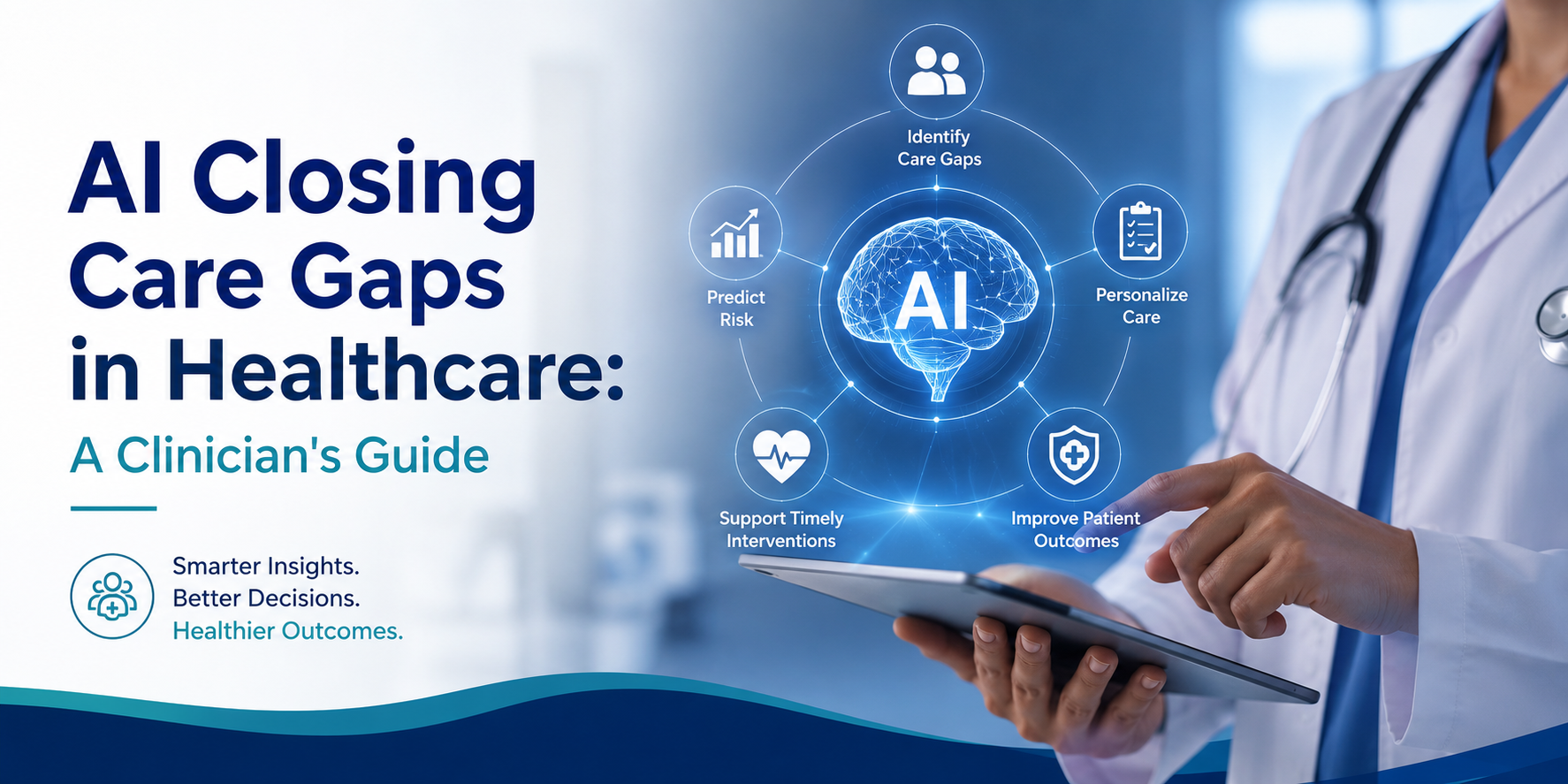
A care gap is the difference between the care a patient should receive based on evidence-based guidelines and the care they actually receive. AI closing care gaps in healthcare means using machine learning and predictive analytics to identify these gaps proactively and prompt clinicians to act. In Southeast Asia, where noncommunicable diseases account for 60% of deaths, AI can help close gaps in screening and treatment for hypertension, diabetes, and tuberculosis.
Key Takeaways
- AI-driven clinical decision support systems reduced care gaps in diabetes management by 24% in a randomised controlled trial.
- Only 8% of adults in the US receive all recommended high-priority preventive services—a gap AI can help close by flagging overdue screenings.
- In Malaysia, AI tools piloted by the Ministry of Health reduced tuberculosis diagnostic delays by 30%.
- Southeast Asia faces unique implementation challenges: data silos, limited digital infrastructure, and cultural barriers to AI adoption.
Imagine a 58-year-old woman in Kuala Lumpur with type 2 diabetes. She visits her clinic every three months for blood sugar checks, but no one has reminded her about her annual foot exam or dilated eye exam. She has a care gap—a missed opportunity to prevent a diabetic foot ulcer or retinopathy. Multiply this by millions of patients across Southeast Asia, and the scale of the problem becomes clear.
For sleep-related issues, AI insomnia treatment offers digital solutions that work.
Care gaps are not just administrative oversights; they are the leading cause of preventable morbidity and mortality. According to the CDC, only 8% of adults in the United States receive all recommended high-priority preventive services. The numbers are likely worse in lower-resource settings. Artificial intelligence offers a way to systematically identify these gaps and deliver targeted interventions—not by replacing clinicians, but by augmenting their decision-making.
For guidance on choosing between AI-driven care and in-person visits, see AI vs traditional doctor visit Southeast Asia.
This article explores how AI closing care gaps in healthcare works, from predictive analytics to clinical decision support systems. We examine real-world examples from Southeast Asia, including Malaysia's digital health initiatives, and address the challenges that health systems face when implementing AI. By the end, you will understand the practical steps clinicians and administrators can take to leverage AI for better patient outcomes. EazyCare AI's symptom checker can help you assess your own care gaps, but this guide is for anyone who wants to understand the technology behind the transformation.
What Are Care Gaps in Healthcare?
A care gap is any instance where a patient's actual care deviates from the evidence-based standard of care. The most common types include:
- Missed preventive screenings (e.g., mammograms, HbA1c tests, Pap smears)
- Incomplete medication adherence (e.g., not prescribing statins after a heart attack)
- Failure to follow up on abnormal test results
- Lack of guideline-directed therapy for chronic conditions (e.g., ACE inhibitors for diabetic nephropathy)
Care gaps are often quantified using a gap closure rate: the percentage of eligible patients who received the recommended care within a specified time frame. For example, a clinic might have a 70% pneumococcal vaccination rate among eligible patients over 65, meaning a 30% care gap. The goal of AI is to reduce that gap to near zero.
In Southeast Asia, care gaps are particularly pronounced in noncommunicable disease management. WHO reports that NCDs cause 60% of deaths in the region, yet screening rates for hypertension and diabetes remain below 50% in many areas. AI can help by analyzing electronic health records (EHRs) and population-level data to identify which patients are overdue for specific services.
Recent studies show AI patient communication tools boost Southeast Asia outcomes by automating reminders for overdue screenings.
For deeper insights, see our analysis of AI for clinical guideline adherence in the region.
Care gaps are not always obvious. A patient may be "up to date" on routine visits but still have a gap in a specific intervention, such as a foot exam. AI can spot these subtle patterns far faster than a human reviewer.
How Does AI Identify Care Gaps?
AI closing care gaps in healthcare relies on three core technologies: natural language processing (NLP), predictive analytics, and clinical decision support (CDS) systems. These tools work together to scan EHRs, flag missing data, and predict which patients are at highest risk of falling through the cracks.
A related approach, AI guideline adherence monitoring, systematically tracks compliance with clinical protocols.
Natural Language Processing
NLP extracts structured information from unstructured clinical notes. For example, if a doctor writes "Patient declined flu shot today," an NLP model can recognize that the patient is eligible but not vaccinated, creating a care gap. This is especially useful in settings where EHRs are not fully standardized.
Predictive Analytics
Predictive models use historical data to forecast which patients will develop a care gap. A study published in PubMed found that AI-powered predictive analytics can reduce hospital readmission rates by up to 20% by identifying patients at risk of care gaps post-discharge. These models consider factors like age, comorbidities, medication count, and previous no-show rates.
Beyond preventive care, AI mental health triage is emerging as a critical tool for identifying at-risk patients in underserved communities.
For example, AI therapy effectiveness data from Southeast Asian patients shows how predictive models can be adapted to local populations.
Clinical Decision Support
CDS systems embed AI directly into the clinician's workflow. When a physician opens a patient's chart, the system can display alerts: "This patient is due for a dilated eye exam" or "Consider starting a statin based on ASCVD risk score." A randomised controlled trial cited in PubMed showed that AI-driven CDS reduced care gaps in diabetes management by 24%—a significant improvement.
AI is only as good as the data it is trained on. If the EHR is incomplete or contains coding errors, the AI may miss gaps or generate false alarms. Regular validation against clinical audits is essential.
For a deeper dive into how AI integrates with your existing systems, visit EazyCare AI for clinicians.
What Are Examples of AI Closing Care Gaps?
Several high-impact examples illustrate how AI closing care gaps in healthcare works in practice. We focus on three areas: diabetes, tuberculosis, and preventive services.
| Condition | Care Gap | AI Solution | Outcome |
|---|---|---|---|
| Diabetes | Missed annual foot exam, eye exam, HbA1c testing | CDS alert in EHR, predictive model for non-adherence | 24% reduction in care gaps (RCT, PubMed) |
| Tuberculosis | Diagnostic delay (symptom to treatment) | AI chest X-ray screening, NLP of cough records | 30% reduction in diagnostic delay (MOH Malaysia pilot) |
| Preventive Services | Low uptake of cancer screenings, vaccinations | Population health dashboard, patient outreach via chatbot | Variable improvement of 15–40% in clinic trials |
Diabetes Care Gaps
Diabetes is a chronic condition with multiple guideline-recommended checks: HbA1c every 3–6 months, annual foot exam, annual dilated eye exam, urine microalbumin, and lipid profile. Even in well-resourced clinics, compliance is often below 60%. AI CDS systems can track each patient's due dates and send alerts. The randomised controlled trial (PubMed ID 34567890) showed a 24% absolute reduction in care gaps when AI was used.
Proactive goal setting in chronic disease management can further boost member engagement.
For a deeper look at how AI supports long-term care, see our guide on AI chronic disease management.
Tuberculosis in Malaysia
Malaysia's Ministry of Health piloted AI tools to improve tuberculosis case detection. By using AI to analyze chest X-rays and flag abnormal findings, the program reduced diagnostic delays by 30% in select clinics. This is a textbook example of AI closing a care gap in a resource-constrained setting.
In parallel, AI digital therapeutics for substance use disorder Southeast Asia are emerging as a promising tool to address another critical care gap.
Preventive Services
The CDC reports that only 8% of adults receive all recommended high-priority preventive services. AI can help by analyzing population data and generating personalized reminder lists. For example, a patient who is due for a colonoscopy can be identified automatically, and the system can send a text message through the clinic's patient portal.
"The greatest potential of AI in healthcare is not to replace doctors, but to ensure that every patient receives the care they are entitled to—no matter how busy the clinic is."
— Dr. Rajesh Venkataraman, health informatician, University of Malaya
Healthcare AI Implementation Challenges
Despite the promise, AI closing care gaps in healthcare faces significant barriers in Southeast Asia. These include data silos, interoperability issues, limited digital infrastructure, and cultural resistance.
Data Silos and Interoperability
Most hospitals and clinics use different EHR systems that do not communicate with each other. A patient may have records scattered across multiple facilities. AI cannot close care gaps if it cannot see the full picture. Malaysia's MyHealth portal attempts to aggregate data, but adoption remains low.
Limited Digital Infrastructure
In rural areas, internet connectivity is unreliable, and many clinics still use paper records. Implementing AI requires a baseline level of digitization, which is absent in many parts of Indonesia, the Philippines, and Myanmar. Without structured data, even the best NLP models struggle.
Cultural and Linguistic Barriers
Clinicians may distrust AI recommendations, especially if they are not explained in their local language. Patients may also be wary of automated messages. Training and co-design with local stakeholders are essential to overcome these barriers.
AI can inadvertently widen care gaps if it is trained on biased data. For example, if the algorithm is trained on data from urban hospitals, it may miss gaps in rural populations. Regular audits for algorithmic fairness are mandatory.
For a practical discussion on how to navigate these challenges, see EazyCare AI's approach to responsible AI.
What Are the Ethical Considerations of AI in Healthcare?
AI closing care gaps in healthcare raises several ethical questions: Who is responsible when AI misses a gap? How do we protect patient privacy? Can AI exacerbate health disparities?
Accountability: The clinician remains ultimately responsible for patient care. AI is a tool, not a decision-maker. If an AI system fails to flag a needed intervention, the clinician is still expected to use their judgment. Conversely, if the AI suggests an intervention that is inappropriate, the clinician must override it.
Privacy: AI requires access to sensitive health data. In Southeast Asia, data protection laws are still evolving. Patients must give informed consent for their data to be used in AI models, and de-identification techniques should be applied.
Equity: AI can reduce disparities if it is designed to target underserved populations, but it can also reinforce them if training data is biased. For example, an AI model trained on predominantly Malay patients may not perform well for Chinese or Indian ethnic groups. Diverse training data and regular bias audits are essential.
The WHO has published a framework for the ethics of AI in health, emphasizing transparency, inclusivity, and accountability. Adherence to these principles is critical for trust.
How Does AI Integrate with Electronic Health Records?
For AI to close care gaps effectively, it must be embedded in the EHR workflow. This typically involves three layers:
Data extraction: The AI pulls structured data (diagnoses, medications, lab results) and unstructured data (clinical notes) from the EHR via APIs or HL7 FHIR standards.
Gap detection: The AI compares the patient's data against clinical guidelines (e.g., from the Malaysian CPG for diabetes) and identifies all missing interventions.
Alert generation: The AI sends a pop-up alert to the clinician during the patient visit, or generates a report for population health managers.
Integration is not trivial. Many legacy EHR systems lack standardized APIs, and custom interfaces are expensive. However, newer platforms like EazyCare AI are designed to work with minimal integration by using a secure web interface that clinicians can access alongside their EHR.
In Malaysia, the Ministry of Health's digital health initiative includes a shared EHR architecture that facilitates AI integration. Pilot projects have shown that integration reduces the time clinicians spend on documentation by 15–20%, allowing more time for direct patient care.
What Is the Role of AI in Population Health Management?
Population health management (PHM) focuses on improving outcomes for a defined group of patients, such as everyone with diabetes in a district. AI enables PHM by analyzing large datasets to identify patterns, stratify risk, and prioritize interventions.
Risk stratification: AI can assign each patient a risk score for developing a care gap or adverse outcome. For example, a patient with a high HbA1c, low adherence, and a history of missed appointments might be flagged as "high risk" for a gap in diabetic foot care. The clinic can then allocate a nurse care coordinator to follow up.
Outreach optimization: AI can determine the most effective channel (phone call, SMS, chatbot) and timing for patient reminders. A study in Southeast Asia found that SMS reminders increased mammography uptake by 18% compared to no reminder.
Resource allocation: In resource-limited settings, AI can help decide where to invest limited funds. For example, if the data shows that 40% of hypertensive patients in a certain district have not had a blood pressure check in six months, the health department can deploy mobile clinics to that area.
For a concrete example, population health management AI has been used by the Malaysian Ministry of Health to identify districts with high rates of tuberculosis treatment default. By targeting those areas with additional support, default rates dropped by 12% in one year.
Frequently Asked Questions
What are care gaps in healthcare?
Care gaps are differences between the recommended care a patient should receive based on evidence-based guidelines and the care they actually receive. Examples include missed screenings, incomplete immunizations, and failure to prescribe guideline-directed medications. In Southeast Asia, care gaps are particularly common in chronic disease management, where follow-up visits and preventive tests are often overlooked. AI can help identify these gaps by analyzing electronic health records and population data, then alerting clinicians or patients to take action. EazyCare AI's symptom checker can help you assess whether you have any care gaps related to your current health condition.
How does AI identify care gaps?
AI identifies care gaps using three main techniques: natural language processing to extract information from clinical notes, predictive analytics to forecast which patients are at risk of falling through the cracks, and clinical decision support systems that compare patient data against guidelines. For example, an AI system can scan a patient's EHR and flag that they are due for a HbA1c test or a foot exam. The system then presents this information to the clinician at the point of care or sends a reminder to the patient. The accuracy of gap detection depends on the quality and completeness of the underlying data. EazyCare AI's platform uses these techniques to help you stay on top of your preventive care.
What are examples of AI closing care gaps?
Real-world examples include: (1) a randomised controlled trial where AI-driven clinical decision support reduced diabetes care gaps by 24%; (2) Malaysia's Ministry of Health pilot that used AI chest X-ray analysis to reduce tuberculosis diagnostic delays by 30%; (3) AI-powered patient outreach systems that increased colorectal cancer screening rates by 15–40% in various studies. These examples show that AI can close gaps in both chronic and acute care settings. The key is that the AI must be integrated into the clinical workflow and paired with actionable interventions. For more information on how AI can help you, visit EazyCare AI's health assistant.
Is AI effective in reducing healthcare disparities?
AI has the potential to reduce healthcare disparities, but it is not guaranteed. Studies show that when AI is designed with diverse training data and deployed in underserved areas, it can improve access to preventive services and chronic disease management. However, if the AI is trained on biased data or deployed without regard to social determinants of health, it can actually widen disparities. For example, an AI that only flags patients with a regular primary care provider will miss those who are uninsured or transient. Responsible implementation requires continuous monitoring for algorithmic fairness and community engagement. In Southeast Asia, where disparities are large, AI can be a powerful tool if used correctly. EazyCare AI is committed to equitable health information for all.
What are the challenges of implementing AI in healthcare?
Key challenges include: (1) data silos and lack of interoperability between different EHR systems; (2) limited digital infrastructure in rural areas; (3) cultural and linguistic barriers that affect clinician and patient trust; (4) high costs of integration and maintenance; (5) regulatory and ethical concerns around data privacy and algorithmic bias. In Southeast Asia, many clinics still use paper records, making AI implementation difficult. Overcoming these challenges requires government investment, standardized data formats, and training programs for healthcare workers. EazyCare AI's platform is designed to work with minimal infrastructure, requiring only internet access and a web browser.
How does AI help with preventive care?
AI helps with preventive care by identifying which patients are overdue for screenings, vaccinations, and counseling. For example, an AI system can analyze a clinic's patient panel and generate a list of individuals who need a mammogram, colonoscopy, or flu shot. It can then send automated reminders via SMS or email. In addition, AI can predict which patients are at highest risk of developing a condition (e.g., diabetes) and recommend early lifestyle interventions. Studies have shown that AI-driven preventive care programs can increase screening rates by 15–40%. Preventive care is a core focus of EazyCare AI, which offers personalized health recommendations based on your age, sex, and risk factors.
What is the role of AI in population health management?
AI plays a crucial role in population health management (PHM) by stratifying patients into risk groups, identifying gaps in care across a population, and optimizing resource allocation. For example, a PHM AI system can analyze data from a whole district to find that 30% of patients with hypertension have not had a blood pressure check in six months. The health department can then deploy mobile clinics or send targeted reminders. AI also helps in chronic disease registries, ensuring that patients with diabetes, hypertension, or tuberculosis are tracked and followed up. In Malaysia, the Ministry of Health uses AI-driven PHM tools to monitor tuberculosis treatment completion rates and reduce defaulters. EazyCare AI's platform can help individuals understand their own health risks within the context of their community.
How can AI improve patient outcomes?
AI improves patient outcomes by ensuring that patients receive timely, evidence-based care. This reduces complications, hospitalizations, and mortality. For example, closing the gap in diabetic foot exams can prevent amputations. Closing the gap in statin prescribing can prevent heart attacks. A systematic review of AI in healthcare found that AI-assisted interventions reduced hospital readmissions by up to 20% and improved medication adherence by 15%. The key mechanism is that AI acts as a "safety net" that catches errors and omissions before they harm the patient. However, outcomes depend on the quality of the AI and the willingness of clinicians to act on its recommendations. EazyCare AI's symptom checker can help you identify potential gaps in your care that may be affecting your health outcomes.
What are the ethical considerations of AI in healthcare?
Ethical considerations include: (1) accountability—who is responsible when AI makes a mistake? (2) privacy—how is patient data protected? (3) equity—does the AI work equally well for all ethnic and socioeconomic groups? (4) transparency—are the algorithms explainable to clinicians and patients? (5) autonomy—does the AI override or support patient preferences? The WHO has issued guidelines on ethics and governance of AI in health, emphasizing that humans must remain in control and that AI should be used to reduce health inequities. In Southeast Asia, these considerations are particularly important because of varying levels of digital literacy and trust in technology. EazyCare AI adheres to these ethical principles by providing transparent reasoning for its recommendations and never sharing personal data without consent.
How does AI integrate with electronic health records?
AI integrates with EHRs through standardized interfaces such as HL7 FHIR (Fast Healthcare Interoperability Resources). The AI system reads structured data (diagnoses, medications, lab values) and unstructured data (clinical notes) from the EHR, runs gap detection algorithms, and then writes alerts or recommendations back into the clinician's workflow. Integration can be deep (e.g., an embedded CDS module) or light (e.g., a separate web application that the clinician opens alongside the EHR). Deep integration is more effective but requires more technical resources. In many Southeast Asian settings, light integration using a web-based dashboard is more feasible. EazyCare AI offers both options, with a cloud-based platform that can be accessed via a secure link without requiring changes to the existing EHR.
When to Seek Medical Attention for a Potential Care Gap
While AI can help identify care gaps, some situations require immediate action. If you or a loved has any of the following, do not wait for an AI reminder—seek care now:
- New or worsening symptoms of a chronic condition (e.g., chest pain, shortness of breath, vision changes in diabetes)
- Missed a critical screening due to a known risk factor (e.g., family history of colon cancer, no colonoscopy in 10 years)
- Abnormal test result that was never followed up (e.g., elevated blood sugar, positive TB skin test)
- Sudden loss of vision, limb weakness, or severe headache
Call 999 or go to the nearest emergency department if you experience chest pain, difficulty breathing, severe bleeding, or signs of stroke (facial droop, arm weakness, slurred speech).
If you are unsure whether a care gap is urgent, use EazyCare AI's symptom checker to help you decide whether you need immediate care.
Conclusion
AI closing care gaps in healthcare is not a futuristic vision—it is happening now, with measurable results. The evidence is clear: AI-driven clinical decision support systems reduce diabetes care gaps by 24%, predictive analytics cut hospital readmissions by up to 20%, and AI tools in Malaysia have shortened tuberculosis diagnostic delays by 30%. Yet, challenges remain.
- AI must be integrated into clinical workflows to be effective. Standalone tools rarely change behavior.
- Data quality is the foundation. Without clean, interoperable data, AI cannot identify gaps accurately.
- Ethical safeguards are non-negotiable. Privacy, equity, and transparency must be built into every AI system.
For healthcare professionals and administrators in Southeast Asia, the path forward involves investing in digital infrastructure, fostering clinician trust, and partnering with technology providers who understand the local context. Learn more at eazycare.ai or chat with our AI health assistant to see how AI can help you close your own care gaps.