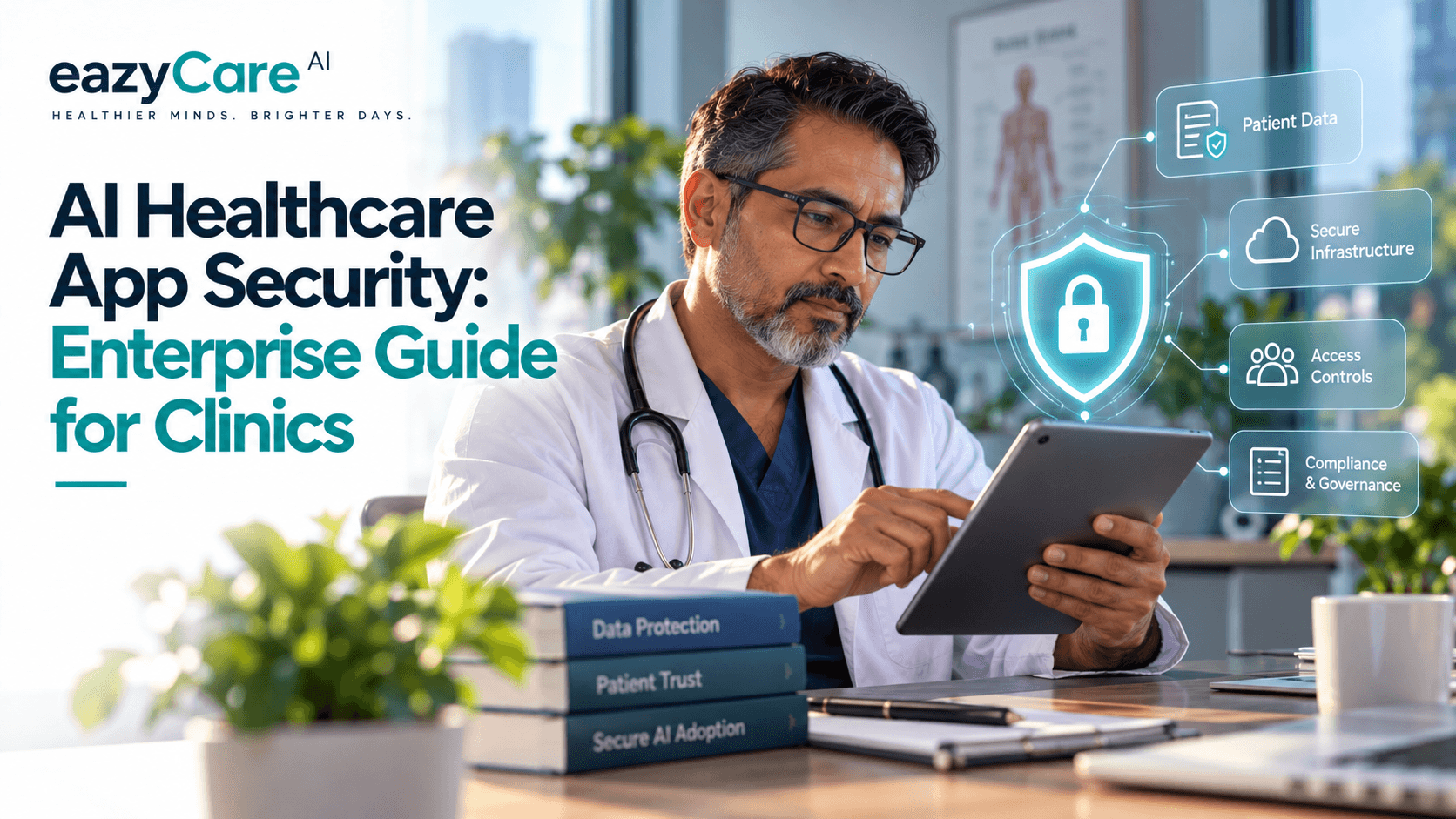
AI healthcare app security for clinics refers to the set of technical, administrative, and regulatory controls that protect patient data when using artificial intelligence tools in a clinical setting. Without these controls, clinics risk data breaches, regulatory penalties, and loss of patient trust. In 2022, the average cost of a healthcare data breach reached $10.1 million globally, and Southeast Asian clinics are increasingly targeted as they adopt AI without commensurate security upgrades.
Key Takeaways
- AI healthcare apps introduce unique vulnerabilities—including model inversion attacks and API data leaks—that traditional clinic IT systems do not face.
- Compliance with Malaysia’s PDPA and Singapore’s PDPA is non-negotiable; clinics must understand how these laws differ from HIPAA and what they require for AI data processing.
- Enterprise-grade security for AI apps requires end-to-end encryption, strict access controls, regular vendor audits, and data localization within the country of practice.
- A practical implementation framework—starting with a risk assessment and ending with continuous monitoring—can help even small clinics achieve robust protection.
Why Security Matters for AI in Southeast Asian Clinics
A mid-sized clinic in Kuala Lumpur adopts an AI-powered diagnostic tool for chest X-ray interpretation. Within three months, the clinic’s patient database is exfiltrated through an unsecured API endpoint. The breach exposes 12,000 records—names, IC numbers, medical histories—and results in a PDPA investigation, a fine of RM 250,000, and a permanent loss of patient confidence. This scenario is not hypothetical. According to the IBM Cost of a Data Breach Report 2023, healthcare breaches cost an average of $10.1 million per incident, and the healthcare sector has the highest breach costs of any industry for 13 consecutive years.
In Southeast Asia, the adoption of AI in healthcare is accelerating rapidly. Clinics in Malaysia, Singapore, Thailand, and Indonesia are using AI for triage, radiology, pathology, and even mental health screening. Yet a study published in PubMed found that 79% of healthcare AI applications lack adequate security controls, including encryption and access management, making patient data vulnerable to cyberattacks. The gap between technological promise and security readiness is dangerous—especially for smaller clinics that lack dedicated IT security teams.
For clinics using AI mental health chatbots, unique privacy and ethical risks require additional safeguards.
This article provides a comprehensive guide to AI healthcare app security tailored for clinics in Southeast Asia. It covers the regulatory landscape (PDPA, HIPAA comparisons), core security measures (encryption, access control, data localization), vendor risk management, and a step-by-step implementation framework. By the end, clinic owners and managers will have a clear roadmap to protect patient data while leveraging the benefits of AI. For a quick assessment of your clinic’s security posture, EazyCare AI’s security checklist tool can help identify gaps.
The Unique Security Challenges of AI in Healthcare
AI healthcare apps differ from traditional clinic software in several critical ways that expand the attack surface. First, AI models often require large datasets for training and inference—meaning patient data must be transmitted to cloud servers or third-party APIs. This data in transit is a prime target for interception. Second, AI models themselves can be attacked: adversaries can perform model inversion to reconstruct training data (including patient identities) or adversarial attacks to manipulate diagnostic outputs. Third, many AI apps are built by startups that may not have mature security practices, introducing supply-chain risks.
A 2022 systematic review in PubMed (PMID: 34849692) analysed 150 healthcare AI applications and found that only 21% implemented encryption for data at rest, and fewer than 15% had proper access control logs. The review also noted that 43% of apps transmitted data over unencrypted HTTP connections. For clinics in Southeast Asia, where internet infrastructure varies widely, these vulnerabilities are magnified. A clinic in a rural area using a public Wi-Fi network to access an AI diagnostic tool is essentially broadcasting patient data.
Another challenge is the lack of standardised security frameworks for AI in healthcare. While general cybersecurity standards exist (e.g., ISO 27001), they were not designed for the specific risks of machine learning models. Clinics must therefore adopt a layered approach: securing the data pipeline, the model itself, and the end-user interface. Practical takeaway: Before deploying any AI app, conduct a threat model that maps data flow from patient intake to AI output, identifying every point where data could be intercepted or leaked.
Many AI healthcare apps marketed as "HIPAA compliant" may not meet Southeast Asian regulations like Malaysia’s PDPA. HIPAA focuses on US healthcare entities, while PDPA requires explicit consent, data breach notification, and data localization in some cases. Never assume compliance transfers across borders.
Regulatory Landscape: PDPA, HIPAA, and Beyond in Southeast Asia
Clinics in Southeast Asia operate under a patchwork of data protection laws. Malaysia’s Personal Data Protection Act (PDPA) 2010 applies to any organisation processing personal data in the context of commercial transactions, including healthcare. Key requirements include obtaining consent, limiting data collection to what is necessary, and ensuring data security. Singapore’s PDPA (amended 2021) similarly mandates consent, purpose limitation, and protection obligations, with additional provisions for data breach notification and data portability. Thailand’s Personal Data Protection Act (PDPA) 2019 and Indonesia’s Law No. 27 of 2022 on Personal Data Protection are also coming into full effect, creating a complex compliance environment.
Unlike HIPAA in the United States, which has specific rules for electronic protected health information (ePHI) and requires business associate agreements, Southeast Asian laws are more principle-based. They do not prescribe specific technical controls but require "appropriate" security measures. This ambiguity can be both a blessing and a curse: clinics have flexibility in implementation, but they also risk non-compliance if they choose inadequate measures. For AI healthcare apps, the key compliance areas are:
- Consent: Patients must be informed that their data will be processed by an AI system and given the option to opt out.
- Data Minimisation: Only the minimum data necessary for the AI function should be collected. For example, an AI triage app does not need the patient’s full medical history.
- Data Localisation: Malaysia’s PDPA does not explicitly require data to stay within the country, but the Personal Data Protection Commissioner has issued guidelines encouraging local storage. Singapore’s PDPA allows cross-border transfers if comparable protection is ensured.
- Breach Notification: Both Malaysia and Singapore require notification to the regulator and affected individuals in case of a data breach involving personal data.
Clinics should also be aware of sector-specific guidelines. For instance, the Malaysian Ministry of Health has issued a Health Data Security Policy that recommends encryption, access controls, and audit trails for all health information systems. Practical takeaway: Map your clinic’s data flows against the requirements of the specific PDPA in your country. Engage a data protection officer (DPO) or legal advisor familiar with healthcare AI. EazyCare AI’s compliance checklist can help you track regulatory obligations.
| Regulation | Jurisdiction | Key Requirements for AI Apps | Enforcement |
|---|---|---|---|
| Malaysia PDPA 2010 | Malaysia | Consent, data minimisation, security, breach notification (proposed amendments) | Personal Data Protection Commissioner; fines up to RM 500,000 |
| Singapore PDPA 2012 (amended 2021) | Singapore | Consent, purpose limitation, protection obligation, data breach notification, data portability | Personal Data Protection Commission; fines up to SGD 1 million |
| Thailand PDPA 2019 | Thailand | Consent, data subject rights, security measures, cross-border transfer restrictions | Personal Data Protection Committee; fines up to THB 5 million |
| HIPAA (US) | United States | Specific ePHI safeguards, business associate agreements, breach notification | Office for Civil Rights; fines up to $1.5 million per violation |
Core Security Measures for AI Healthcare Apps
Enterprise-grade security for AI healthcare apps rests on three pillars: encryption, access control, and auditability. Each must be implemented at every stage of the data lifecycle—collection, transmission, storage, processing, and deletion.
Encryption: Data in Transit and at Rest
All patient data sent between the clinic’s systems and the AI app’s servers must be encrypted using TLS 1.3 or higher. This prevents man-in-the-middle attacks, especially on public networks. Data at rest—stored on servers or in databases—should be encrypted using AES-256. Some AI models also support homomorphic encryption, which allows computation on encrypted data without decryption, though this is still computationally expensive for real-time clinical use. Practical takeaway: Verify that your AI vendor uses end-to-end encryption and that you have access to encryption keys (or use a key management service).
Access Control: Who Can See What?
Role-based access control (RBAC) ensures that only authorised personnel can view or process patient data. For AI apps, this means the AI model itself should only have access to the data it needs for the specific task—not the entire patient record. Implement multi-factor authentication (MFA) for all administrative accounts. The PubMed study found that 85% of healthcare AI apps lacked proper access logs, making it impossible to detect unauthorised access. Practical takeaway: Require your AI vendor to provide detailed audit logs showing every data access event, including timestamps, user IDs, and data elements accessed.
Auditability and Transparency
Clinics must be able to demonstrate compliance with data protection laws. This requires maintaining logs of all AI interactions, including inputs, outputs, and model decisions. For AI diagnostic tools, this is also essential for clinical accountability—if a model makes an error, the clinic must be able to trace the decision. Practical takeaway: Choose AI apps that offer immutable audit trails and allow you to export logs in a standard format (e.g., JSON, CSV) for regulatory review.
Data Localisation refers to the practice of storing and processing data within the country where it was collected. Some Southeast Asian regulators encourage or require this to ensure data is subject to local laws. For AI apps, this means the cloud servers hosting the model must be located in the same country as the clinic. Always confirm the data residency policy of your AI vendor.
Data Localization and Encryption: Protecting Patient Data in Transit and at Rest
Data localization is a critical but often overlooked aspect of AI healthcare app security. When a clinic in Malaysia uses an AI app hosted on servers in Singapore or the United States, patient data crosses borders and may be subject to different legal regimes. While Malaysia’s PDPA does not explicitly mandate local storage, the Personal Data Protection Commissioner has issued guidelines recommending that health data be stored within Malaysia to ensure adequate protection. Singapore’s PDPA allows cross-border transfers if the receiving country has comparable protection, but the burden of proof lies with the clinic.
Encryption is the technical counterpart to localization. Even if data is stored locally, it must be encrypted at rest to protect against physical theft or unauthorised access to servers. For AI apps, encryption should also cover the model itself—some advanced techniques like federated learning allow the model to be trained across multiple clinics without raw data ever leaving each clinic’s premises. This is an emerging best practice for privacy-preserving AI. Practical takeaway: When evaluating AI vendors, ask for a data flow diagram that shows where data is stored, how it is encrypted, and whether any data leaves the country. Insist on a written data processing agreement that specifies localization and encryption standards.
For clinics with limited IT resources, a practical approach is to use a virtual private cloud (VPC) within the country of practice. Major cloud providers (AWS, Azure, GCP) offer local regions in Singapore and Malaysia. The AI app can be deployed on a VPC with encryption keys managed by the clinic. This gives the clinic control over data residency and encryption. Practical takeaway: If your AI vendor does not offer local hosting, consider using a secure API gateway that encrypts data before it leaves your network and decrypts only on your own servers. EazyCare AI’s platform is designed with data localization in mind for Southeast Asian clinics.
Vendor Risk Management: How to Vet AI Healthcare App Providers
Many clinics adopt AI apps without thoroughly vetting the vendor’s security posture. This is a dangerous oversight. A vendor with weak security can become the weakest link in your clinic’s data protection chain. Vendor risk management (VRM) for AI healthcare apps should include the following steps:
Request a Security Questionnaire: Ask the vendor to complete a standardised security assessment (e.g., based on ISO 27001 or NIST CSF). Key questions: Do they encrypt data at rest and in transit? Do they have a bug bounty program? Have they undergone a third-party penetration test in the last 12 months? What is their incident response plan?
Review Compliance Certifications: Look for certifications like ISO 27001, SOC 2 Type II, or HIPAA BAA (if relevant). For Southeast Asia, also check if the vendor has been audited against local PDPA requirements. Some vendors may claim compliance without formal certification.
Assess Data Handling Practices: Understand how the vendor uses patient data. Do they train their models on your clinic’s data? If so, can that data be used to improve models for other clinics? This could violate patient consent. Insist on a data processing agreement that prohibits secondary use of data without explicit consent.
Evaluate Model Security: Ask about measures against adversarial attacks and model inversion. Does the vendor perform regular security testing on their AI models? Are there controls to prevent an attacker from manipulating the model’s output?
Practical takeaway: Create a vendor risk scorecard that weights security, compliance, and data handling. Only proceed with vendors that score above a defined threshold. EazyCare AI’s vendor assessment tool can help you standardise this process.
"The weakest link in healthcare AI security is often the vendor, not the clinic. A single unpatched API can expose thousands of patient records."
— Dr. Lim Siew Hoon, Cybersecurity Advisor, Malaysian Medical Association
Implementing an Enterprise-Grade Security Framework for Your Clinic
Even small clinics can achieve enterprise-grade security by following a structured framework. The following five-phase approach is adapted from the NIST Cybersecurity Framework and tailored for AI healthcare apps in Southeast Asia.
Phase 1: Risk Assessment
Identify all AI apps used in the clinic, map data flows, and assess vulnerabilities. Use the threat model mentioned earlier. Prioritise risks based on likelihood and impact. For example, an AI triage app that processes patient names and symptoms has a different risk profile than an AI scheduling tool that only handles appointment times.
Phase 2: Policy Development
Create or update your clinic’s data security policy to include specific rules for AI apps. Define roles and responsibilities (e.g., who approves new AI tools, who monitors logs). Ensure the policy aligns with your country’s PDPA requirements.
Phase 3: Technical Controls
Implement encryption, access control, and audit logging as described above. For clinics without in-house IT, consider using a managed security service provider (MSSP) that specialises in healthcare. Deploy a firewall and intrusion detection system (IDS) to monitor traffic to and from AI APIs.
Phase 4: Training and Awareness
Train all staff—doctors, nurses, receptionists—on data security best practices. Emphasise that AI apps are not toys; they process sensitive data. Conduct phishing simulations and regular security refreshers.
Phase 5: Continuous Monitoring and Improvement
Set up automated alerts for unusual data access patterns (e.g., a sudden spike in API calls). Conduct quarterly reviews of vendor security posture and annual penetration tests. Update policies as regulations evolve. Practical takeaway: Start with Phase 1 today. Even a simple risk assessment can prevent a breach. EazyCare AI’s security self-assessment can guide you through the first phase in under 30 minutes.
Frequently Asked Questions
How do AI healthcare apps protect patient data?
AI healthcare apps protect patient data through encryption (both in transit and at rest), strict access controls, and audit logging. Many also implement data anonymisation or pseudonymisation before processing. However, the level of protection varies widely by vendor. Clinics must verify these measures through security questionnaires and independent audits. EazyCare AI's symptom checker uses end-to-end encryption and does not store identifiable data beyond the session.
Are AI medical apps HIPAA compliant?
Some AI medical apps are designed to be HIPAA compliant, meaning they meet the US Health Insurance Portability and Accountability Act requirements for protecting electronic health information. However, HIPAA compliance does not automatically satisfy Southeast Asian regulations like Malaysia's PDPA or Singapore's PDPA. Clinics in the region should look for compliance with local laws, not just HIPAA. EazyCare AI's platform is built to comply with both HIPAA principles and Southeast Asian data protection laws.
What is PDPA in healthcare and how does it affect clinics?
PDPA stands for Personal Data Protection Act, which governs how personal data (including health data) is collected, used, and stored. In healthcare, it affects clinics by requiring patient consent for data processing, data minimisation, security safeguards, and breach notification. Clinics using AI apps must ensure that the vendor's data handling practices comply with the PDPA. Failure to do so can result in fines and reputational damage. EazyCare AI's compliance checklist can help clinics align with PDPA requirements.
How secure are AI diagnostic tools?
AI diagnostic tools vary in security. A 2022 study found that 79% of healthcare AI applications lacked adequate security controls. Secure tools use encryption, role-based access, and regular security testing. However, even secure tools can be vulnerable if the clinic's own network is compromised. Clinics should treat AI diagnostic tools as part of a broader security ecosystem. EazyCare AI's diagnostic assistant undergoes regular third-party penetration testing and uses encrypted APIs.
What security measures should healthcare apps have?
Essential security measures include: end-to-end encryption (TLS 1.3 for transit, AES-256 for storage), multi-factor authentication for admin access, detailed audit logs, data anonymisation where possible, and regular vulnerability scans. For AI apps, additional measures like model security testing and adversarial attack prevention are recommended. Clinics should also ensure the app has a clear data retention and deletion policy. EazyCare AI's platform incorporates all these measures by default.
Can AI apps be used in hospitals securely?
Yes, AI apps can be used securely in hospitals if proper controls are in place. Hospitals typically have dedicated IT security teams that can enforce network segmentation, intrusion detection, and vendor compliance. However, smaller clinics without such resources can still achieve security by using cloud-based AI apps with strong encryption and data localization. The key is to treat AI apps as critical infrastructure and apply the same security standards as other hospital systems. EazyCare AI's enterprise tier is designed for hospital-grade security.
What is end-to-end encryption in healthcare apps?
End-to-end encryption (E2EE) ensures that patient data is encrypted on the clinic's device and only decrypted on the intended recipient's device (or server). This prevents anyone—including the AI vendor—from reading the data during transmission. In healthcare apps, E2EE is critical for protecting sensitive information like medical histories and test results. However, E2EE can complicate some AI functions that require data analysis on the server. Some apps use hybrid approaches where data is encrypted until it reaches a secure processing environment. EazyCare AI uses E2EE for all patient communications and data storage.
How do clinics ensure data privacy when using AI?
Clinics can ensure data privacy by: (1) conducting a thorough vendor risk assessment, (2) implementing encryption and access controls, (3) obtaining explicit patient consent for AI processing, (4) limiting data collection to what is necessary, (5) storing data locally when possible, and (6) regularly auditing access logs. Training staff on privacy practices is equally important. EazyCare AI's platform provides built-in privacy controls and a consent management module for clinics.
What are the risks of using AI in healthcare data?
Key risks include data breaches (through unsecured APIs or insider threats), model inversion attacks (where attackers reconstruct patient data from the AI model), adversarial manipulation (where inputs are altered to produce wrong diagnoses), and regulatory non-compliance. There is also the risk of vendor lock-in, where a clinic cannot easily switch providers without losing historical data. Mitigating these risks requires a combination of technical controls, vendor management, and legal safeguards. EazyCare AI's risk assessment tool can help clinics identify their specific vulnerabilities.
Is patient data safe with AI chatbots?
Patient data safety with AI chatbots depends on the chatbot's architecture. Chatbots that store conversation logs on unencrypted servers or use data for model training pose significant risks. Secure chatbots use end-to-end encryption, do not retain data beyond the session, and are transparent about data usage. Clinics should only deploy chatbots that comply with local data protection laws and provide clear privacy policies. EazyCare AI's health assistant chatbot is designed with privacy-first principles: conversations are encrypted and not used for training without explicit consent.
When to Seek Professional Security Guidance
While many clinics can implement basic security measures independently, certain situations require expert intervention. Consider engaging a cybersecurity consultant or data protection officer if:
- Your clinic has experienced a data breach or suspicious activity in the last 12 months.
- You are unsure whether your AI vendor’s security practices meet PDPA requirements.
- You plan to deploy multiple AI apps that share patient data across platforms.
- Your clinic handles high-risk data (e.g., genetic information, mental health records).
- You have received a notice from a data protection regulator or a patient complaint about data misuse.
Emergency escalation: If you suspect an active data breach—such as unauthorised access to patient records or ransomware on clinic systems—immediately disconnect affected systems from the network, notify your data protection officer, and contact the relevant regulator (e.g., Personal Data Protection Commissioner in Malaysia). Do not attempt to investigate on your own; preserve evidence for forensic analysis.
If you are unsure whether your clinic’s AI security posture is adequate, EazyCare AI’s security assessment tool can help you identify gaps and recommend next steps.
Conclusion
AI healthcare apps offer transformative potential for clinics in Southeast Asia, but they also introduce significant security risks that cannot be ignored. The key takeaways from this guide are:
- Understand the regulatory landscape: Comply with your country’s PDPA and any sector-specific health data policies. Do not rely on HIPAA compliance alone.
- Implement core technical controls: Encryption, access control, and audit logging are non-negotiable. Data localization adds an extra layer of protection.
- Manage vendor risk rigorously: Vet every AI app provider using a standardised security questionnaire and insist on a data processing agreement that protects patient rights.
Security is not a one-time project but an ongoing commitment. Start with a simple risk assessment today, and build your clinic’s security posture step by step. For a practical starting point, explore EazyCare AI’s security resources for clinics or chat with our AI health assistant to assess your current vulnerabilities.