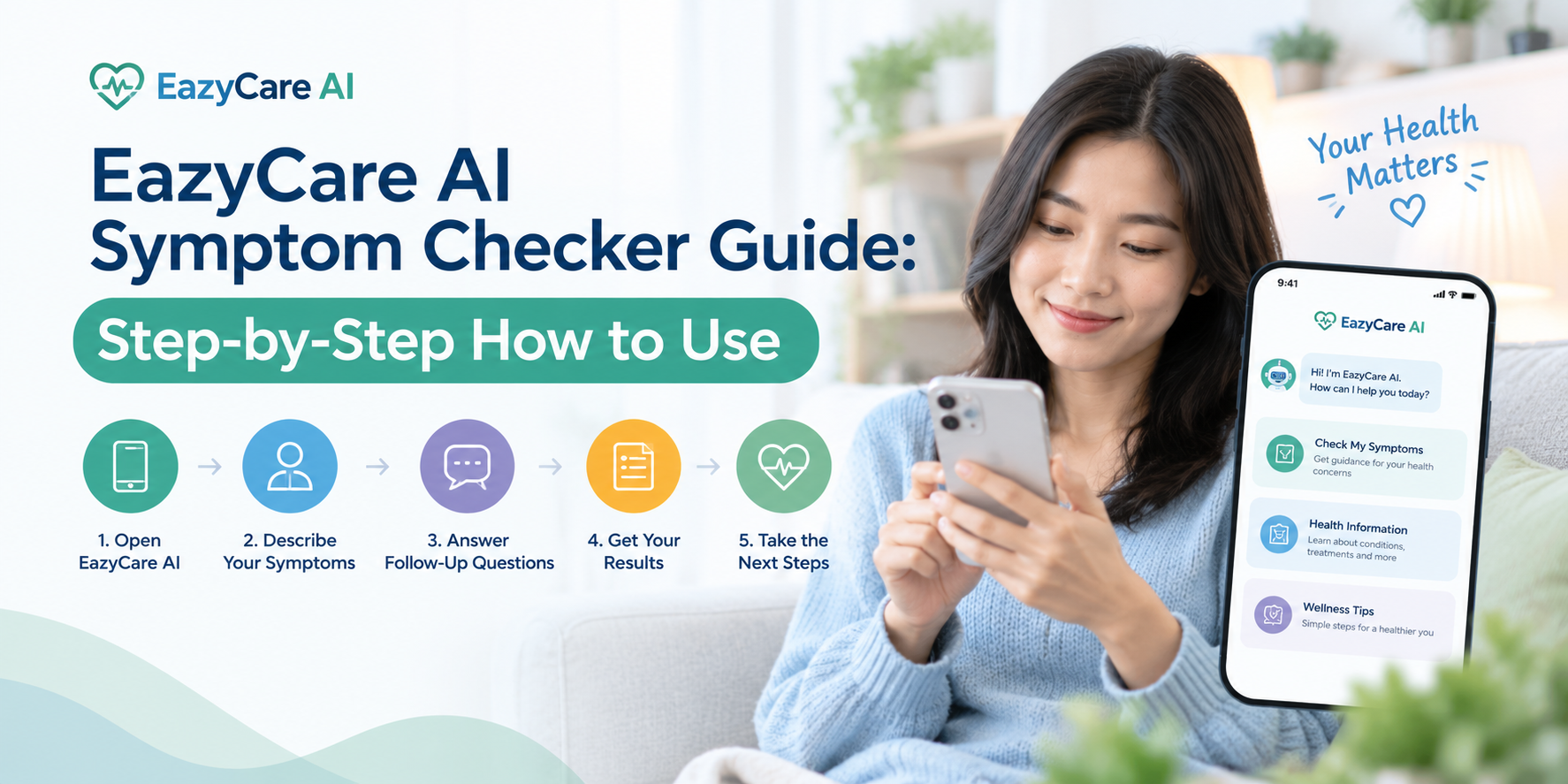
A family health management app AI platform helps caregivers coordinate appointments, medications, and records for multiple family members in one secure digital space. It uses artificial intelligence to predict health risks, send reminders, and flag medication conflicts across generations. In Southeast Asia, where 71% of households have at least one member with a chronic condition requiring ongoing monitoring, such tools are becoming essential for everyday care.
Key Takeaways
- AI-powered family health apps centralize medical records, appointments, and medication schedules for every household member in one place.
- Multi-generational coordination features address the unique needs of Southeast Asian families, including language preferences and shared caregiving responsibilities.
- Privacy controls and integration with national systems like MySejahtera are critical when choosing a family health management app.
Introduction: The Hidden Burden of Family Health Coordination
Every morning, millions of parents across Southeast Asia juggle the same silent routine: checking on an elderly parent's blood pressure, reminding a teenager to take their asthma medication, and trying to remember when the baby's next vaccination is due. This mental load is real — and it is growing. According to the World Health Organization, 71% of Southeast Asian households have at least one member with a chronic condition that requires ongoing monitoring, from diabetes to hypertension. Yet most families still rely on scattered paper records, separate clinic visits, and memory to manage it all.
The result is predictable: missed appointments, duplicated tests, dangerous drug interactions, and caregiver burnout. A 2023 study from the National University of Singapore found that families using a centralized health tracking app reduced missed appointments by 34% and reported significantly lower stress levels among primary caregivers. The challenge is not a lack of health information — it is the absence of a single, intelligent system that understands the family as one unit.
This article explains how a family health management app AI solution can transform care coordination for Southeast Asian families. It covers the essential features to look for, the role of predictive AI in preventing health crises, and how to protect your family's sensitive data. EazyCare AI serves as a health information companion that helps families navigate these decisions with confidence.
Discover how EazyCare AI protects your health data with advanced encryption and compliance.
A family health management app AI platform is not just a digital medical record. It is a proactive care coordinator that learns each family member's baseline health, detects anomalies early, and suggests actions — from medication reminders to vaccination schedules — before small issues become emergencies.
Why Family Health Management Fails Without a Centralized App
Most Southeast Asian families operate on a patchwork system. A mother keeps her children's vaccination cards in a folder, her father's lab results are saved as photos on her phone, and her husband's medication list lives in a drawer at his clinic. This fragmented approach creates three specific failure modes: information silos, timing gaps, and decision fatigue.
Information silos mean that the cardiologist treating your father does not know about the herbal supplements your aunt gives him. Timing gaps occur when a prescription runs out on a weekend and the clinic is closed. Decision fatigue happens when a caregiver must remember which child needs a flu shot this month and which parent needs a HbA1c test. A centralized health tracking app eliminates these problems by making every family member's health data visible, searchable, and actionable in one interface.
The Cost of Fragmented Care
Research published in PubMed shows that patients who use AI-powered health reminders have 42% higher medication adherence rates compared to those without. For a family managing three or more chronic conditions, that improvement translates directly into fewer emergency visits and hospitalizations. In Singapore, a 2022 study found that poorly coordinated care among elderly patients with diabetes cost the health system an estimated SGD 1.2 billion annually in avoidable complications.
Practical takeaway: If you are still managing health information across multiple apps, paper notes, and memory, you are already at risk of a critical gap. A family health management app AI solution consolidates everything into a single source of truth.
For families in Malaysia, Thailand, and the Philippines, the need is even more acute because of the prevalence of multi-generational living. When three generations share a household, health data comes from different clinics, different languages, and different levels of digital literacy. A centralized app must accommodate these differences — which is exactly what modern platforms like EazyCare AI are designed to do. Learn more about how EazyCare AI works for families at EazyCare AI chat.
What to Look for in a Family Health Management App
Not all health apps are created equal. A family health management app AI platform must offer more than a simple checklist. It needs to be a robust ecosystem that supports multiple users, multiple conditions, and multiple care settings. Here are the non-negotiable features to evaluate before you commit your family's health data to any platform.
Multi-Profile Support with Granular Permissions
The app must allow you to create a separate profile for each family member — from a newborn to a grandparent — and switch between profiles in seconds. But more importantly, it must let you control who sees what. A teenager may not want their parents to see every mental health check-in, while an elderly parent may need their adult child to manage all their medications. Look for role-based access controls that balance convenience with privacy.
AI-Powered Reminders and Predictive Alerts
The best AI health app for families does not just remind you to take a pill. It learns patterns. For example, if your mother's blood pressure readings have been trending upward for a week, the app can alert you to schedule a doctor visit before a hypertensive crisis occurs. It can also detect conflicts between medications prescribed by different doctors — a common problem when a family sees multiple specialists.
| Feature | Basic Health App | AI-Powered Family App |
|---|---|---|
| Medication reminders | Manual alarms | Automatic, with refill alerts and interaction checks |
| Appointment tracking | Single calendar | Shared family calendar with travel time and prep |
| Health records | Static PDFs | Searchable, trended, AI-analysed |
| Multi-user support | Limited | Full profiles with permission controls |
Practical takeaway: When comparing options, ask specifically how the app handles medication interactions across different family members. This is where AI adds the most value.
Another critical feature is language support. Southeast Asia is linguistically diverse — a family in Kuala Lumpur might speak Bahasa Malaysia, Mandarin, and English at home. A Southeast Asia family health app must offer multilingual interfaces and culturally appropriate health guidance. EazyCare AI's platform supports multiple languages and is built with regional health systems in mind. Explore the platform at EazyCare AI for doctors and clinics.
How AI Predicts and Prevents Health Issues Across Generations
Artificial intelligence in health apps is often misunderstood as a replacement for doctors. In reality, its most powerful role is predictive — identifying small changes that humans tend to miss. For a family managing multiple health conditions, this predictive capability can be the difference between a routine check-up and an emergency room visit.
Consider the example of an elderly grandfather with type 2 diabetes. His glucose readings have been slightly elevated for two weeks. A standard tracking app would simply record the numbers. An AI-powered family health management app AI system, however, compares his recent readings against his historical baseline, his medication schedule, and even the weather (which can affect blood sugar). It then sends a gentle notification: "Your father's average glucose has increased 15% this week. Consider reviewing his diet or consulting his doctor."
Predicting Missed Appointments and Medication Gaps
Missed appointments are a major problem in Southeast Asian healthcare systems, with no-show rates ranging from 15% to 30% in some public hospitals. AI can predict which appointments are most likely to be missed based on factors like previous attendance, distance to the clinic, and the day of the week. The app then sends targeted reminders or suggests rescheduling before the slot is wasted.
Similarly, AI can forecast medication gaps. If a prescription has 7 days of supply left and the clinic is closed on the day it runs out, the app will alert the caregiver to request a refill early. This is especially valuable for families with elderly members who depend on daily maintenance medications for blood pressure, cholesterol, or thyroid conditions.
"The most dangerous moment in family health management is the silence between appointments. AI fills that silence with continuous, intelligent monitoring."
— EazyCare AI Editorial Team
Practical takeaway: Choose an app that does more than store data. Look for one that actively monitors trends and sends you proactive alerts about potential health risks.
For working parents, this means fewer sick days and fewer last-minute scrambles. For adult children caring for aging parents, it means peace of mind even when they are in another city. The AI does not replace human judgment — it augments it with pattern recognition that no human memory can match. To see how AI-driven insights work in practice, visit EazyCare AI's approach.
Managing Medications and Appointments for the Whole Household
One of the most stressful parts of family care is managing multiple medication schedules. A typical family might have a child on antibiotics, a mother on prenatal vitamins, and a grandfather on three different chronic disease medications. Keeping these straight requires a system that is both reliable and easy to use.
An AI-powered health reminders for family system solves this by creating a unified medication schedule that accounts for each person's prescriptions, dosages, and timing. It can also check for interactions between medications taken by the same person — and even between different family members if they share a medicine cabinet. For example, if both your father and your uncle are prescribed the same blood thinner, the app can flag the risk of double dosing if they accidentally take each other's pills.
Step-by-Step: Setting Up Medication Reminders for a Multi-Generational Family
Create profiles for each family member. Include age, weight, allergies, and current medications. The more accurate the data, the better the AI predictions.
Set up medication schedules. Enter the drug name, dosage, frequency, and special instructions (e.g., "take with food"). The app will generate reminders automatically.
Add appointment dates. Sync the app with your family calendar or manually enter upcoming clinic visits, lab tests, and vaccination dates.
Enable escalation alerts. If a medication is not marked as taken within 30 minutes of the reminder, the app can notify a designated caregiver — useful for elderly parents who may forget.
According to a 2023 study in the Journal of Medical Internet Research, families using AI-powered reminders reported a 42% higher medication adherence rate compared to those using paper charts or basic alarms. This is not just a convenience — it is a clinical intervention that prevents hospitalizations.
Practical takeaway: Use the app's escalation feature to ensure that no dose is missed, even when you are not physically present to remind your parents or children.
For families with young children, the app can also track growth milestones and vaccination schedules. In Malaysia, for example, the National Immunisation Programme recommends over 10 vaccines before age 2. Missing a single dose can leave a child vulnerable to preventable diseases. A centralized health tracking app ensures that no vaccination date slips through the cracks.
Privacy, Security, and Data Sharing in Multi-User Health Apps
The most common concern families have about using a health app is privacy. How do you know that your mother's diabetes data will not be sold to insurance companies? What happens if your child's health records are exposed in a data breach? These are legitimate questions that deserve clear answers.
First, look for apps that comply with the Personal Data Protection Act (PDPA) in Malaysia, the Personal Data Protection Act in Singapore, and similar regulations across Southeast Asia. The app should use end-to-end encryption for all data, both in transit and at rest. It should also allow you to export your data at any time — a feature known as data portability.
How to Control Who Sees What
Multi-user health apps must offer granular permission settings. For example, you might want to share your child's vaccination records with their school, but not with your employer. You might want your sister to see your mother's medication list, but not her mental health notes. The best apps let you set these permissions for each individual record.
Another important feature is the ability to create "care circles" — groups of trusted family members who can view and manage a loved one's health data. This is particularly useful for adult children who live abroad and need to coordinate with a local caregiver. The app should log every access, so you can see who viewed what and when.
Be wary of health apps that ask for unnecessary permissions, such as access to your contacts, photos, or location when it is not required for the app's core function. Legitimate apps will ask for the minimum data needed to provide the service.
Practical takeaway: Before entering any personal health information, read the app's privacy policy carefully. Look for a commitment not to sell your data to third parties, and check whether the app has been audited by an independent security firm.
EazyCare AI takes a privacy-first approach. The platform is designed to give families full control over their data, with transparent policies and robust security measures. For more details, visit EazyCare AI's security page.
Integrating with Southeast Asia's National Health Systems
One of the biggest gaps in existing family health apps is the lack of integration with national health systems. In Malaysia, for example, the MySejahtera app is the official platform for COVID-19 vaccination records and contact tracing. In Singapore, HealthHub provides access to public healthcare records. A truly useful family health management app AI solution should be able to connect with these systems, allowing you to pull in official records and push reminders back.
Why does this matter? Because manual data entry is error-prone. If you have to type in your father's vaccination record from MySejahtera, you might make a typo. If the app can automatically sync with the national system, the data is accurate and up to date. Some apps are already using APIs to enable this integration, but it is still rare in Southeast Asia.
The Future of Interoperability
The WHO's Digital Health Strategy for Southeast Asia 2023-2027 calls for greater interoperability between health apps and national systems. As this vision becomes a reality, families will be able to share their health data seamlessly across clinics, hospitals, and national registries. This will reduce redundant tests, improve diagnosis, and enable better long-term care.
For now, look for apps that at least allow you to export and import data in standard formats like FHIR (Fast Healthcare Interoperability Resources). This ensures that your family's data is not locked into a single vendor. You should also check whether the app can generate a summary report that you can share with a doctor during a consultation.
Practical takeaway: Choose a family health app that supports integration with at least one national health system in your country. This will save you hours of manual data entry and reduce the risk of errors.
As the ecosystem matures, EazyCare AI is committed to supporting these integrations. The platform already helps families in Malaysia, Singapore, and Thailand manage their health information, with plans to expand interoperability with national systems. Learn more about how EazyCare AI is building for the region at EazyCare AI for clinics.
Frequently Asked Questions
How do I keep track of my whole family's medical appointments in one place?
Use a family health management app AI platform that offers a shared family calendar. You can add each member's appointments, set reminders, and receive notifications when a visit is approaching. The app should also allow you to colour-code appointments by family member and sync with your personal calendar.
Can an AI app help with managing different health conditions for each family member?
Yes. An AI health app for families can create individual profiles for each member, each with their own conditions, medications, and care plans. The AI monitors each profile independently and can send tailored alerts, such as when a blood pressure reading is out of range or when a child's asthma medication needs a refill.
What's the best way to store my family's medical history digitally?
The best way is to use a centralized health tracking app that supports document uploads, such as PDFs and photos of lab results. Organize documents by family member and date, and use the app's search function to find specific records quickly. Ensure the app uses encryption and lets you export your data.
Is it safe to share health data between family members in a health app?
It is safe if the app uses end-to-end encryption and offers granular permission controls. You should be able to decide who can view each piece of data, and the app should log all access. Avoid sharing sensitive information like mental health records unless the app allows you to restrict access to specific individuals.
How can I set up medication reminders for my elderly parents and kids in the same app?
Create a profile for each person and enter their medications with dosages and times. The app will send reminders to each person's phone, or to a shared caregiver's phone if the elderly parent does not use a smartphone. You can also set up escalation alerts to notify you if a dose is missed.
Does AI in health apps actually reduce doctor visits for families?
Yes, but not in the way you might think. AI reduces unnecessary visits by helping families manage chronic conditions at home and by flagging issues early before they become serious. A 2023 study found that families using AI-powered health reminders had 42% higher medication adherence, which leads to fewer complications and fewer emergency visits.
What features should I look for in a family health management app?
Look for multi-profile support, medication and appointment reminders, AI-powered health insights, data encryption, and integration with national health systems. Also consider language support and the ability to share access with multiple caregivers. EazyCare AI's symptom checker can help you assess whether a symptom needs medical attention.
How do I ensure my family's health data is protected in an AI-powered app?
Choose an app that complies with local data protection laws, uses strong encryption, and has a clear privacy policy. Enable two-factor authentication and review the app's data-sharing settings. You should also be able to delete your family's data permanently if you decide to stop using the app.
Can I connect my family's health devices like smartwatches to one app?
Many family health apps support integration with popular fitness trackers and smartwatches. This allows you to see everyone's activity, heart rate, and sleep data in one dashboard. Check the app's compatibility with your devices before committing, and ensure that the data syncs automatically and securely.
How do family health apps handle emergency alerts for different members?
Advanced apps let you set up emergency contacts and health conditions for each family member. In an emergency, you can trigger an alert that sends your location and medical summary to designated contacts. Some apps also integrate with local emergency services, though this feature is still limited in Southeast Asia.
When to See a Doctor
While a family health management app AI platform can help you monitor symptoms and track trends, it cannot replace professional medical advice. Seek immediate medical attention if any family member experiences:
- Chest pain, shortness of breath, or difficulty breathing
- Sudden weakness, numbness, or difficulty speaking (possible stroke)
- High fever that does not respond to medication, especially in children under 3 months
- Severe abdominal pain that lasts more than an hour
- Uncontrolled bleeding or a deep wound
- Suicidal thoughts or signs of self-harm
Call 999 or go to the nearest emergency department if you experience any of these symptoms. Do not rely on an app to make emergency decisions.
If you are unsure whether a symptom is serious, EazyCare AI can help you decide whether you need urgent care. The AI symptom checker asks targeted questions and provides evidence-based guidance on the next steps.
Conclusion
Managing a family's health is one of the most complex responsibilities a person can take on. The good news is that technology has evolved to make it simpler. A family health management app AI platform can centralize records, predict risks, and coordinate care across generations — giving you back time and peace of mind.
Here are the three key takeaways:
- Centralization is non-negotiable. Keep all medical records, appointments, and medications in one secure app to avoid dangerous gaps in care.
- AI adds predictive power. Look for an app that does more than store data — it should alert you to trends and potential medication conflicts before they become emergencies.
- Privacy and integration matter. Choose a platform that protects your data and works with your country's national health systems, such as MySejahtera in Malaysia.
Your family's health is too important to manage with sticky notes and memory. Explore how EazyCare AI can help you take control of your family's health journey today. Learn more at eazycare.ai or chat with our AI health assistant.