Online doctor consultation Malaysia refers to a remote medical consultation conducted via video, phone, or chat between a patient and a registered medical practitioner. It allows Malaysians to receive diagnosis, treatment advice, and prescriptions without visiting a physical clinic. According to a 2020 study published in PubMed, telemedicine consultations achieved a 91% diagnostic accuracy rate for common acute infections compared to in-person visits.
Key Takeaways
- Online doctor consultations in Malaysia are legal, safe, and regulated under the Telemedicine Act 1997 and the Medical Act 1971.
- Doctors can issue MCs and prescriptions online, but controlled substances require in-person visits.
- Costs range from RM20 to RM150 for private telemedicine services, with some public sector options available for free or at low cost.
- Always verify a doctor's MMC registration and the platform's compliance with PDPA before booking.
Why Online Doctor Consultations Are Transforming Malaysian Healthcare
Imagine waking up with a high fever and a throbbing headache on a Sunday morning. The nearest clinic is closed, and the emergency room is packed with patients. For millions of Malaysians, the answer is now a smartphone. Online doctor consultations have moved from a niche convenience to a mainstream healthcare channel, accelerated by the COVID-19 pandemic and the rapid digitalisation of the country's health system.
The problem is not a lack of access to healthcare—Malaysia has a robust public health system—but rather a lack of convenient, timely access for non-emergency conditions. A 2023 survey by the Malaysian Digital Economy Corporation (MDEC) found that 78% of urban Malaysians have used some form of telehealth service. Yet many remain uncertain about the safety, legality, and practical limitations of consulting a doctor online.
This guide provides everything you need to know about online doctor consultations in Malaysia, from how they work and what they cost, to whether online doctors can issue MCs and prescriptions. It also addresses the legal differences between telemedicine and in-person visits, helping you make informed decisions. EazyCare AI, an AI-powered health information companion, supports this mission by helping patients navigate their symptoms before they book a consultation.
What Is an Online Doctor Consultation and How Does It Work in Malaysia?
An online doctor consultation is a medical appointment conducted remotely using digital communication tools. In Malaysia, this typically involves a video call, but some platforms also offer phone or chat-based consultations. The process is straightforward: you register on a telemedicine platform, provide your medical history and symptoms, pay a consultation fee, and are connected to a licensed doctor within minutes or hours.
According to the Ministry of Health Malaysia (MOH), telemedicine is defined as the practice of medicine using interactive audio-visual communication to diagnose and treat patients remotely. This definition aligns with the World Health Organization's (WHO) broader framework for telehealth, which includes remote diagnosis, monitoring, and health education. In practice, Malaysian telemedicine platforms operate under the Telemedicine Act 1997, which mandates that only registered medical practitioners can provide online consultations.
The Typical Consultation Flow
Most platforms follow a standardised flow. First, you create an account and enter your personal details, including your identification number and contact information. Next, you select a symptom category or describe your condition in a secure questionnaire. The platform then matches you with a doctor who reviews your information and initiates a video call. During the call, the doctor asks follow-up questions, performs a visual assessment, and may request additional information such as photos of a rash or your vital signs if you have a home monitoring device.
After the consultation, the doctor provides a diagnosis, treatment plan, and if appropriate, an electronic prescription sent directly to a partner pharmacy. The entire process typically takes 15 to 30 minutes, depending on the complexity of your condition. One key advantage is that online consultations eliminate travel time and waiting room queues, making healthcare accessible to those in rural areas or with mobility issues.
However, not all conditions are suitable for telemedicine. Acute infections like sinusitis, urinary tract infections, and skin conditions are commonly managed online. Chronic disease management, such as diabetes or hypertension follow-ups, can also be handled remotely if the patient has regular monitoring data. But emergencies, severe chest pain, or conditions requiring physical examination—like an acute abdomen or a suspected fracture—are not appropriate for online consultations.
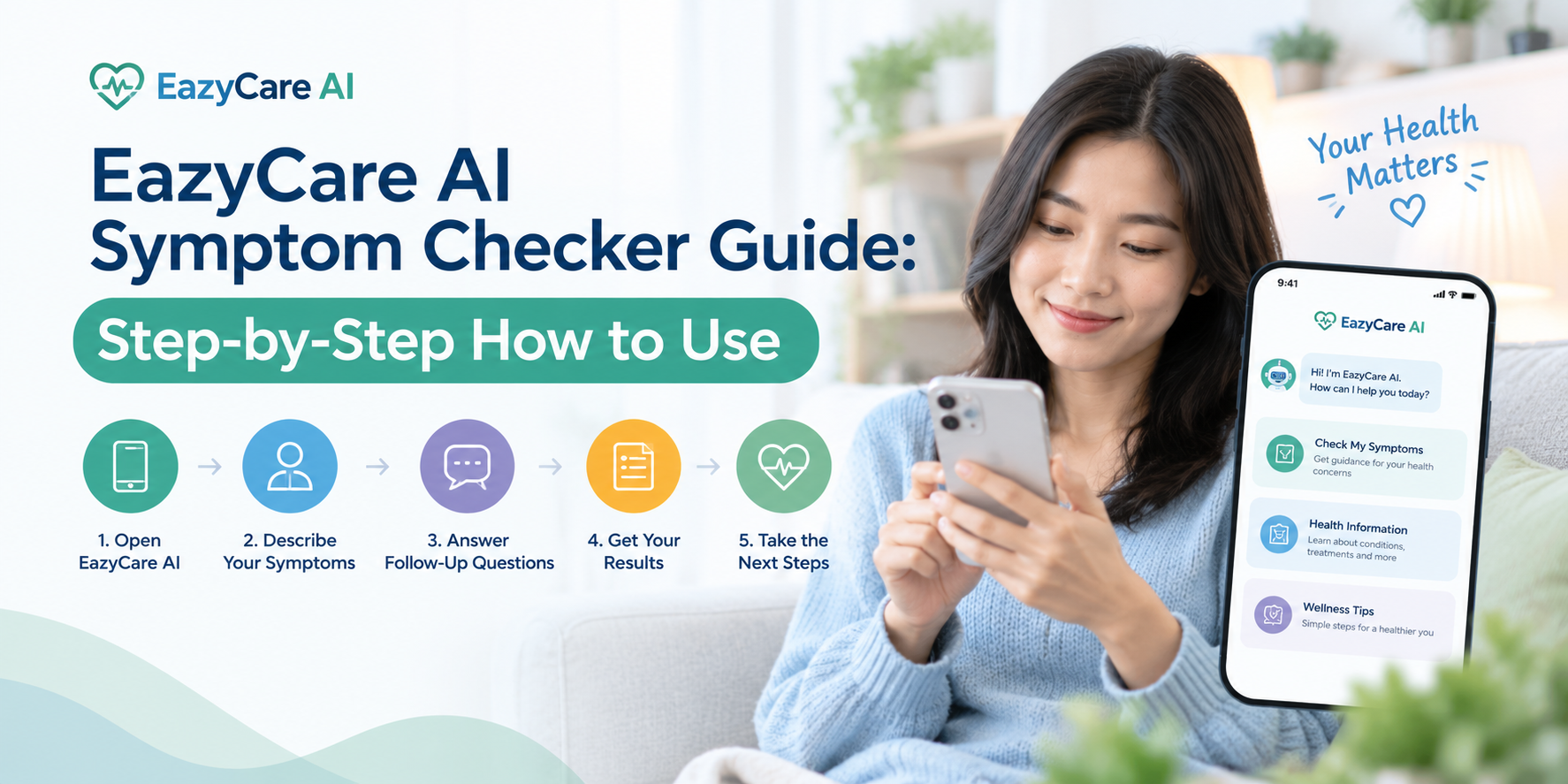
For those new to telemedicine, EazyCare AI's symptom checker can help you decide whether an online consultation is appropriate for your symptoms. It uses evidence-based algorithms to assess urgency and suggests whether you can safely consult a doctor online or should seek in-person care.
Understanding when to use AI-powered tools versus seeing a traditional doctor is key to making informed decisions.
Is an Online Doctor Consultation Safe? Evidence and Malaysian Regulations
Safety is the most common concern among patients considering online consultations. The short answer is yes, provided you choose a legitimate platform and the consultation is conducted by a registered medical practitioner. A 2020 study published in PubMed found that telemedicine consultations achieved a 91% diagnostic accuracy rate for common acute infections compared to in-person visits. This suggests that for straightforward conditions, online doctors can be just as effective as their in-person counterparts.
In Malaysia, the safety of telemedicine is governed by several layers of regulation. The Telemedicine Act 1997 sets the legal framework, while the Medical Act 1971 requires all doctors to be registered with the Malaysian Medical Council (MMC). The Personal Data Protection Act 2010 (PDPA) ensures that your medical records and personal information are protected. Reputable platforms also comply with the MOH's Guidelines on Telemedicine, which outline standards for clinical governance, patient consent, and data security.
How to Verify a Doctor's Credentials
Before booking an online consultation, always verify that the doctor is registered with the MMC. You can do this by visiting the MMC's official website and using the "Register of Practitioners" search function. Legitimate telemedicine platforms will display the doctor's full name, MMC number, and annual practising certificate (APC) on their profile. If this information is missing or cannot be verified, do not proceed with the consultation.
Beware of unlicensed platforms or individuals offering online consultations without proper credentials. In 2023, the MOH issued a public advisory against several unregistered telemedicine services operating on social media. Always check for the platform's registration with the MOH and the doctor's MMC status before sharing any personal health information.
Another safety consideration is the quality of the consultation itself. A legitimate online doctor will ask thorough questions, explain the diagnosis clearly, and provide a written summary of the consultation. They will also be transparent about the limitations of telemedicine and refer you for in-person care if your condition requires it. If a doctor refuses to provide their MMC number or pressures you to buy unnecessary medications, that is a red flag.
Data privacy is equally important. Ensure the platform uses end-to-end encryption for video calls and stores your medical records securely. Read the platform's privacy policy to understand how your data is used and whether it is shared with third parties. Under the PDPA, you have the right to access and correct your medical records, and any breach of this right can be reported to the Department of Personal Data Protection.
Can Online Doctors Issue MCs and Prescriptions in Malaysia?
One of the most frequently asked questions about online consultations in Malaysia is whether doctors can issue medical certificates (MCs) and prescriptions online. The answer is yes, with certain conditions. Under the Telemedicine Act 1997, a doctor can issue an MC if they have established a valid doctor-patient relationship through a proper consultation. This means the doctor must have conducted a thorough assessment of your condition, not just a cursory chat.
However, there are limitations. An MC issued online is generally valid for up to two days for a single episode of illness, although some doctors may issue longer certificates if clinically justified. Employers in Malaysia are increasingly accepting online MCs, but it is always wise to check with your human resources department first. Some companies, particularly those in the public sector, may still require a physical visit for sick leave claims.
Prescription Rules and Pharmacy Partnerships
Online doctors can prescribe a wide range of medications, including antibiotics, antivirals, and chronic disease medications. The prescription is sent electronically to a partner pharmacy, which then arranges delivery or pickup. This process is convenient, but it is important to note that not all medications can be prescribed online. Controlled substances, such as strong painkillers (e.g., morphine) and certain psychiatric medications, are strictly regulated and cannot be prescribed via telemedicine. Additionally, a prescription for a controlled substance must be written on a physical prescription pad and signed in person.
| Item | Online Consultation | In-Person Visit |
|---|---|---|
| Medical Certificate (MC) | Yes, up to 2 days per episode | Yes, can be longer if clinically justified |
| Prescription for common medications | Yes, sent electronically to partner pharmacy | Yes, physical prescription provided |
| Controlled substances | No, not permitted | Yes, with physical prescription |
| Referral to specialist | Yes, can be issued online | Yes, can be issued in person |
If a pharmacy refuses to accept an online prescription, it may be because the prescription lacks the doctor's digital signature or the pharmacy is not a registered partner. Reputable telemedicine platforms have partnerships with licensed pharmacies to ensure smooth fulfilment. Always ensure that the prescription includes the doctor's MMC number and the clinic's registration number to avoid issues.
For patients with chronic conditions, online doctors can also issue repeat prescriptions for maintenance medications, provided you have a recent diagnosis and are stable. However, the doctor may require you to undergo periodic blood tests or in-person check-ups to continue prescribing certain medications, such as insulin or anticoagulants.
How Much Does an Online Doctor Consultation Cost in Malaysia?
The cost of an online doctor consultation in Malaysia varies widely depending on the platform, the doctor's seniority, and the time of day. On average, a private telemedicine consultation costs between RM20 and RM150. Some platforms offer subscription plans that reduce the per-visit cost, while others charge a premium for after-hours consultations or specialist opinions.
For comparison, a typical in-person visit to a private clinic in Malaysia costs between RM50 and RM150, excluding medication. Public health facilities, on the other hand, charge a nominal fee of RM1 for outpatient care, but wait times can be long. Online consultations offer a middle ground: they are more expensive than public healthcare but often cheaper and more convenient than private in-person visits.
Insurance Coverage and Panel Clinics
Many private health insurers in Malaysia now cover telemedicine consultations. However, coverage varies by policy. Some insurers have partnered with specific telemedicine platforms, while others reimburse you for any online consultation with a registered doctor. It is essential to check with your insurer before booking to confirm whether the service is covered and what documentation you need to submit for reimbursement.
If you are covered under a corporate health plan, your employer may have a panel of approved telemedicine providers. Using a non-panel provider could result in higher out-of-pocket costs or no reimbursement. Always verify your coverage and panel status before your consultation to avoid unexpected bills.
| Provider Type | Typical Cost | Insurance Coverage |
|---|---|---|
| Private telemedicine platform | RM20 - RM150 | Varies by insurer; some covered |
| Public health facility (MOH) | RM1 - RM5 | Not applicable; government-subsidised |
| Corporate panel clinic | RM0 - RM50 (co-pay) | Yes, if panel provider |
It is also worth noting that some telemedicine platforms offer free or discounted consultations for first-time users. For example, EazyCare AI partners with several Malaysian clinics to provide affordable initial consultations. However, always read the terms and conditions to understand what is included in the fee, such as the number of follow-up messages or the cost of medication.
How to Choose a Legitimate Online Clinic in Malaysia
With the proliferation of telemedicine apps, choosing a legitimate online clinic can be overwhelming. The following steps will help you identify a safe and reliable provider.
Verify the platform's registration. Check that the platform is registered with the Ministry of Health Malaysia (MOH) and complies with the Telemedicine Act 1997. Look for a registration number in the website's footer or terms of service.
Check the doctor's MMC registration. Every doctor on the platform should have a publicly verifiable MMC number. Use the MMC's online register to confirm their credentials and ensure they have no disciplinary actions against them.
Review the privacy policy. Ensure the platform uses encryption and complies with the Personal Data Protection Act 2010. Your medical records should not be shared without your explicit consent.
Assess the pharmacy network. A legitimate platform will have partnerships with licensed pharmacies. Check that the pharmacy can deliver to your location and that the prescription includes all necessary details.
Read patient reviews. Look for reviews on independent platforms like the Google Play Store or the Apple App Store. Pay attention to comments about wait times, doctor communication, and prescription fulfilment.
By following these steps, you can minimise the risk of encountering an unlicensed or fraudulent telemedicine service. Remember that a legitimate online doctor will never pressure you into purchasing unnecessary tests or medications.
Telemedicine vs. In-Person Visits: Key Differences in Malaysia
Understanding the differences between telemedicine and in-person visits is crucial for making the right choice for your health. While both modes of care aim to provide quality medical treatment, they differ in terms of convenience, cost, and scope of practice.
Telemedicine excels in accessibility. You can consult a doctor from the comfort of your home, eliminating travel time and waiting room queues. This is particularly beneficial for individuals with mobility issues, those living in rural areas, or busy professionals with tight schedules. In contrast, in-person visits require physical travel and often involve longer wait times, but they allow for a comprehensive physical examination.
From a clinical perspective, certain conditions are better managed in person. A doctor may need to palpate your abdomen, listen to your lungs, or perform a throat swab—procedures that are impossible to conduct remotely. However, for many common ailments, such as colds, flu, urinary tract infections, and skin rashes, telemedicine is highly effective. The 91% diagnostic accuracy rate for acute infections, as cited earlier, supports this.
| Factor | Telemedicine | In-Person Visit |
|---|---|---|
| Convenience | High - no travel, 24/7 availability | Moderate - limited hours, travel required |
| Physical examination | Limited - visual assessment only | Comprehensive - hands-on examination |
| Cost | RM20 - RM150 | RM50 - RM150 (private) |
| MC issuance | Yes, up to 2 days | Yes, can be longer |
| Prescription | Electronic, no controlled substances | Physical, including controlled substances |
Another key difference is the legal framework. In Malaysia, telemedicine consultations are subject to the same standards of care as in-person visits, but the doctor must ensure that the remote consultation is appropriate for the patient's condition. If a doctor determines that an in-person visit is necessary, they are obligated to advise you accordingly. This is a critical safeguard that protects patients from misdiagnosis.
"The goal of telemedicine is not to replace in-person care, but to extend it to those who need it most. A responsible online doctor knows when to say 'you need to see me in person.'"
— Dr. Nurul Izzah, Telemedicine Specialist, Kuala Lumpur
Ultimately, the choice between telemedicine and in-person care depends on your symptoms, preferences, and access to services. For minor illnesses and follow-up consultations, telemedicine is an excellent option. For complex or chronic conditions, a hybrid approach—combining online consultations with periodic in-person visits—is often the most effective strategy.
Frequently Asked Questions
Is online doctor consultation safe?
Yes, online doctor consultations are safe when conducted by a registered medical practitioner on a legitimate platform. A 2020 PubMed study found a 91% diagnostic accuracy rate for common acute infections via telemedicine. Always verify the doctor's MMC registration and the platform's compliance with Malaysian regulations.
Can online doctors give MC in Malaysia?
Yes, online doctors can issue MCs in Malaysia, but they are typically limited to two days per episode of illness. Employers may have specific policies, so it is advisable to check with your HR department. The MC must be issued after a proper consultation, not just a chat.
How much does an online doctor consultation cost in Malaysia?
The cost ranges from RM20 to RM150 for private telemedicine services. Some platforms offer subscription plans or first-time discounts. Public health facilities charge as little as RM1, but wait times are longer. Insurance coverage varies, so check with your provider.
Can online doctors prescribe medication?
Yes, online doctors can prescribe a wide range of medications, including antibiotics and chronic disease medications. However, controlled substances such as strong painkillers cannot be prescribed online. Prescriptions are sent electronically to partner pharmacies for delivery or pickup.
What happens during an online doctor consultation?
You will be asked to describe your symptoms, provide your medical history, and answer follow-up questions. The doctor may ask you to show visual symptoms, such as a rash, via video. After the assessment, you will receive a diagnosis, treatment plan, and if needed, an electronic prescription.
How do I choose a legitimate online doctor?
Verify the doctor's MMC registration on the Malaysian Medical Council's website. Ensure the platform is registered with the MOH and has a clear privacy policy. Read patient reviews and check if the platform partners with licensed pharmacies. Avoid services that pressure you into unnecessary purchases.
Are online doctor consultations covered by insurance or panel clinics?
Many private insurers cover telemedicine, but coverage varies by policy. Some insurers have partnerships with specific platforms, while others reimburse any registered doctor. If you have a corporate health plan, check if your employer has a panel of approved telemedicine providers.
Do online doctors work for skin conditions and minor illnesses?
Yes, online doctors commonly treat skin conditions like rashes, eczema, and acne, as well as minor illnesses such as colds, flu, and urinary tract infections. Visual assessment via video is often sufficient. However, if a condition requires a biopsy or laboratory test, an in-person visit may be necessary.
What is the difference between telemedicine and telehealth?
Telemedicine refers specifically to clinical services provided remotely, such as consultations and diagnoses. Telehealth is a broader term that includes non-clinical services like health education, remote monitoring, and administrative meetings. In Malaysia, telemedicine is a subset of telehealth.
How do I prepare for an online doctor consultation?
Find a quiet, well-lit space with a stable internet connection. Have your identification, insurance card, and a list of current medications ready. Write down your symptoms, including when they started and any triggers. Be prepared to show visual symptoms via your camera.
When to See a Doctor
While online consultations are convenient, certain symptoms require immediate in-person or emergency care. Do not rely on telemedicine for the following red flags:
- Chest pain or pressure, especially if accompanied by shortness of breath, sweating, or nausea.
- Difficulty breathing or a bluish tint to the lips or face.
- Sudden severe headache, confusion, or difficulty speaking.
- Uncontrolled bleeding or a deep wound that may require stitches.
- Severe abdominal pain that does not subside.
- Seizures or convulsions.
- Signs of anaphylaxis, such as swelling of the face, throat, or tongue.
Call 999 or go to the nearest emergency department if you experience any of these symptoms. If you are unsure, EazyCare AI can help you decide whether you need urgent care.
Conclusion
Online doctor consultations have revolutionised access to healthcare in Malaysia, offering a safe, convenient, and cost-effective alternative to in-person visits for many conditions. By understanding how telemedicine works, verifying the credentials of your doctor, and being aware of the limitations, you can make informed decisions about your health.
- Always verify that the platform and doctor are registered with the relevant authorities, such as the MOH and MMC.
- Understand the scope of online consultations—they are ideal for minor illnesses and follow-ups, but not for emergencies or conditions requiring physical examination.
- Be aware of the costs and insurance coverage, and always ask for a written summary of your consultation.
As telemedicine continues to evolve, it is essential to stay informed about your rights and options. Whether you are managing a chronic condition or seeking treatment for a minor ailment, online consultations offer a flexible and reliable pathway to care. Learn more at eazycare.ai or chat with our AI health assistant to get started.