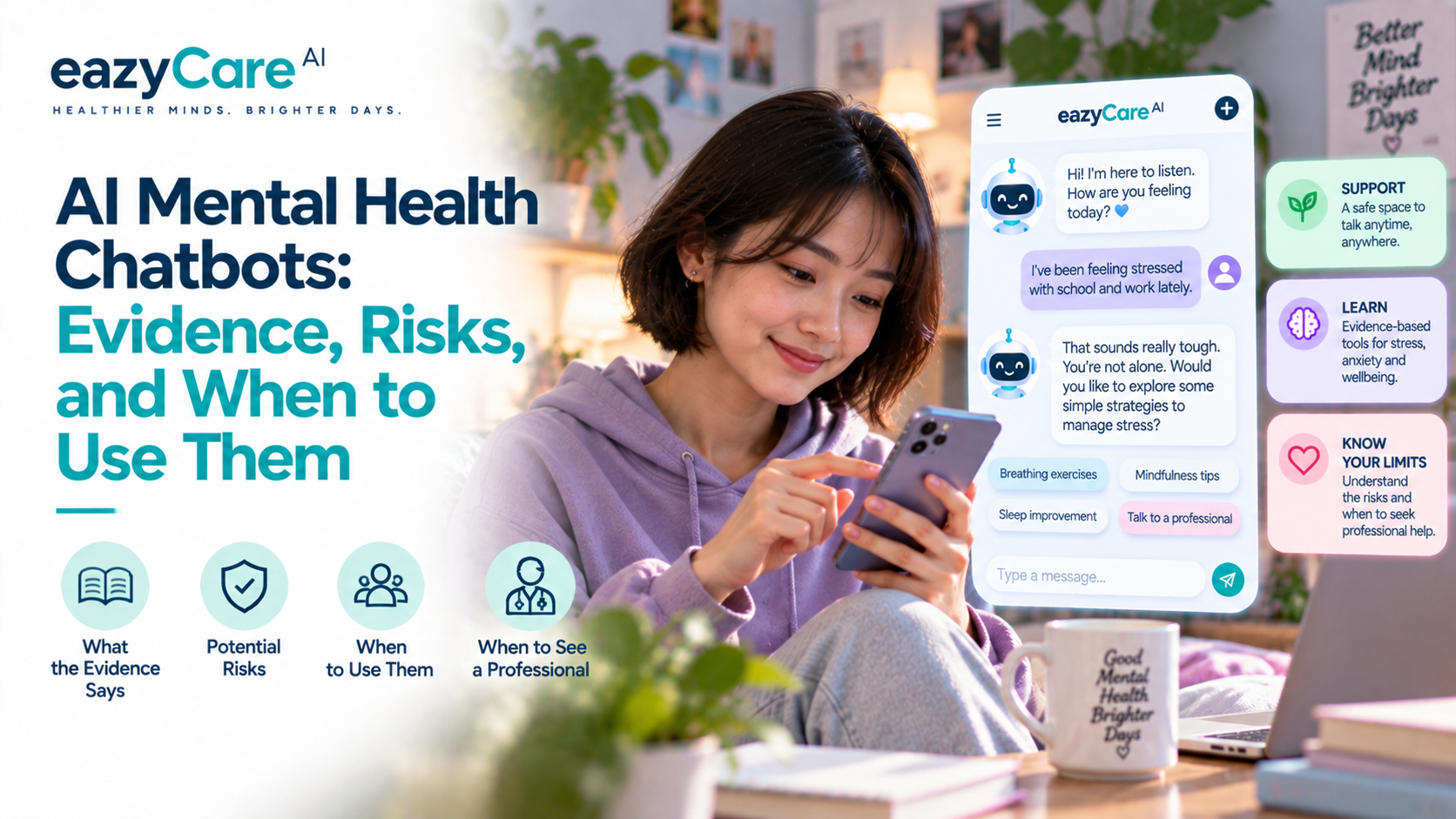
Millions of people now type their symptoms into a general-purpose AI chatbot before they speak to anyone medical. Used well, it can turn a vague worry into a clear set of questions for a doctor. Used badly, it produces confident, fluent, wrong answers — and delays the appointment that mattered. The difference is almost entirely in how you ask, and in knowing what these tools structurally cannot do.
Key Takeaways
- A general-purpose chatbot is not a symptom checker. It was built to produce plausible text, not to triage illness, and it has no clinical safety design behind it.
- Even purpose-built symptom checkers are weak diagnosticians. An evaluation of 23 of them published in BMJ found the correct diagnosis was listed first only about a third of the time, though urgency advice was considerably better.
- The four failure modes to plan around are confabulation, the absence of any physical examination, training data skewed towards Western illness patterns, and a tendency to agree with however you framed the question.
- Ask it to prepare you for a consultation rather than to replace one. "What would a doctor want to know about this?" is a far safer prompt than "what do I have?"
- Consumer chatbots are not bound by the duty of care that applies to a clinic. Assume anything you paste may be retained, and leave out identifiers.
Why People Ask a Chatbot First
The reasons are rarely about technology. A consultation costs money and half a day. Some symptoms are embarrassing to describe to a stranger. In much of Southeast Asia the nearest clinic with a short queue is not the nearest clinic. And a chatbot answers at two in the morning, in your own language, without making you feel foolish for asking.
Those are legitimate needs, and dismissing them has not worked. Research on symptom-checking tools consistently finds that people value them for deciding whether to seek care: a study published in the Journal of Medical Internet Research reported that around 70% of users found such tools helpful for making that decision. The useful question is not whether people will use AI for health questions. They already do. It is how to make that habit safer.
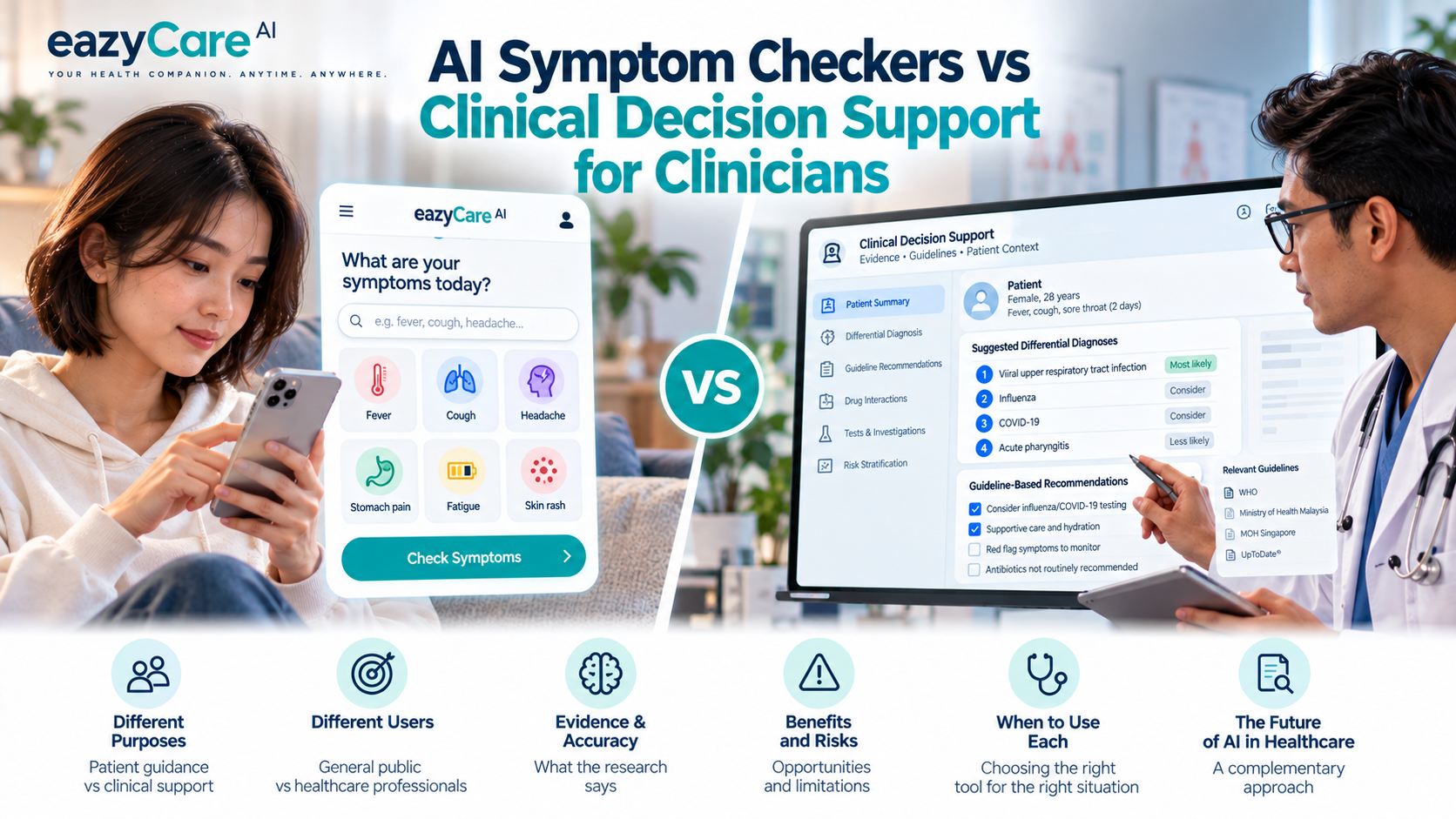
It is worth being precise about what you are using, though. A purpose-built symptom checker asks a fixed sequence of clinical questions and is designed to err towards caution. A general assistant like ChatGPT, Gemini or Claude has no such structure — it is a language model that will discuss your symptoms as readily as it will discuss anything else. The distinction matters, and it is explored further in our comparison of symptom checkers and clinical decision support.
What These Tools Are Genuinely Good At
Language models are strong at exactly one thing relevant here: turning medical language into plain language, and back again. That is more useful than it sounds.
- Explaining terminology. If a discharge summary says "no focal neurological deficit" or a result is flagged as "mildly elevated ALT", a chatbot will explain what the phrase means in general terms. This is reference work, not diagnosis.
- Preparing for an appointment. Ask it what a clinician would typically want to know about a given complaint and you will arrive with duration, triggers, and relevant history already organised. Consultations are short; arriving prepared buys you minutes of actual discussion.
- Translating. For patients navigating a system in a second or third language, having terminology explained in their first language before the visit reduces a real barrier.
- Understanding what you were told. After a consultation, when you have forgotten half of it, asking for a general explanation of a named condition or test is reasonable — provided you treat the clinician's version as authoritative.
If your question is "what does this word mean?", a chatbot is a reasonable place to ask. If your question is "is this serious?", it is not. The first is a language task. The second requires examining you.
The Four Ways It Goes Wrong
These are not bugs awaiting a patch. They follow from how the tools are built, so the practical response is to work around them rather than wait for them to be fixed.
Confabulation
A language model generates text that is statistically likely, which is not the same as text that is true. It will invent plausible mechanisms, misstate how common a condition is, and — notoriously — produce citations to papers that do not exist. The failure is dangerous precisely because the tone never changes: an invented answer reads exactly as confidently as a correct one. If a chatbot gives you a reference, open it before you believe it.
No physical examination
Much of general practice is not verbal. A clinician notices that you look unwell, that your breathing is shallow, that your abdomen is rigid on palpation, that your ankle is swollen on one side only. None of that reaches a text box. This is the single largest gap between any AI tool and a consultation, and it is why "it said I was probably fine" carries so little weight.
Training data skewed elsewhere
These models learned mostly from English-language sources describing illness in North America and Europe. For a reader in Malaysia, Indonesia, Thailand or the Philippines, that matters: a week of fever prompts a different differential here than in a temperate country, because dengue, typhoid, leptospirosis and malaria are genuinely on the list. A general chatbot may not weight them appropriately, and may not know to ask about mosquito exposure, recent flooding, or travel within the region.
Agreeing with you
Models are tuned to be helpful and agreeable, which in a medical context is a hazard. Ask "could this just be stress?" and you will often be told that yes, it could well be stress. Ask "could this be something serious?" about the same symptoms and the answer shifts. The tool is responding to your framing, not assessing you. That makes false reassurance the most likely way it causes harm, a risk also discussed in our piece on when to trust an AI symptom checker.
An audit of 23 symptom checkers published in BMJ found the correct diagnosis appeared first in roughly a third of cases, while advice on how urgently to seek care was right far more often. The lesson generalises: these tools are more reliable about how soon than about what. Treat any named condition as a hypothesis, not a finding.
How to Phrase the Question
Most of the risk is in the prompt. Four habits meaningfully improve what you get back.
Describe before you ask. Write down what you are experiencing before you open the chatbot: when it started, whether it is constant or comes and goes, what makes it better or worse, what else changed around the same time, and any conditions or medicines you already have. Writing it out first stops you unconsciously shaping the description towards the answer you are hoping for.
Ask for questions, not answers. "What would a doctor want to know about these symptoms, and what examinations or tests would they usually consider?" This plays to the tool's strength and produces something you can actually take to an appointment. Avoid "what do I have?", which invites exactly the confident guess you should not rely on.
Ask what it cannot tell. A direct prompt — "what about this would require a physical examination or a test to determine?" — reliably produces a useful list of the gaps. It also punctures any false sense that the conversation settled anything.
Do not lead it. Ask neutrally. If you have a theory, keep it to yourself until the end, then ask what evidence would argue against it. A model asked to argue against a hypothesis behaves far more usefully than one asked to confirm it.
What You Are Handing Over
A clinic that holds your medical record operates under a duty of care and, in Malaysia, under the Personal Data Protection Act; comparable regimes apply across the region. A consumer chatbot is a different relationship. Data protection law still applies to the operator, but you are not its patient, the transcript is not a medical record, and depending on your settings your conversation may be retained and used to improve the service.
Practical precautions:
- Leave out your full name, IC or NRIC number, passport number, address, and insurance or policy numbers. None of them improve the answer.
- Check the settings before you start. Most major assistants let you turn off chat history and training on your conversations; it is usually not the default.
- Be deliberate about uploading photographs of documents or of your body. Images carry metadata, and a letterhead identifies you and your clinician.
- Prefer describing a result to pasting the whole report. "A liver enzyme is slightly above the reference range" gets the same explanation as a full document with your name on it.
Our guide to what health apps collect goes into the permissions question in more detail, and the same scepticism applies here.
Putting It Together
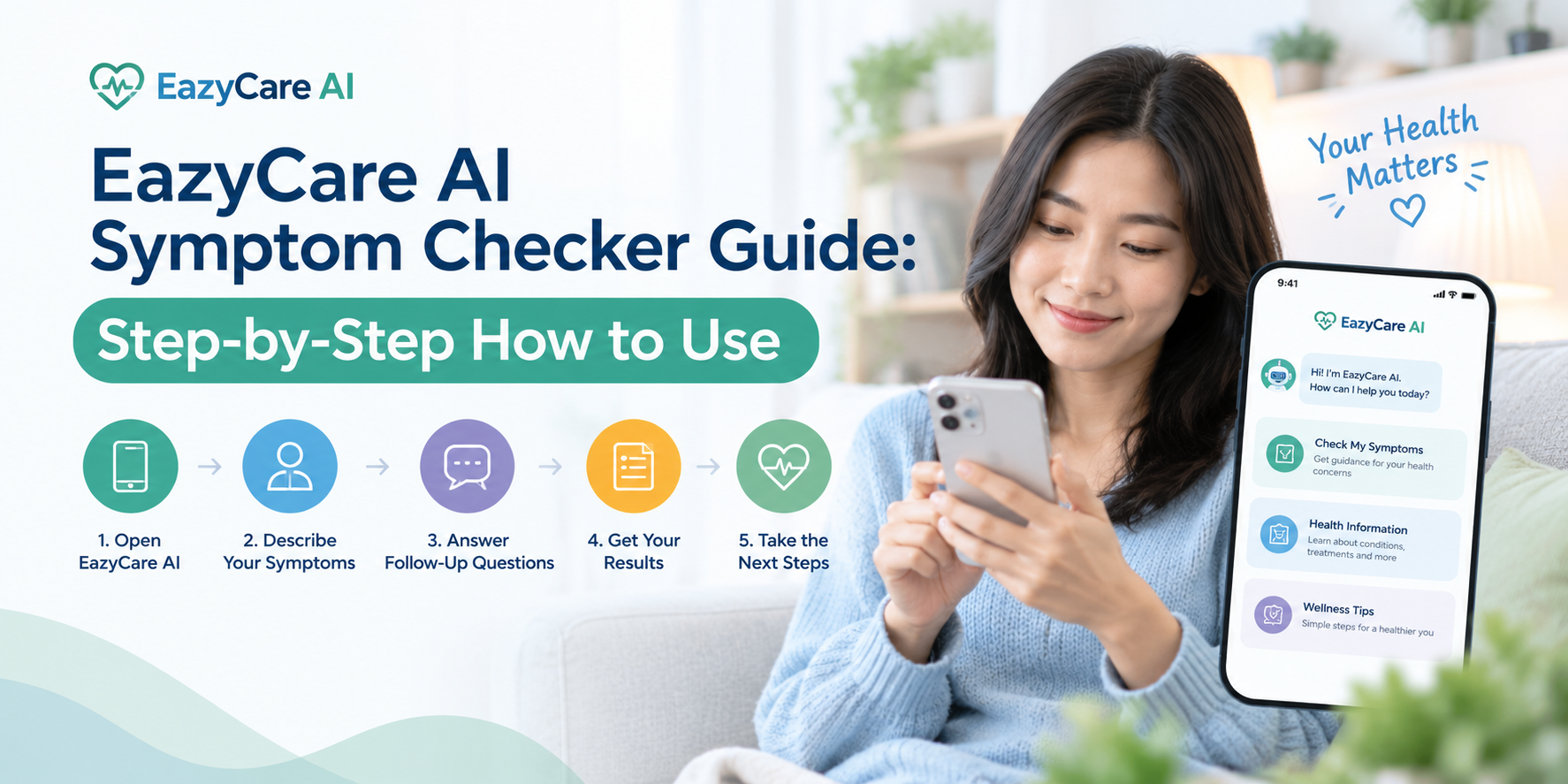
A sequence that keeps the tool in the role it is good at:
- Write your symptoms down in your own words, unprompted.
- Check the red flags below yourself, before any chatbot is involved. This step is not delegated.
- Use the AI to build a question list for your appointment, and to explain any terminology you have been given.
- Verify anything factual that would change your behaviour, against a health authority or a clinician — not against the same chatbot.
- See a GP and treat their assessment as the answer. If the chatbot said something different, mention it; do not act on it.
Notice that nothing in that sequence asks the tool to decide anything. That is the point. For a fuller discussion of where the boundary sits, see whether AI can replace a doctor.
When to See a Doctor
No AI tool, general or purpose-built, should be in the loop when any of the following is present. These need assessment now, not research.
- Chest pain or pressure, particularly spreading to the arm, jaw or back
- Difficulty breathing, or breathlessness at rest
- Sudden severe headache, described as the worst you have had
- Weakness, numbness or drooping on one side of the face or body, or sudden difficulty speaking
- Confusion, a seizure, or reduced consciousness
- Fever with a stiff neck, a rash that does not fade under pressure, or persistent vomiting
- Fever that does not settle, especially with bleeding gums, nosebleeds, or severe pain behind the eyes — in dengue-endemic areas this warrants same-day review
- Signs of dehydration: no urine for eight hours, dry mouth, dizziness on standing
- Any new symptom alongside an existing diagnosis of diabetes, heart disease, asthma or immunosuppression
Call 999 or go to the nearest emergency department if you have chest pain, difficulty breathing, signs of stroke, a seizure, uncontrolled bleeding, or if someone becomes unresponsive. Do not spend that time typing into a chatbot.
Common Questions
Can a general AI chatbot diagnose me?
No, and it is not built to. It generates likely text from the words you give it, with no examination, no tests, and no responsibility for the outcome. It can describe conditions that are associated with a set of symptoms, which is a different thing from determining which one you have. Treat anything it names as a question to raise with a clinician, not as a finding. A GP can confirm this properly.
Is a purpose-built symptom checker better than ChatGPT for this?
For deciding how urgently to seek care, generally yes — a dedicated checker asks a structured sequence of clinical questions and is usually designed to err towards caution, whereas a general assistant has no such safety design and will follow your conversational lead. For explaining terminology or preparing questions for an appointment, a general assistant is often more useful. They are different tools for different jobs.
Why does it give me a different answer when I rephrase the question?
Because it is responding to your wording rather than assessing you. These models are tuned to be agreeable, so a question that hints at a reassuring answer tends to get one. This is the most important reason not to use a chatbot to decide whether something is serious: you can steer the conclusion without intending to. Ask neutrally, and ask what would argue against your theory.
Can I trust the research it cites?
Not without checking. Language models produce citations that look correct but sometimes refer to papers that do not exist, or attribute real findings to the wrong study. If a claim would change what you do, open the source and confirm it says what the chatbot claimed. If no source is offered, treat the claim as unverified.
Is it safe to paste my blood test results in?
Describing a result is safer than uploading the document. A report typically carries your name, identification number, date of birth and your clinician's details, none of which improve the explanation you get back. Say that a particular value is above or below its reference range and ask what that measurement generally indicates. Also check whether your chat history and model training are switched off.
Does it understand tropical diseases common in Southeast Asia?
Less well than conditions common in North America and Europe, which dominate its training data. Dengue, typhoid, leptospirosis and malaria may be under-weighted, and the tool may not think to ask about mosquito exposure, recent flooding or regional travel. If you are in an endemic area, say so explicitly and mention your exposures — and treat persistent fever as a reason to be seen rather than researched.
My doctor said one thing and the chatbot says another. Who is right?
Your doctor examined you; the chatbot did not. Where they disagree, follow your doctor. That said, raising the discrepancy at your next appointment is entirely reasonable — being asked "I read something different, can you explain why that does not apply to me?" is a normal part of a consultation, and a good clinician will welcome it.
Is it ever a bad idea to use one at all?
Yes — in an emergency, and when you are looking for permission to delay. If some part of you is hoping the tool will say it can wait, that impulse is itself the signal to get seen. Chatbots are poor at overriding what you want to hear. Bring this up at your next GP appointment if you are unsure.
Conclusion
General-purpose AI has become a first stop for health questions, and that is not going to reverse. It is genuinely good at the language half of medicine: explaining jargon, organising a messy worry into clear questions, and helping someone understand what they were told after the appointment ended. It is unreliable at the clinical half, and structurally so — it cannot examine you, it is tuned to agree with you, and it will state an invention in the same tone as a fact.
So give it the job it can do. Write your symptoms down yourself. Check the warning signs yourself. Use the tool to walk into a consultation better prepared than you would otherwise have been, and let the clinician do the assessing. Used that way, asking an AI first makes you a better-informed patient. Used as a substitute, it mostly delays the appointment you were already going to need.
If you are a clinic or a GP practice thinking about where AI belongs in your own workflow, our resources for healthcare providers set out how a continuous patient record changes what a consultation can start from.