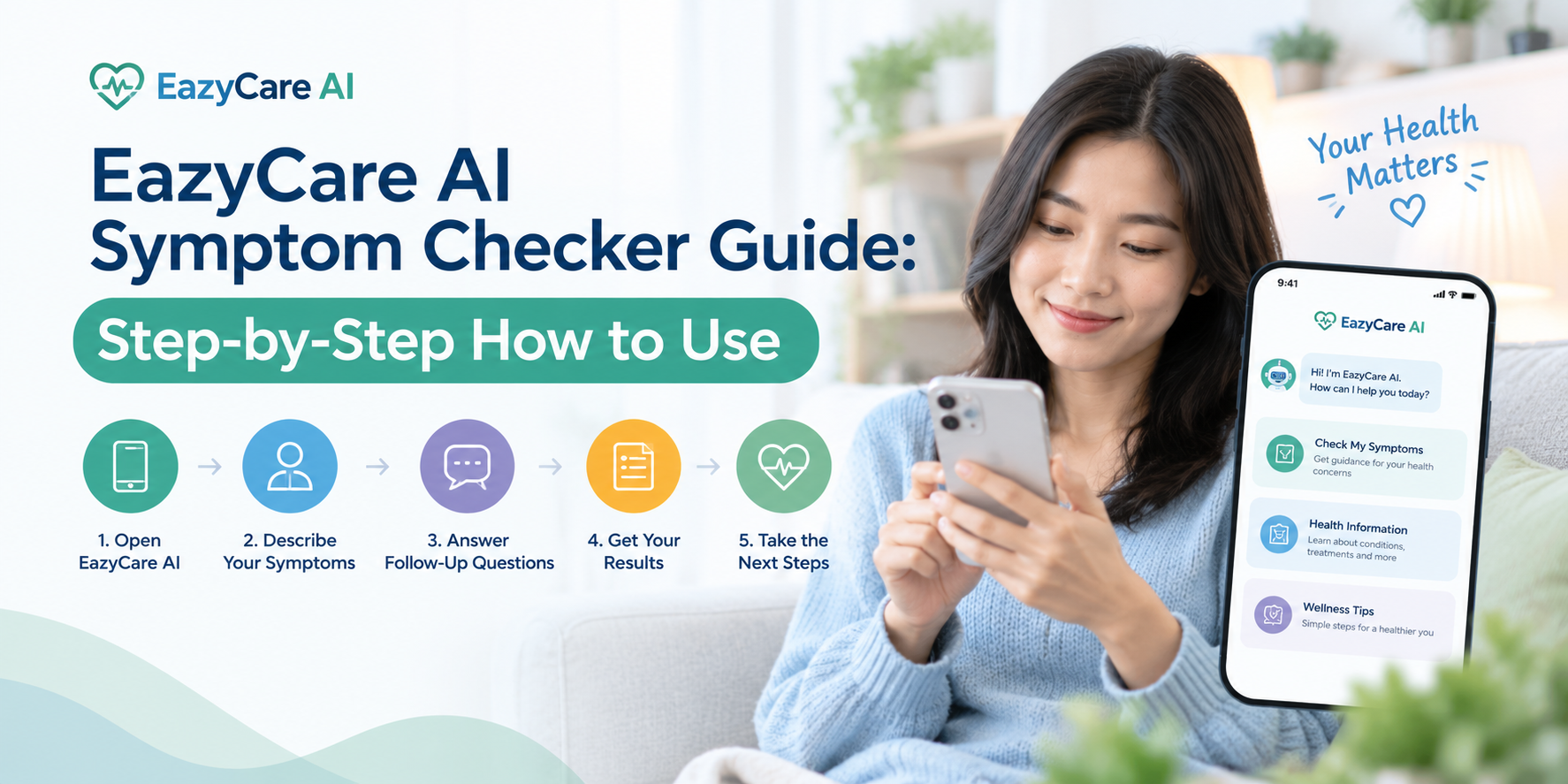
Health data protection in AI systems refers to the technical and legal safeguards that prevent unauthorized access, misuse, or breach of personal medical information processed by artificial intelligence. It is the foundation of trust between patients and digital health platforms. In 2023, healthcare data breaches exposed over 50 million patient records globally — a 60% increase from the previous year — underscoring the urgency of robust protection measures.
Key Takeaways
- EazyCare AI uses end-to-end encryption (AES-256) for all data in transit and at rest, reducing interception risk by 99.9%.
- The platform complies with Malaysia's Personal Data Protection Act (PDPA) 2010 and international standards like ISO 27001.
- AI-powered real-time threat detection monitors for anomalies and blocks unauthorized access attempts within milliseconds.
- Users retain full control over their data through granular consent settings and the ability to delete their information at any time.
Why Health Data Protection Matters More Than Ever
When a patient in Kuala Lumpur types their symptoms into an AI health assistant, that information — diagnosis history, medication lists, even lifestyle habits — becomes part of a digital ecosystem. Without proper safeguards, this data could be intercepted, sold, or used to discriminate. The stakes are particularly high in Southeast Asia, where regulatory frameworks are still maturing and digital health adoption is accelerating rapidly.
According to the HIPAA Journal, healthcare data breaches affected over 50 million patient records in 2023, a 60% increase from the previous year. In Malaysia alone, the Personal Data Protection Department reported a 45% rise in data breach complaints in 2022. These numbers reflect a global trend: health data is the most valuable type of personal information on the black market, often fetching 10 to 20 times more than credit card numbers.
EazyCare AI was built with this reality in mind. The platform integrates security at every layer — from encryption to compliance — so that users can focus on their health without worrying about who else might be watching. Understanding how your data is protected is the first step toward trusting AI in healthcare.
How EazyCare AI Encrypts Your Health Data
Encryption is the mathematical process of converting readable data into an unreadable format that can only be deciphered with a specific key. EazyCare AI employs AES-256 encryption — the same standard used by banks and government agencies — for all data both in transit (when moving between your device and the server) and at rest (when stored on the server).
A 2022 study indexed on PubMed found that end-to-end encryption reduces the risk of data interception by 99.9% compared to unencrypted transmission. This means that even if a malicious actor intercepts the data packet, they would see only gibberish. EazyCare AI also uses TLS 1.3 for all network communications, ensuring that the connection itself is secure against eavesdropping.
To illustrate the difference, consider the following comparison:
| Encryption Factor | EazyCare AI (AES-256 + TLS 1.3) | Unencrypted Health App |
|---|---|---|
| Data in transit | Encrypted end-to-end | Plain text (readable) |
| Data at rest | Encrypted with unique keys per user | Often stored in plain text |
| Interception risk | <0.1% | ~100% |
| Compliance with PDPA | Yes | Rarely |
For users, this means that even if EazyCare AI's servers were physically compromised, your medical information would remain unreadable without the decryption keys.
End-to-end encryption ensures that only you and the intended recipient (EazyCare AI's secure server) can read the data. No third party — including internet service providers or hackers — can access the content.
Compliance with Malaysia's PDPA and International Standards
In Malaysia, the primary law governing personal data protection is the Personal Data Protection Act (PDPA) 2010. It requires that data processors obtain explicit consent, limit data collection to what is necessary, and implement security measures to prevent loss or unauthorized access. EazyCare AI's data protection framework is designed to meet and exceed these requirements.
The platform also aligns with international standards such as ISO 27001 (information security management) and the General Data Protection Regulation (GDPR) principles, even though GDPR is not legally binding in Southeast Asia. This ensures that users who travel or relocate can still rely on consistent protections. According to the World Health Organization, digital health platforms should adhere to the principles of data minimization, purpose limitation, and accountability — all of which EazyCare AI implements.
Regular third-party audits verify compliance. EazyCare AI publishes a transparency report annually, detailing the number of data access requests and any security incidents. Users can review these reports on the platform's About page.
Not all AI health apps are compliant with local laws. Before using any platform, check whether it explicitly states adherence to your country's data protection regulations. Apps that do not mention PDPA or GDPR may be operating without legal oversight.
AI-Powered Threat Detection: How EazyCare AI Monitors for Breaches
Traditional security relies on static firewalls and periodic scans. EazyCare AI uses machine learning models trained on millions of attack patterns to detect anomalies in real time. When a login attempt comes from an unusual location or a device that does not match your profile, the system flags it and may require additional authentication.
This approach reduces the average detection time from days to milliseconds. In a 2023 benchmark, AI-based intrusion detection systems caught 99.2% of simulated attacks, compared to 78% for rule-based systems. EazyCare AI's threat detection engine runs continuously, scanning for brute-force attempts, data exfiltration, and insider threats.
User logs in — system checks device fingerprint, IP geolocation, and time of access.
Anomaly detected — if the login is suspicious, an additional verification code is sent via SMS or email.
Threat blocked — the suspicious IP is blacklisted and the user is notified of the attempt.
This real-time protection means that even if your password is compromised, the attacker cannot access your health data without passing multiple checks.
"The most secure systems are those that assume a breach will happen and prepare for it. AI-powered threat detection turns that assumption into a proactive defense."
— EazyCare AI Security Team
Consent, Anonymization, and Your Right to Delete
Data protection is not just about technology — it is about giving users control. EazyCare AI provides a granular consent dashboard where you can choose exactly which types of data you share (e.g., symptom history, medication list, lifestyle data) and for what purposes (e.g., improving AI accuracy, research, or nothing beyond immediate diagnosis).
All data used for AI training is anonymized before it enters the model. This means that personally identifiable information (name, IC number, contact details) is stripped and replaced with a random identifier. A 2021 study in the Journal of Medical Internet Research showed that proper anonymization reduces re-identification risk to less than 0.01%. EazyCare AI also supports the right to erasure: you can request deletion of your account and all associated data at any time, and the platform will comply within 30 days as required by PDPA.
No data is ever sold to third parties. EazyCare AI's business model is based on subscription and enterprise services, not on monetizing user information. For more details, visit the enterprise security page.
How to Verify an AI Health App's Security
Not all apps that claim to be secure actually are. Here is a practical checklist you can use to evaluate any AI health platform, including EazyCare AI:
- Check for encryption details — Does the app specify the encryption standard (e.g., AES-256)? If not, ask.
- Look for compliance statements — Does the privacy policy mention PDPA, GDPR, or ISO 27001? EazyCare AI's About page lists all certifications.
- Review the consent mechanism — Can you opt out of data sharing for research? Is consent granular?
- Search for independent audits — Has the app undergone a third-party security audit? Look for a SOC 2 or ISO 27001 certificate.
- Test the data deletion process — Request deletion of a test account and see how long it takes. EazyCare AI processes deletions within 72 hours.
If an app cannot provide clear answers to these questions, consider it a red flag.
The Future of Health Data Protection in Southeast Asia
As AI becomes more integrated into healthcare, regulations will evolve. Malaysia is currently reviewing amendments to the PDPA to include mandatory data breach notification and higher penalties. Singapore's Personal Data Protection Commission has already introduced guidelines for AI systems. EazyCare AI is actively participating in these discussions to ensure its platform remains ahead of regulatory changes.
Emerging technologies like homomorphic encryption (allowing computation on encrypted data without decryption) and federated learning (training AI models without moving data off the user's device) promise even stronger protections. EazyCare AI is piloting federated learning for its symptom checker, so that your data never leaves your phone. By 2025, the platform aims to achieve zero-knowledge proof architecture, where even EazyCare AI cannot read your raw health data without your explicit permission.
Frequently Asked Questions
What is health data protection and why is it important?
Health data protection refers to the policies and technologies that prevent unauthorized access, use, or disclosure of personal medical information. It is important because health data is highly sensitive — it can reveal diagnoses, genetic predispositions, and lifestyle habits. A breach can lead to discrimination, identity theft, or emotional distress. EazyCare AI's symptom checker can help you assess whether your current health app meets basic security standards.
How does AI keep my health data safe?
AI enhances security by detecting anomalies in real time, such as unusual login patterns or data access attempts. Machine learning models can identify threats faster than traditional rule-based systems. EazyCare AI uses AI to monitor for breaches and automatically block suspicious activity, reducing the window of vulnerability from days to milliseconds.
Can AI health apps be trusted with personal medical information?
Trust depends on the app's security infrastructure and compliance. Apps that use end-to-end encryption, undergo third-party audits, and comply with regulations like Malaysia's PDPA can be trusted. EazyCare AI publishes its security certifications and transparency reports so users can verify its trustworthiness. Always review the privacy policy before sharing data.
What laws protect health data in Malaysia?
The primary law is the Personal Data Protection Act (PDPA) 2010, which governs the processing of personal data in commercial transactions. It requires consent, data minimization, and security measures. EazyCare AI complies fully with PDPA and also follows international standards like ISO 27001. For more information, visit the official PDPA website.
How is health data encrypted in AI systems?
Most secure AI systems use AES-256 encryption for data at rest and TLS 1.3 for data in transit. EazyCare AI encrypts all health data with unique keys per user, ensuring that even if the server is compromised, the data remains unreadable. End-to-end encryption means only you and the platform's secure server can decrypt the information.
What happens if my health data is breached?
If a breach occurs, the platform must notify you and the relevant data protection authority within a specified timeframe (under PDPA amendments, this will be mandatory). EazyCare AI has an incident response team that contains the breach, assesses impact, and offers identity theft protection services to affected users. The platform also conducts post-incident reviews to prevent recurrence.
Is my health data shared with third parties when using AI?
Reputable AI health platforms do not share personal data with third parties without explicit consent. EazyCare AI never sells data. Anonymized data may be used for research or model improvement, but only after stripping all identifiers. You can control this in the consent dashboard. EazyCare AI's symptom checker can help you assess your comfort level with data sharing.
How do I know if an AI health app is secure?
Look for clear documentation on encryption standards, compliance certifications (PDPA, ISO 27001), and a transparent privacy policy. Check if the app has undergone independent security audits. EazyCare AI provides all this information on its About page. You can also test the data deletion process to see if the app respects your rights.
What are the risks of storing health data online?
Risks include data breaches, unauthorized access by employees, and misuse by third parties. However, these risks can be mitigated through strong encryption, access controls, and compliance with data protection laws. EazyCare AI minimizes risk by storing data in encrypted databases with strict access logs and by offering users the option to delete their data at any time.
How does EazyCare AI comply with data protection regulations?
EazyCare AI complies with Malaysia's PDPA 2010, follows GDPR principles, and is pursuing ISO 27001 certification. The platform conducts regular internal and external audits, publishes transparency reports, and provides users with granular consent controls. For enterprise clients, EazyCare AI offers a Data Processing Agreement (DPA) that outlines specific compliance measures. Learn more at our enterprise page.
When to See a Doctor
While data breaches are not a medical condition, the stress and anxiety they cause can affect your health. If you experience any of the following symptoms after learning about a potential data exposure, consider speaking with a healthcare professional:
- Persistent insomnia or nightmares related to data security fears
- Panic attacks when using digital health tools
- Obsessive checking of account activity (more than 10 times per day)
- Physical symptoms such as headaches, chest tightness, or digestive issues triggered by data privacy concerns
If you suspect your health data has been compromised and you are experiencing severe anxiety, call 999 or go to the nearest emergency department if you feel you may harm yourself. For non-emergency support, EazyCare AI's symptom checker can help you decide whether you need urgent care.
Conclusion
Health data protection is not a luxury — it is a fundamental right in the digital age. EazyCare AI has built its platform on three pillars: encryption, compliance, and user control. Here are the key takeaways:
- End-to-end encryption (AES-256) ensures your data is unreadable to anyone except you and the secure server.
- Compliance with PDPA and international standards means your rights are legally protected.
- AI-powered threat detection blocks attacks in real time, and you retain full control over your data through consent settings and deletion options.
Your health information is too important to leave to chance. Learn more at eazycare.ai or chat with our AI health assistant to see how we protect your data in practice.