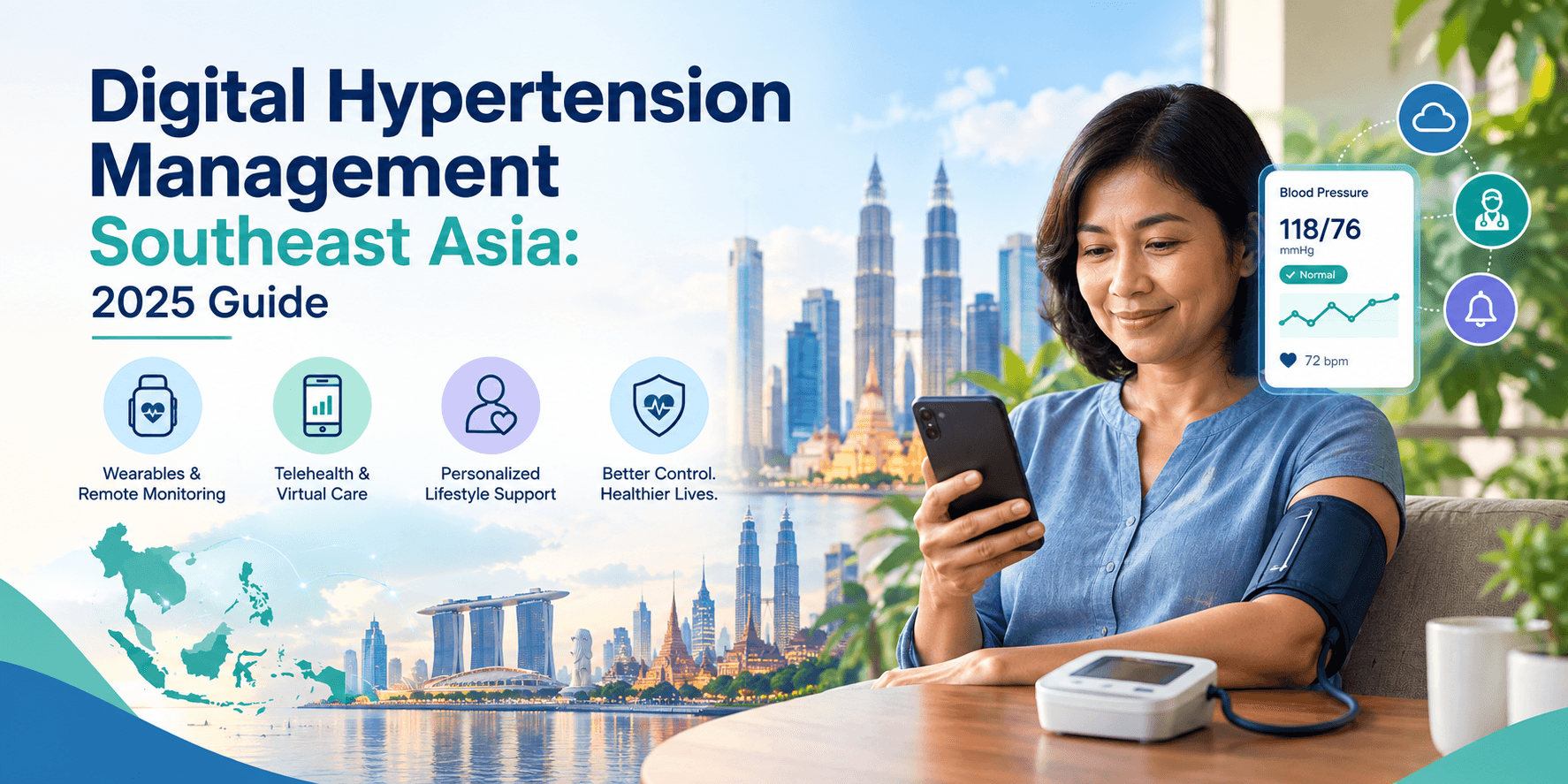
Digital hypertension management in Southeast Asia is the systematic use of remote blood pressure monitoring, telehealth coaching, and mobile health applications to improve blood pressure control in a region where only about one-third of adults with hypertension achieve target levels (WHO, 2023). When implemented with regional adaptation, these tools reduce systolic blood pressure by an average of 5–10 mmHg compared to usual care alone—a difference that translates to a 20–30% reduction in cardiovascular events.
Key Takeaways
- Remote monitoring plus digital coaching lowers systolic blood pressure by 5–10 mmHg on average—comparable to adding one antihypertensive medication.
- Digital hypertension tools fail without adaptation for low digital literacy, local languages, and high-sodium Southeast Asian diets.
- Community health workers remain the critical bridge between digital tools and patients in rural Malaysia, Indonesia, and the Philippines.
- Thailand's digital hypertension program cut healthcare costs by 15% per patient while improving blood pressure control rates.
- Telehealth complements—but does not replace—in-person care; the best outcomes come from hybrid models.
Why Southeast Asia's Hypertension Crisis Demands a Digital Response
Imagine a 52-year-old factory supervisor in Johor Bahru who takes three antihypertensive medications daily. His blood pressure reads 158/96 mmHg at his last clinic visit—still uncontrolled despite treatment. He is not non-adherent; he simply has no way to know his blood pressure fluctuates between quarterly appointments. This is the reality for most of the 400 million adults living with hypertension in Southeast Asia.
The numbers are sobering. According to the World Health Organization's 2023 fact sheet, only about one-third of adults with hypertension in Southeast Asia have their blood pressure controlled. The region carries some of the highest cardiovascular mortality rates globally, with hypertension as the leading modifiable risk factor. In Malaysia alone, the National Health and Morbidity Survey reports that nearly 30% of adults aged 18 and above have hypertension, yet more than half remain undiagnosed or untreated.
Traditional care models are failing. Patients see a clinician every 3–6 months for a 15-minute consultation, during which blood pressure is measured once under "white coat" conditions. This snapshot approach misses masked hypertension (normal in clinic, high at home), white coat hypertension, and nocturnal blood pressure patterns—all of which predict cardiovascular outcomes better than clinic readings.
Digital hypertension management addresses this structural weakness by shifting from episodic to continuous monitoring. But technology alone is not the answer. The evidence is clear: digital tools work only when they are integrated into existing health systems and adapted to local realities. This article examines what works, what fails, and how Southeast Asian health systems can implement digital hypertension care that actually moves the needle.
For clinicians and health systems exploring these tools, EazyCare AI's platform for doctors and clinics offers a starting point for understanding how AI-assisted triage and patient engagement fit into chronic disease workflows.
Remote Blood Pressure Monitoring: What the Data Actually Shows
The most common question clinicians ask is whether remote monitoring genuinely improves outcomes or simply adds another layer of data to ignore. The evidence, drawn from a 2023 systematic review published in PubMed, is unambiguous: remote patient monitoring combined with digital coaching reduces systolic blood pressure by an average of 5–10 mmHg compared to usual care. To put this in perspective, a 10 mmHg reduction in systolic blood pressure corresponds to a 20% reduction in major cardiovascular events and a 27% reduction in stroke risk.
These effect sizes are not trivial. They rival the efficacy of first-line antihypertensive monotherapy. A patient who achieves a 7 mmHg reduction through remote monitoring plus coaching has effectively gained the equivalent of one additional medication—without the pill burden, side effects, or cost.
What Makes Remote Monitoring Effective
The mechanism is not the device itself; it is the behavioral cascade it triggers. When patients measure their blood pressure at home twice daily and transmit readings to a care team, three things happen: patients become more engaged in self-management, clinicians can titrate medications based on real-world data rather than clinic snapshots, and non-adherence becomes visible within days rather than months.
A meta-analysis of 30 randomized controlled trials found that self-monitoring alone reduces systolic blood pressure by 3.2 mmHg, but adding telemonitoring (transmitting readings to a provider) increases the effect to 6.1 mmHg. Adding active coaching—whether human or automated—pushes the effect to 8–10 mmHg. The dose-response relationship is clear: more frequent feedback loops produce better outcomes.
A 5–10 mmHg population-wide reduction in systolic blood pressure would prevent an estimated 28% of cardiovascular deaths in Southeast Asia. This is not an aspirational target; it is the minimum effect size demonstrated in digital hypertension interventions. If your program is not achieving at least 5 mmHg average reduction, the implementation—not the technology—is the problem.
Practical takeaway: When evaluating digital hypertension solutions, demand evidence of at least 5 mmHg systolic reduction in real-world settings, not just efficacy trials. Ask vendors for subgroup analyses by age, digital literacy, and baseline blood pressure.
Telehealth Coaching: The Active Ingredient in Blood Pressure Control
Remote monitoring generates data; coaching turns that data into behavior change. Telehealth hypertension coaching involves structured, periodic interactions—via video, phone, or asynchronous messaging—where trained professionals (nurses, pharmacists, or community health workers) review blood pressure trends, address medication adherence, and provide lifestyle counseling. The evidence suggests that coaching is the difference between a tool that collects readings and a program that changes outcomes.
A 2023 systematic review of digital interventions for hypertension in Asia, published in PubMed, found that interventions combining remote monitoring with coaching achieved significantly better blood pressure control than monitoring alone. The review, which analyzed 47 studies across 11 Asian countries, reported that the most effective programs shared three characteristics: personalized feedback within 24–48 hours of abnormal readings, culturally tailored lifestyle advice, and integration with existing primary care teams.
What Effective Coaching Looks Like in Practice
Consider the structure of a successful program in Thailand. Researchers implemented a digital hypertension program that combined home blood pressure monitoring with nurse-led telehealth coaching. Over 12 months, patients achieved a 9.2 mmHg reduction in systolic blood pressure, and the program reduced healthcare costs by 15% per patient—driven primarily by fewer emergency department visits and hospitalizations. The cost savings were not from reducing medication costs but from preventing complications.
The coaching component addressed three specific behaviors: medication timing (many patients skipped evening doses), dietary sodium reduction (a challenge in a region where fish sauce and soy sauce are ubiquitous), and physical activity (tailored to tropical climates where outdoor exercise is uncomfortable midday).
"The most effective digital hypertension programs do not try to replace the clinician–patient relationship. They extend it into the spaces where patients actually live—their homes, their workplaces, their daily routines."
— Dr. Ananya Srisuwan, hypertension researcher, Mahidol University
Practical takeaway: When implementing telehealth coaching, prioritize frequency over duration. Five-minute check-ins every 2 weeks outperform one-hour monthly sessions. The goal is to maintain a continuous feedback loop, not to deliver comprehensive education in a single sitting.
For patients in Malaysia, understanding the future of telehealth Malaysia future can clarify how these coaching models will evolve locally.
Why Digital Hypertension Management Fails in Southeast Asia (and How to Fix It)
Most digital hypertension programs designed in high-income countries fail in Southeast Asia not because the technology is wrong, but because the assumptions are wrong. The region's barriers are structural, cultural, and economic—and they require adaptation, not just translation.
Digital Literacy and the Elderly
Hypertension disproportionately affects adults over 60, a population with the lowest digital literacy rates in the region. In Indonesia, only 25% of adults over 55 own a smartphone, and fewer than 15% can navigate a health app independently. Expecting an 68-year-old farmer in Central Java to upload blood pressure readings to a mobile app is unrealistic. The solution is not simpler apps; it is involving family members and community health workers as intermediaries.
Language and Cultural Adaptation
Most hypertension apps are developed in English or Mandarin, with minimal support for Bahasa Indonesia, Tagalog, Thai, or Vietnamese. Even when translated, the dietary guidance is often irrelevant. A generic "reduce sodium" message fails to address that the primary sodium sources in Southeast Asian diets are fish sauce (1,400 mg sodium per tablespoon), soy sauce (900 mg per tablespoon), and instant noodles (1,300 mg per serving). Effective digital coaching must be culturally specific.
Affordability and Device Access
Validated Bluetooth blood pressure monitors cost between RM 150–300 (USD 35–70) in Malaysia—a significant outlay for low-income households. While some national health systems are beginning to subsidize devices, most patients pay out of pocket. The cost is not just the device; it is the data plan, the electricity for charging, and the opportunity cost of time spent learning a new system.
Digital hypertension management that is not deliberately designed for low-resource settings risks widening existing health disparities. If only affluent, tech-savvy patients benefit, the program has failed its primary purpose. Every digital health initiative in Southeast Asia must include a plan for patients who cannot or will not use the technology directly.
Practical takeaway: Before launching a digital hypertension program, conduct a "digital readiness assessment" of your target population. Measure smartphone ownership, data plan affordability, and willingness to share health data. Design for the 20% of patients who will struggle, not the 80% who will adapt.
The Human Bridge: Community Health Workers in Digital Hypertension Care
Across Southeast Asia, community health workers (CHWs)—known as kader in Indonesia, brgy health workers in the Philippines, and komuniti in Malaysia—are the backbone of primary care in rural and underserved areas. Digital hypertension management must integrate with, not bypass, these existing networks. The evidence suggests that CHWs are the single most important factor in whether a digital program succeeds or fails in low-resource settings.
A study of hypertension programs in the Philippines found that CHW-led home blood pressure monitoring, supported by a simple SMS-based data collection system, achieved a 71% blood pressure control rate—compared to 38% in clinics without CHW involvement. The key was not the technology but the trust that CHWs had already built with their communities over years of service.
How CHWs Fit into Digital Workflows
Effective digital hypertension programs use CHWs in three roles. First, as technology navigators who help patients set up devices, understand readings, and troubleshoot basic problems. Second, as data validators who ensure that readings are accurate and transmitted correctly. Third, as health coaches who provide the motivational interviewing and culturally appropriate lifestyle advice that automated systems cannot.
The technology should reduce CHW administrative burden, not increase it. Instead of requiring CHWs to manually enter data into multiple systems, digital platforms should allow them to capture information once and automatically populate patient records, generate alerts, and schedule follow-ups.
Practical takeaway: When designing digital hypertension programs, budget for CHW training and compensation. The technology is an enabler; the CHW is the intervention. Programs that invest equally in both achieve outcomes that neither can deliver alone.
For health systems exploring how to integrate digital tools with existing community networks, EazyCare AI's approach to AI-assisted triage can help CHWs identify which patients need escalation and which can be managed remotely.
Building a Digital Hypertension Program: A Step-by-Step Roadmap for Southeast Asian Health Systems
Implementing digital hypertension management is not a technology project; it is a health systems intervention. The following roadmap synthesizes evidence from successful programs in Thailand, Malaysia, and the Philippines, and provides a practical framework for health systems at any stage of maturity.
Assess population readiness. Conduct a rapid assessment of smartphone ownership, digital literacy, and patient preferences. In Malaysia, this might involve partnering with the Ministry of Health's district health offices to survey patients in primary care waiting rooms.
Select validated devices. Use only clinically validated blood pressure monitors that meet international standards (AAMI/ESH/ISO). In Southeast Asia, the Omron HEM-7130 and Microlife BP A2 are widely available and validated for use in Asian populations.
Design the workflow. Define who does what: who reviews readings, who escalates abnormal values, who provides coaching. In Thailand's successful program, nurses reviewed readings daily and escalated to physicians only when systolic exceeded 160 mmHg or diastolic exceeded 100 mmHg.
Train the trainers. Train CHWs and clinic nurses as "digital champions" who can support both patients and less tech-savvy colleagues. Training should include hands-on device practice and role-playing difficult conversations about medication adherence.
Launch, learn, iterate. Start with a pilot of 100–200 patients, measure outcomes at 3 months, and adjust before scaling. Key metrics include: proportion of patients with controlled BP, average systolic reduction, and patient retention at 6 months.
Integrate with primary care. Ensure that remote monitoring data flows into the electronic health record and that primary care physicians receive alerts for uncontrolled patients. This is the most common failure point—technology that exists in a silo does not change care.
Practical takeaway: The implementation timeline from pilot to scale is typically 12–18 months. Resist the temptation to scale prematurely; a successful pilot with 200 patients is more valuable than a failed program with 2,000.
Digital vs. Traditional Hypertension Care: A Comparative Analysis
Patients and clinicians often ask whether digital hypertension management can replace traditional in-person care. The answer, based on the evidence, is a qualified no—but the question is the wrong one. The right question is how to combine both approaches for optimal outcomes.
| Factor | Traditional Care (Clinic-Based) | Digital Hypertension Management |
|---|---|---|
| Blood pressure measurement | Occasional, clinic-based (white coat effect) | Frequent, home-based (more accurate reflection of true BP) |
| Medication adjustment | Every 3–6 months based on single readings | Within weeks based on home BP trends |
| Patient engagement | Passive—patient waits for appointments | Active—patient measures, records, and receives feedback |
| Cost to health system | High per-visit cost, low per-patient cost | Low per-patient cost, high upfront technology investment |
| Access in rural areas | Limited—long travel distances | High—requires only mobile network coverage |
| Cultural appropriateness | High—face-to-face interaction | Variable—depends on language and design |
The data from Thailand's digital hypertension program illustrates this complementarity. The program did not replace clinic visits; it reduced their frequency by 40% while improving blood pressure control from 52% to 68%. Patients still saw their physician every 3–4 months, but the physician had access to 60+ home readings instead of a single clinic measurement.
Practical takeaway: The most effective model is "hybrid care"—digital monitoring and coaching between clinic visits, with in-person consultations reserved for medication adjustments, complications, and patients who prefer face-to-face interaction.
Frequently Asked Questions
What is remote patient monitoring for hypertension?
Remote patient monitoring (RPM) for hypertension involves patients measuring their blood pressure at home using validated devices and transmitting the readings to healthcare providers via mobile apps, web portals, or cellular-connected monitors. Providers review the data remotely and adjust treatment or provide coaching without requiring in-person visits. RPM typically involves daily or twice-daily measurements, with alerts triggered for readings above or below preset thresholds. In Southeast Asia, RPM is most effective when combined with community health worker support, particularly for elderly patients who may struggle with smartphone-based apps. EazyCare AI's symptom checker can help you assess whether your blood pressure readings warrant professional attention.
How effective is digital coaching in lowering blood pressure?
Digital coaching—whether delivered by nurses, pharmacists, or automated systems—reduces systolic blood pressure by an additional 3–7 mmHg compared to remote monitoring alone. A 2023 meta-analysis published in PubMed found that interventions combining remote monitoring with active coaching achieved a 5–10 mmHg average systolic reduction. The most effective coaching programs provide personalized feedback within 24–48 hours of abnormal readings, address medication adherence directly, and offer culturally tailored lifestyle advice. In Thailand's digital hypertension program, nurse-led telehealth coaching contributed to a 9.2 mmHg systolic reduction over 12 months. EazyCare AI's symptom checker can help you assess your blood pressure readings and determine if you need to consult a healthcare provider.
Can telehealth replace in-person visits for hypertension management?
No—telehealth should complement, not replace, in-person care for hypertension. The evidence suggests that the best outcomes come from hybrid models: remote monitoring and coaching between clinic visits, with in-person consultations for medication adjustments, complications, and patients who prefer face-to-face interaction. Telehealth alone cannot perform physical examinations, assess for target organ damage (e.g., retinopathy, renal dysfunction), or build the trust that is essential for long-term medication adherence. In Southeast Asia, where many patients value the therapeutic relationship with their physician, completely replacing in-person care would likely reduce adherence. A pragmatic approach is to use telehealth for follow-up and monitoring while maintaining in-person visits every 3–6 months.
What are the barriers to digital hypertension care in Southeast Asia?
The primary barriers are digital literacy (particularly among adults over 60), language support (most apps lack Bahasa Indonesia, Tagalog, Thai, or Vietnamese), device affordability (validated Bluetooth monitors cost RM 150–300), and limited integration with primary care systems. Cultural factors also play a role—some patients distrust technology for health decisions or prefer face-to-face interactions. In rural areas, unreliable internet connectivity and electricity access can disrupt data transmission. The most significant barrier is the lack of reimbursement mechanisms; in most Southeast Asian countries, digital health services are not covered by national health insurance schemes, creating a financial disincentive for both patients and providers.
How does remote monitoring improve medication adherence?
Remote monitoring improves medication adherence through several mechanisms. First, the act of measuring blood pressure daily makes patients more conscious of their condition and the link between medication and outcomes. Second, when patients see their readings improve with adherence, they are more likely to continue. Third, providers can identify non-adherence early by observing blood pressure trends—a patient whose readings are consistently high despite treatment may not be taking medications as prescribed. Fourth, digital platforms can send automated reminders and educational content. A 2023 systematic review found that remote monitoring combined with adherence-focused coaching improved medication adherence by 20–30% compared to usual care. EazyCare AI's symptom checker can help you assess your blood pressure readings and determine if you need to consult a healthcare provider.
What devices are used for home blood pressure monitoring?
Validated upper-arm blood pressure monitors are the gold standard for home monitoring. In Southeast Asia, the Omron HEM-7130 and Microlife BP A2 are widely available, clinically validated, and cost between RM 150–300 (USD 35–70). Wrist monitors are less accurate and not recommended for routine use. For digital hypertension management, Bluetooth-enabled monitors that automatically sync readings to a smartphone app are preferred, as they eliminate manual data entry errors. Some advanced devices include irregular heartbeat detection (useful for screening atrial fibrillation) and multiple-user memory. When selecting a device, look for the AAMI/ESH/ISO validation mark and ensure it has been tested on Asian populations, as arm circumference and arterial stiffness vary by ethnicity.
Is digital hypertension management covered by insurance in Malaysia?
Coverage is limited but evolving. As of 2025, the Malaysian Ministry of Health has piloted telemedicine reimbursement for chronic disease management in select public health facilities, but this is not yet universal. Private health insurers in Malaysia are beginning to offer telehealth consultation coverage, but most exclude remote monitoring devices and digital coaching programs. The National Health Insurance (BPJS Kesehatan) in Indonesia and PhilHealth in the Philippines similarly have limited coverage for digital health services. However, given the evidence of cost-effectiveness—Thailand's program reduced healthcare costs by 15% per patient—there is growing pressure on payers to reimburse digital hypertension care. Patients should check with their insurer and employer-provided health plans for telehealth benefits.
How do cultural factors affect adoption of digital health for hypertension?
Cultural factors significantly influence adoption. In many Southeast Asian cultures, there is a strong preference for face-to-face communication and trust in authority figures—patients may be skeptical of advice delivered through an app. Family involvement is crucial; in Malaysia and Indonesia, adult children often manage their parents' healthcare, so apps should be designed for shared use. Dietary counseling must account for high-sodium condiments like fish sauce, soy sauce, and belacan (shrimp paste). Religious practices, such as fasting during Ramadan, affect medication timing and should be addressed in coaching. Finally, the stigma associated with chronic disease can discourage patients from using visible health devices. Successful programs engage community leaders and religious figures as champions to normalize digital health use.
What role do community health workers play in digital hypertension programs?
Community health workers (CHWs) are the critical bridge between digital technology and patients in Southeast Asia. They serve as technology navigators (helping patients set up devices and understand readings), data validators (ensuring accuracy), and health coaches (providing motivational interviewing and culturally appropriate advice). In the Philippines, CHW-led home monitoring programs achieved a 71% blood pressure control rate compared to 38% in clinics without CHW involvement. CHWs also address the digital divide by collecting data on behalf of patients who cannot use smartphones. Effective programs train CHWs as "digital champions" and compensate them for the additional workload. Technology should reduce CHW administrative burden, not increase it.
What is the evidence for digital hypertension interventions in low-resource settings?
The evidence base is growing but remains thinner than for high-income countries. A 2023 systematic review in PubMed identified 47 studies of digital hypertension interventions in Asia, with the strongest evidence from Thailand, China, and India. The review found that interventions combining remote monitoring with coaching achieved a 5–10 mmHg systolic reduction, comparable to high-income country studies. However, the review noted significant heterogeneity and risk of bias, with many studies using small sample sizes and short follow-up periods. In low-resource settings, the most effective interventions are those that leverage existing community health worker networks and use simple, low-cost technology like SMS rather than smartphone apps. More research is needed on implementation strategies and cost-effectiveness in rural and underserved populations.
When to See a Doctor
Digital hypertension management is effective, but it has limits. Seek immediate medical attention if you experience any of the following symptoms, which may indicate a hypertensive emergency or complications:
- Blood pressure ≥ 180/120 mmHg with symptoms such as severe headache, chest pain, shortness of breath, or vision changes
- Sudden weakness or numbness on one side of the body, difficulty speaking, or facial drooping—signs of stroke
- Severe abdominal pain radiating to the back, which may indicate aortic dissection
- Seizures or loss of consciousness
- Blood in urine or sudden swelling in the face, hands, or feet
- Persistent headache that does not respond to usual pain relief
Call 999 or go to the nearest emergency department if you experience any of these symptoms. Do not wait for a telehealth appointment.
If you are unsure whether your symptoms warrant urgent care, EazyCare AI can help you decide whether you need immediate medical attention or can safely manage your condition at home.
Conclusion
Digital hypertension management in Southeast Asia is no longer experimental—it is an evidence-based approach that, when implemented correctly, reduces systolic blood pressure by 5–10 mmHg and lowers healthcare costs by 15% per patient. The key lessons from successful programs across the region are clear:
- Technology is necessary but insufficient. The most effective programs combine remote monitoring with active coaching from nurses, pharmacists, or community health workers.
- Regional adaptation is non-negotiable. Digital tools must be available in local languages, account for high-sodium Southeast Asian diets, and be accessible to patients with low digital literacy.
- Integration with primary care determines success. Remote monitoring data must flow into the health system and trigger action—not sit in a silo.
The opportunity is significant. With only one-third of Southeast Asian adults with hypertension achieving blood pressure control, the potential for digital tools to close this gap is substantial. But the window for action is now. Health systems that invest in digital hypertension management today will prevent thousands of strokes, heart attacks, and premature deaths in the coming decades.
For patients, the message is simple: if you have hypertension, ask your doctor about home blood pressure monitoring and telehealth follow-up. For health systems, the message is equally clear: the evidence is in, and the time to scale is now. Learn more at eazycare.ai or chat with our AI health assistant to understand how digital tools can support your hypertension management journey.