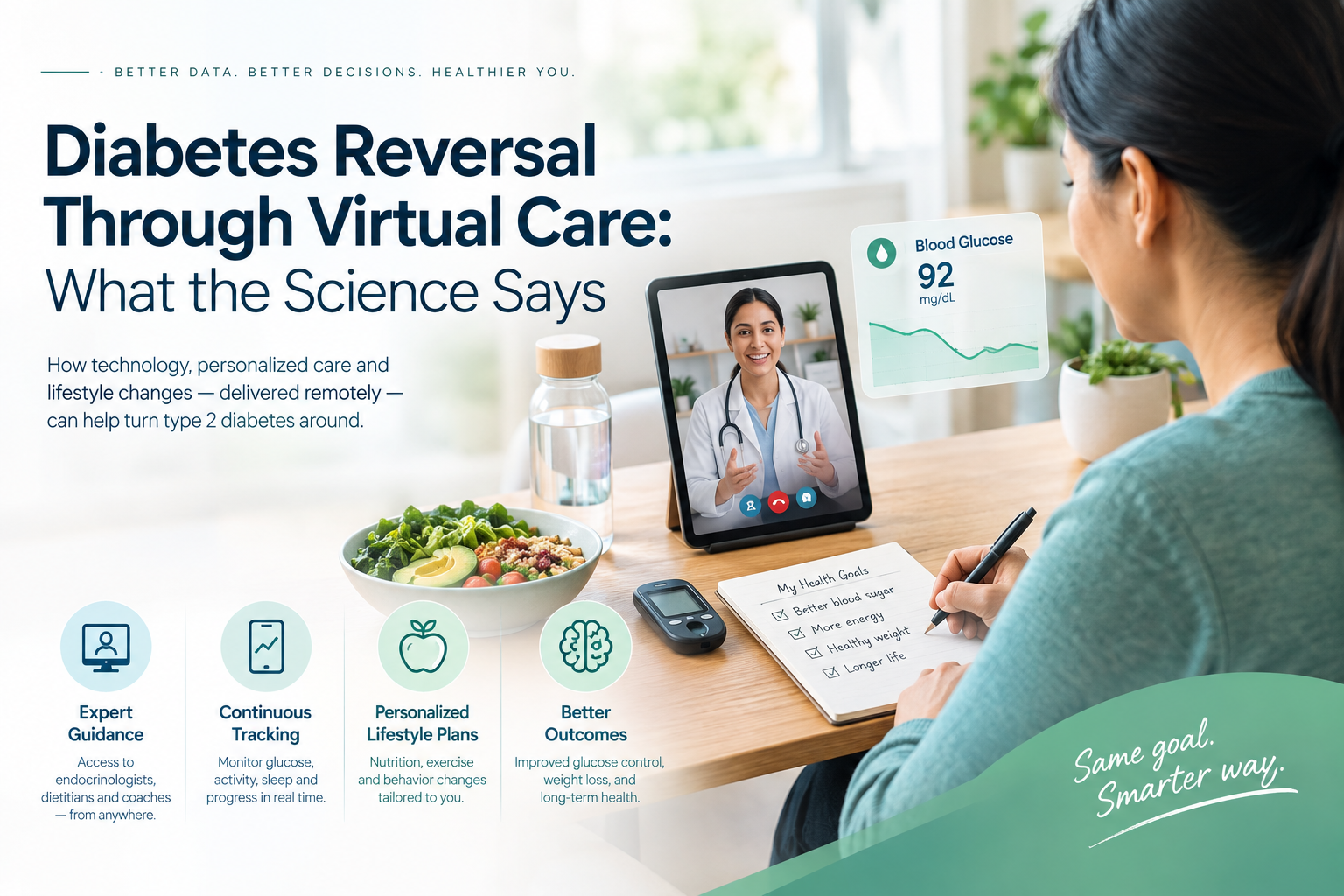
Diabetes reversal through virtual care is the achievement of glycaemic remission (HbA1c below 6.5% or 48 mmol/mol) maintained for at least three months without glucose-lowering medication, delivered through telemedicine platforms. The Diabetes Remission Clinical Trial (DiRECT) demonstrated that 46% of participants achieved remission at 12 months through intensive weight management—a result now replicated in digital programs. In Southeast Asia, where diabetes prevalence exceeds 11% in adults, virtual care offers a scalable path to remission that overcomes geographic and cultural barriers.
Key Takeaways
- Type 2 diabetes remission is defined as HbA1c <6.5% for at least 3 months without medication—not a "cure" but a managed state of metabolic health.
- Virtual care programs combining continuous glucose monitoring (CGM), tele-coaching, and dietary interventions achieve remission rates of 30–46% in well-selected patients.
- Success depends on sustained weight loss (≥15 kg or ≥15% body weight), not just glucose monitoring. Telemedicine supports adherence through frequent feedback.
- For Southeast Asians, adapting virtual programs to local food cultures (high-carb staples like rice, noodles) and low digital literacy is critical for reproducibility of trial results.
- Remission is not permanent for all—lifestyle relapse can cause return of hyperglycemia. Long-term virtual support is essential.
You are a 45-year-old executive in Kuala Lumpur. Your HbA1c is 8.2%. Your doctor says you need insulin soon. But a colleague tells you she reversed her diabetes through an online program. Is that real? The answer: yes, but with conditions. Diabetes reversal through virtual care is not a myth—it is a data-backed strategy that requires precision, discipline, and the right infrastructure. However, the science is nuanced, and what works in a UK clinical trial may not translate directly to a diet of nasi lemak and roti canai. This article dissects the evidence, identifies the cultural gaps in Southeast Asia, and gives you an actionable framework to discuss with your clinician. We will draw on the DiRECT trial, a meta-analysis of telehealth interventions, and a virtual care program using CGM—all peer-reviewed. Along the way, we will note where EazyCare AI's digital tools can help you navigate this journey.
Can Type 2 Diabetes Be Reversed? The Metabolic Basis
Type 2 diabetes is not a permanent sentence of pancreatic failure. It is a state of metabolic dysfunction driven by excess intra-organ fat—primarily in the liver and pancreas—that impairs insulin sensitivity and beta-cell function. The DiRECT trial, published in The Lancet in 2018, provided the landmark proof that losing 15 kg or more can reverse the disease in nearly half of patients with type 2 diabetes of less than 6 years' duration. Remission was defined as HbA1c <6.5% off all glucose-lowering medications for a minimum of 3 months.
But here is the nuance: the intervention in DiRECT was not a pill or a surgery. It was a structured weight management program using total diet replacement (825–853 kcal/day) followed by stepped food reintroduction and maintenance. This was delivered face-to-face. The question now is whether the same recipe can work when delivered through screens, keyboards, and smartphone alerts.
International consensus (Diabetes Care, 2021) defines remission as HbA1c <6.5% (<48 mmol/mol) sustained for at least 3 months without glucose-lowering pharmacotherapy. Some patients achieve "temporary remission" (maintained for >1 year) and even "prolonged remission" (>5 years). The goal is not cure, but metabolic reset.
Key takeaway: Virtual care can replicate the DiRECT protocol if it provides equivalent caloric restriction and behavioural support. The medium does not abolish the physiology. Several digital programs now use meal replacement shakes delivered via subscription, video coaching, and CGM data to guide titration—essentially DiRECT delivered through your phone.
Is Remission Possible Without Weight Loss?
Rarely. A 2020 systematic review in BMJ Open found that the strongest predictor of remission was magnitude of weight loss. Only 2–3% of patients achieved remission with minimal weight loss (0–5 kg). For Southeast Asians, who may have lower BMI thresholds for metabolic risk (body fat percentage higher at same BMI), a 10–15% body weight reduction is often sufficient. The CDC's data on type 2 diabetes remission confirms that the key driver is sustained calorie restriction, not just exercise or glucose monitoring alone. Virtual care without a robust dietary component will not produce remission.
Read more about how EazyCare AI's symptom checker can help you track your risk factors for type 2 diabetes.
What Does the Evidence Say About Virtual Care for Remission?
A 2017 meta-analysis of 24 telemedicine interventions for type 2 diabetes, spanning over 4,000 patients, reported a mean HbA1c reduction of 0.57% compared to usual care. That is clinically meaningful: a 1% drop in HbA1c reduces microvascular complications by 37% (UKPDS). But note: this meta-analysis included mostly telephone counselling, text messaging, and web portals—not full-scale remission programs. It proved that telehealth can improve glycaemic control, but not necessarily achieve remission.
Later studies directly targeted remission. A 2021 telehealth program combining CGM and nurse coaching found that 30% of participants reached HbA1c <6.5% within 6 months. Another 2022 study of a smartphone app with low-calorie meal replacement and weekly video visits reported a 41% remission rate at 12 months—comparable to DiRECT's 46%. These results demonstrate that the delivery channel matters less than the intensity and structure of the program.
"The effectiveness of virtual diabetes remission programs is limited by fidelity to the core principles of weight loss, caloric restriction, and behaviour change—not by the screen between doctor and patient."
— Dr. Roy Taylor, lead investigator of the DiRECT trial
Key takeaway: Telemedicine can achieve remission rates of 30–46% when the program includes at least 3 components: caloric prescription, remote coaching, and data-driven feedback. Programs lacking one of these three pillars yield lower success.
The Role of Continuous Glucose Monitoring (CGM)
CGM is not just a gadget—it is a learning tool. By showing real-time glucose responses to different foods, CGM helps patients make immediate adjustments. A Southeast Asian patient eating white rice (GI 70–80) can see a glucose spike that motivates swapping to brown rice (GI 50) or cauliflower rice. A 2022 study of virtual care with CGM in Singapore showed a median HbA1c reduction of 1.2% over 12 weeks. The visual feedback loop is particularly powerful in populations with low health literacy.
However, CGM is expensive (USD 100–300 per month) and not widely subsidised in Malaysia or Indonesia. Virtual programs must offer alternatives like intermittent flash glucose monitoring or structured blood glucose meter logbooks for patients who cannot afford CGM.
Patients with type 2 diabetes of >10 years' duration, severe insulin deficiency (C-peptide <0.2 nmol/L), or advanced complications (e.g., stage 4 chronic kidney disease) are unlikely to achieve remission. Virtual screening tools, including those on EazyCare AI, can help identify candidates suitable for a reversal attempt.
Remote Diabetes Care Southeast Asia: Barriers and Solutions
The content gap in current literature is glaring: most diabetes reversal trials were conducted in Western populations with high digital literacy, access to diet replacements, and limited carb-heavy staple diets. Southeast Asia presents unique challenges:
- High-carb staple diets: Rice provides 50–70% of daily calories in Malaysia, Indonesia, and Vietnam. A virtual program that prescribes "low-carb" without culturally appropriate alternatives will fail. Substitution with cauliflower rice, konjac noodles, or sweet potatoes must be explicitly taught.
- Low digital literacy: According to a 2022 WHO SEARO report, only 30–45% of adults over 50 in the region can use a health app independently. Virtual programs must include voice-based interactions, WhatsApp-style messaging, and caregiver involvement.
- Stigma: Diabetes is often seen as a personal failure or a "sugar illness" rooted in diet. Patients may avoid seeking help. Telemedicine offers privacy—no one in the waiting room sees you.
- Rural specialist access: Indonesia has 0.3 endocrinologists per 100,000 people. Virtual care can extend specialist coaching to rural health centres, but requires stable internet and community health worker support.
| Barrier | Western-Designed Program | Southeast Asian Adaptation |
|---|---|---|
| Staple food | Low-carb with pasta, bread substitutes | Replace rice with konjac, reduce portion by 50%, add legume-based alternatives |
| Digital literacy | Mobile app with graphs | Voice notes, video call coaching, simple SMS reminders |
| Cost of CGM | Insurance-covered or subsidised | Use intermittent scanning CGM (e.g., FreeStyle Libre) or structured self-monitoring |
| Follow-up | Monthly in-person visits | Twice-weekly WhatsApp check-ins with community health workers + monthly video consult |
Key takeaway: A virtual diabetes reversal program designed for Southeast Asia must substitute, not copy, Western dietary and technological templates. It should leverage existing community health networks and low-bandwidth communication tools.
For clinicians looking to implement such programs, EazyCare AI's provider tools offer culturally tailored nutrition guides and remote monitoring dashboards.
Diabetes Reversal Program Online: What It Must Include
Based on the evidence, a successful virtual care program for diabetes reversal requires five core components, each with a specific implementation strategy:
1. Structured Caloric Prescription
Prescribe a total diet replacement (800–1000 kcal/day) for 8–12 weeks using meal replacement shakes, followed by gradual food reintroduction. Digital programs can deliver shakes by courier and use video calls to guide refeeding. The DiRECT trial used liquid formula; virtual programs like Vindens (UK) have replicated this with 46% remission at 12 months.
2. Continuous Glucose Monitoring or Equivalent
Provide CGM or flash glucose monitoring for real-time feedback. If cost is prohibitive, use a structured logbook with pre- and post-meal values (7-point profile, 3 days per month). The 2021 telehealth study achieved a 30% remission rate using CGM.
3. Frequent Remote Coaching
Weekly video or phone calls with a dietitian or diabetes educator for the first 3 months, then bi-weekly for maintenance. The meta-analysis showed that interventions with >12 contacts over 6 months had double the HbA1c reduction compared to fewer contacts.
Clinicians can refer to best practices in digital health programs adherence health goals to support patient commitment.
4. Behavioural and Psychological Support
Address emotional eating, stress, and sleep—all linked to glycaemic variability. Cognitive behavioural therapy (CBT) modules integrated into the app improve long-term adherence.
For broader chronic disease support, connected devices for chronic disease management in Southeast Asia are expanding access to remote monitoring.
For patients managing both conditions, digital hypertension management Southeast Asia programs offer parallel remote monitoring frameworks.
5. Community Health Worker Integration
In rural Southeast Asia, trained community health workers can serve as intermediaries—conducting home weigh-ins, taking blood pressure, and uploading data via a simple phone interface. This bridges the digital literacy gap.
AI care gap identification preventive health tools can flag patients who miss follow-ups or regain weight, enabling timely re-engagement.
Emerging AI chronic disease management tools are now being integrated into these programs to personalize coaching and predict relapse risk.
Key takeaway: Do not attempt a virtual reversal program with only a glucose log app and a weekly phone call. The intensity of DiRECT must be translated into the digital environment—it requires the same caloric restriction, frequency of contact, and behavioural scaffolding.
Is Diabetes Reversal Permanent With Remote Monitoring?
The short answer: not without continuous effort. In the DiRECT trial, 26% of those who achieved remission at 12 months had relapsed by 24 months—mostly because they regained over 5 kg. Virtual care can mitigate this by maintaining contact. A 2020 study of a telehealth maintenance program (monthly video calls, ongoing CGM, and group chat support) showed that 70% of patients who reached remission at 1 year were still in remission at 2 years, compared to 45% in a standard care group.
For Southeast Asian patients, the risk of relapse is higher due to social pressure to eat communally and the ubiquity of sugary beverages (teh tarik, bubble tea). Virtual programs must include "relapse management" protocols: if weight regains 2 kg, step back into meal replacements for 2 weeks. If HbA1c rises above 6.5%, restart coaching.
Key takeaway: Remission is not a one-time event; it is a chronic condition of vigilance. Virtual care excels at providing low-burden, high-frequency monitoring that can catch relapses early.
Frequently Asked Questions
Can type 2 diabetes be reversed through virtual care?
Yes, with the right program. Virtual care that delivers intensive weight management (total diet replacement, coaching, CGM) can achieve remission in 30–46% of patients, based on clinical trials. However, it requires strict adherence and is most successful in patients with type 2 diabetes of less than 6 years' duration and significant motivation. EazyCare AI's symptom checker can help you assess whether you are a candidate for a reversal program.
What is the success rate of diabetes reversal with telemedicine?
The success rate ranges from 30% to 46% at 12 months, comparable to in-person programs like DiRECT. The meta-analysis of 24 telemedicine interventions found a mean HbA1c reduction of 0.57%, but specific remission-focused programs have higher rates. Success depends on weight loss magnitude: losing ≥15 kg gives a 60% chance of remission. For Southeast Asians with lower BMI, a 10–12 kg loss may suffice.
How does virtual care help in diabetes remission?
Virtual care provides three mechanisms: (1) remote coaching that reinforces calorie restriction and behaviour change; (2) data-driven feedback from CGM or self-monitoring that allows real-time diet adjustments; (3) frequent, low-barrier contact that prevents dropout and catches early weight regain. It also overcomes stigma by offering privacy—patients can join from home without clinic visits.
What are the key components of a virtual diabetes reversal program?
The five essential components include: (1) structured caloric prescription (800–1000 kcal/day via meal replacement); (2) continuous glucose monitoring or flash scanning; (3) weekly remote coaching for ≥12 weeks; (4) behavioural support for emotional eating and stress; (5) integration with community health workers in rural settings. Programs missing any of these components show lower remission rates.
Is diabetes reversal permanent with remote monitoring?
Not automatically. Permanent remission requires sustained weight loss and continued healthy habits. Virtual care with ongoing monthly monitoring can maintain remission in about 70% of patients at 2 years, but relapse occurs if weight is regained. The key is to monitor weight and HbA1c remotely and intervene with a "rescue" meal replacement plan at the first sign of relapse (e.g., weight gain of >2 kg).
What does the science say about reversing diabetes without medication?
The science is clear: significant weight loss (≥15 kg or ≥15% body weight) can normalise liver glucose output and restore first-phase insulin secretion. The DiRECT trial proved that 46% of patients can achieve medication-free remission. Virtual programs are designed to facilitate this medication-free state, but patients must wean off meds under medical supervision—never suddenly—as hypoglycaemia risk rises with weight loss.
How long does it take to reverse diabetes with virtual care?
Most programs aim for remission within 6–12 months. The initial weight loss phase (total diet replacement) takes 8–12 weeks, followed by 3–4 months of food reintroduction and stabilisation. In the telehealth study using CGM, 30% achieved remission at 6 months. Those who do not reach remission by 12 months are unlikely to do so without additional interventions like pharmacotherapy or bariatric surgery.
Are there any risks of diabetes reversal through telehealth?
Yes—without face-to-face monitoring, patients may develop hypoglycaemia as weight loss reduces insulin resistance. They may also miss signs of diabetic complications (e.g., silent myocardial infarction) if relying solely on virtual care. Additionally, patients with long-standing diabetes (>10 years) or low C-peptide may attempt aggressive dieting despite low beta-cell reserve, leading to weight loss without remission. EazyCare AI's screening tools can help identify contraindications.
What is the role of continuous glucose monitoring in diabetes reversal?
CGM provides real-time glucose data that empowers patients to identify which meals cause spikes, motivating dietary change. It also allows clinicians to safely reduce insulin doses as glucose improves, accelerating the path to medication-free remission. For Southeast Asians, CGM can reveal individual responses to rice types, cooking methods, and portion sizes, making dietary advice personalised and actionable.
Can virtual care replace in-person diabetes management for reversal?
For carefully selected patients, yes—if the virtual program matches the intensity of in-person DiRECT (total diet replacement, frequent contact, behavioural support). However, patients with complications, comorbidities, or low health literacy may still require periodic in-person evaluations. The best approach is hybrid: monthly virtual visits with quarterly in-person labs and physical exams.
When to See a Doctor
Virtual care for diabetes reversal requires medical oversight. Schedule an in-person evaluation if you experience any of the following:
- Severe or recurrent hypoglycaemia (blood glucose <54 mg/dL) despite stopping or reducing medications
- Unintentional weight loss exceeding 2 kg per week (risk of gallstones, malnutrition)
- Vision changes (possible proliferative retinopathy or macular oedema)
- Chest pain, shortness of breath, or leg swelling (cardiac risk)
- Nausea, vomiting, or abdominal pain (pancreatitis or gallbladder disease)
- Foot ulcer or infection
Call 999 (emergency services in Malaysia) or go to the nearest emergency department if you experience: loss of consciousness, severe confusion, rapid breathing, or blood glucose >250 mg/dL with ketone bodies.
If you are unsure whether your symptoms require urgent care, EazyCare AI can help you decide whether you need immediate medical attention.
Conclusion
Diabetes reversal through virtual care is not a gimmick—it is a strategy grounded in robust physiology and growing clinical evidence. Three key takeaways for patients and clinicians:
- Weight loss drives remission, not gadgets. Virtual care is a delivery vehicle for intensive dietary intervention. The medium must not dilute the message.
- Cultural adaptation is non-negotiable. Southeast Asian food staples, low digital literacy, and stigma require program modifications—not translations.
- Remission is maintainable but not permanent. Long-term virtual monitoring with early rescue protocols can keep most patients in remission for years.
If you or a loved one have type 2 diabetes, discuss a virtual reversal program with your doctor. Learn more at eazycare.ai or chat with our AI health assistant to explore your options. The science says it is possible—but only with the right plan, the right support, and the right commitment.