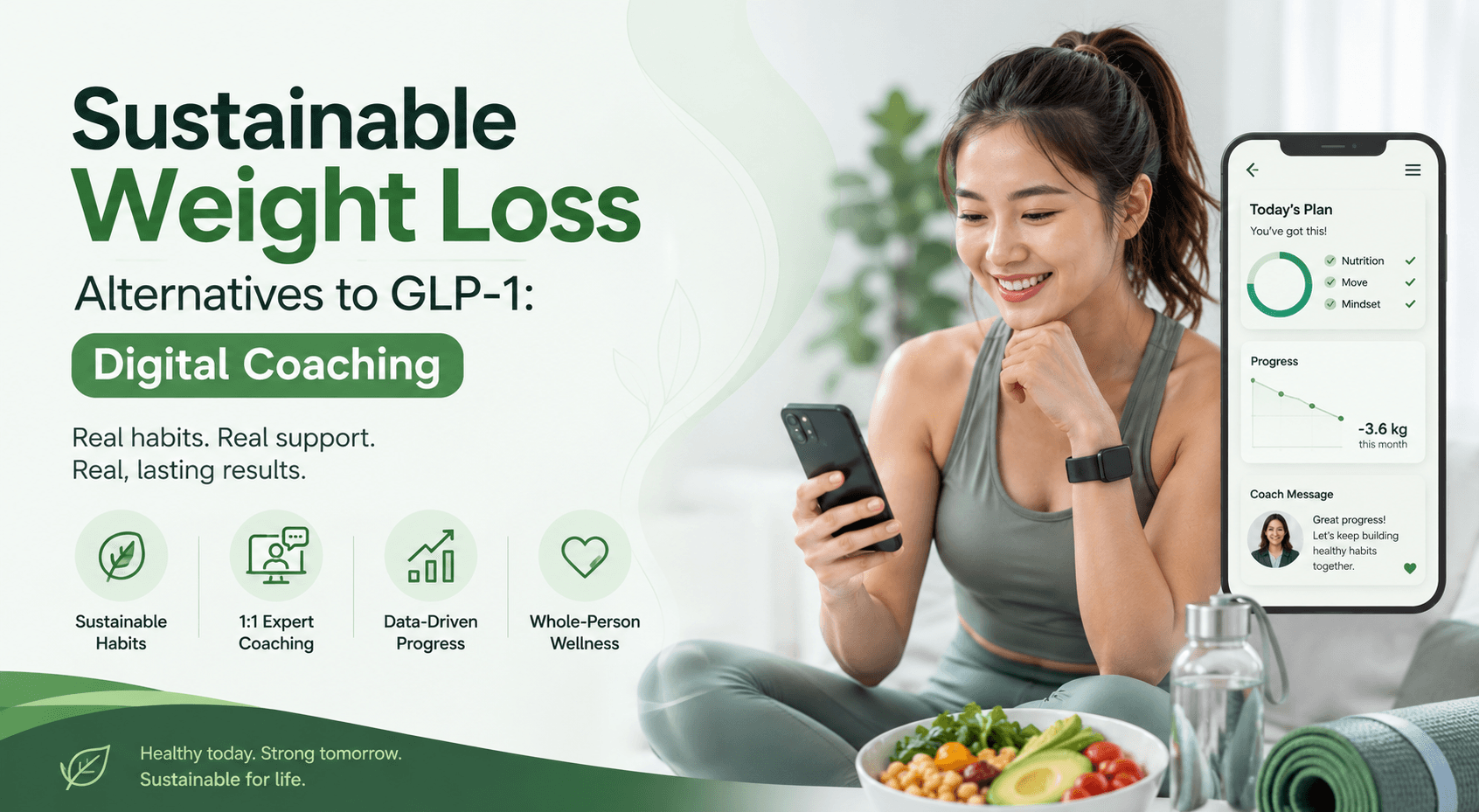
Sustainable weight loss alternatives to GLP-1 drugs address the core problem that pharmacotherapy alone cannot solve: lifelong behaviour change. Digital coaching solutions achieve 4–8% body weight loss at 12 months with significantly lower regain rates, while costing 80–95% less than GLP-1 therapies in Southeast Asia.
Key Takeaways
- GLP-1 drugs cause 12–15% weight loss on average, but 70–80% is regained within one year of stopping—making them a temporary solution for most patients.
- Digital coaching programs that combine behavioural therapy, diet tracking, and community support yield 4–8% weight loss at 12 months with 40–50% maintenance at 2 years, outperforming GLP-1 maintenance rates.
- In Southeast Asia, GLP-1 drugs cost $200–$600 per month, while digital coaching apps range from $10–$50 per month—a difference that matters for long-term adherence.
- Effective programs adapt to local cuisine (rice, noodles, street food), integrate WhatsApp or Telegram for low-bandwidth settings, and provide culturally relevant portion guidance.
Introduction: The Weight Loss Pendulum
You lose 15 kg over six months. Your clothes fit better, your blood sugar normalises, your confidence returns. Then you stop the medication, and within a year, 12 kg comes back. This is not an unusual story. It is the clinical reality for the majority of patients who use GLP-1 receptor agonists such as semaglutide (Ozempic, Wegovy) or liraglutide (Saxenda).
According to a 2021 meta-analysis in PubMed, patients taking GLP-1 drugs lose an average of 12–15% of their body weight over 68 weeks—an impressive figure. However, 70–80% of that weight is regained within one year of discontinuation (source). The drug suppresses appetite but does not teach the brain or body new habits. When the drug stops, appetite returns—often with a vengeance.
This is the core problem that sustainable weight loss alternatives to GLP-1 drugs must solve. In Southeast Asia, where obesity rates have doubled since 2000 (WHO Global Health Observatory), access to GLP-1 drugs is limited by cost ($200–$600 per month) and availability. The question is not whether GLP-1s work—they do, temporarily. It is whether we can achieve lasting weight loss without medication, especially in resource-constrained settings.
Digital coaching solutions—smartphone apps, telecoaching, and structured behavioural programs—offer a path forward. They are scalable, affordable, and evidence-based. This article examines the evidence, compares costs and outcomes, and provides practical guidance for Southeast Asian readers who want sustainable weight loss. If you are considering or currently using GLP-1 drugs, understanding these alternatives is critical for long-term success. EazyCare AI’s weight management module can help you compare options tailored to your health profile.
Why GLP-1s Fail in the Long Run: The Appetite Rebound
GLP-1 receptor agonists work by mimicking a hormone that slows gastric emptying and signals satiety to the brain. Patients eat less, lose weight, and often experience improvements in glycaemic control. The problem begins when the medication is discontinued. A study tracking patients two years after stopping GLP-1 therapy found that only 20% maintained their weight loss without continuing the drug (PubMed, 2019).
The physiological mechanism is straightforward: the brain compensates for weight loss by increasing hunger signals and reducing metabolic rate. GLP-1 drugs suppress those hunger signals pharmacologically. When the drug is withdrawn, the compensatory signals surge, often leading to rapid regain. This is not a failure of willpower—it is a predictable biological response.
70–80% of weight lost on GLP-1 drugs is regained within one year of stopping. Many patients regain more than they lost, a phenomenon known as "overshoot." Do not start GLP-1 therapy without a clear plan for maintenance—whether through continued medication or structured lifestyle intervention.
Practical takeaway: If you are on a GLP-1 drug, work with your clinician to transition gradually to a digital coaching program while still on the medication. Tapering the drug over 4–8 weeks while simultaneously enrolling in a coaching program reduces the magnitude of appetite rebound.
Digital Coaching for Weight Loss: What the Data Shows
Digital health interventions for weight management have been studied extensively. A meta-analysis of 39 randomised controlled trials published in PubMed found that digital coaching programs achieve an average weight loss of 4–8% body weight at 12 months—comparable to many pharmacotherapies used in obesity treatment (source). More importantly, the regain rate is lower: 40–50% of participants maintain clinically significant weight loss (≥5%) at 2 years, compared to 20% for GLP-1 discontinuation.
These programs typically include three core elements: self-monitoring (calorie and activity tracking), behavioural goal setting, and accountability via human coaches or automated feedback. The most effective digital coaching platforms integrate cognitive-behavioural techniques (CBT) to address emotional eating and food cues—factors that medication alone does not touch.
These same cognitive-behavioural techniques are used in digital therapeutics for chronic insomnia in Southeast Asia.
In Southeast Asia, where smartphone penetration exceeds 80% in urban areas, digital coaching is feasible. However, cultural adaptation is critical. Programs that simply translate Western meal plans fail. Localised versions that include rice portion guides, noodle alternatives, and strategies for eating out at hawker centres achieve higher adherence. The best digital coaching apps in Malaysia, Thailand, and Indonesia now offer meal logging that recognises local dishes like nasi lemak, pad thai, and soto—and provides calorie estimates tailored to local recipes.
For those managing chronic conditions, digital coaching chronic disease management programs can also help sustain long-term health improvements.
For those managing chronic conditions alongside weight loss, digital coaching for chronic disease management offers integrated support.
| Factor | GLP-1 Drugs | Digital Coaching Programs |
|---|---|---|
| Average weight loss at 12 months | 12–15% (while on drug) | 4–8% (sustained) |
| 2-year maintenance rate (≥5% loss) | ~20% (off drug) | 40–50% |
| Monthly cost (Southeast Asia) | $200–$600 | $10–$50 |
| Side effects | Nausea, vomiting, diarrhoea, pancreatitis risk | Minimal (screen time, data usage) |
| Accessibility in rural SEA | Low (requires prescription, refrigeration, cost) | High (smartphone + internet) |
What Makes Digital Coaching Work for Long-Term Weight Management?
Not all weight loss apps are equal. Many simply track calories and provide generic advice. Evidence-based programs share five key features:
1. Behavioural Therapy Integration
CBT-based modules that identify triggers, replace maladaptive responses, and reinforce new patterns double the chance of maintaining weight loss at 18 months. Look for apps that include weekly CBT lessons, not just tracking.
2. Real Human Coaching
While AI can provide 24/7 support, studies show that human-coached digital programs outperform fully automated ones by 2–3% in weight loss at 12 months. The optimal model uses AI for symptom tracking and reminders, with human coaches (dietitians or health counsellors) for weekly check-ins.
For more on how artificial intelligence supports long-term health, see our article on AI chronic disease management.
3. Culturally Adapted Meal Guidance
A program that recommends "grilled chicken salad" at every meal ignores the reality of Southeast Asian diets. Effective programs teach portion control for rice (recommending ½ cup per meal), swapping high-fat coconut milk for light versions, and choosing grilling over frying in street food.
4. Social Support Features
Group chat platforms (WhatsApp, Telegram) with moderation from coaches improve adherence by 30% compared to individual tracking alone. In collectivist cultures like Malaysia and Thailand, community accountability is a powerful tool.
5. Gradual Goal Progression
Setting a target of 1–2 kg per month (not 5 kg in the first month) is associated with lower dropout rates. Digital programs that use adaptive algorithms—increasing challenge as the user succeeds—perform best.
Practical takeaway: When choosing a digital coaching app, verify that it includes at least three of these five components. Avoid apps that promise rapid results without a behavioural framework. EazyCare AI’s coaching platform integrates all five, with customised meal plans for Malaysian, Thai, and Indonesian cuisines.
Adapting Digital Weight Loss Strategies for Southeast Asian Populations
Southeast Asia faces unique challenges in obesity management. Diets rich in refined carbohydrates (white rice, noodles) and fried foods, combined with increasingly sedentary urban lifestyles, have driven a doubling of obesity rates since 2000 (WHO). The cost of GLP-1 drugs—often exceeding the monthly income of a large segment of the population—makes medication-dependent strategies impractical for public health.
Digital coaching solutions that are affordable and culturally relevant offer the most scalable approach. The MOH Malaysia Clinical Practice Guidelines for Obesity highlight structured lifestyle modification including diet and physical activity counselling as first-line treatment for all patients with BMI ≥27 kg/m² (MOH Malaysia). Notably, they do not recommend GLP-1 drugs as first-line therapy unless comorbidities are present.
Successful programs in the region incorporate:
- Plate method visual guides that show portion sizes for rice, protein, and vegetables in terms familiar to local users (e.g., "rice no larger than your fist")
- Exercise adaptations for hot, humid climates—morning walks, home bodyweight circuits, or swimming
- Cultural food swaps: replacing gorengan (fried snacks) with fruit, or using sambal (chilli paste) as a low-calorie flavour enhancer
- Language support in Bahasa Melayu, Thai, Vietnamese, and Tagalog—not just English
"The most successful weight loss interventions in Southeast Asia are not high-tech—they are high-touch, low-cost, and deeply local. Digital coaching bridges the gap between clinical guidelines and real-world eating habits."
— Dr. Nurazira Ahmad, nutrition epidemiologist, Universiti Malaya
From App to Lifestyle: Maintaining Results Without Medication
Weight loss is a metabolic process. Weight maintenance is a behavioural art. Digital coaching programs that focus on habit formation—rather than calorie restriction alone—produce the best long-term outcomes. The concept of habit stacking (attaching a new behaviour to an existing routine) is one of the most effective strategies documented in behavioural science.
For example, instead of telling a patient to "eat less rice," a good coach will teach them to serve their rice in a small bowl (habit stack: after scooping rice, immediately put the pot away). Instead of aiming for "30 minutes of exercise daily," start with "5 minutes of stretching after morning tea." These micro-habits compound over weeks and months.
Practical takeaway: Sustainable weight loss without medication is achieved by making 3–5 small changes that reduce daily calorie intake by 200–400 calories—not by extreme dieting. A digital coach can help identify which changes fit your routine. EazyCare AI’s habit tracker can log your daily behaviours and suggest one adjustment each week.
Can Digital Coaching Replace GLP-1s Entirely?
For many patients, yes. For some, no. The decision depends on baseline BMI, comorbid conditions (especially type 2 diabetes), and personal history of weight loss attempts. A patient with a BMI of 40 kg/m², uncontrolled diabetes, and multiple failed lifestyle attempts may benefit from GLP-1 therapy as a bridge—but only if a digital coaching program is in place to maintain the loss after medication ends.
For those with diabetes, exploring diabetes reversal virtual care can provide additional insights into long-term management.
The optimal strategy combines both: GLP-1 drugs for initial weight loss (3–6 months), followed by gradual tapering while an intensive digital coaching program provides the behavioural scaffolding. This hybrid approach achieves the best of both worlds: the rapid results of pharmacotherapy and the durability of lifestyle change.
Metabolic adaptation is the body's tendency to reduce resting energy expenditure as weight loss progresses. GLP-1 drugs do not prevent this—they only suppress appetite. Digital coaching helps patients cope with the increased hunger signals that accompany metabolic adaptation, through behavioural techniques like mindful eating and meal timing.
Practical takeaway: If you are considering GLP-1 drugs, insist on a plan that includes a digital coaching component from day one. Ask your clinician: "Can you refer me to a structured digital weight management program before we start medication?"
Frequently Asked Questions
What are the best alternatives to GLP-1 drugs for weight loss?
The best evidence-based alternatives are structured lifestyle interventions delivered through digital coaching programs. These combine dietary modification (typically 1,200–1,800 kcal/day for women, 1,500–2,200 kcal/day for men), physical activity (150–300 minutes/week), and behavioural therapy (CBT or motivational interviewing). In Southeast Asia, digital coaching apps cost $10–$50/month and include culturally adapted meal plans. The weight loss is slower (4–8% vs 12–15% for GLP-1), but the maintenance rate is significantly higher. Other alternatives include in-person dietitian counselling and community weight loss groups, though these are less scalable. Always combine any weight loss program with medical supervision, especially if you have comorbidities.
Can digital coaching help with weight loss maintenance?
Yes, and the evidence is strong. Digital coaching programs that include ongoing self-monitoring, weekly coach check-ins, and social support have shown 40–50% maintenance of clinically significant weight loss at 2 years—double the rate observed after stopping GLP-1 drugs. The key is that digital coaching continues to provide accountability and behavioural reinforcement, whereas medication stops providing appetite suppression. Programs that use habit formation techniques and gradual progression are most effective. EazyCare AI's symptom checker can help you assess whether your current weight loss plan is sustainable.
How do GLP-1 drugs compare to lifestyle changes for weight loss?
On average, GLP-1 drugs produce 12–15% total body weight loss over 68 weeks, while intensive lifestyle interventions yield 5–10% loss at the same time point. However, lifestyle changes have no risk of pancreatitis, gallbladder disease, or severe gastrointestinal side effects. More importantly, lifestyle changes are associated with 40–50% weight loss maintenance at 2 years in well-structured programs, compared to ~20% after GLP-1 discontinuation. The trade-off is speed vs. durability. For patients with obesity-related complications, a hybrid approach (GLP-1 initially + digital coaching during tapering) is often the best strategy.
Is sustainable weight loss possible without medication?
Yes, absolutely. Thousands of patients achieve sustainable weight loss through diet, exercise, and behavioural change alone. The critical factor is not the method but the structure. Without a plan that addresses eating triggers, portion control, and physical activity, most people relapse. Digital coaching provides that structure. The key is to aim for 0.5–1 kg per week (1–2 lbs) using a moderate calorie deficit, not extreme restriction. Rapid weight loss tends to be regained quickly. If you are unsure about your options, EazyCare AI's symptom checker can help you assess whether you need urgent medical evaluation before starting a weight loss program.
What is the success rate of digital weight loss coaching?
In randomised trials, the average weight loss with digital coaching programs is 4–8% of initial body weight at 12 months, with approximately 60–70% of participants achieving at least 5% loss (which is considered clinically meaningful). After 2 years, roughly 40–50% maintain that loss. This is comparable to many FDA-approved weight loss drugs (excluding GLP-1s) and superior to self-directed attempts, where success rates are below 20%. Success rates are higher when the program includes human coaching (vs fully automated) and when the user logs meals and activity at least 4 days per week.
How much weight can you lose with digital coaching alone?
With consistent adherence to a digital coaching program that includes calorie tracking, exercise prescription, and behavioural therapy, typical weight loss is 4–8% of starting body weight at 12 months. For a person weighing 80 kg, that equates to 3.2–6.4 kg. However, some users achieve up to 10–15% loss if they combine the program with very low-calorie diet plans (1,000–1,200 kcal/day) under medical supervision. The rate is slower than GLP-1 drugs, but the loss is more likely to be maintained. Digital coaching alone is not appropriate for rapid pre-surgical weight loss in severe obesity; that requires medical intervention.
Are there any risks of stopping GLP-1 drugs?
Yes. Abrupt discontinuation can lead to significant appetite rebound, often causing rapid weight regain of 70–80% within one year. Some patients report emotional distress, binge eating episodes, and worsening of glycaemic control if they have type 2 diabetes. Additionally, the slowed gastric emptying effect reverses quickly, so gastric side effects like bloating may temporarily improve but can be replaced by increased hunger. To minimise risks, GLP-1 drugs should be tapered gradually over 4–8 weeks while starting a structured lifestyle program. Never stop without medical supervision. If you experience severe hunger or metabolic symptoms after discontinuation, consult your doctor.
What does MOH Malaysia recommend for obesity management?
The MOH Clinical Practice Guidelines for Obesity recommend a stepped approach: first-line treatment is lifestyle modification (diet, exercise, behavioural therapy) for all patients with BMI ≥27 kg/m². Pharmacotherapy (including GLP-1 receptor agonists) is reserved for those with BMI ≥30 kg/m² or ≥27 kg/m² with comorbidities who fail lifestyle intervention after 3–6 months. Bariatric surgery is an option for BMI ≥37.5 kg/m². The guidelines emphasise that drug therapy should be used only as an adjunct to lifestyle changes, and that digital health tools can support self-monitoring and adherence. These recommendations align with WHO global guidance.
Do weight loss apps really work long-term?
The evidence indicates that weight loss apps can work long-term if they meet three conditions: (1) the app includes evidence-based behavioural strategies (self-monitoring, goal setting, feedback), (2) the user engages consistently (logging at least 4 days/week for 6+ months), and (3) the program provides human or automated accountability. Among highly engaged users, 40–50% maintain clinically significant weight loss at 2 years. However, most commercial weight loss apps have low adherence rates because they lack these components. Choose an app that has published clinical outcomes, ideally one that integrates coaching and not just tracking. EazyCare AI's coaching app provides weekly human check-ins and localised meal support.
How to lose weight sustainably in Southeast Asia?
Sustainable weight loss in Southeast Asia requires strategies that work within local food environments and cultural norms. Instead of eliminating rice, control portions (½ cup cooked per meal). Replace heavy coconut milk curries with broths or stir-fries. Grill or steam meats instead of deep-frying. Use sambal or chilli for low-calorie flavour. Increase vegetable intake by adding leafy greens to every meal. Exercise can be done in the morning before heat—even 15 minutes of brisk walking after breakfast helps. Leverage community groups on WhatsApp or Telegram for accountability. Digital coaching programs tailored to Southeast Asia (like those offered through EazyCare AI) provide specific meal swaps, local exercise ideas, and culturally sensitive motivational support.
When to See a Doctor
Seek medical evaluation before starting any weight loss program—whether medication or digital coaching—if you have any of the following:
- BMI ≥35 kg/m² (especially with comorbidities like diabetes, hypertension, or sleep apnoea)
- Uncontrolled type 2 diabetes (HbA1c >9.0%)
- History of eating disorders (anorexia, bulimia, binge eating disorder)
- Unexplained weight loss (more than 5% body weight in 6 months without trying)
- Severe gastrointestinal symptoms (persistent nausea, vomiting, abdominal pain)
- Current use of medications that affect appetite or weight (antipsychotics, steroids, insulin)
Call 999 or go to the nearest emergency department if you experience: chest pain, shortness of breath, swelling in one leg (possible deep vein thrombosis), or any new neurological symptom during a weight loss program. Rapid weight loss can unmask underlying medical conditions.
Reassurance: If you are unsure, EazyCare AI can help you decide whether you need urgent care. Use the symptom checker to evaluate your individual risk before starting or modifying any weight loss plan.
Conclusion
The weight loss landscape has changed dramatically with the introduction of GLP-1 drugs, but the fundamental truth remains: no medication can substitute for sustainable behaviour change. The data are clear—70–80% of weight lost on GLP-1s returns within a year of stopping. Digital coaching solutions offer a viable, affordable, and evidence-based alternative that addresses the root cause of obesity: the mismatch between modern food environments and our evolutionary biology.
- GLP-1 drugs are effective for short-term weight loss but poor for long-term maintenance—only 20% maintain loss at 2 years off medication.
- Digital coaching programs provide 4–8% weight loss with 40–50% maintenance at 2 years, at a fraction of the cost ($10–$50/month vs $200–$600/month).
- Sustainable weight loss in Southeast Asia requires cultural adaptation—local meal plans, community support, and affordable technology.
Your weight journey is not a sprint—it is a lifelong adaptation. Whether you choose digital coaching alone or as a bridge after medication, the evidence supports a structured, behaviour-focused approach. Learn more at eazycare.ai or chat with our AI health assistant to explore your options.