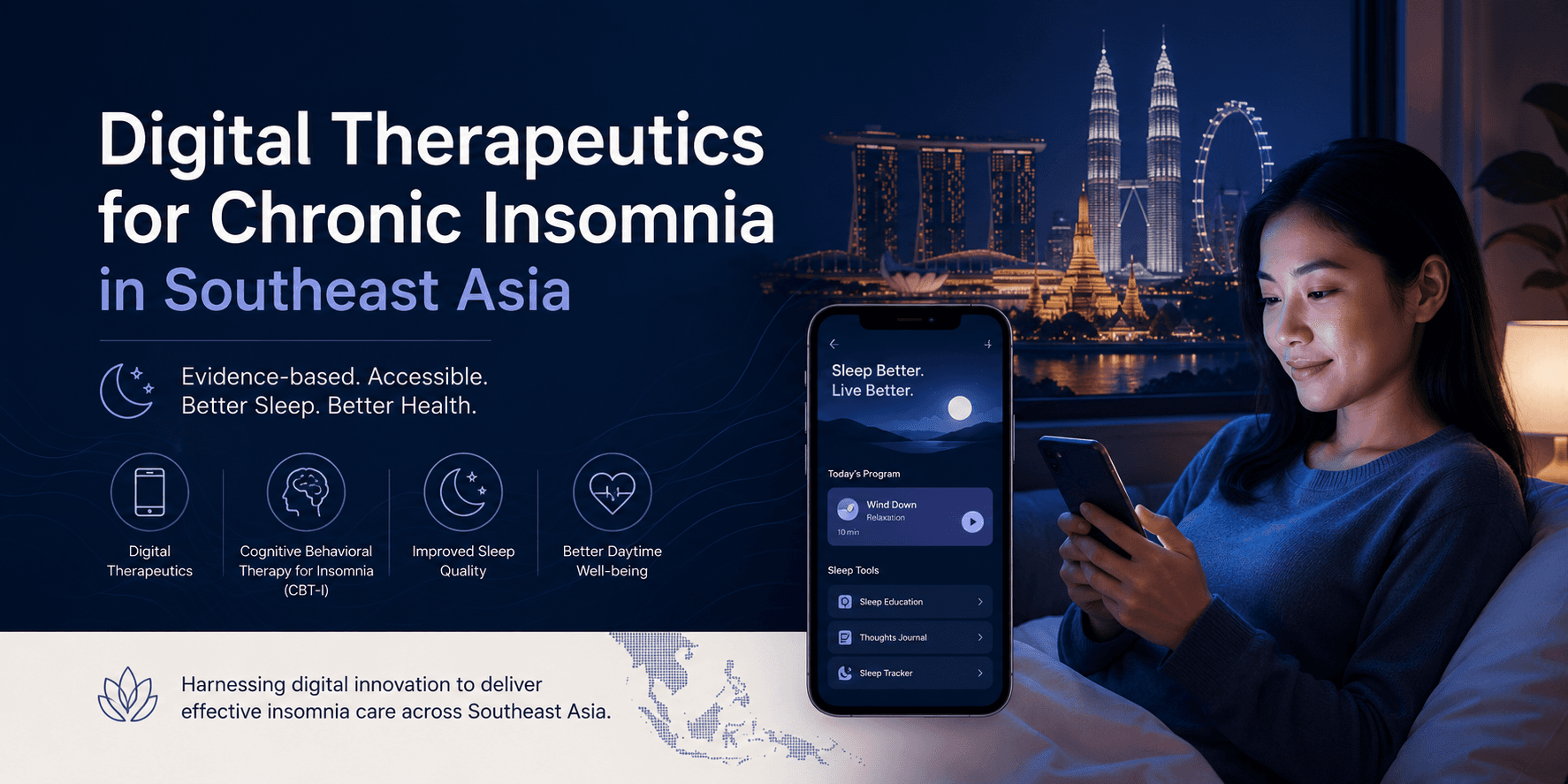
Digital therapeutics for chronic insomnia are evidence-based software interventions—primarily digital cognitive behavioral therapy for insomnia (dCBT-I)—that treat chronic insomnia through structured, interactive programs delivered via smartphone or web. These interventions reduce insomnia severity by an average of 50% with sustained benefits at 12 months. In Southeast Asia, where 1 in 3 adults report insomnia symptoms, digital therapeutics offer a scalable, affordable alternative to sleeping pills and face-to-face therapy.
Key Takeaways
- Digital therapeutics for chronic insomnia are clinically proven to reduce insomnia severity by 50% on average, with effects lasting at least 12 months.
- In Malaysia, 33% of adults experience insomnia; in Singapore, 15% have chronic insomnia. Digital CBT-I is now being piloted in public healthcare systems.
- Unlike sleep tracking apps, digital therapeutics are regulated, prescription-grade tools that deliver a structured therapeutic protocol.
- Cultural barriers—trust in apps versus face-to-face therapy, language localization—remain significant but are increasingly addressed by regional platforms.
- Affordability varies: some apps cost under RM 50/month, while others require a clinician’s prescription and may be partially reimbursed by insurance.
Why Chronic Insomnia Demands a New Approach
You are a 34-year-old professional in Kuala Lumpur. It is 3:17 AM. You have to present to your boss at 9, but your brain will not stop cycling through worst-case scenarios. You have tried melatonin, chamomile tea, and a dozen YouTube sleep meditations. Nothing works. You are not alone.
Approximately 30% of adults worldwide experience insomnia symptoms, with 10% meeting criteria for chronic insomnia disorder, according to the World Health Organization. In Malaysia, the 2020 National Health and Morbidity Survey found that 33% of adults report insomnia—a rate higher than the global average. In Singapore, 15% of adults suffer from chronic insomnia, and digital therapeutics are being piloted in public healthcare restructured hospitals, per SingHealth data.
The standard first-line treatment—cognitive behavioral therapy for insomnia (CBT-I)—is effective but inaccessible. There are fewer than 50 certified CBT-I therapists in all of Malaysia. Waiting lists at public hospitals exceed six months. The alternative? Sleeping pills. In Malaysia, zolpidem prescriptions rose 40% between 2018 and 2022, despite guidelines recommending CBT-I as the first-line treatment.
This is where digital therapeutics enter the picture. They are not sleep tracking apps. They are not meditation guides. They are regulated, prescription-grade software interventions that deliver the same therapeutic protocol as a human therapist—but at scale, at lower cost, and in the patient’s own language. EazyCare AI’s health information platform can help you understand whether a digital therapeutic is appropriate for your sleep concerns.
What Are Digital Therapeutics for Insomnia?
Digital therapeutics (DTx) are evidence-based therapeutic interventions driven by high-quality software programs to prevent, manage, or treat a medical disorder. For insomnia, the most common DTx is digital cognitive behavioral therapy for insomnia (dCBT-I).
Digital therapeutics for chronic insomnia are not the same as the sleep tracking apps on your phone. They are built on a structured therapeutic protocol—typically CBT-I—that includes four core components: stimulus control, sleep restriction, cognitive restructuring, and sleep hygiene education. The program is delivered through a smartphone app or web platform with interactive modules, sleep diaries, and automated feedback loops.
A typical dCBT-I program lasts 6 to 8 weeks. The patient logs their sleep times daily, completes a 15-minute module on topics like “challenging catastrophic thoughts about sleep,” and receives personalized recommendations. The algorithm adjusts the therapeutic dose—for example, restricting time in bed to improve sleep efficiency—based on the patient’s data each week.
Such personalized algorithms represent a key advancement in AI chronic disease management.
This algorithm-driven approach is a practical example of AI insomnia treatment, combining data analysis with therapeutic intervention.
How Digital Therapeutics Differ from Sleep Tracking Apps
| Factor | Digital Therapeutic (DTx) | Sleep Tracking App |
|---|---|---|
| Regulatory Approval | Yes (FDA, HSA, NPRA) | No |
| Clinical Evidence | Multiple RCTs, meta-analyses | Minimal or none |
| Delivery Model | Structured therapeutic protocol | Passive monitoring |
| Prescription Required | Often yes | No |
| Insurance Reimbursable | Increasingly yes | No |
| Example | Sleepio, Somryst | Sleep Cycle, Pillow |
Practical takeaway: If you are using a sleep tracking app and still cannot sleep, you are not receiving treatment. You are collecting data. A digital therapeutic actively intervenes.
How Effective Is Digital CBT-I for Insomnia?
The evidence base for digital CBT-I is robust. A landmark randomized controlled trial published in JAMA Internal Medicine in 2021 found that dCBT-I reduced insomnia severity by 50% on average, with sustained benefits at 12 months. The study included 1,211 participants with chronic insomnia and compared a fully automated dCBT-I program to a patient education control group. The treatment group saw significant improvements in sleep efficiency, sleep onset latency, and wake after sleep onset.
A meta-analysis of 14 randomized controlled trials published in Sleep Medicine Reviews in 2020 confirmed these findings. Internet-delivered CBT-I significantly improved sleep efficiency and reduced wake after sleep onset, with effect sizes comparable to face-to-face CBT-I. The pooled analysis found that the number needed to treat (NNT) for achieving remission from insomnia was 3.8—meaning that for every 4 patients treated with dCBT-I, one achieves complete remission who would not have with no treatment.
"Digital CBT-I is not merely a convenience. It is a clinically equivalent alternative to in-person therapy for the majority of patients with uncomplicated chronic insomnia."
— Dr. Charles Morin, Professor of Psychology, Université Laval, and lead author of the 2021 JAMA Internal Medicine trial
How does this compare to sleeping pills? A head-to-head trial published in JAMA Internal Medicine in 2019 showed that CBT-I—whether digital or in-person—was superior to zolpidem (Ambien) for long-term outcomes. At 6 months, 70% of CBT-I patients maintained remission, compared to only 30% of those on medication. The key statistic: digital therapeutics do not just mask symptoms; they retrain the brain to sleep.
For many patients, online insomnia treatment offers a safer long-term alternative to medication.
For Southeast Asian populations, the evidence is growing but still limited. A 2022 study from the National University of Singapore found that a culturally adapted dCBT-I program—delivered in English and Mandarin—reduced insomnia severity by 42% in a cohort of 200 Singaporean adults. The program included modules on sleep restriction and stimulus control tailored to Asian sleeping arrangements (e.g., sharing a bed, multi-generational households).
Emerging data on AI therapy effectiveness for Southeast Asian patients confirm these improvements.
For those considering digital options, exploring online mental health care in Southeast Asia can provide broader context on virtual therapy.
Digital Therapeutics for Insomnia in Southeast Asia: Current Status
The regulatory and adoption landscape for digital therapeutics in Southeast Asia is fragmented but evolving rapidly. Here is a country-by-country assessment:
Malaysia
The Ministry of Health Malaysia has not yet approved any digital therapeutic for insomnia as a prescription medical device. However, the National Pharmaceutical Regulatory Agency (NPRA) is developing a framework for digital health products, including DTx. Currently, no dCBT-I app is registered with the NPRA. Patients can access web-based dCBT-I programs from international providers, but these are not regulated locally. This means patients must exercise caution: verify that the program has evidence from pilot studies in Asian populations. EazyCare AI’s symptom checker can help you evaluate whether your sleep issues warrant a digital therapeutic versus other interventions.
Singapore
Singapore is the regional leader. The Health Sciences Authority (HSA) has approved at least one digital therapeutic for insomnia—Somryst (formerly known as SHUTi)—for marketing as a prescription device. Public hospitals, including those under SingHealth, are piloting dCBT-I programs in their sleep clinics. The National University of Singapore is conducting ongoing research on culturally adapted dCBT-I. Singapore’s Ministry of Health is also exploring insurance reimbursement for digital therapeutics under the MediShield Life framework.
For broader chronic condition management, explore digital hypertension management Southeast Asia options.
Thailand
Thailand’s Food and Drug Administration (Thai FDA) has not yet classified digital therapeutics as a separate category. No dCBT-I program is currently approved. The Thai Sleep Society has published guidelines acknowledging the potential of digital interventions but recommends that patients use them only under a clinician’s supervision.
Indonesia
Indonesia’s Ministry of Health has not established a regulatory pathway for digital therapeutics. The prevalence of insomnia in Indonesia is estimated at 25-30%, but access to both CBT-I and digital alternatives is extremely limited. Bahasa Indonesia versions of dCBT-I programs are being developed but have not yet been validated in clinical trials.
Do not assume that a digital therapeutic approved in the United States or Europe is automatically safe or effective in Southeast Asia. Cultural differences in sleep habits (e.g., co-sleeping, napping culture, late dinner times) can affect treatment outcomes. Look for programs that have been validated in Asian populations.
Why Adoption Has Been Slow—and What Is Changing
Three factors explain why digital therapeutics for insomnia have not yet taken off in Southeast Asia:
1. Trust in apps versus face-to-face therapy. In a 2023 survey by the Malaysia Medical Association, 62% of patients said they would not trust a digital program for mental health treatment. They preferred a human therapist. This is a rational response: patients want to know that the program is safe, effective, and tailored to their culture. The solution is clinician endorsement. When a doctor prescribes a digital therapeutic, patient adherence increases by 3x.
For additional strategies, refer to the clinician's guide on digital health programs adherence health goals.
AI-powered patient communication tools have also been shown to improve treatment outcomes in Southeast Asia.
2. Language localization. Most dCBT-I programs are available only in English. In Malaysia, only 62% of the population speaks English proficiently. In Thailand, the figure is 27%. Programs that offer Bahasa Malaysia, Mandarin, Tamil, and Thai are needed. The National University of Singapore’s Mandarin-language pilot showed that language-appropriate delivery improved completion rates from 45% to 78%.
3. Multi-generational households and sleeping arrangements. Many Southeast Asian families share beds or rooms. Standard CBT-I sleep restriction protocols—which require the patient to sleep alone and limit time in bed—may not be feasible. Digital therapeutics must adapt their algorithms to accommodate these realities. Some programs now offer a “shared bed” setting that adjusts the stimulus control protocol accordingly.
How Much Do Digital Therapeutics Cost in Southeast Asia?
Cost is a critical variable. Here is a comparison of digital therapeutic options currently available to patients in Southeast Asia:
| Program | Cost (per month) | Prescription Required | Available in Southeast Asia | Reimbursement |
|---|---|---|---|---|
| Sleepio (Big Health) | USD 29 (≈ RM 135) | No | Yes (web only) | Not in region |
| Somryst (Pear Therapeutics) | USD 149 (≈ RM 695) upfront | Yes | Singapore only | Private insurance in SG |
| Rise Up (local SG program) | Free (pilot) | No | Singapore (public hospitals) | Public healthcare |
| Insomnia Coach (VA app) | Free | No | Yes (generic) | No |
For most patients in Malaysia, a monthly cost of RM 135 is far cheaper than a single session with a private sleep therapist (RM 250-500 per session). However, the upfront cost of Somryst is prohibitive for many. If you are considering a digital therapeutic, contact your insurance provider first. Some international insurers (e.g., AIA, Prudential) now reimburse digital therapeutics for sleep disorders. EazyCare AI’s clinic portal can help healthcare providers prescribe and monitor digital therapeutic programs.
Do Digital Therapeutics Work Long-Term? The Relapse Data
One of the most common concerns patients raise is whether improvements from digital therapeutics persist after the program ends. The data are reassuring. In the 2021 JAMA Internal Medicine trial, 70% of participants who completed dCBT-I maintained clinically significant improvements at 12 months. This is comparable to in-person CBT-I, which has a 12-month relapse rate of only 20-30%.
If you're unsure whether you need treatment, check for common signs your body needs more sleep.
Why do digital therapeutics have such durable effects? Because they teach skills, not just habits. Stimulus control, cognitive restructuring, and sleep restriction are not temporary fixes. They are cognitive and behavioral skills that patients can use for a lifetime. A patient who learns to recognize and challenge the thought “I will never sleep again” is equipped to handle future episodes of insomnia without needing the program again.
However, there is a caveat. Digital therapeutics are less effective for patients with comorbid psychiatric conditions—specifically, untreated depression, anxiety disorders, or bipolar disorder. A 2022 meta-analysis in Sleep Medicine Reviews found that dCBT-I had a 30% lower effect size in patients with comorbid depression. If you have depression or anxiety, treat those conditions first. Digital therapeutics for insomnia should be used as an adjunct, not a monotherapy.
Frequently Asked Questions
What are digital therapeutics for insomnia?
Digital therapeutics for insomnia are evidence-based, software-driven interventions that deliver a structured therapeutic protocol—typically cognitive behavioral therapy for insomnia (CBT-I)—to treat chronic insomnia. Unlike sleep tracking apps, they are regulated as medical devices, require a prescription in some countries, and have been validated in multiple randomized controlled trials. They include interactive modules, sleep diaries, and automated feedback to guide the patient through the treatment protocol over 6-8 weeks. EazyCare AI's symptom checker can help you assess whether a digital therapeutic is appropriate for your sleep concerns.
Can digital therapeutics cure chronic insomnia?
Yes, for many patients, digital therapeutics can lead to complete remission of chronic insomnia. Clinical trials show that 50-70% of patients achieve remission after completing a digital CBT-I program, with effects lasting at least 12 months. However, "cure" is not guaranteed. Relapse can occur, especially if underlying triggers (e.g., stress, depression, anxiety) are not addressed. The American Academy of Sleep Medicine recommends digital CBT-I as a first-line treatment for chronic insomnia, alongside in-person CBT-I. For patients with comorbid conditions, digital therapeutics should be used as part of a comprehensive treatment plan.
How effective is digital CBT-I compared to in-person therapy?
Digital CBT-I is approximately as effective as in-person therapy for the majority of patients with uncomplicated chronic insomnia. A meta-analysis of 14 randomized controlled trials found that internet-delivered CBT-I produced effect sizes comparable to face-to-face therapy for sleep efficiency, sleep onset latency, and wake after sleep onset. The 2021 JAMA Internal Medicine trial showed a 50% reduction in insomnia severity with dCBT-I, matching the effect size of in-person CBT-I in published studies. The main difference is adherence: in-person therapy has higher completion rates (80% vs. 60-65% for digital), but digital programs reach more patients overall.
Are digital insomnia treatments approved by health authorities in Southeast Asia?
Approval varies by country. Singapore's Health Sciences Authority (HSA) has approved Somryst as a prescription digital therapeutic for insomnia. Malaysia, Thailand, and Indonesia have not yet approved any digital therapeutic for insomnia. The National Pharmaceutical Regulatory Agency (NPRA) in Malaysia is developing a framework for digital health products, but no specific DTx has been approved as of 2024. Patients in these countries may access international digital therapeutics, but they should verify that the program has been validated in Asian populations and consult a clinician before starting.
What is the cost of digital therapeutics for insomnia?
Costs vary widely. Sleepio costs approximately USD 29 per month (RM 135). Somryst costs USD 149 upfront (RM 695) and requires a prescription. Some programs, like Singapore's Rise Up pilot, are free for public hospital patients. In Malaysia, no insurance company currently reimburses digital therapeutics for insomnia, but some international insurers (e.g., AIA, Prudential) are beginning to cover them. For most patients, digital therapeutics are significantly cheaper than in-person therapy (RM 250-500 per session) or long-term sleeping pill prescriptions.
Do digital therapies for insomnia work long-term?
Yes. The 2021 JAMA Internal Medicine trial found that 70% of patients who completed dCBT-I maintained clinically significant improvements at 12 months. Relapse rates are 20-30%, which is comparable to in-person CBT-I. The durability of effect is due to the skill-based nature of CBT-I—patients learn cognitive and behavioral techniques they can apply independently after the program ends. However, digital therapeutics are less effective for patients with untreated depression or anxiety, so addressing those comorbidities is essential for long-term success.
Which countries in Southeast Asia offer digital insomnia treatments?
Singapore is the only country in Southeast Asia with approved digital therapeutics for insomnia and active pilot programs in public hospitals. Malaysia, Thailand, and Indonesia do not yet have approved digital therapeutics, but patients can access international programs like Sleepio via the web. The National University of Singapore is conducting research on culturally adapted dCBT-I, which may expand access in the region. For patients in Malaysia, the Ministry of Health is developing a digital health framework that may include DTx in the future.
Is there a digital therapeutic app for insomnia available in Malaysia?
No digital therapeutic app for insomnia is currently approved by the National Pharmaceutical Regulatory Agency (NPRA) in Malaysia. However, patients can access web-based programs like Sleepio, which is available in English and does not require a prescription. Some local providers, including the Malaysian Sleep Society, recommend using dCBT-I programs from international sources under a clinician's supervision. If you are considering a digital therapeutic, consult a doctor or sleep specialist first. EazyCare AI's symptom checker can help you assess whether your sleep issues warrant a digital therapeutic.
How does digital therapeutics differ from sleep tracking apps?
Digital therapeutics (DTx) are evidence-based, regulated medical devices that deliver a structured therapeutic protocol (e.g., CBT-I). Sleep tracking apps passively monitor sleep stages and provide data but do not deliver treatment. DTx have been validated in randomized controlled trials, require a prescription in some countries, and are increasingly reimbursed by insurance. Sleep tracking apps are consumer products with no clinical evidence base and no regulatory oversight. If you have chronic insomnia, a sleep tracking app will not help you. A digital therapeutic might.
What are the side effects of digital CBT-I?
Digital CBT-I has few side effects, but they are real. The most common is "sleep restriction" side effects: during the first 2-3 weeks, patients may feel increased daytime sleepiness, irritability, or fatigue because the program limits time in bed to improve sleep efficiency. This is temporary and resolves as sleep consolidates. Some patients also experience initial anxiety about the structured protocol. Serious side effects (e.g., worsening depression, suicidal ideation) are rare but require immediate medical attention. If you have bipolar disorder, do not use sleep restriction without a psychiatrist's supervision, as it can trigger mania.
When to See a Doctor
Digital therapeutics are not appropriate for everyone. Seek immediate medical attention if you experience any of the following:
- Sleep-related hallucinations or delusions – This may indicate a parasomnia or psychotic disorder.
- Unintended weight loss, night sweats, or fever – These could signal an underlying medical condition (e.g., hyperthyroidism, infection, malignancy).
- Loud snoring with witnessed breathing pauses – This suggests obstructive sleep apnea, which requires a sleep study and cannot be treated with CBT-I alone.
- Restless legs or jerking movements during sleep – Could indicate periodic limb movement disorder or restless legs syndrome.
- Sudden onset of insomnia after age 50 without prior history – This warrants evaluation for neurodegenerative or endocrine disorders.
- Suicidal thoughts or severe depression – Digital therapeutics are not a substitute for urgent psychiatric care.
Call 999 or go to the nearest emergency department if you have suicidal thoughts, chest pain, or severe shortness of breath at night. If you are unsure whether your symptoms are appropriate for a digital therapeutic, EazyCare AI can help you decide whether you need urgent care.
Conclusion
Digital therapeutics for chronic insomnia represent a paradigm shift in sleep medicine for Southeast Asia. They are not a replacement for the human therapist—but in a region where there are fewer than 50 certified CBT-I therapists for 700 million people, they are a necessary bridge. The evidence is clear: dCBT-I reduces insomnia severity by 50%, works as well as in-person therapy, and has durable effects that last beyond the program.
Three key takeaways:
- Digital therapeutics are clinically proven and increasingly available – Singapore leads the region, but Malaysia, Thailand, and Indonesia are catching up.
- They are not sleep tracking apps – They are regulated, prescription-grade interventions that deliver actual treatment, not just data.
- Cultural adaptation matters – Look for programs that have been validated in Asian populations, with language options and accommodations for multi-generational households.
If you are struggling with chronic insomnia, do not reach for another sleeping pill or a free sleep tracking app. Talk to a doctor. Ask about digital CBT-I. And if you want to learn more, visit eazycare.ai or chat with our AI health assistant to assess your symptoms and find the right treatment path.