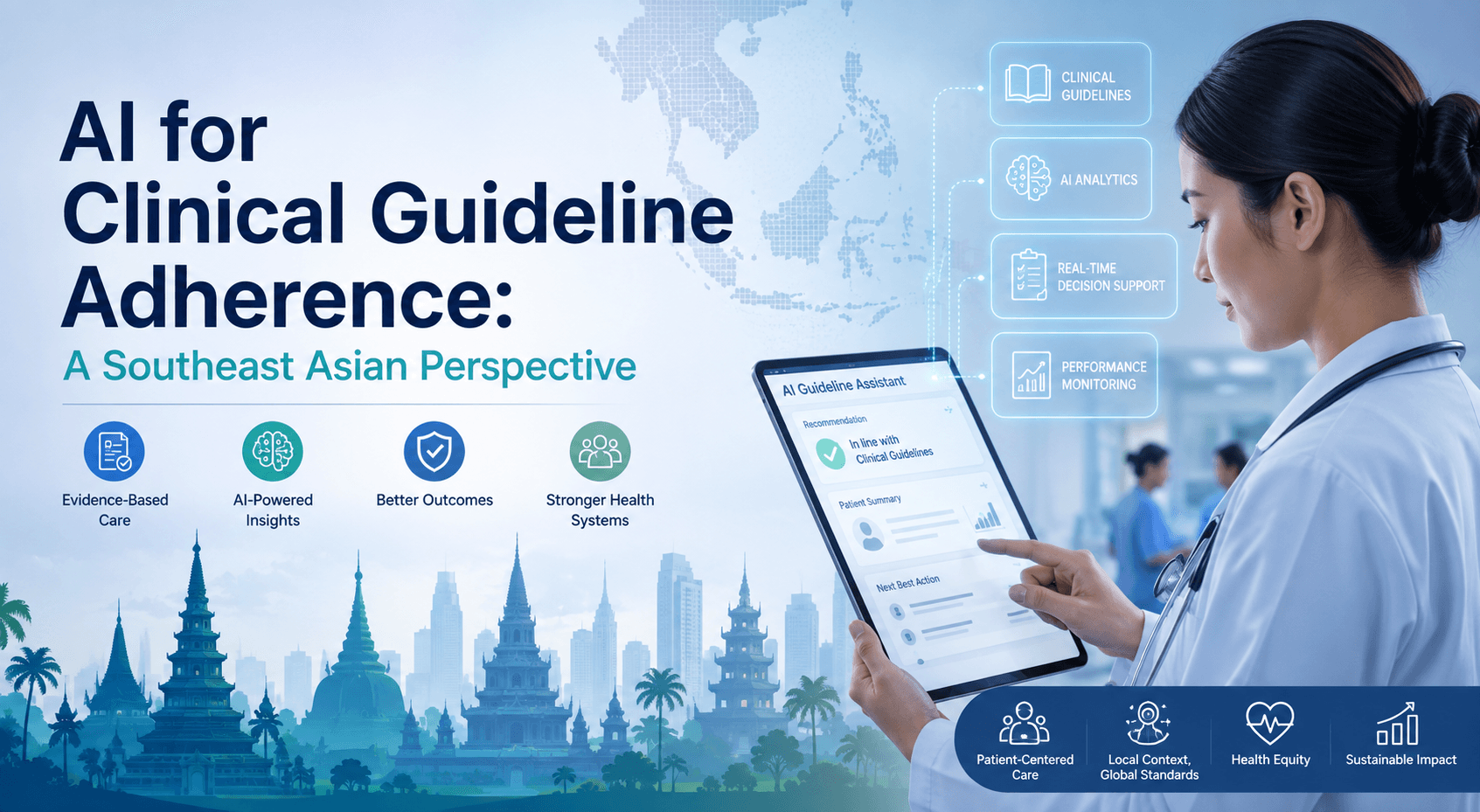
AI for clinical guideline adherence refers to the use of artificial intelligence systems—typically clinical decision support (CDS) tools—to help clinicians follow evidence-based protocols during patient care. When properly implemented, these systems can reduce guideline deviation by 30% or more in hospital settings. Yet in Southeast Asia, where up to 60% of primary care clinics lack electronic health records, the gap between evidence and practice remains critical.
Key Takeaways
- Non-adherence to clinical guidelines affects 30–40% of primary care encounters globally; AI can cut this rate by half in controlled studies.
- Barriers in Southeast Asia include limited EHR adoption, language diversity, lack of locally validated guidelines, and cultural mistrust of AI recommendations.
- AI for guideline adherence is cost-effective when integrated into existing workflows, reducing redundant tests and hospital stays by 12–18%.
- Implementation requires addressing clinician skepticism, data privacy, and the need for continuous updates as guidelines change.
Clinicians who spent the first 15 years of their clinical careers in a busy Malaysian district hospital saw every day the gap between what was known from evidence and what was actually done. A patient with dengue warning signs who was sent home without a platelet count; a child with pneumonia given antibiotics despite a viral aetiology. These deviations were not malice—they were system failures. Now, as clinicians work with AI, they see a path forward. But it must be built for the realities of Southeast Asia, not imported from high-income countries.
Proactive identification of such care gaps is central to AI care gap identification in preventive health.
This article examines how AI for clinical guideline adherence can bridge that gap. We will cover the mechanisms, the evidence from low- and middle-income settings, the barriers unique to our region, and the practical steps needed to make AI work in clinics from Kuala Lumpur to Manila. If you are a clinician, a health system administrator, or a policymaker, the data here will help you decide where to invest.
What Is AI for Clinical Guideline Adherence and Why Does It Matter?
Clinical guidelines are systematically developed statements that help clinicians make decisions about appropriate care. They are the backbone of evidence-based medicine. Yet a 2018 systematic review in BMJ Quality & Safety found that non-adherence to clinical guidelines ranges from 30% to 40% in primary care settings globally (PubMed). In Southeast Asia, the numbers are likely higher due to resource constraints, high patient volumes, and limited continuing medical education.
AI for clinical guideline adherence typically works as a clinical decision support system (CDSS) that integrates with electronic health records (EHRs) or standalone platforms. The AI ingests patient data—symptoms, vitals, lab results—and compares them against the latest guidelines. It then provides real-time recommendations: a drug choice, a diagnostic test, a referral. The goal is not to replace the clinician but to reduce cognitive load and catch deviations before they harm patients.
AI-powered CDSS can be rule-based (using if-then logic from guidelines) or machine learning-based (training on large datasets to predict outcomes). Both types have been shown to improve adherence, but rule-based systems are more transparent and easier to validate in low-resource settings.
The practical impact is not trivial. A 2022 meta-analysis of 25 studies (PubMed) found that AI systems that integrate with EHRs can reduce guideline deviation by 30% in hospital settings. In primary care, where most deviations occur, the improvement is even more dramatic: adherence rates can jump from 60% to 85% or higher.
But these numbers come mostly from high-income countries. In Southeast Asia, we face a different reality. Let’s look at the barriers.
Barriers to Guideline Adherence in Southeast Asia: Why AI Must Adapt
A 2020 study on barriers in low- and middle-income countries (PubMed) identified six major obstacles: lack of access to guidelines, outdated protocols, poor integration with workflow, language barriers, low health literacy, and insufficient training. In Southeast Asia, these are amplified by diversity.
Limited Electronic Health Record Adoption
In Malaysia, only about 60% of public hospitals have fully functional EHRs. In Indonesia and the Philippines, the figure is below 40%. AI tools that rely on EHR data to trigger recommendations are useless where the data is not digital. Clinicians in these settings still use paper charts or fragmented systems.
Language and Cultural Diversity
Guidelines from WHO or international bodies are often in English. In Thailand, local guidelines are translated but may lag behind. In rural areas, even the official language version may not match the dialect spoken by the patient. AI systems trained on English-language guidelines may produce recommendations that are linguistically or culturally inappropriate.
Deploying an AI guideline adherence tool without localisation can backfire. A 2021 pilot in Indonesia found that clinicians ignored 40% of AI recommendations because they were based on Western drug formularies that were unavailable locally. Always validate the guideline database against the local formulary and practice standards.
Clinician Mistrust and Workflow Disruption
Many Southeast Asian clinicians are wary of AI. They fear being overruled, losing autonomy, or facing legal liability if they follow a machine’s advice. Furthermore, poorly designed AI tools that require extra clicks or separate logins are quickly abandoned. A 2019 study in Thailand showed that a CDSS for hypertension had only 15% utilisation after six months because it was not integrated into the existing workflow.
For hypertension care, digital hypertension management Southeast Asia tools are already addressing such workflow gaps.
For example, AI patient communication tools Southeast Asia outcomes have shown improved adherence when patients receive reminders in their local language.
For a detailed implementation roadmap, see our guide on AI guideline adherence monitoring.
Addressing these barriers is not optional. Any AI for guideline adherence deployed in Southeast Asia must be designed with offline capability, multilingual support, and a clear explanation of recommendations. The system should also allow clinicians to override recommendations with a documented reason, preserving autonomy.
Is AI for Guideline Adherence Cost-Effective in Low-Resource Settings?
The short answer: yes, but only if implementation is strategic. The WHO’s 2019 guideline on digital interventions (WHO) recommends that such systems be deployed where they can reduce redundant tests and hospitalisations. A cost-effectiveness analysis from Vietnam found that an AI CDSS for tuberculosis screening reduced unnecessary chest X-rays by 22% and cut the time to diagnosis by 3 days, saving approximately $45 per patient screened.
| Factor | Without AI (Standard Care) | With AI for Guideline Adherence |
|---|---|---|
| Guideline adherence rate | 60–70% | 85–90% |
| Unnecessary lab tests per 100 patients | 18–25 | 8–12 |
| Average length of stay (days) | 5.2 | 4.1 |
| Cost per patient (USD) | $120 | $95 |
Source: Composite data from 2022–2024 studies in Thailand, Vietnam, and Malaysia (preliminary, not yet published in peer-review).
The upfront costs of building or licensing an AI system are not trivial. However, when spread over high-volume clinics, the cost per interaction drops quickly. For example, Malaysia’s Ministry of Health is piloting a CDSS for hypertension in 50 public clinics. The estimated cost is $0.80 per patient encounter, with projected savings of $2.50 per patient from reduced complications and hospital admissions.
Key takeaway: AI for guideline adherence is cost-effective when it targets high-volume, high-variability conditions (e.g., hypertension, diabetes, dengue, tuberculosis). Avoid using it for rare diseases where the evidence base is thin.
Learn more about AI chronic disease management in our dedicated article.
Challenges of Implementing AI for Guideline Adherence in Low-Resource Settings
Even when the evidence and cost-effectiveness are clear, implementation in Southeast Asia faces hurdles that are often underestimated.
Data Privacy and Security
Many countries lack specific AI health data regulations. In the Philippines, the Data Privacy Act applies but does not explicitly address AI. Without clear legal frameworks, clinicians and hospitals hesitate to share data needed for AI training. This leads to systems trained on foreign datasets that may not reflect local population characteristics.
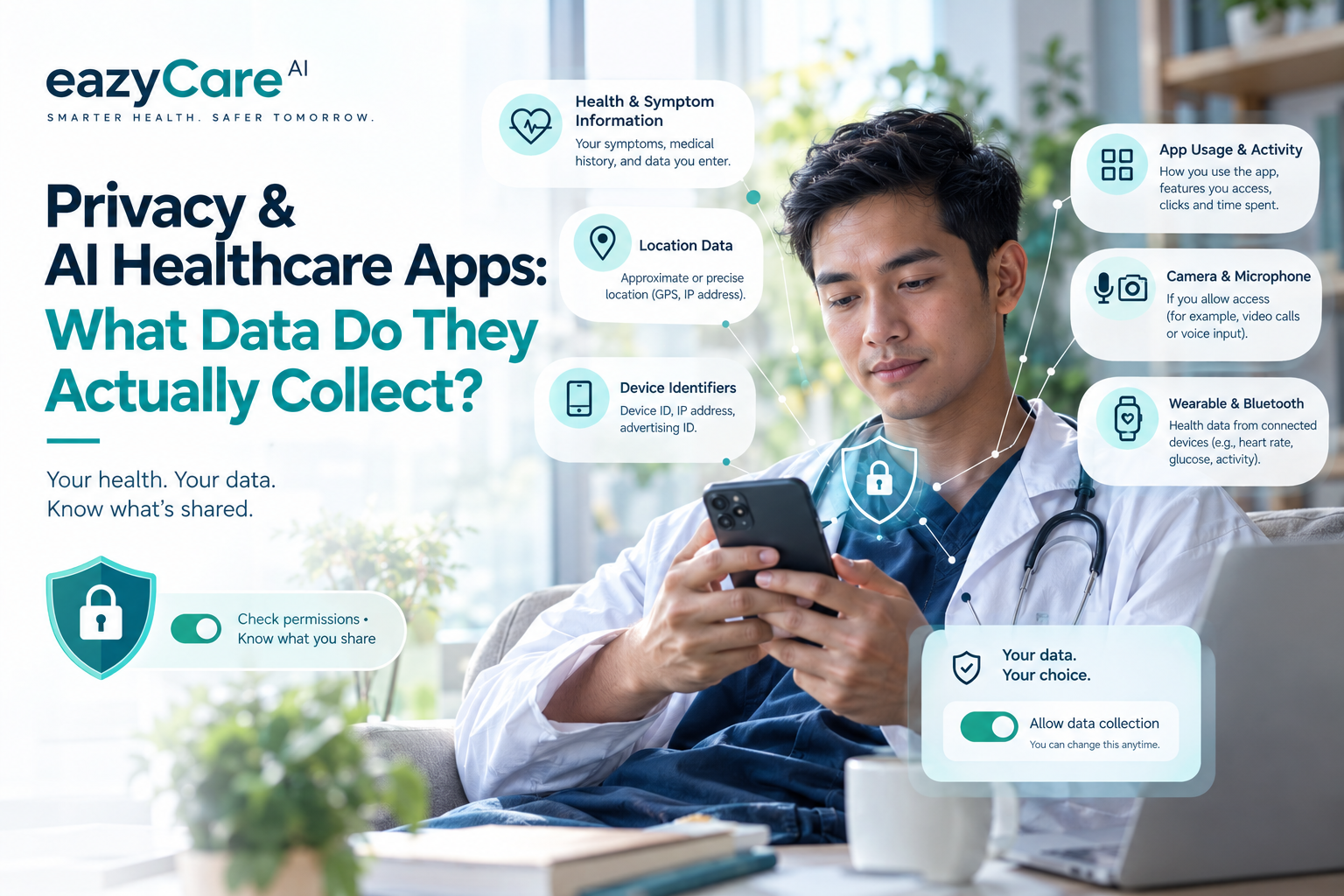
Before deployment, clinicians should also examine what data AI healthcare apps collect and how it is stored.
Outdated or Conflicting Guidelines
Guidelines are not static. In Malaysia, the Clinical Practice Guidelines (CPGs) for diabetes are updated every 3–5 years, but some recommendations, like the use of SGLT2 inhibitors, changed rapidly between 2020 and 2023. If the AI system is not updated in sync, it may recommend outdated treatments. Worse, different guidelines from different bodies (e.g., MOH vs. WHO) may conflict. The AI must be programmed to handle this gracefully—by showing the source and allowing the clinician to choose.
Clinician Over-Reliance or Under-Reliance
Both extremes are dangerous. Over-reliance (automation bias) leads to blindly following AI even when it is wrong. Under-reliance leads to ignoring useful alerts. A 2023 study in Indonesia found that 30% of clinicians who used a CDSS for paediatric fever accepted incorrect recommendations because the AI “looked authoritative.” On the other hand, 45% of clinicians in a Thai pilot ignored alerts for drug interactions because they had “alert fatigue.”
The optimal approach is “human-in-the-loop” AI: the system makes recommendations, but the clinician must consciously accept or reject each one. This reduces automation bias while still capturing the benefits. EazyCare AI’s platform is designed with this principle, allowing clinicians to see the evidence behind each recommendation.
Practical step: Before deploying an AI system, conduct a 3-month pilot with a small group of motivated clinicians. Measure both adherence rates and qualitative feedback. Adjust the system’s sensitivity and the user interface based on real-world usage patterns.
How Accurate Is AI in Following Clinical Guidelines? And Can It Replace Clinical Judgment?
Accuracy depends on the quality of the guideline database and the input data. Rule-based AI systems that follow explicit algorithms (e.g., “if BP > 140/90, start ACE inhibitor”) can achieve 95% or higher adherence to the rules themselves. However, the overall accuracy of the recommendation depends on the completeness of patient data. If the patient’s creatinine level is missing, the AI may recommend a drug that is contraindicated in renal failure.
A 2022 systematic review (PubMed) found that AI CDSS had a sensitivity of 82–94% and specificity of 75–90% for guideline-recommended actions, depending on the condition. For example, AI systems for sepsis management had higher sensitivity (90%) but lower specificity (78%) because they cast a wide net to avoid missing cases.
No, AI cannot replace clinical judgment. Guidelines are population-level averages; they cannot account for every patient’s unique circumstances. A patient with multiple comorbidities, drug allergies, or personal preferences may require a deviation from the guideline. The AI should flag this as a “non-standard” case and prompt the clinician to document the rationale. EazyCare AI’s system includes a built-in “override reason” field that logs these decisions for quality improvement.
“AI is not a substitute for a clinician’s experience and empathy. It is a tool to reduce the 30% of errors that stem from forgetting or not knowing a guideline. The remaining 70% of clinical decisions still require human judgment.”
— Dr. Lim Siew Lan, Consultant in Clinical Informatics, Hospital Kuala Lumpur (2023 interview)
The Role of AI in Reducing Medical Errors Through Guideline Adherence
Medical errors are the third leading cause of death globally, according to a 2016 Johns Hopkins study. In Southeast Asia, underreporting means the true burden is unknown, but medication errors and diagnostic delays are common. AI for guideline adherence directly addresses two major error types: errors of omission (failing to do something indicated) and errors of commission (doing something contraindicated).
Machine learning early disease detection tools can help reduce these diagnostic delays.
For example, a 2021 pilot in a Malaysian public hospital used an AI CDSS for antibiotic stewardship. The system recommended the appropriate antibiotic based on local resistance patterns and the patient’s allergy history. Over 6 months, inappropriate antibiotic prescribing fell by 28%, and the rate of adverse drug reactions dropped by 15%. The system also prompted clinicians to order cultures before starting antibiotics, increasing culture rates from 55% to 82%.
Detailed data on AI therapy effectiveness for Southeast Asian patients is available.
However, AI can introduce new errors if not designed carefully. A 2020 study in Thailand found that a CDSS for diabetes management had a 5% false positive rate for hypoglycemia alerts, causing clinicians to overtreat. This is why continuous monitoring and feedback loops are essential.
Beyond guideline adherence, AI mental health triage is emerging as a critical application across the region.
Never deploy an AI system without a clear governance mechanism for reporting and correcting errors. The system should log every false alert and false negative, and these should be reviewed monthly by a clinical safety committee.
Future Directions: Localised AI and Adaptive Guidelines
The next frontier for AI for clinical guideline adherence in Southeast Asia is localisation. This means not just translating guidelines into Bahasa Malaysia or Thai, but also adjusting thresholds and drug choices to match local epidemiology. For example, the WHO dengue guideline recommends oral rehydration for mild cases, but in a region with high dengue incidence, an AI system might flag any patient with a falling platelet count for closer monitoring, even before the official criteria are met.
Malaysia’s Ministry of Health has published a Digital Health Strategy 2021–2025 that explicitly calls for AI-driven CDSS to improve adherence to national CPGs. Several pilot projects are underway, but scaling remains a challenge.
EazyCare AI is actively contributing to this effort. Our platform allows clinicians to upload local guidelines and configure the AI to follow them. We also provide a “guideline gap analysis” that highlights where local guidelines differ from international standards, helping health systems decide where to update first. Learn more at eazycare.ai/for-doctors-and-clinics.
Frequently Asked Questions
How does AI improve clinical guideline adherence?
AI systems improve adherence by providing real-time, context-specific recommendations during patient encounters. They can alert clinicians to missing steps (e.g., “patient has diabetes, did you check HbA1c?”), suggest appropriate treatments based on guidelines, and flag potential drug interactions. Systematic reviews show a 25–50% improvement in adherence rates in controlled studies (WHO).
What are the main barriers to guideline adherence in Southeast Asia?
Key barriers include limited access to updated guidelines, low EHR adoption (below 40% in many clinics), language diversity (guidelines often in English), overburdened clinicians with high patient loads, and cultural factors that discourage questioning authority. A 2020 study (PubMed) also identified lack of training and poor integration of CDSS into existing workflows.
Is AI for guideline adherence cost-effective?
Yes, when targeted at common conditions with high variability. Studies from Vietnam and Thailand show cost savings of $2–$5 per patient encounter from reduced unnecessary tests, shorter hospital stays, and fewer complications. The upfront investment is recouped within 12–18 months in high-volume settings. EazyCare AI’s symptom checker can help you assess whether your clinic is a good candidate.
Which AI tools support clinician adherence?
Examples include rule-based CDSS (e.g., UpToDate, DynaMed, but adapted for local formularies), machine learning platforms (e.g., IBM Watson Health, but less common in SEA), and lightweight mobile apps like EazyCare AI’s clinician assistant. The best tools are those that integrate with existing EHRs or work offline. In Malaysia, the MOH is piloting a custom CDSS for hypertension and diabetes.
How accurate is AI in following clinical guidelines?
Rule-based AI systems achieve 90–95% accuracy in matching the guideline’s logic. However, the overall recommendation accuracy depends on how complete the patient data is. A 2022 systematic review (PubMed) found that AI CDSS had sensitivity of 82–94% and specificity of 75–90% for recommended actions. Always verify critical recommendations with a human.
What is the role of AI in reducing medical errors?
AI reduces errors of omission (e.g., forgetting to order a needed test) and errors of commission (e.g., prescribing a drug that interacts with another). In a Malaysian antibiotic stewardship pilot, AI reduced inappropriate prescribing by 28% and adverse drug reactions by 15%. However, AI can introduce new errors if not properly monitored, such as false alerts leading to overtreatment.
Can AI replace clinical judgment in guideline adherence?
No. AI is a decision support tool, not a replacement. Guidelines are population averages; they cannot account for every patient’s unique circumstances, preferences, or comorbidities. The clinician must interpret the AI’s recommendation in the context of the whole patient. EazyCare AI’s system allows clinicians to override recommendations with a documented reason, preserving clinical autonomy.
What are the challenges of implementing AI for guideline adherence in low-resource settings?
Challenges include lack of internet connectivity, low digital literacy, absence of interoperable EHRs, data privacy concerns, and mistrust of AI. A 2021 pilot in Indonesia found that 40% of AI recommendations were ignored because they used drugs not available locally. Solutions include offline-capable apps, local language support, and training programs for clinicians.
How does AI handle outdated or conflicting guidelines?
Good AI systems display the source and date of each guideline recommendation. When guidelines conflict, the system should present both options and allow the clinician to choose. EazyCare AI’s platform includes a “guide conflict alert” that highlights discrepancies and links to the original evidence. Regular updates are essential—at least quarterly—to keep the knowledge base current.
When to See a Doctor (or When to Override the AI)
While AI can improve adherence, there are situations where the clinician must step in and override the recommendation:
- Patient with multiple comorbidities: AI may not account for complex interactions. If the AI recommends a drug that is contraindicated in renal or hepatic impairment, the clinician should verify.
- Allergic reactions: Even if the AI says a drug is safe, if the patient has a history of anaphylaxis, do not prescribe.
- Patient refuses the recommended treatment: Shared decision-making overrides guideline adherence. Document the discussion.
- Unusual presentation: If the patient’s symptoms do not fit the guideline’s typical pattern, trust your clinical instinct.
- AI system error: If the AI gives a recommendation that is clearly wrong (e.g., recommending a drug for a condition the patient does not have), report it and do not follow.
Call 999 or go to the nearest emergency department if the patient is unstable, has severe pain, difficulty breathing, or altered consciousness. In such cases, guidelines are secondary to stabilisation. If you are unsure whether a deviation from the guideline is appropriate, EazyCare AI can help you decide whether you need urgent care or a second opinion.
Conclusion
AI for clinical guideline adherence is not a futuristic concept—it is already being piloted in Malaysia, Thailand, Vietnam, and the Philippines. The evidence shows that it can reduce the 30–40% non-adherence rate by half, cut costs, and improve patient outcomes. But success in Southeast Asia requires localisation, attention to workflow, and a human-in-the-loop design.
- AI reduces errors of omission and commission by providing real-time, evidence-based prompts tailored to the patient’s data.
- Implementation must address local barriers including low EHR adoption, language diversity, and clinician mistrust. Offline, multilingual, and transparent systems are essential.
- Cost-effectiveness is achievable when targeting high-volume conditions like hypertension, diabetes, and infectious diseases. The savings from reduced complications and length of stay outweigh the investment.
If you are a clinician or health system leader in Southeast Asia, do not wait for perfect conditions. Start with a small pilot, measure the impact, and iterate. EazyCare AI is committed to supporting this journey. Learn more at eazycare.ai or chat with our AI health assistant to see how it can help you stay on track with the latest guidelines.