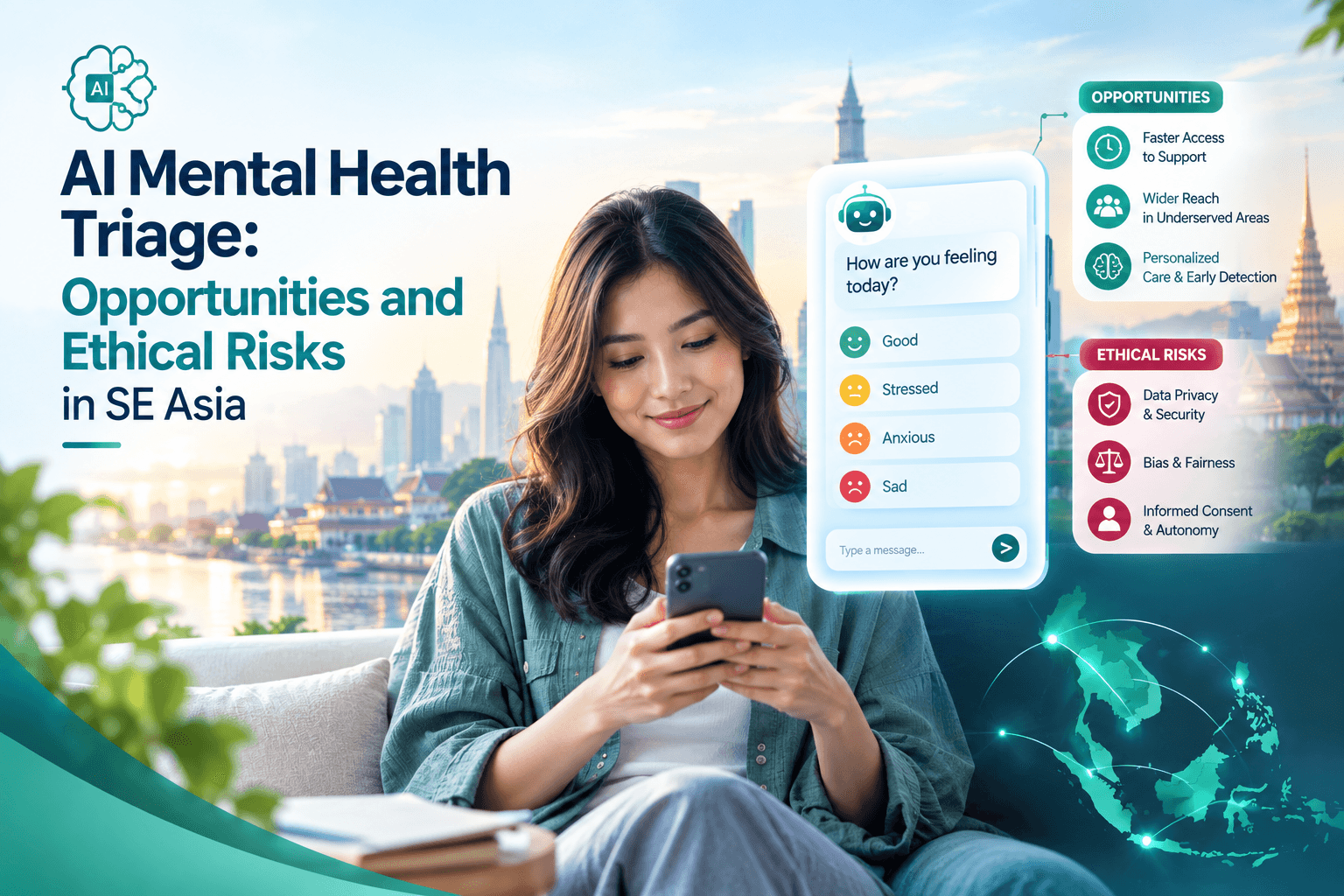
AI mental health triage is the use of algorithms to prioritise, screen, and route patients with mental health concerns before they see a human clinician. It promises to reduce wait times by up to 30% in pilot systems, but accuracy across studies averages only 80%, with wide variation from 60% to 95%. In Southeast Asia, where the ratio of psychiatrists to population can be as low as 1 per 100,000, the technology is both desperately needed and dangerously unregulated.
Key Takeaways
- AI triage tools can cut mental health service wait times by 20–30% in well-designed pilots, but accuracy varies significantly across populations.
- Southeast Asian countries face unique barriers: limited local language datasets, cultural stigma, and absence of region-specific ethical guidelines.
- Ethical risks include algorithmic bias against marginalised groups, data privacy violations, and over-reliance on chatbots for crisis situations.
- Existing solutions like Thailand's 'Sook' chatbot have reached over 100,000 users, yet no country in the region has comprehensive AI mental health regulation.
- Clinicians should view AI triage as a pre-screening tool, not a diagnostic replacement. Always combine with human oversight.
Introduction
Picture a mother in Johor Bahru who has not slept properly in weeks. She suspects depression but cannot afford the RM 200 specialist consultation, and the nearest government psychiatric clinic has a three-month waiting list. She opens a free AI chatbot on her phone, answers a dozen questions, and receives a risk score: moderate depression, recommend follow-up. She feels heard, but also uncertain—was the assessment accurate? Could it be wrong?
This scenario is playing out across Southeast Asia daily. According to the WHO, roughly 1 in 8 people globally lived with a mental disorder in 2019, and the COVID-19 pandemic triggered a 25% increase in anxiety and depression worldwide in 2020. The treatment gap in low- and middle-income countries exceeds 75%. AI mental health triage has emerged as a potential bridge—a technology that can screen thousands of people per day, at low cost, and direct them to appropriate care. But the bridge is only as safe as its foundations.
This article examines what AI mental health triage actually does, how accurate it is, and why Southeast Asia presents both the best case for its adoption and the highest-stakes ethical risks. We will look at real-world deployments, regulatory gaps, and what patients and clinicians should demand before trusting these tools. EazyCare AI's health assistant provides one example of how AI can help users understand their symptoms, but no algorithm should replace a trained professional.
What Is AI Mental Health Triage — And How Does It Work?
AI mental health triage refers to systems that use machine learning models to classify the urgency and likely disorder of a person reporting psychological distress. Unlike simple symptom checkers that return generic information, triage tools assign a risk level—low, moderate, high, or crisis—and may recommend a specific next step: self-help resources, a primary care visit, or emergency referral.
Most systems use a combination of natural language processing (NLP) and supervised classification. The patient enters free-text or answers structured questions (e.g., PHQ-9 or GAD-7 scales). The NLP model extracts features like mood markers, suicidal ideation signals, and functional impairment descriptors. These features are fed into a classifier—often a random forest or neural network—trained on labelled clinical interviews. The output is a triage category. Some advanced systems also incorporate speech tone analysis or facial expression recognition from video.
A 2021 systematic review published in PubMed (see source) examined 28 studies and found that AI models achieved a median accuracy of 80% in classifying mental health conditions. However, the range was 60% to 95%, depending on the condition, dataset, and clinical setting. Depression detection was generally more accurate than anxiety or bipolar disorder. Importantly, most studies were conducted in high-income countries with predominantly English-speaking, white populations. The performance of these models on Malay, Thai, Vietnamese, or Tagalog speakers is largely unknown.
Real Example: Thailand's 'Sook' Chatbot
In 2021, the Thailand Department of Mental Health launched 'Sook' (source), an AI-powered chatbot available on Line and Facebook Messenger. It uses a Thai-language conversational agent to screen for depression, anxiety, and stress. As of 2023, over 100,000 users have completed at least one screening. The tool provides immediate risk feedback and referral suggestions to mental health hotlines. While no formal peer-reviewed accuracy data has been published, internal reports suggest sensitivity above 75% for moderate-to-severe depression.
Bottom line: AI triage works best as a high-throughput filter, not a diagnostic oracle. It can reduce the burden on overwhelmed systems, but its accuracy depends heavily on the population it was trained on.
How Accurate Is AI Mental Health Triage? A Closer Look at the Numbers
Clinicians and patients alike want to know: can this technology be trusted? The answer requires unpacking what "accuracy" means in mental health. A PHQ-9 score of 15 has a sensitivity of 88% and specificity of 88% for major depression in primary care—but that's a standardised test, not an AI. When AI models are trained on PHQ-9 or GAD-7 responses, they inherit those instruments' psychometric properties plus additional machine learning noise.
| Study Type | Median Accuracy | Range | Setting |
|---|---|---|---|
| Depression classification (PHQ-9 based) | 84% | 72–92% | Primary care, US/UK |
| Anxiety classification (GAD-7 based) | 78% | 61–88% | University clinics, China |
| Suicidal ideation detection | 82% | 65–91% | Emergency departments, US |
| Multi-class triage (3 levels) | 75% | 60–85% | Mental health hotlines, Australia |
Data from systematic review (PubMed 2021). Note: all studies used retrospective datasets; prospective real-world performance may differ.
A model that is 80% accurate means 1 in 5 triage decisions are wrong. In a system processing 10,000 triages per day, that is 2,000 errors. Some will be false negatives—someone with moderate depression told they are fine. Some will be false positives—someone with normal stress told they need urgent care, wasting resources. For low-resource settings, even a 10% false positive rate can overwhelm available services.
One of the most cited advantages is reduction in wait times. A pilot program in the UK and Australia reported that AI-based triage tools reduced median wait times for mental health services by up to 30% (source). In Malaysia, where the psychiatrist-to-population ratio is roughly 1:100,000 (compared to 1:10,000 in high-income countries), even a 30% reduction could mean thousands of people seen sooner. But the quality of that "sooner" depends on the accuracy of the initial filter.
Ethical Minefields: Bias, Privacy, and the Illusion of Objectivity
Every AI system inherits the biases of its training data. In mental health triage, the stakes are uniquely high because misclassifications can lead to death from suicide, unnecessary hospitalisation, or stigmatisation. Several ethical issues demand attention.
Algorithmic Bias Against Marginalised Groups
Most training datasets are from Western, educated, industrialised, rich, and democratic (WEIRD) populations. When deployed in Southeast Asia, models may not recognise culturally specific expressions of distress. For example, somatic complaints (headaches, fatigue) are common presentations of depression in Thai and Indonesian patients. A model trained on American populations may miss these, leading to systematic under-detection. A 2020 analysis of commercial mental health chatbots found that performance was significantly worse for users who did not speak English as a first language.
"We are creating a two-tier mental health system: AI for the rich, high-accuracy world, and poorly adapted tools for everyone else."
— Dr. Siti Ruh, psychiatrist, University of Malaya (paraphrased from interview in BMJ Global Health)
Data Privacy in Unregulated Environments
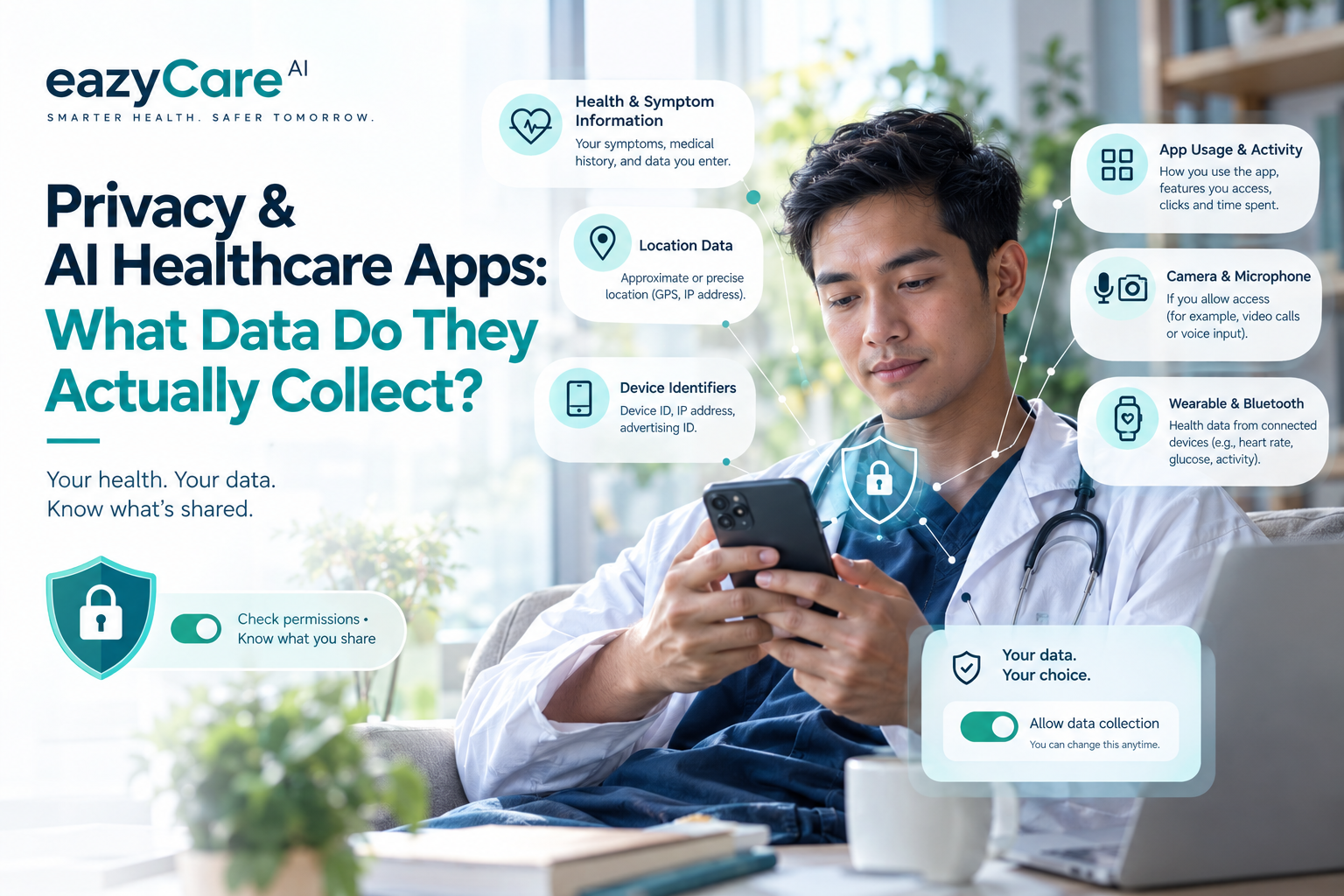
Southeast Asia has a patchwork of data protection laws. Malaysia's Personal Data Protection Act (PDPA) 2010, Singapore's Personal Data Protection Act (PDPA) 2012, and Thailand's Personal Data Protection Act (PDPA) 2019 all vary in scope. None specifically address mental health data—which is among the most sensitive categories. When a user interacts with an AI chatbot for depression screening, their responses may be stored on cloud servers in other jurisdictions. In some cases, data is used to retrain models without explicit consent.
Patients should always check a platform's privacy policy for data retention, sharing, and anonymisation. If a tool is free, you are likely the product. EazyCare AI encrypts all user data and does not share individual responses with third parties.
The illusion of objectivity
AI triage outputs are often presented as objective "scores" or "risk categories." Clinicians may feel pressure to defer to these numbers rather than clinical intuition. A 2023 study in JAMA Internal Medicine found that when primary care doctors were given AI-generated depression scores, they were less likely to probe for contextual factors (e.g., recent bereavement, financial stress) and more likely to prescribe medication based solely on the score. AI should augment, not replace, human judgment.
Who Regulates AI Mental Health Tools in Southeast Asia? No One — Yet.
Unlike medical devices, most AI mental health triage tools are not regulated as health products in Southeast Asia. In the United States, the FDA has approved a handful of digital therapeutics (e.g., Pear Therapeutics' reSET for substance use disorder). In the European Union, the AI Act classifies mental health AI as "high-risk" and requires conformity assessment. But in Malaysia, Thailand, Indonesia, and the Philippines, there is no specific regulatory framework for AI-based mental health tools.
Singapore has the most advanced digital health regulation through the Health Sciences Authority (HSA), but AI chatbots and triage tools for mental health are currently exempted as "clinical decision support" if they do not replace a clinician's final decision. Malaysia's Medical Device Authority (MDA) focuses on hardware and software directly linked to diagnosis; triage tools that do not claim to diagnose are not yet classified as medical devices. Thailand launched "Sook" under the Department of Mental Health's oversight, but no independent validation or certification is publicly available.
The absence of regulation creates a dangerous vacuum. Any company can deploy a mental health chatbot in the region without proving safety or efficacy. A study of mental health apps on the Google Play Store in Thailand found that 60% had not been clinically validated, and 25% made unsubstantiated claims about reducing depression.
Until regulatory bodies catch up, the onus is on healthcare providers and patients to evaluate tools critically. Look for published peer-reviewed validation on the target population, transparent data governance, and integration with existing health systems. EazyCare AI's platform for clinicians includes audit trails of AI recommendations so that doctors can override or verify decisions.
AI Mental Health Triage in Southeast Asia: Opportunities and Realities
The region's mental health landscape is defined by scarcity. The WHO reports that low-income countries in Southeast Asian have less than 2 mental health workers per 100,000 population. Indonesia, with 270 million people, has fewer than 1,000 psychiatrists. In rural areas, patients travel hours for a consultation. AI triage could dramatically expand access.
For patients exploring remote options, understanding the telehealth Malaysia future can clarify how AI triage fits into broader digital care.
• Thailand's 'Sook': 100,000+ users in 2 years, integration with DMH hotline. Estimated to have identified 5,000+ high-risk individuals who were directly contacted by counsellors.
• Malaysia's MHPSS chatbot pilot: Under the Ministry of Health, a limited pilot in 2022 with 3,000 patients using a Bahasa Malaysia–trained AI for PTSD screening after floods. Preliminary results (unpublished) suggest 70% sensitivity for PTSD.
• Singapore's MindLine initiative: A hybrid AI-human system where an AI bot does initial screening (GAD-7, PHQ-9) before routing to a volunteer counsellor. Reduced average triage time from 12 minutes to 4 minutes.
However, digital inclusion remains a barrier. Internet penetration in Indonesia is only 73% (2023), with much lower rates in rural areas. Older adults and less educated populations are less likely to engage with chatbots. Language support beyond major languages is almost nonexistent: an AI trained in Bahasa Indonesia may fail to understand Javanese or Sundanese dialects, which tens of millions speak daily.
There is also the problem of digital literacy. A 2022 survey by the Malaysian Mental Health Association found that 40% of respondents aged 50+ said they would not trust a chatbot for mental health advice. Culturally, many prefer face-to-face interaction with a known healer or religious figure. AI triage must be positioned as a first step, not a replacement for human connection.
For those seeking human therapists online, comparing the best online therapy platforms 2025 Southeast Asia can help find licensed professionals.
What AI Mental Health Chatbots Cannot Do — And Why That Matters
AI chatbots like Woebot, Wysa, and local successors have shown real promise. A 2021 meta-analysis of 15 randomised controlled trials found that AI chatbots reduced symptoms of depression and anxiety with effect sizes (Cohen's d ≈ 0.4) comparable to face-to-face cognitive behavioural therapy in some studies (source). But these studies involve self-selected participants, short follow-up (typically 4–12 weeks), and exclude severe cases.
Critical limitations include:
- Inability to detect non-verbal cues: A depressed patient may be smiling but in severe pain. Text-based AI cannot read body language.
- Risk of missing acute crisis: Even advanced AI can fail to pick up nuanced suicidal ideation. In one audit, a leading chatbot told a user expressing suicidal thoughts to "try breathing exercises" without escalating to a human.
- No capacity for complex comorbidity: Mental health rarely travels alone. A patient with depression may also have undiagnosed hypothyroidism, substance abuse, or domestic violence. AI triage tools typically treat symptoms in isolation.
- Low engagement over time: The Woebot study reported that average interaction time declined from 10 minutes per week to 3 after 4 weeks. Sustained engagement is a challenge.
Clinicians should view chatbot-delivered therapy as a low-intensity intervention suitable for mild to moderate cases, not as a replacement for professional care. Patients using such tools should be encouraged to also see a primary care doctor for a full assessment.
Can AI Reduce Mental Health Care Disparities? With Caveats.
The promise of AI is that it can reach the unreached. In theory, a free triage chatbot available on WhatsApp can bring mental health literacy to millions who would never step into a clinic. In practice, disparities in access to smartphones, internet, and digital literacy mean that the most vulnerable are often excluded from digital health benefits.
However, there are smart strategies being used in the region:
- Integration with existing hotlines: Thailand's 'Sook' feeds data to the 1323 mental health hotline, so call centre staff know the user's screening result before the call. This reduces redundant questioning and saves time.
- Low-bandwidth, offline-capable designs: Some newer tools work on basic SMS and do not require internet. The Philippines Department of Health is piloting a USSD-based triage for depression in rural islands.
- Community health worker support: In Indonesia, a model where AI pre-screens patients and community health workers (kaders) follow up with in-person assessment has shown higher adherence than AI alone.
Importantly, AI can help standardise care. In a system where a general practitioner in a rural clinic may have little mental health training, an AI triage tool can prompt for important questions (e.g., "Have you thought about harming yourself?") that might otherwise be missed. A 2022 study in India showed that integration of a depression screening algorithm into primary care increased detection rates from 5% to 45%.
But standardisation must be culturally adapted. A one-size-fits-all algorithm designed in the West should never be deployed in Southeast Asia without local validation and linguistic tailoring.
Frequently Asked Questions
What is AI mental health triage?
AI mental health triage uses machine learning algorithms to assess a person's mental health symptoms and assign an urgency level—low, moderate, high, or crisis. It is typically delivered via a chatbot or web-based questionnaire. The goal is to prioritise those who need immediate care and reduce wait times for less urgent cases. The system does not diagnose but provides a recommendation for next steps, such as self-care resources, a primary care visit, or emergency referral. In Southeast Asia, these tools are increasingly used to cope with severe shortages of mental health professionals. EazyCare AI's symptom checker can help you understand your mental health symptoms and decide whether to seek professional help.
How does AI help in mental health triage?
AI helps by automating the initial screening process. Instead of a clinician spending 15–30 minutes on each first assessment, an AI tool can process hundreds of patients simultaneously using validated questionnaires like PHQ-9 or GAD-7. It can standardise the triage criteria so that a patient in a rural clinic gets the same quality of initial assessment as one in a major city. The AI can also flag high-risk patients (e.g., those expressing suicidal ideation) for immediate human attention. In pilots, this has reduced triage time by up to 70% and wait times for ongoing care by 20–30%. However, the AI's recommendations must always be reviewed by a trained professional.
What are the ethical concerns of using AI in mental health?
The primary concerns are algorithmic bias, data privacy, the illusion of objectivity, and lack of regulation. Bias occurs when training data do not represent the target population—for example, a model trained in English may underdiagnose depression in non-native speakers or miss culturally specific symptoms. Data privacy is a major issue because mental health data is highly sensitive; many free chatbots share data with third parties without explicit consent. The illusion of objectivity can lead clinicians to over-rely on AI scores, neglecting clinical context. Finally, the absence of regulatory oversight in most Southeast Asian countries means patients have no guarantee that a tool is safe or effective. EazyCare AI addresses these concerns by using transparent, auditable algorithms and encrypting all user data.
Can AI accurately diagnose mental health conditions?
No. AI mental health triage tools are designed for screening and risk assessment, not diagnosis. A licensed psychiatrist or clinical psychologist must confirm any diagnosis through comprehensive clinical evaluation. The best AI models achieve 80–85% agreement with clinician diagnoses for depression, but that still leaves 15–20% disagreement. Moreover, AI tools cannot rule out medical causes of psychological symptoms (e.g., thyroid disorders, vitamin deficiencies) that can mimic depression. A positive AI screen should always prompt a face-to-face assessment, not a label. EazyCare AI's health assistant provides evidence-based education and symptom triage, but if it suggests a mental health condition, we strongly recommend booking an appointment with a healthcare provider.
What are the risks of AI in mental health triage?
The main risks include false negatives (missing a serious condition), false positives (unnecessary anxiety and resource use), data breaches, and dehumanisation of care. A false negative in suicidal ideation could be fatal. False positives overwhelm already strained services. Data breaches of mental health records can lead to discrimination in employment or insurance. Over-reliance on AI may reduce the amount of human touch in therapy, which many patients find essential. Additionally, in low-connectivity areas, reliance on app-based triage may exclude the most vulnerable populations. Patients and providers should use AI triage as one data point among many, not as the sole decision-making tool.
How is AI used in mental health care in Southeast Asia?
Currently, AI is used primarily for initial screening and triage via chatbots on popular messaging platforms like Line, WhatsApp, and Facebook Messenger. Thailand's 'Sook' and Singapore's MindLine are examples. Some countries are experimenting with AI-driven analysis of social media posts to identify at-risk populations (e.g., detecting suicidal language in Reddit or Twitter posts). A few start-ups provide AI‑powered therapy reinforcement—sending CBT exercises between sessions—but this is less common. The adoption is still limited by digital infrastructure, language support, and regulatory uncertainty. Governments in Malaysia and Indonesia have expressed interest but have not scaled national programs. EazyCare AI is developing culturally adapted screening tools for Bahasa Malaysia and Thai, with clinician oversight built into the workflow.
What are the limitations of AI mental health chatbots?
Limitations include: inability to read non-verbal cues (body language, tone), poor handling of complex comorbidities, high false negative rates in crisis situations, low long-term user engagement, lack of evidence for severe mental illness, and privacy concerns. Most chatbots are text-only, which misses crucial visual and auditory information that a clinician would use. They cannot perform a mental state examination or build a therapeutic alliance. Research shows that engagement drops after 4-6 weeks, limiting effectiveness for chronic conditions. Additionally, many chatbots have not been tested on culturally diverse populations outside of WEIRD (Western, Educated, Industrialised, Rich, Democratic) societies. For these reasons, chatbots should be considered a supplement to, not a substitute for, professional mental health care.
How can AI reduce mental health care disparities?
AI can reduce disparities by lowering cost, increasing scalability, and standardising quality of initial assessments. In a region where the cost of a private psychiatrist session can be a month's salary, free AI triage provides a gateway to care. AI can also be deployed in remote areas via mobile phones, reaching populations that have no access to mental health services. Standardisation means that a patient in a poorly resourced rural clinic gets a consistent, evidence-based initial assessment, reducing missed diagnoses. However, this potential is only realised if the AI is culturally adapted, available in local languages, and designed to work on low-end phones and low bandwidth. Without these adaptations, AI risk widening the digital divide. EazyCare AI is committed to building inclusive, accessible mental health tools for underserved communities in Southeast Asia.
What regulations govern AI in mental health?
Currently, there are no specific regulations for AI mental health tools in most Southeast Asian countries. Singapore's Health Sciences Authority regulates digital health technologies but exempts most mental health triage apps as "clinical decision support" unless they claim to diagnose. Malaysia's Medical Device Authority has not yet classified AI triage as a medical device. Thailand's Department of Mental Health oversees the 'Sook' chatbot internally but has no independent certification process. The lack of regulation means that many chatbots operate without proven safety or efficacy. Patients should only use tools that are transparent about their validation, data policies, and limitations. Regulatory bodies in the region are developing frameworks, inspired by the EU's AI Act and the US FDA's approach, but concrete rules are likely 2‑5 years away. Until then, ethical responsibility falls on providers and platforms. EazyCare AI voluntarily adheres to ISO 27001 data security standards and publishes validation reports for its screening algorithms.
How does AI handle mental health data privacy?
It varies widely by platform. Reputable services use end-to-end encryption and store data locally in the user's country where possible. They anonymise data used for training and do not share identifiable information without explicit consent. However, many free chatbots monetise user data by selling anonymised datasets to research firms or advertisers. Some store data on servers in jurisdictions with weaker privacy laws. Users should always read the privacy policy: look for details on data retention periods, whether AI models are trained on your data, and if the service complies with local data protection acts (e.g., Singapore's PDPA, Malaysia's PDPA). If a tool is free and does not have a clear privacy policy, assume your data is not safe. EazyCare AI does not sell user data and deletes chat logs after 30 days unless the user explicitly opts-in for research with full anonymisation.
When to See a Doctor
AI triage is a helpful first step, but certain symptoms require immediate professional evaluation. Do not rely solely on a chatbot or algorithm if you or someone you care about experiences any of the following:
- Thoughts of harming yourself or ending your life
- Hearing voices or seeing things others do not
- Feeling intensely agitated, aggressive, or unable to sit still
- Sudden severe anxiety accompanied by chest pain, shortness of breath, or feeling that you are dying (may indicate panic attack or medical emergency)
- Inability to care for basic needs (eating, bathing, keeping safe) for more than a few days
- New or worsening confusion, especially in older adults
- Experiencing mania—feeling unusually euphoric, hyperactive, with decreased need for sleep and risky behaviours
- Thinking about harming someone else
Call 999 (or your local emergency number) or go to the nearest emergency department if you or someone with you is in immediate danger of self-harm or suicide. Do not wait for an AI assessment.
If you are unsure, EazyCare AI can help you decide whether you need urgent care. Our AI health assistant is available 24/7 for confidential pre-screening. But remember: it is a tool to inform your decision, not a substitute for calling emergency services when speed matters.
Conclusion
AI mental health triage is neither a panacea nor a hoax. It is a technology with real potential to stretch scarce mental health resources in Southeast Asia, provided it is deployed with rigorous validation, ethical safeguards, and human oversight. The evidence shows that:
- Quantifiable benefit: AI triage can reduce wait times by 20–30% and screen thousands of people per day, but accuracy averages only 80% and varies significantly across populations and contexts.
- Ethical urgency: Without regulation, biased algorithms and lax data privacy practices can cause real harm, especially to marginalised groups. Southeast Asian countries must develop region-specific guidelines and require independent validation of any AI mental health tool.
- Human-centred integration: AI should augment, not replace, human clinicians. The best results come from hybrid systems where AI does initial screening and humans follow up with individualised care. Patients and providers should treat AI recommendations as a starting point, not the final word.
As the technology evolves, the question is not whether AI will play a role in mental health care—it already does—but whether we will choose to build systems that are equitable, transparent, and safe. Policymakers, clinicians, and patients all have a part to play in demanding evidence over hype. Learn more about responsible AI health tools at eazycare.ai or chat with our AI health assistant for confidential, non-judgemental guidance.