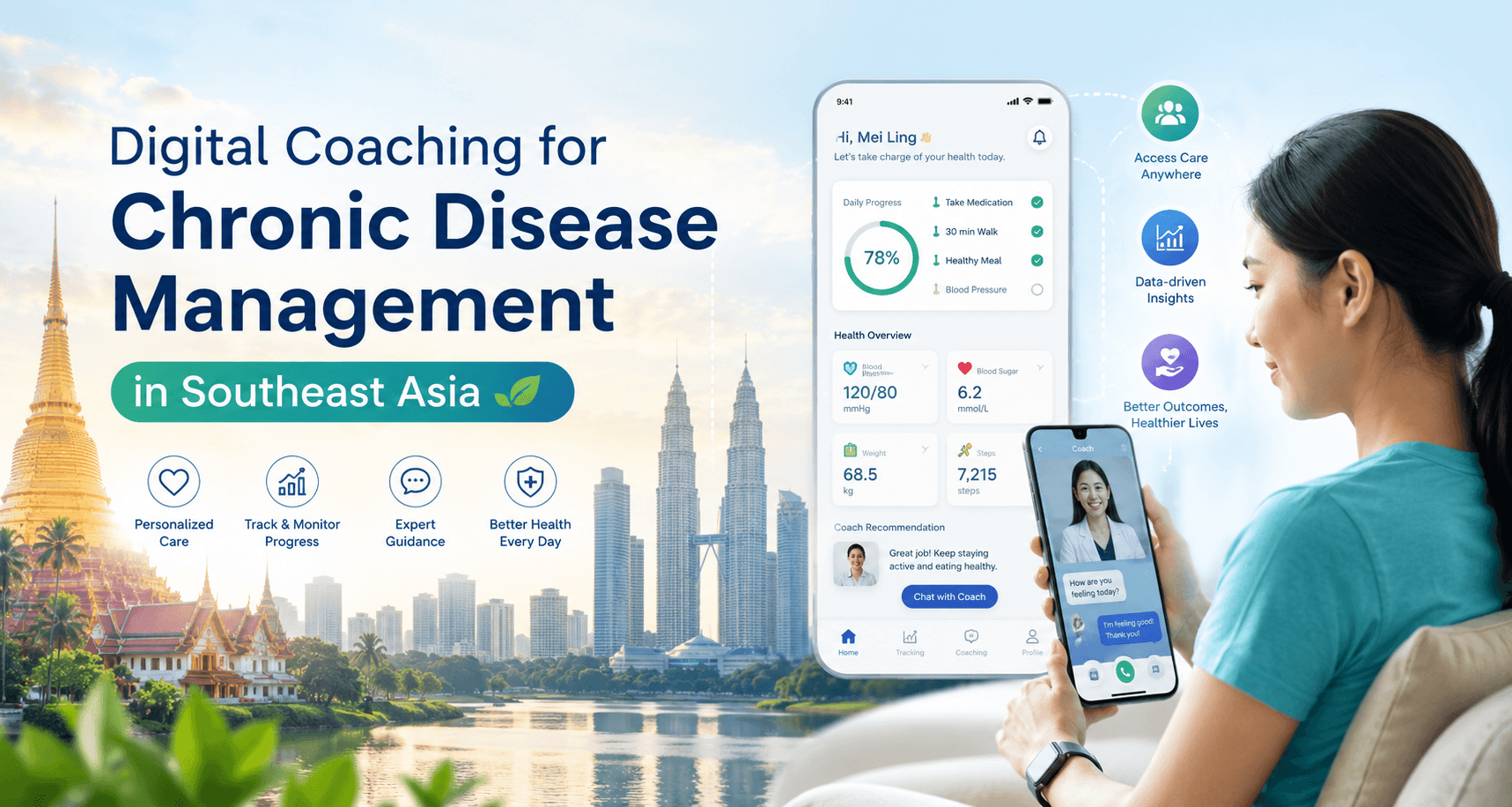
Digital coaching for chronic disease management uses structured remote guidance—via apps, calls, or AI—to help patients self-manage conditions like diabetes, hypertension, and heart disease. It works: a meta-analysis of 22 studies found an average HbA1c reduction of 0.5% in type 2 diabetes patients. Yet in Southeast Asia, only 18% of rural populations have access to these services, creating a critical equity gap.
Key Takeaways
- Digital coaching improves HbA1c by 0.5% and medication adherence by 28% in hypertensive patients.
- Southeast Asian patients face unique barriers: low digital literacy, language gaps, and lack of integration with public systems like BPJS Kesehatan or MyHealth.
- Choose a digital coach that offers vernacular content, works offline, and supports family involvement.
Imagine a 58-year-old woman in rural Kelantan, Malaysia, diagnosed with hypertension and type 2 diabetes. She sees a doctor every three months at the district clinic. Between visits, she struggles with medication timing, dietary changes, and understanding her blood pressure readings. Her son, working in Kuala Lumpur, downloads a digital health app—but it’s in English, requires high-speed internet, and offers no human touch. She stops using it after a week.
This is the reality of chronic disease management in Southeast Asia. Non-communicable diseases (NCDs) account for 62% of all deaths in the region, according to WHO 2023 data. Diabetes and hypertension lead the burden. The promise of digital coaching is immense: it can bridge the gap between clinic visits, provide real-time feedback, and empower patients. But the evidence is only as good as the implementation. Western-centric solutions fail when dropped into Southeast Asian contexts. This article will review the evidence for digital coaching, examine what works in the region, and give you a practical framework for choosing a digital health coach that fits your life—or your patient’s life.
Recent studies show that AI patient communication tools Southeast Asia outcomes are improving adherence and health literacy.
For a deeper look at how technology is addressing these gaps, see our guide on AI closing care gaps healthcare.
EazyCare AI’s symptom checker and health information platform can help you better understand your condition and connect with appropriate resources. Throughout this guide, we’ll highlight how to use digital tools effectively without replacing the human element of care.
What Is Digital Coaching and How Effective Is It for Chronic Diseases?
Digital coaching for chronic disease management encompasses a range of interventions: SMS reminders, mobile apps, video calls with health coaches, AI-driven chatbots, and remote monitoring devices. The common thread is continuous, structured support outside the clinic. The CDC classifies digital health interventions as “evidence-based strategies that can improve chronic disease outcomes.”
The strongest evidence comes from diabetes management. A 2022 PubMed meta-analysis of 22 randomized controlled trials found that digital coaching interventions reduced HbA1c by an average of 0.5% compared to usual care. That’s clinically meaningful—a 1% reduction in HbA1c lowers the risk of microvascular complications by 37%. For hypertension, a 2021 MOH Malaysia study reported that mobile health interventions increased medication adherence by 28% among hypertensive patients. The effect was most pronounced when coaching included two-way communication (e.g., patient messaging a coach) rather than one-way reminders.
For earlier detection of complications, machine learning early disease detection can complement coaching by flagging risks before symptoms appear.
For those seeking more dramatic results, the science of diabetes reversal through virtual care offers promising data.
Digital coaching is not the same as digital tracking. Tracking alone (e.g., a step counter) generally does not improve outcomes. The “coaching” component—human or AI-driven feedback, goal setting, and accountability—is what drives behavior change.
However, effect sizes vary. A systematic review of digital health interventions for heart disease found that only 60% of studies showed statistically significant improvements in blood pressure or cholesterol. The difference often comes down to engagement: programs that involve patients actively (e.g., logging symptoms, setting weekly goals) outperform passive content delivery.
For musculoskeletal conditions, understanding goal setting digital MSK programs can improve outcomes.
Exploring effective patient engagement strategies for closing care gaps can further enhance digital coaching outcomes.
Programs that incorporate proactive goal setting in chronic disease management member engagement that works can significantly boost adherence.
If you are managing a chronic condition, look for a digital coaching program that includes regular two-way interaction—not just automated reminders.
Managing Diabetes and Hypertension with Digital Coaching: What the Numbers Say
Diabetes and hypertension are the two most common NCDs in Southeast Asia, and they frequently coexist. Digital coaching interventions for diabetes typically focus on blood glucose monitoring, dietary adjustments, and medication adherence. For hypertension, the emphasis is on home blood pressure monitoring, salt reduction, and stress management.
The 0.5% HbA1c reduction from digital coaching is comparable to adding one oral hypoglycemic agent. For a patient with a baseline HbA1c of 8.5%, a drop to 8.0% significantly delays progression. In Malaysia, the MOH has integrated digital health tools into its Clinical Practice Guidelines for Hypertension, recommending remote monitoring and coaching for patients with uncontrolled blood pressure.
For clinicians, AI guideline adherence monitoring can help ensure these recommendations are consistently followed.
| Condition | Digital Coaching Intervention | Typical Outcome |
|---|---|---|
| Type 2 Diabetes | App-based coaching + weekly nurse calls | HbA1c reduction of 0.5–0.8% (PubMed 2022) |
| Hypertension | SMS medication reminders + home BP monitoring | 28% improvement in adherence (MOH Malaysia 2021) |
| Heart Failure | Remote weight monitoring + telecoaching | 30% reduction in hospital readmissions (CDC 2023) |
But numbers only tell part of the story. In Southeast Asia, the cultural context matters. Many patients rely on family members to manage medications. A digital coach that works for a single professional in Singapore may not work for a multigenerational household in rural Indonesia. Successful programs in the region use family-based coaching models, where a caregiver co-manages the app.
For those seeking support beyond physical health, online mental health care in Southeast Asia offers similar flexibility.
“Digital health interventions that ignore the family unit are unlikely to succeed in collectivist Southeast Asian societies.”
— WHO SEARO, 2023 Digital Health Report
If you are helping a parent or older relative with diabetes, choose a digital coaching platform that allows a second user (e.g., a child) to monitor data and receive alerts.
How Digital Coaching Improves Medication Adherence—and the Equity Gap Holding It Back
Medication adherence is the Achilles’ heel of chronic disease management. Studies show that 50% of patients with chronic conditions stop taking their medications within one year. Digital coaching tackles this through regular reminders, education, and feedback loops. The MOH Malaysia study found that mobile health interventions increased adherence by 28%—but only among patients who owned a smartphone and had basic digital literacy.
For patients managing multiple prescriptions, integrating medication management with online therapy can simplify daily routines and improve adherence.
Here’s the problem: Only 18% of rural populations in Southeast Asia have access to digital health coaching services (WHO SEARO, 2023). The gap is driven by:
- Low internet penetration in rural areas (e.g., less than 40% in parts of Myanmar and Cambodia)
- Language barriers: most apps are in English or Mandarin, ignoring Thai, Vietnamese, Bahasa, Tagalog
- Elderly patients who are not comfortable with smartphones
- Cost: data plans and app subscriptions can be prohibitive
Do not assume that a digital coaching app that works in the US will work in Southeast Asia. Check for offline capability, local language support, and integration with public health systems like MyHealth (Malaysia) or BPJS Kesehatan (Indonesia).
To bridge this gap, some governments are piloting low-bandwidth solutions. For example, Thailand’s MorDee app uses SMS-based coaching for diabetes, reaching patients without smartphones. Indonesia’s PROLANIS program integrates digital coaching into BPJS Kesehatan, offering subsidized coaching for NCD patients. These are early but promising models.
If you are a clinician, consider recommending digital coaching tools that are available in local languages and can be used via SMS or low-data apps like WhatsApp.
How to Choose a Digital Health Coach for Chronic Conditions: A Practical Framework
With hundreds of digital coaching apps on the market, how do you choose? The following criteria are tailored for Southeast Asian patients and families:
For deeper insights, see how AI for clinical guideline adherence can enhance these tools.
Check for local integration. Does the app connect with your country’s health record system? For example, Malaysia’s MySejahtera or Singapore’s HealthHub. If not, you may end up duplicating data.
Language and literacy. Is the content available in Bahasa Indonesia, Malay, Thai, or Vietnamese? Does it use simple language suitable for a 60-year-old with limited education?
Offline functionality. Rural areas often have poor internet. Can the app log data offline and sync later? Does it work via SMS or voice calls?
Human support. AI-only coaching is cheaper but less effective for complex needs. Look for programs that include a human coach (nurse, dietitian) who can be contacted via message or phone.
Recent data on AI therapy effectiveness for Southeast Asian patients shows promising results for certain conditions.
For more insights, read our article on AI chronic disease management.
Evidence base. Has the program been tested in a clinical trial? Look for peer-reviewed publications or endorsement by the Ministry of Health.
The global digital therapeutics market is growing at 26.1% CAGR (CDC, 2023), but the best tool is the one that fits your specific context. For a patient in urban Jakarta, a full-featured app like HaloDoc may work. For a farmer in rural Cambodia, a simple SMS-based coach may be better.
EazyCare AI’s health information platform can help you compare different digital coaching options and understand which one aligns with your condition and lifestyle.
What Are the Risks of Using Digital Coaching for Chronic Disease?
Digital coaching is not a magic bullet. Risks include:
- Over-reliance on technology: Patients may skip in-person visits, thinking the app replaces the doctor. It does not. Digital coaching is a supplement, not a substitute.
- Data privacy concerns: Health data is sensitive. Ensure the app complies with local data protection laws (e.g., Malaysia’s Personal Data Protection Act 2010).
- Inaccurate algorithms: AI-driven coaching may give inappropriate advice if the algorithm is not trained on diverse populations. For example, dietary recommendations based on Western diets may not suit Southeast Asian cuisines.
- Digital divide: As noted, only 18% of rural populations have access. Recommending digital coaching to a patient without a smartphone can increase frustration and non-adherence.
Never use a digital coaching app that claims to diagnose or replace medical treatment. Always consult a doctor before making changes to your medication or lifestyle.
Clinicians should also be aware of “digital burnout.” Patients who receive too many notifications may disengage. A 2023 study in Singapore found that optimal engagement was achieved with 3–5 interactions per week, not daily.
Set realistic expectations: digital coaching works best when combined with regular medical check-ups, not in place of them.
Cost-Effective Digital Coaching for NCDs: Comparing Options in Southeast Asia
Cost is a major barrier. In Southeast Asia, out-of-pocket spending on health is high. A typical digital coaching app subscription ranges from $5 to $30 per month. Compare this to the cost of uncontrolled diabetes: a single hospitalization for diabetic ketoacidosis in Malaysia can cost RM 3,000–10,000 ($650–$2,100).
Some programs are free or subsidized through public health systems. For example:
- Malaysia: MySejahtera offers basic digital coaching for NCDs at no cost, integrated with the national health system.
- Indonesia: BPJS Kesehatan covers PROLANIS, which includes digital coaching for diabetes and hypertension.
- Thailand: The National Health Security Office (NHSO) funds MorDee for diabetes management.
Private apps like Vida, HaloDoc, and DoctorOnCall offer coaching services but may not be covered by insurance. A 2023 survey found that only 12% of health insurance plans in Indonesia cover digital health coaching. The situation is similar in the Philippines and Vietnam.
Before subscribing, check if your insurance or government health scheme covers digital coaching. If not, ask your clinic if they can recommend a subsidized program.
Frequently Asked Questions
What is digital coaching for chronic conditions?
Digital coaching for chronic conditions refers to remote, structured guidance using technology (apps, calls, SMS, AI) to help patients manage long-term illnesses. It includes goal setting, monitoring, education, and feedback—typically delivered by a human coach or AI. The goal is to improve outcomes like blood sugar control, blood pressure, and medication adherence, while reducing hospital visits.
How effective is digital coaching in managing diabetes?
A meta-analysis of 22 studies found that digital coaching interventions reduced HbA1c by an average of 0.5% in type 2 diabetes patients. This is comparable to adding one medication. Effectiveness depends on patient engagement and the quality of coaching. Programs with human interaction outperform fully automated ones. EazyCare AI's symptom checker can help you assess your diabetes risk and track progress.
Can digital coaching replace in-person doctor visits for chronic diseases?
No. Digital coaching is a supplement, not a substitute. Routine check-ups, laboratory tests, and medication adjustments require in-person or telehealth consultations with a doctor. Digital coaching can replace some follow-up visits for stable patients, but any new symptoms or changes in condition require professional evaluation. Always consult your doctor before making health decisions.
What are the best digital coaching apps for chronic illness?
There is no single best app—it depends on your condition, language, location, and budget. For Southeast Asia, look for apps that integrate with local health systems (e.g., MySejahtera in Malaysia, BPJS Kesehatan in Indonesia). Examples include HaloDoc, Vida, MorDee (Thailand), and DoctorOnCall. For offline use, SMS-based programs like PROLANIS are effective. EazyCare AI can help you compare options based on your needs.
Does digital coaching work for hypertension management?
Yes. A 2021 MOH Malaysia study found that mobile health interventions increased medication adherence by 28% in hypertensive patients. Digital coaching programs that include home blood pressure monitoring and two-way communication with a coach produce the best results. The CDC also recognizes digital coaching as an effective strategy for hypertension control.
How does digital coaching improve medication adherence?
Digital coaching improves adherence through regular reminders, education about medication benefits, and real-time feedback. Many apps send push notifications at pill times. Some allow patients to log doses and receive praise or encouragement. A 2023 review found that the addition of a human coach (e.g., weekly phone call) doubled adherence rates compared to reminders alone.
Is digital coaching covered by health insurance in Southeast Asia?
Coverage is limited. In Malaysia, MySejahtera offers free digital coaching. In Indonesia, BPJS Kesehatan covers PROLANIS. However, private insurance rarely covers digital coaching apps. A 2023 survey found only 12% of plans in Indonesia include such coverage. Check with your insurer or employer. Some employers offer wellness programs that include digital coaching. EazyCare AI can help you navigate your insurance options.
What evidence supports digital coaching for heart disease?
The CDC reports that digital coaching for heart failure reduces hospital readmissions by 30%. Programs that combine remote monitoring (e.g., daily weight checks) with telecoaching show the strongest evidence. However, not all studies are positive: a 2022 Cochrane review noted that benefits vary widely. Choose programs with published evidence from peer-reviewed journals.
How to choose a digital health coach for chronic conditions?
Use the framework in Section 4: check for local integration, language support, offline capability, human support, and evidence base. Also consider your personal comfort with technology. If you are a caregiver for an elderly relative, prioritize apps that allow family access. EazyCare AI's health information platform can provide personalized recommendations.
What are the risks of using digital coaching for chronic disease?
Risks include over-reliance on technology, data privacy concerns, inaccurate AI algorithms, and the digital divide. Patients may delay seeking care if they trust the app too much. Always use digital coaching as a complement to regular medical care. Ensure the app is compliant with local data protection laws. If you experience any red flags (see below), seek immediate medical attention.
When to See a Doctor
Digital coaching is not a substitute for urgent medical care. Seek immediate medical attention if you or your loved one experiences:
- Blood pressure consistently above 180/120 mmHg, especially with headache, chest pain, or shortness of breath
- Blood sugar readings above 250 mg/dL (13.9 mmol/L) with nausea, vomiting, or confusion
- Chest pain, sudden weakness on one side of the body, or difficulty speaking
- Severe headache, blurred vision, or seizures
- Signs of infection (fever, chills) in a diabetic patient
Call 999 or go to the nearest emergency department if you experience any of these symptoms. Do not rely on your digital coach for emergency guidance.
If you are unsure whether your symptoms are serious, EazyCare AI can help you decide whether you need urgent care.
Conclusion
Digital coaching for chronic disease management is a powerful tool, but its success in Southeast Asia depends on context. The evidence is clear: it improves HbA1c, medication adherence, and reduces hospitalizations. However, the region's low digital literacy, language barriers, and rural access gaps mean that a one-size-fits-all approach fails.
- Choose a digital coach that works offline, supports local languages, and integrates with your country's health system.
- Prioritize programs with human coaching over fully automated AI, especially for complex conditions.
- Use digital coaching as a supplement to regular medical care—never as a replacement.
Technology is only as good as its implementation. When selected wisely, a digital coach can be your partner in managing a chronic condition, not just another app on your phone. Learn more at eazycare.ai or chat with our AI health assistant to get started on your personalized health journey.