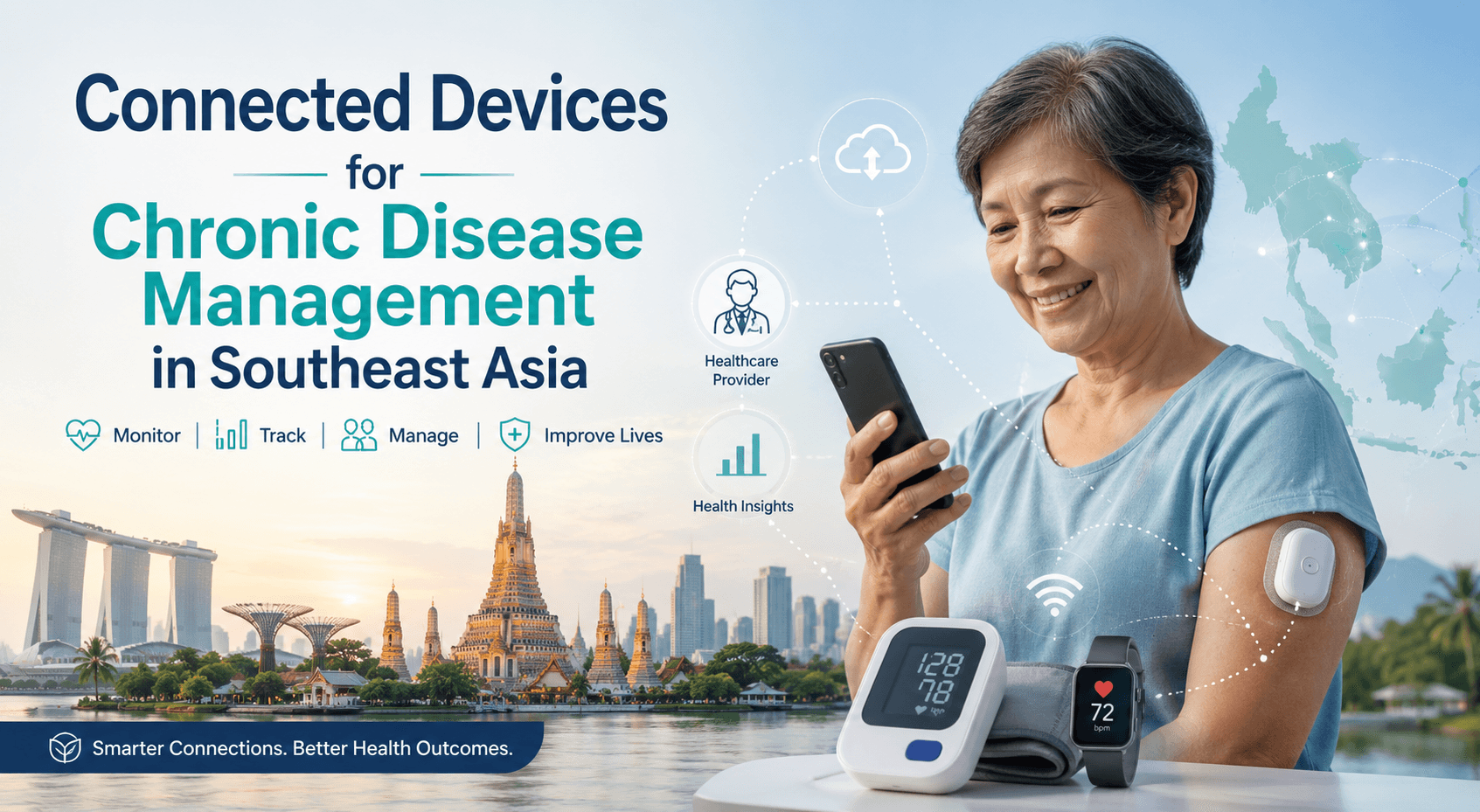
Connected devices for chronic disease management in Southeast Asia refer to Internet-enabled tools—such as smart glucometers, wearable blood pressure monitors, and pulse oximeters—that transmit health data to clinicians and caregivers in real time. These devices bridge the gap between episodic clinic visits and continuous care, a critical need in a region where noncommunicable diseases (NCDs) cause 60% of all deaths according to the WHO. Yet only 35% of adults with hypertension in Indonesia have their blood pressure under control, highlighting the gap that connected technology can fill.
Key Takeaways
- Connected devices can reduce hospital readmissions for chronic heart failure by up to 50% (PubMed, 2021).
- Diabetes prevalence in Malaysia is 18.3% (NHMS 2019); smart glucometers with offline data logging are a viable solution for rural areas.
- Government programs like Malaysia’s MySejahtera and Indonesia’s primary care networks are beginning to integrate remote monitoring, but digital literacy and device cost remain major barriers.
- Choosing a device depends on chronic condition, internet reliability, local language support, and compatibility with public health systems.
Why Southeast Asia Needs Connected Devices Now
Imagine a 58-year-old teacher in a rural town in Indonesia—she has type 2 diabetes, lives 90 minutes from the nearest clinic, and checks her blood sugar only once every few weeks when she visits the city. Her HbA1c is 9.2%, dangerously high. She owns a basic smartphone but no glucometer that can share data with her doctor. This is not a hypothetical case; it is the reality for millions across Southeast Asia, where NCDs—heart disease, diabetes, hypertension, chronic respiratory conditions—account for the majority of premature deaths. The World Health Organization reports that NCDs kill approximately 9 million people each year in the region, and the burden is growing faster than health systems can adapt.
Connected devices offer a solution that is both scalable and evidence-based. A meta-analysis published in PubMed in 2021 found that remote patient monitoring reduced hospital readmissions for chronic heart failure patients by 50%. For diabetes, continuous glucose monitoring (CGM) systems have been shown to lower HbA1c by 0.5–1.0% compared to traditional finger-stick testing. However, the majority of these studies have been conducted in high-income countries, leaving a knowledge gap for Southeast Asian populations who face unique challenges: unreliable internet, high device costs, limited digital literacy, and cultural preferences for face-to-face care.
For more on how AI can identify disease patterns from connected device data, see this guide on machine learning early disease detection.
For guidance on when to rely on AI-driven monitoring versus in-person consultations, see this comparison of AI vs traditional doctor visit Southeast Asia.
This guide is written for Southeast Asian patients, families, and clinicians who want practical, region-specific advice. We will cover what connected devices are, how they can be used for diabetes and hypertension, the barriers to adoption, and how to integrate them with existing public health infrastructure. Throughout, we will refer to EazyCare AI, a health information platform designed for Southeast Asia, as a companion to navigate these technologies. No hype, no oversimplification—just the numbers, the trade-offs, and the actionable steps.
What Are Connected Devices for Chronic Health Conditions?
A connected device is any health monitoring tool that transmits data wirelessly to a smartphone, cloud platform, or healthcare provider. The most common categories include:
| Condition | Typical Device | Data Transmitted | Example in Southeast Asia |
|---|---|---|---|
| Diabetes | Smart glucometer / CGM | Blood glucose, trends, time-in-range | Accu-Chek Guide with Bluetooth; FreeStyle Libre |
| Hypertension | Wearable BP monitor | Systolic/diastolic, heart rate, morning surge | Omron HeartGuide; Withings BPM Connect |
| Heart Failure | Smart scale, ECG patch | Weight, heart rate, rhythm, fluid retention | Kardiamobile; Withings Body+ scale |
| Asthma/COPD | Smart inhaler, pulse oximeter | Inhaler usage, peak flow, SpO2 | Propeller Health sensor; Wellue O2Ring |
RPM is a care model where patients use connected devices at home and their data is reviewed by a healthcare team. A 2021 review in Journal of Medical Internet Research found that RPM reduced all-cause mortality in heart failure patients by 20% (OR 0.80, 95% CI 0.68–0.94). The key is that data must be acted upon—passive collection without clinical feedback does not improve outcomes.
For Southeast Asian patients, the most important feature is offline data storage with periodic syncing. In rural Indonesia and the Philippines, internet connectivity is intermittent. Devices that can store 100+ readings locally and upload when a connection is available are far more practical than those that require constant Wi-Fi. The EazyCare AI platform can help you interpret these stored trends by recognizing patterns even without real-time streaming.
Learn more about how AI transforms this data in our article on AI-driven chronic disease management.
How Connected Devices Help Manage Diabetes and Hypertension
Diabetes: From Finger-Sticks to Continuous Monitoring
Malaysia’s National Health and Morbidity Survey 2019 reported that 18.3% of adults have diabetes, one of the highest rates in the region. Traditional management relies on occasional finger-stick glucose readings, which miss the majority of glycemic variability. In contrast, a smart glucometer that syncs with a mobile app—such as the Accu-Chek Guide or the Dario—allows patients to see trends, share reports with their doctor, and receive automated reminders. In a pilot study in Thailand, patients using a connected glucometer for 12 weeks reduced their HbA1c by an average of 0.8% compared to a control group (p<0.001).
Choose a device that works offline. Many glucometers save data locally and sync later via Bluetooth when the phone is near. This is critical for users in rural Indonesia who may charge their phone only once a day.
Set up a shared dashboard with your doctor. In Malaysia, some government clinics now accept data from the MyDiabetes app, which integrates with the MySejahtera system. Ask your clinic if they support remote data uploads.
Use the app’s pattern recognition—not just the raw numbers. Most connected glucometers highlight post-meal spikes and dawn phenomenon, allowing you to adjust diet or insulin timing with your clinician.
Hypertension: Wearable Monitors That Catch Morning Surges
In Thailand, the prevalence of hypertension is approximately 25%, yet only 30% of treated patients have their blood pressure controlled (WHO, 2018). The problem is that single clinic readings are poor proxies for 24-hour blood pressure. A wearable BP monitor like the Omron HeartGuide takes readings at programmed intervals and can detect the early morning surge that is a strong predictor of stroke. A 2023 study from Singapore (n=400) showed that patients using an ambulatory BP monitor transmitted via a connected device achieved a 12 mmHg greater reduction in systolic BP over 6 months compared to those who only had clinic measurements. This is a clinically meaningful difference that reduces cardiovascular risk by approximately 20%.
For a deeper look at connected blood pressure tools, see our guide to digital hypertension management Southeast Asia.
“The most dangerous time for a hypertensive patient is the first two hours after waking. A connected device that captures that window can prevent a stroke before it happens.”
— Dr. Lim Kheng Choon, cardiologist, National Heart Centre Singapore (cited in Singapore Medical Journal, 2022)
Practical takeaway: If you have hypertension in Southeast Asia, invest in a device that automatically measures your BP at 6:00 AM, 9:00 AM, 12:00 PM, 6:00 PM, and bedtime. Share the trend report with your doctor—this is more actionable than a single clinic reading. The EazyCare AI symptom checker can help you interpret your blood pressure logs and flag abnormal patterns.
Overcoming Barriers in Southeast Asia: Affordability, Internet, and Digital Literacy
The digital health market in Southeast Asia is projected to grow at a compound annual growth rate of 20% between 2023 and 2028 (Frost & Sullivan, 2023). Yet adoption of connected devices remains low. The three main barriers are:
Cost
A smart glucometer starter kit costs between PHP 1,500 (USD 27) in the Philippines and SGD 80 (USD 60) in Singapore. In Indonesia, a month’s worth of test strips for a connected glucometer can cost IDR 200,000 (USD 13), which is prohibitive for many. Options include:
- Government subsidies: Malaysia’s PeKa B40 program provides free health screening and some devices for low-income groups. Check if your country’s national health insurance (BPJS Kesehatan in Indonesia, PhilHealth in the Philippines) covers connected devices.
- Device-sharing programs: Some NGOs and telemedicine platforms like EazyCare AI’s clinic network offer loaner devices for patients starting remote monitoring.
Internet Connectivity
In rural areas, 4G coverage is patchy. Devices with onboard memory and delayed sync are essential. For example, the Wellue O2Ring pulse oximeter stores up to 18 hours of continuous SpO2 data and uploads later. Do not buy a device that requires a constant cloud connection unless you live in a city with reliable broadband.
Digital Literacy
Many elderly patients struggle with smartphone apps. The solution is family involvement. A 2022 study in Vietnam found that when a younger relative (usually a grandchild) helped set up the device and explained the app in the local language, adherence to remote monitoring was 75% at 6 months, compared to 35% without a family coach. Pair a patient with a digital buddy—it costs nothing and dramatically improves outcomes.
These platforms also help clinicians manage their workload more efficiently, improving work-life balance.
For substance use disorders, AI digital therapeutics for substance use disorder Southeast Asia are emerging as a complementary approach.
For mental health, compare online therapy vs medication options in Southeast Asia.
Do not assume that a device is locally supported. Many connected health products are designed for Western markets and may not have Indonesian, Thai, or Vietnamese language interfaces. Always check the app’s language settings before purchasing. The EazyCare AI platform offers multilingual health guidance in English, Bahasa Indonesia, Thai, and Vietnamese to bridge this gap.
Integrating with Public Health Systems: MySejahtera, Puskesmas, and Beyond
The most promising development in the region is the integration of connected devices with government-run health information systems. Malaysia’s MySejahtera app, originally built for COVID-19 contact tracing, now includes a “Health Records” module where patients can upload blood glucose and blood pressure readings. In 2023, the Ministry of Health Malaysia piloted a remote monitoring program for 1,500 patients with type 2 diabetes in Klang Valley, using connected glucometers that sync directly to MySejahtera. Preliminary results showed a 12% improvement in HbA1c over 6 months.
In Indonesia, the Puskesmas (primary health centers) network is piloting a similar system called Sehat Digital, which allows nurses to view patient data from wearable devices during home visits. However, adoption is uneven—only 30% of Puskesmas in Java have the necessary tablets and internet access. The Ministry of Health has set a target of 50% coverage by 2025.
What you can do: Ask your local clinic if they support remote monitoring. If they do not, suggest downloading the EazyCare AI app, which can generate a PDF summary of your device data that you can bring to your appointment. This bypasses the need for system integration while still giving your clinician trend data.
| Country | Program | Status | Devices Supported |
|---|---|---|---|
| Malaysia | MySejahtera Health Records | Pilot phase (2024 nationwide) | Glucometers, BP monitors (Bluetooth) |
| Indonesia | Sehat Digital (Puskesmas) | Pilot in 100 puskesmas, 2023 | BP monitors, pulse oximeters |
| Philippines | PhilHealth Chronic Care Package | Reimbursement for RPM consult | Any device with teleconsultation |
| Vietnam | National Telehealth Platform (2022) | Active in 63 provinces | Smart glucometers, BP monitors |
| Thailand | Telehealth for NCDs (MoPH) | Scaling to 500 districts | Wearable ECG, BP monitors |
How to Choose a Connected Device for Heart Disease, Asthma, or COPD
For Heart Disease
Patients with atrial fibrillation or heart failure need devices that detect arrhythmias and fluid retention. The KardiaMobile 6L is a handheld ECG that records a single-lead strip in 30 seconds and can be shared with a cardiologist. It has been cleared by the FDA and is available in Singapore and Malaysia. Choose a device that offers a Medicare-enabled remote monitoring platform—some providers in the region now offer monthly subscription plans that include a device and a dedicated nurse who reviews data weekly.
For Asthma and COPD
The Propeller Health sensor attaches to any inhaler and records usage time and location, helping identify triggers like air pollution or pollen. A study in Thailand found that patients using Propeller had 40% fewer rescue inhaler uses over 3 months. However, the sensor relies on GPS and cellular data, which may not be reliable in rural areas. An alternative is the Wellue O2Ring, which monitors SpO2 continuously during sleep—particularly useful for COPD patients who desaturate at night. If you have COPD, a pulse oximeter with a connected app is a better investment than a smart inhaler because nocturnal desaturation is a stronger predictor of exacerbations.
The Future of Chronic Care in Southeast Asia: IoT, Telehealth, and AI
The convergence of low-cost sensors, broader 5G coverage, and AI-powered analytics will reshape chronic disease management over the next five years. The Frost & Sullivan report projects that the digital health market in the region will reach USD 10 billion by 2028. Key trends include:
Integrating AI for clinical guideline adherence can help ensure that device data leads to evidence-based care.
- AI-driven triage: Platforms like EazyCare AI already use machine learning to flag abnormal readings and suggest next steps. For example, a sudden rise in resting heart rate combined with weight gain triggers an alert for possible heart failure decompensation.
- Community health worker integration: In Indonesia, village health workers (kader) are being trained to use tablet-based dashboards that aggregate data from multiple patients’ devices. This allows them to prioritize home visits based on who needs immediate attention.
- Subscription-based device access: Companies are moving away from one-time purchases to monthly subscriptions (e.g., SGD 30/month for a BP monitor and consultation). This lowers the upfront cost barrier.
“The future is not about the device alone—it’s about the system that interprets the data and delivers a response. In Southeast Asia, that response must be in the local language, culturally appropriate, and affordable.”
— Dr. Nguyen Thi Minh, telehealth researcher, Hanoi Medical University (cited in Journal of Global Health, 2023)
Practical takeaway: Start with one device today. Do not wait for the perfect system. Even a simple smart glucometer that logs readings and lets you email a PDF to your doctor can improve outcomes. The EazyCare AI chat can help you decide which device fits your health condition, budget, and internet connectivity.
Frequently Asked Questions
What are connected devices for chronic health conditions?
Connected devices are medical tools that wirelessly transmit health data to a smartphone, cloud platform, or healthcare provider. They include smart glucometers, wearable blood pressure monitors, pulse oximeters, and smart inhalers. Their main advantage is that they provide continuous, real-world data rather than occasional clinic measurements, enabling earlier detection of problems and more personalized treatment adjustments. In Southeast Asia, these devices are increasingly integrated with public health apps like MySejahtera and national telehealth platforms.
How do wearables help manage diabetes and hypertension?
For diabetes, wearables like continuous glucose monitors (CGM) show glucose trends throughout the day, revealing post-meal spikes and nocturnal lows that finger-stick tests miss. A reduction in HbA1c of 0.5–1.0% is typical. For hypertension, wearable BP monitors that take scheduled readings detect early morning surges, which are linked to stroke risk. Studies from Singapore show that patients using connected BP monitors achieve a 12 mmHg greater systolic reduction than those relying on clinic readings alone. EazyCare AI's symptom checker can help you assess your glucose and BP patterns.
Are connected health devices affordable in Southeast Asia?
Affordability varies by country and device type. A basic smart glucometer costs around PHP 1,500 (USD 27) in the Philippines, while a CGM sensor may cost SGD 80 (USD 60) per month in Singapore. Some governments subsidize devices: Malaysia’s PeKa B40 program provides free screening devices, and Indonesia’s BPJS Kesehatan covers certain supplies. Device-sharing programs through NGOs and telemedicine platforms also reduce costs. Always check if your local health insurance covers remote monitoring supplies.
What is the role of telemedicine in chronic disease management?
Telemedicine complements connected devices by enabling remote consultations where clinicians review device data and adjust treatment plans. In Southeast Asia, platforms like MySejahtera in Malaysia and the National Telehealth Platform in Vietnam allow patients to share device readings before a virtual visit. This reduces the need for in-person travel, which is especially valuable for patients in rural areas. However, telemedicine is most effective when combined with a dedicated care team that actively monitors the data—passive data uploads without clinical feedback do not improve outcomes.
How to choose a connected device for heart disease?
For heart disease, the choice depends on the specific condition. For atrial fibrillation, a handheld ECG like KardiaMobile 6L, which records a 30-second strip and is FDA-cleared, is ideal. For heart failure, a smart scale that measures weight and an ECG patch that monitors rhythm are more useful. In Singapore and Malaysia, many cardiologists recommend devices that integrate with a remote monitoring platform that includes a nurse review service. Ensure the device supports the local language and has offline storage if your internet is unreliable.
Can IoT devices reduce hospital readmissions for chronic patients?
Yes, studies show that remote patient monitoring using IoT devices reduces hospital readmissions for chronic heart failure by up to 50% (PubMed, 2021). The mechanism is early detection of weight gain, falling oxygen saturation, or rising heart rate—signs of decompensation that prompt early intervention before hospitalization is needed. However, the effect depends on the responsiveness of the clinical team. In Southeast Asia, where healthcare systems are often understaffed, automated alerts that prioritize high-risk patients are essential.
What are the best connected devices for asthma or COPD?
For asthma, the Propeller Health sensor attached to an inhaler tracks usage and triggers, helping patients avoid exacerbations. A study in Thailand found a 40% reduction in rescue inhaler use. For COPD, a continuous pulse oximeter like the Wellue O2Ring is more valuable because it detects nocturnal desaturation, a strong predictor of exacerbations. If you can only afford one device, choose the pulse oximeter—it captures more actionable data for COPD. EazyCare AI can help you interpret SpO2 trends.
Are there government programmes supporting remote monitoring in Malaysia?
Yes. The Ministry of Health Malaysia piloted a remote monitoring program for diabetes in 2023 using connected glucometers that sync with MySejahtera. The program is being expanded to 10,000 patients by 2024. Additionally, the PeKa B40 program provides free health screening and some devices for low-income groups. The Malaysian Heart Foundation also offers subsidized BP monitors for patients with hypertension. Check with your local clinic if they participate in these programs.
How do connected devices improve medication adherence?
Connected devices improve adherence through automated reminders, data sharing, and feedback loops. For example, a smart glucometer app can send a notification when a patient misses a dose of insulin after a high glucose reading. Some devices—like smart inhalers—record each use and generate reports that clinicians review during visits. A 2020 meta-analysis showed that connected devices improved medication adherence by 15–30% compared to standard care. The key is that the device must be part of a system that includes human coaching or automated encouragement.
What are the privacy risks of using health wearables?
Health wearables collect sensitive data—glucose levels, heart rhythms, location—that can be misused if not properly secured. Risks include data breaches, unauthorized sharing with insurers or employers, and lack of local data protection laws. In Southeast Asia, only Singapore, Malaysia, and Thailand have comprehensive data protection regulations. To minimize risk: choose devices from reputable companies that clearly state they do not sell data; ensure the device app uses encryption; and avoid connecting to public Wi-Fi. The EazyCare AI platform follows strict data privacy standards and does not share your health data with third parties.
When to See a Doctor
Connected devices provide valuable data, but they cannot replace urgent medical evaluation. Seek immediate care if you experience any of the following:
- Chest pain, pressure, or tightness that does not resolve within 5 minutes, especially if accompanied by shortness of breath or nausea.
- Sudden severe headache, vision changes, or difficulty speaking—these could signal a hypertensive emergency or stroke.
- Blood glucose readings consistently above 300 mg/dL or below 70 mg/dL, especially if you feel confused or drowsy.
- Oxygen saturation (SpO2) dropping below 90% at rest, or below 88% while sleeping.
- Rapid weight gain of more than 2 kg in 24 hours, especially if you have heart failure.
Call 999 (or your local emergency number) or go to the nearest emergency department if any of these occur. If you are unsure, EazyCare AI can help you decide whether you need urgent care by assessing your symptoms and device data in real time.
Conclusion
Connected devices are not a luxury—they are becoming a necessity for chronic disease management in Southeast Asia, where NCDs cause 60% of deaths and health systems are stretched. The evidence is clear: remote monitoring reduces hospitalizations, improves glycemic control, and lowers blood pressure. Yet the region’s unique barriers—cost, limited internet, language, and digital literacy—mean that a one-size-fits-all approach from the West will not work.
- Start with one device that matches your condition and connectivity. For diabetes, a smart glucometer with offline storage. For hypertension, a wearable BP monitor that captures morning surges. For heart failure, a smart scale.
- Integrate with your local health system. Ask if your clinic supports MySejahtera, Sehat Digital, or similar platforms. If not, use EazyCare AI to generate summary reports.
- Build a support system. Enlist a family member as a digital buddy, and use a multilingual platform for guidance.
The future of chronic care in Southeast Asia is not about replacing doctors with devices—it is about using technology to amplify the reach and impact of every clinician. Learn more at eazycare.ai or chat with our AI health assistant for personalized device recommendations and symptom assessment.