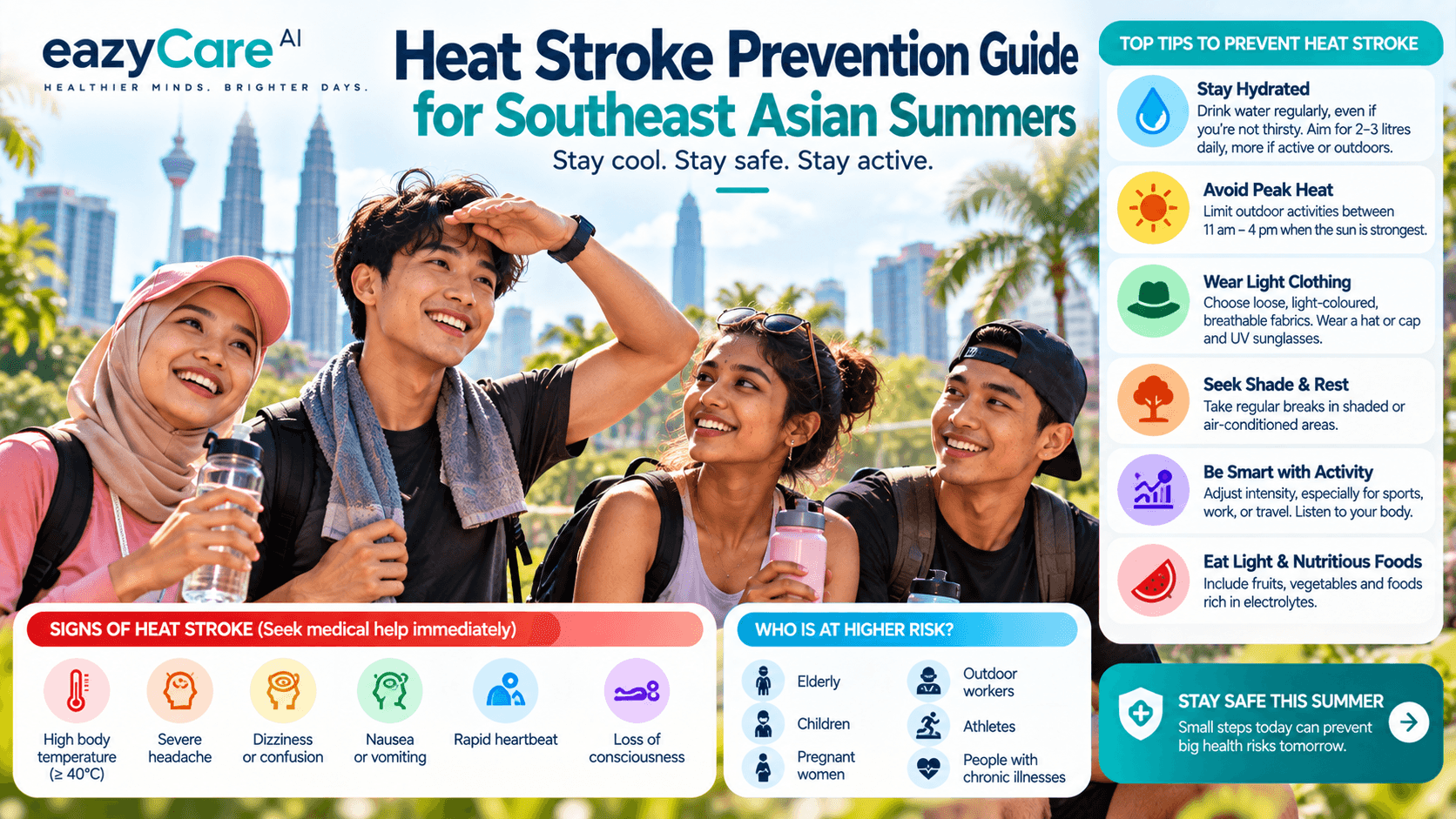
Heat stroke is a life-threatening medical emergency where the body's core temperature rises above 40°C (104°F) and the thermoregulatory system fails. In Southeast Asia's humid summers, even healthy adults can succumb within minutes. With a mortality rate of up to 50% when treatment is delayed, understanding heat stroke prevention Southeast Asia summer strategies is not optional — it's survival.
Key Takeaways
- Heat stroke and heat exhaustion differ by core temperature and neurological symptoms; heat stroke requires immediate emergency care.
- High humidity above 80% blocks sweat evaporation — the body's main cooling mechanism — making 33°C feel like 50°C.
- Low-cost cooling methods (wet cloth fans, cool foot baths, improvised evaporative coolers) can save lives in homes without air conditioning.
- Outdoor workers, elderly in informal settlements, and children face highest risk; early recognition and rapid cooling are critical.
Introduction
Imagine a 45-year-old construction worker in Bangkok, sweating heavily under the midday sun. He feels dizzy, nauseous, and stops sweating altogether. His colleagues think he is just tired. Twenty minutes later, he collapses. This scenario plays out daily across Southeast Asia, where heat waves are intensifying, and heat stroke prevention advice often misses the mark.
Many online guides focus on generic hydration and "stay in the shade" — but that advice fails in tropical humidity. When relative humidity exceeds 80%, sweat cannot evaporate, and the body loses its primary cooling mechanism. The threshold for dangerous heat index in tropical climates is 33°C (91°F) with humidity above 80%, at which heat stroke risk rises sharply (CDC, 2023).
This article goes beyond basics. It provides region-specific, evidence-based guidance for preventing heat stroke in Southeast Asia's unique conditions. You will learn how to distinguish heat stroke from heat exhaustion and dengue fever, how to cool someone effectively without an air conditioner, and which populations need extra vigilance. EazyCare AI’s symptom checker can help you assess heat-related symptoms in real time.
Heat Stroke vs Heat Exhaustion: Know the Difference
Heat exhaustion and heat stroke exist on a continuum, but their treatments diverge dramatically. Heat exhaustion is a milder condition where the body loses excessive water and salt through sweat. Symptoms include heavy sweating, weakness, cold clammy skin, and a core temperature below 40°C. The person may feel faint but remains neurologically intact.
Heat stroke, however, is a systemic failure. The core temperature exceeds 40°C, and the brain's thermoregulatory center shuts down. Sweating stops (except in some exertional cases), the skin becomes hot and dry, and neurological symptoms appear: confusion, slurred speech, seizures, or loss of consciousness. According to a 2019 review in PubMed, heat stroke has a mortality rate of up to 50% when treatment is delayed, even in healthy young individuals.
Heat stroke can trigger intense headaches, but headache causes beyond stress include dehydration, infections, and heat exposure.
| Feature | Heat Exhaustion | Heat Stroke |
|---|---|---|
| Core temperature | Below 40°C | Above 40°C |
| Sweating | Heavy, present | Often absent (hot dry skin) |
| Mental state | Dizzy, weak, irritable | Confusion, seizures, coma |
| First aid | Rest, hydrate, cool environment | Emergency cooling + ambulance |
"The transition from heat exhaustion to heat stroke can happen in under 30 minutes under extreme conditions. Waiting for symptoms to worsen is a fatal delay."
— CDC Heat Stress Guidelines, 2023
Practical takeaway: If anyone shows confusion, altered speech, or stops sweating in the heat — treat it as heat stroke and call for emergency help immediately. Do not wait for the temperature to be confirmed.
Why Southeast Asia's Humidity Makes Heat Stroke Prevention Unique
Standard heat prevention advice — "drink water and rest in the shade" — assumes that sweat can cool the body. In Southeast Asia, where humidity routinely exceeds 80% during summer months, sweat evaporation becomes nearly impossible. The air is already saturated with water vapour, so the body cannot shed heat through perspiration. This is why a 33°C day in Jakarta can feel as oppressive as a 50°C day in a dry climate.
Research from PubMed (2020) shows that every 1°C rise above 35°C increases hospital admissions for heat stroke by 9% in urban Southeast Asia. The same study underscores that high humidity is the single strongest predictor of heat-related hospitalisation, not just peak temperature.
Meteorologists use the Wet Bulb Globe Temperature (WBGT) to measure heat stress in humid conditions. When WBGT reaches 32°C, even healthy individuals cannot maintain a safe core temperature during physical activity. In Southeast Asia, WBGT often exceeds this threshold for months.
Practical takeaway: Check humidity along with temperature. Use a simple wet-bulb calculator app or look for the "feels like" temperature. If it's above 38°C, reduce outdoor activity duration by 50% and take frequent water breaks in shaded or air-conditioned spaces.
Low-Cost Cooling Methods for Homes and Workplaces Without Air Conditioning
Many Southeast Asian households — especially in rural areas and informal settlements — lack air conditioning. Yet cooling must begin immediately when heat stroke is suspected. The goal is to lower core temperature to below 39°C within 30 minutes. Here are proven low-cost techniques:
Wet cloth fanning. Dampen a large cloth or towel with cool (not ice cold) water, lay it on the person's neck, armpits, and groin. Fan them vigorously with a handheld fan or cardboard. This mimics evaporative cooling even in humidity — the moving air accelerates water evaporation from the cloth.
Cool foot bath. Fill a basin with cool tap water (25-30°C). Immerse feet and ankles. Blood vessels in the feet dilate in heat, and cooling them helps lower overall body temperature. Avoid ice water — it can cause shivering, which generates more heat.
Improvised evaporative cooler. Hang a wet bedsheet in an open window or doorway. Air passing through the wet fabric cools before entering the room. Paired with a fan, this can reduce ambient temperature by 2-3°C.
Hydrate strategically. Oral rehydration solutions (ORS) are more effective than plain water because they replace electrolytes lost in sweat. Mix 1 litre of clean water with 6 teaspoons of sugar and ½ teaspoon of salt.
Practical takeaway: Do not use rubbing alcohol or ice baths at home — these can cause rapid vasoconstriction and shivering, worsening heat retention. Stick to cool water and fanning.
Who Is at Highest Risk for Heat Stroke in Southeast Asia?
While heat stroke can strike anyone, certain groups face disproportionately high risk due to physiological or environmental factors. Outdoor workers — construction laborers, farmers, street vendors — often work through the hottest hours because of economic necessity. A study from PubMed (2019) found that occupational heat stroke in tropical regions is underreported, but mortality among hospitalised cases remains above 40%.
Elderly individuals living in informal settlements without ventilation are another high-risk group. Age-related decline in sweat gland function and cardiovascular reserve means their thermoregulation is compromised. Many also take medications such as diuretics or anticholinergics that impair heat dissipation.
Children under five have a higher surface-area-to-body-mass ratio, causing faster heat gain. Additionally, they may not recognise or communicate symptoms early. During heat waves, paediatric emergency visits for heat illness in Bangkok and Manila increase 3‑ to 5‑fold.
Heat stroke in the elderly often presents without the classic hot, dry skin. They may appear confused or drowsy, which family members mistake for dementia or stroke. Always check the ambient temperature and recent exposure to heat.
Practical takeaway: Check on elderly neighbours and relatives during heat waves. Provide them with a damp towel to place on their neck and encourage them to move to the coolest room — even if it's a bathroom with a tiled floor.
Heat Stroke vs Dengue: How to Tell the Difference in the Tropics
Both heat stroke and dengue fever present with high fever, headache, nausea, and body aches — especially during the rainy season when dengue cases surge. Misdiagnosis can delay critical cooling in heat stroke, or conversely, lead to unnecessary emergency visits for mild dengue.
| Feature | Heat Stroke | Dengue Fever |
|---|---|---|
| Onset | Rapid (minutes to hours during heat exposure) | Gradual over 2–7 days |
| Sweating | Usually absent (hot, red skin) | Present; skin may be moist |
| Joint/bone pain | Rare | Severe (breakbone fever) |
| Rash | Not typical | Morbilliform rash appears after fever |
| Recent history | Heat exposure, physical exertion | Mosquito bite in last 7 days |
| Core temperature | Above 40°C | Often 38–39.5°C |
Practical takeaway: If a person has no muscle or joint pain and their skin is dry and hot despite a high fever, suspect heat stroke first — especially during a heat wave. Initiate cooling immediately and seek emergency care. EazyCare AI's symptom checker can help differentiate these conditions with a guided questionnaire.
Heat Stroke First Aid: What to Do While Waiting for an Ambulance
When heat stroke is suspected, every minute counts. The CDC recommends aggressive cooling before transport. Here is the step-by-step protocol:
- Call emergency services (999/112) — state "heat stroke emergency" and address.
- Move to a shaded, ventilated area — ideally an air-conditioned room or at least under a tree with fan.
- Remove excess clothing — any tight or heavy garments.
- Initiate evaporative cooling: spray or sponge the person with cool water and fan them vigorously. If available, apply ice packs wrapped in cloth to the groin, armpits, and neck.
- If conscious and able to swallow, give small sips of cool water or ORS. Do not force fluids if confused or unconscious.
- Monitor vital signs — check responsiveness, pulse, and breathing until help arrives.
"Aggressive cooling in the field — before reaching the hospital — reduces mortality from heat stroke by more than 60%."
— PubMed, 2019 review
Practical takeaway: Do not waste time looking for a thermometer. If the person has collapsed after heat exposure and is confused or unconscious, start cooling immediately.
Heat Stroke Recovery Time and Long-Term Outlook
Surviving heat stroke is only the first step. Recovery can take weeks to months, depending on severity and pre-existing health. After hospital discharge, many patients experience persistent thermoregulatory dysfunction — they become more sensitive to heat for up to a year. Mild cognitive deficits (memory lapses, difficulty concentrating) have been documented in up to 30% of survivors.
The hospital course typically involves intensive cooling, IV fluids, and monitoring for multi-organ failure (kidneys, liver, heart). In severe cases, patients may require dialysis or ventilator support. The mortality rate for severe heat stroke remains 20–50% despite modern ICU care. But with early recognition and rapid cooling before arrival, outcomes improve dramatically.
For a full recovery, patients should avoid physical exertion and heat exposure for at least 2–4 weeks. A gradual return to activity — under medical supervision — is recommended. EazyCare AI can help track symptoms during recovery and flag any recurrence.
Frequently Asked Questions
What's the difference between heat exhaustion and heat stroke?
Heat exhaustion involves heavy sweating, weakness, and a core temperature below 40°C, with no neurological symptoms. Heat stroke involves a core temperature above 40°C, absence of sweating, and confusion, seizures, or unconsciousness. Heat stroke is a medical emergency requiring immediate cooling and ambulance transport.
How long does it take to recover from heat stroke?
Mild heat stroke without organ damage may allow hospital discharge in 48–72 hours, but full recovery often takes 2–6 weeks. Severe cases with multi-organ failure can require weeks of ICU care and months of rehabilitation. Even after discharge, heat sensitivity can persist for up to a year.
Can you get heat stroke without sun exposure?
Yes. High ambient temperature and humidity in shaded areas — such as a poorly ventilated room or car — can still cause heat stroke. Any environment that prevents heat dissipation, especially when combined with physical activity, can be dangerous.
What are the first signs of heat stroke in children?
Children may not complain of thirst. Look for flushed, hot skin; irritability or lethargy; rapid breathing; and lack of interest in play. Older children may complain of headache or stomach pain. If the skin is dry despite fever, suspect heat stroke.
How do you treat heat stroke at home before going to hospital?
Move the person to the coolest available area, remove clothing, and start evaporative cooling: spray or sponge with cool water and fan them vigorously. Place cool, damp cloths on neck, armpits, and groin. If conscious, give sips of cool water. Do not give fever-reducing medicines — they are ineffective for heat stroke. Call for an ambulance immediately.
Does drinking cold water help prevent heat stroke?
Yes. Cold water (10–15°C) is absorbed faster than warm water and helps lower core temperature. However, if the person shivers, stop — shivering increases heat production. In humid conditions, oral rehydration solutions are more effective than plain water because electrolytes are lost through sweat.
Why is humidity dangerous for heat stroke?
Humidity above 80% prevents sweat evaporation, which is the body's main cooling mechanism. The air is so saturated with moisture that sweat sits on the skin without evaporating. This dramatically accelerates heat gain, making a 33°C day feel like 50°C and pushing the body toward heat stroke much faster.
When should you call an ambulance for heat stroke?
Call immediately if the person is confused, has slurred speech, experiences a seizure, becomes unconscious, or has stopped sweating despite intense heat. Do not wait for temperature measurement — if you suspect heat stroke, call 999 or 112 and begin cooling measures while waiting.
Can air conditioning alone prevent heat stroke?
Air conditioning is highly effective, but it must be used correctly. A fan alone is inadequate when room temperature exceeds 35°C. For homes without AC, the low-cost methods described in this guide (wet cloth fanning, cool foot baths) can be life-saving. During heat waves, spending even a few hours in an air-conditioned space significantly reduces heat stroke risk.
What should I do if someone is having a heat stroke?
Call an ambulance immediately. While waiting, move them to a cool place, remove clothing, and cool them aggressively with water spray and fanning. Place ice packs wrapped in cloth on the groin, armpits, and neck. If conscious, give cool fluids. Do not give any medications. Monitor their breathing and pulse. EazyCare AI's symptom checker can help you assess heat-related concerns.
When to See a Doctor
Seek immediate medical attention if you or someone you are with experiences any of the following during or after heat exposure:
- Confusion, disorientation, or inability to think clearly
- Slurred speech or difficulty speaking
- Seizures or convulsions
- Loss of consciousness or collapse
- Absence of sweating despite hot, red skin
- Body temperature >40°C (104°F) or inability to measure temperature but hot to touch
- Rapid, weak pulse and fast, shallow breathing
Emergency escalation: Call 999 or go to the nearest emergency department if any of the above symptoms occur. Do not drive yourself — have someone else drive or call an ambulance.
Reassurance: If you feel unwell but are alert and sweating, you are likely experiencing heat exhaustion. Move to a cool place, drink fluids, and monitor yourself for 30 minutes. If symptoms worsen, seek help. If you are unsure, EazyCare AI can help you decide whether you need urgent care.
Conclusion
Heat stroke is preventable, but prevention in Southeast Asia requires understanding that the region's humidity changes the rules. Sweat evaporation fails, so passive cooling (shade, fan) is not enough. Here are the three most important takeaways:
- Know the difference between heat exhaustion and heat stroke. Neurological symptoms mean heat stroke — call for help and cool the person aggressively.
- Use low-cost cooling tools: wet cloth fanning, cool foot baths, and improvised evaporative coolers are effective even in humid homes without AC.
- Protect the vulnerable: outdoor workers, elderly, and children need extra vigilance. Check on them during heat waves and ensure they have access to hydration and a cool environment.
EazyCare AI is your trusted health companion across Southeast Asia. Use our symptom checker to assess heat-related symptoms, learn more about heat illness, and get personalised prevention tips. Your health is too important to leave to guesswork — Learn more at eazycare.ai or chat with our AI health assistant.