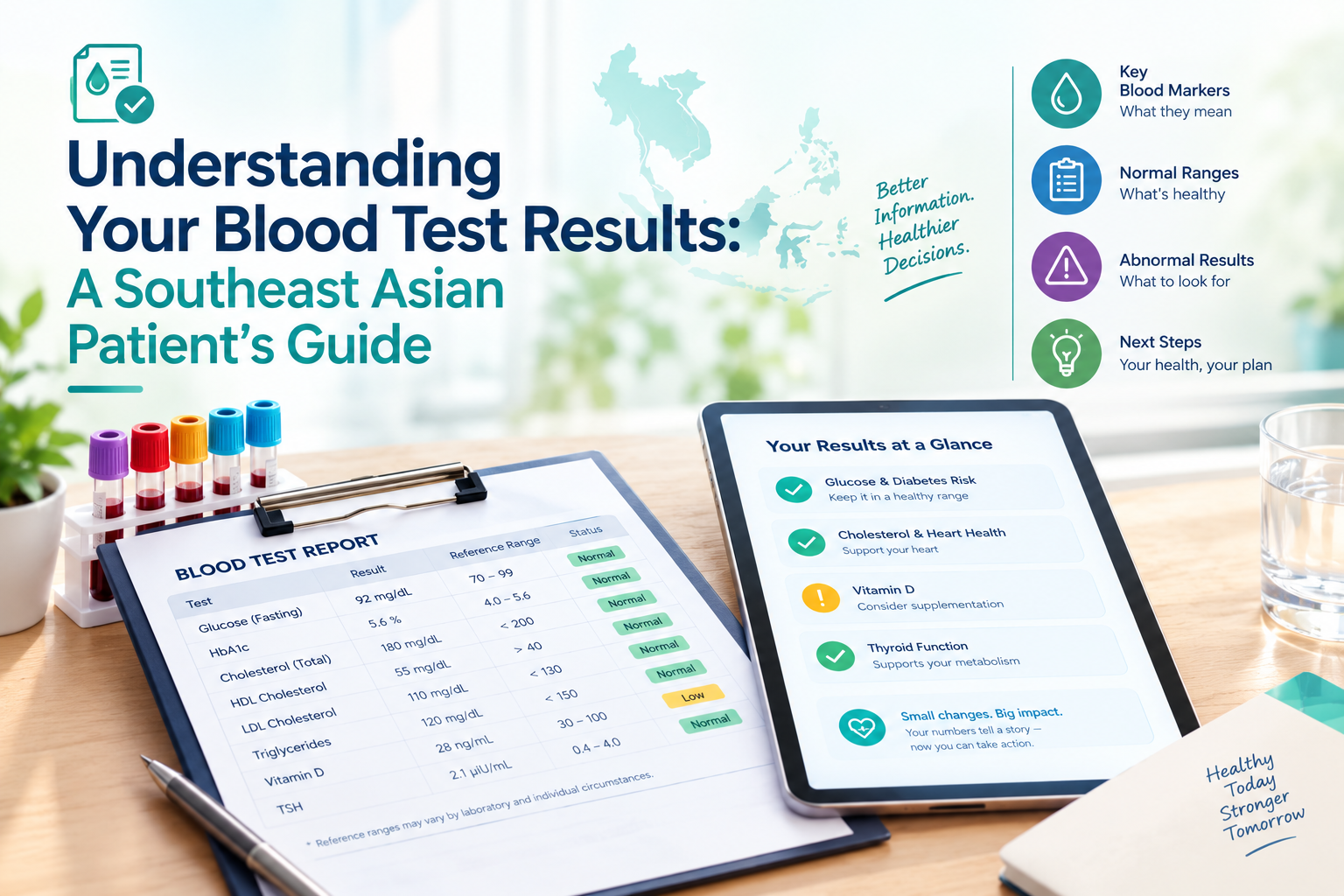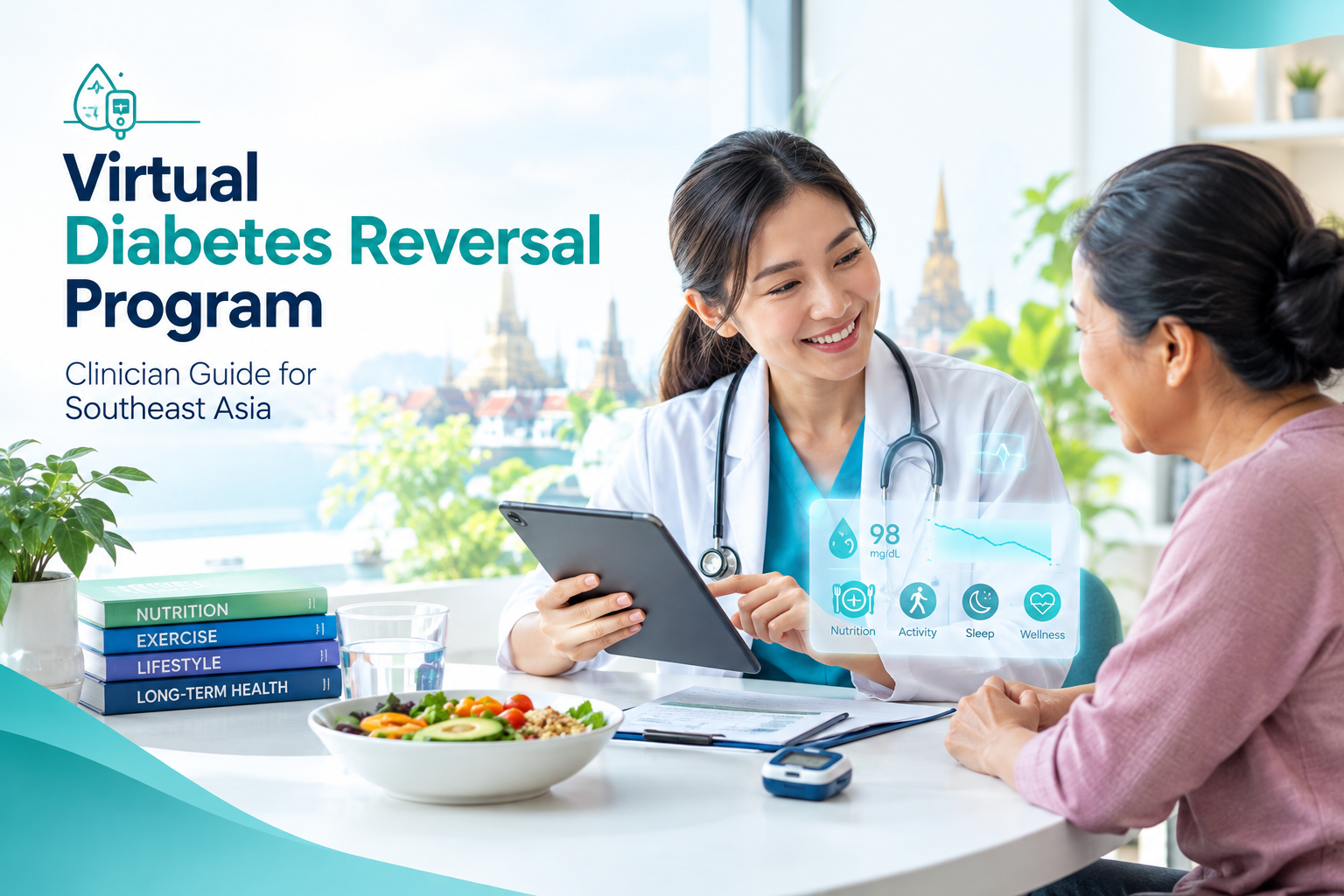
A virtual diabetes reversal program is a structured, clinician-supervised telehealth intervention combining dietary modification, physical activity, and continuous glucose monitoring to achieve remission of type 2 diabetes. In Southeast Asia, pilot programs have shown that 42% of participants achieve HbA1c <6.5% without medication after 6 months (MOH Malaysia, 2023). This guide provides clinicians with evidence-based protocols and cultural adaptations for Southeast Asian populations.
Key Takeaways
- Virtual diabetes reversal programs are as effective as in-person programs for select patients, with 1 in 3 adults in Southeast Asia achieving remission through structured lifestyle interventions (Singapore study, 2022).
- Cultural adaptation of dietary recommendations (e.g., reducing rice, noodles, roti) is critical for program success in Southeast Asia.
- Clinicians must integrate local telemedicine regulations (MOH Malaysia guidelines) and affordable continuous glucose monitors to deliver safe, effective care.
- Contraindications include advanced kidney disease, active diabetic retinopathy, and history of severe hypoglycemia unawareness.
Why Virtual Diabetes Reversal Demands a Clinician's Recalibration
In Southeast Asia, the prevalence of diabetes is projected to rise from 11.3% in 2021 to 15.7% by 2045 (WHO, 2023). This is not a statistic—it is a clinical reality that will overwhelm already strained healthcare systems. For the busy clinician, the question is no longer can we reverse type 2 diabetes, but how can we scale reversal to the millions who need it. Virtual programs offer a path: they remove geographic barriers, reduce clinic visits, and leverage continuous data streams that in-person care cannot match.
However, most existing guidelines assume a Western dietary context, high health literacy, and stable broadband. They fail Southeast Asian clinicians who treat patients with rice-centred meals, limited English, and patchy internet. This guide bridges that gap. Drawing on the latest evidence from Singapore, Malaysia, and global systematic reviews, it provides actionable protocols for remote weight loss and diabetes reversal tailored to the region. Whether you are a general practitioner in Penang or a diabetologist in Jakarta, you will find specific, quantitative recommendations you can implement tomorrow.
EazyCare AI's clinician platform can help you design and track virtual diabetes reversal programs, offering evidence-based meal plans and real-time patient monitoring. But first, let's ground ourselves in the evidence.
What Defines a Virtual Diabetes Reversal Program?
A virtual diabetes reversal program is a structured telehealth intervention that aims to achieve normoglycemia (HbA1c <6.5%) without glucose-lowering medication for at least 3 months. The core components are identical to in-person reversal: significant caloric restriction, high-intensity physical activity, behavioural coaching, and pharmacologic de-escalation. The difference is that all interactions occur via video consultations, messaging platforms, and remote monitoring devices.
Remission is not cure. The underlying pathophysiology (beta-cell dysfunction, insulin resistance) remains. Virtual programs must include long-term maintenance strategies to prevent relapse. The 2022 Singapore study found that 1 in 3 adults with type 2 diabetes achieved remission at 12 months, but 20% of those relapsed within 6 months of stopping the intervention.
The typical program lasts 6–12 months and includes:
- Initial in-person or virtual assessment (within 30 days) to establish baseline HbA1c, renal function, and contraindications.
- Weekly telehealth coaching sessions (30–45 minutes) for the first 12 weeks, then biweekly.
- Continuous glucose monitoring (CGM) for at least 2 weeks per month for the first 6 months.
- Structured dietary plan targeting 800–1,200 kcal/day with meal replacements or whole foods, culturally adapted.
- Gradual medication reduction protocol managed by the clinician.
Clinicians must ensure that the program includes a clear escalation pathway: if a patient's CGM data shows sustained hypoglycemia (<54 mg/dL) or hyperglycemia (>250 mg/dL), the platform should trigger an alert to the clinician.
For more details on setting up a virtual clinic, see EazyCare AI's clinician resources.
Evidence for Virtual Diabetes Reversal in Southeast Asia
The evidence base for virtual diabetes reversal in Southeast Asia is growing, though still limited. The most compelling data come from a 2022 Singapore randomized controlled trial comparing a virtual lifestyle intervention to standard in-person care. The study enrolled 321 adults with type 2 diabetes (mean age 52, BMI 29.4). After 12 months, 33% of the virtual group achieved HbA1c <6.5% without medication, compared to 34% in the in-person group—a non-inferiority margin of 1% (p<0.001 for non-inferiority). The virtual group also showed greater weight loss (mean 8.2 kg vs 6.9 kg, p=0.03).
For patients struggling with long-term weight maintenance, sustainable weight loss GLP-1 Southeast Asia strategies can complement the reversal program's early gains.
In Malaysia, a pilot study at Hospital Putrajaya demonstrated even higher remission rates: 42% of participants in a virtual program achieved HbA1c <6.5% without medication after 6 months. The program used a low-carbohydrate diet (50g net carbs/day) and weekly telehealth coaching. The median time to remission was 8 weeks.
“Virtual diabetes reversal programs are not inferior to in-person care for remission rates, and they may offer advantages in weight loss and adherence due to the flexibility of remote monitoring.”
— Singapore Telemedicine and Diabetes Study, 2022
A systematic review of 12 trials (including 2 from Southeast Asia) published in 2023 found that virtual lifestyle interventions reduced HbA1c by an average of 1.1% (95% CI 0.8–1.4%) compared to usual care, with no significant difference in adverse events. The review emphasized that programs with at least 8 weeks of CGM monitoring had the highest success rates.
For clinicians managing multiple patients, AI chronic disease management can automate data review and flag at-risk cases early.
For patients with concurrent hypertension, digital hypertension management Southeast Asia programs can complement diabetes reversal efforts.
The science behind diabetes reversal virtual care is explored in a dedicated article.
Takeaway: For patients with HbA1c between 7.0% and 9.0% and BMI >27, a virtual diabetes reversal program is a viable first-line option. The evidence supports its use in Southeast Asian populations, provided cultural adaptation is applied.
For a deeper dive into the evidence, consult the PubMed systematic review on telemedicine for diabetes reversal.
Key Components of a Successful Virtual Diabetes Reversal Program
A virtual program is only as good as its components. Based on the evidence and clinical experience, the following elements are essential:
1. Continuous Glucose Monitoring (CGM)
CGM provides real-time data on glucose trends, enabling patients to adjust meals and activity immediately. In Southeast Asia, affordable CGM devices (e.g., Abbott FreeStyle Libre, Dexcom G7) are increasingly available. The device should be worn for at least 2 weeks per month during the first 6 months. Clinicians must review the data weekly, focusing on time in range (70–140 mg/dL), time above range, and hypoglycemia events.
Clinicians can also leverage connected devices for chronic disease management in Southeast Asia for broader patient monitoring.
Do not initiate a virtual reversal program without a CGM prescription. Self-monitoring blood glucose (SMBG) with fingersticks provides insufficient data density for safe medication reduction. In the Malaysia pilot, 2 of 3 hypoglycemia events were detected only by CGM, not by SMBG.
2. Structured Dietary Plan
The diet must be calorie-restricted and carbohydrate-adapted. For Southeast Asian populations, this means reducing staple foods like rice, noodles, and roti. A sample plan: breakfast: 2 eggs + vegetables; lunch: 100g protein + 1 cup non-starchy vegetables; dinner: 100g protein + 1 cup vegetables. Carbohydrates are limited to 50g net per day initially. Patients should be given a visual guide for portion sizes (e.g., palm-sized protein, fist-sized vegetables).
3. Regular Telehealth Coaching
Weekly coaching sessions (30–45 minutes) are critical for behaviour change. The coach should be a dietitian or nurse educator trained in diabetes reversal. Sessions should review CGM data, discuss challenges, and adjust meal plans. After 12 weeks, sessions can be reduced to biweekly.
Clinicians can also review best practices in digital coaching chronic disease management to enhance program design.
4. Medication De-escalation Protocol
As glucose levels drop, medications must be reduced to prevent hypoglycemia. A typical protocol: reduce sulfonylureas by 50% when HbA1c falls below 7.0%; discontinue them when HbA1c <6.5%. Insulin doses are reduced by 20% per week based on fasting glucose trends. Always consult an endocrinologist before making aggressive insulin reductions.
For a visual comparison, here is a table of standard vs virtual program components:
| Component | In-Person Program | Virtual Program |
|---|---|---|
| Frequency of visits | Monthly clinic visits | Weekly video calls + daily messaging |
| Glucose monitoring | SMBG 4x/day | CGM 2 weeks/month |
| Dietary counseling | Face-to-face + printed materials | Video demonstrations + app-based meal logging |
| Medication adjustment | At clinic visits | Real-time via secure messaging with CGM data |
| Patient engagement | Moderate (missed appointments) | High (daily app engagement) |
EazyCare AI's platform integrates all these components into a single dashboard, allowing clinicians to monitor adherence, CGM trends, and medication changes. Learn more at EazyCare AI Chat.
Cultural Adaptation for Southeast Asian Diets
The biggest barrier to virtual diabetes reversal in Southeast Asia is the carbohydrate-dense staple diet. A typical Malaysian meal consists of rice (200g cooked, 50g carbs), lauk (protein), and vegetables. In Thailand, sticky rice and noodles dominate. In Indonesia, steamed rice is eaten three times a day. Removing these foods often leads to non-adherence and dropout.
Instead of elimination, clinicians should use substitution. The following table provides alternatives:
| Staple (100g serving) | Net Carbs (g) | Healthier Alternative | Net Carbs (g) |
|---|---|---|---|
| White rice | 28 | Cauliflower rice or konjac rice | 3–5 |
| Egg noodles (mee) | 25 | Zucchini noodles or shirataki noodles | 2–4 |
| Roti canai (1 piece) | 30 | Egg wrap or low-carb tortilla | 5 |
| Sticky rice (khao niao) | 35 | Green papaya salad with protein | 10 |
Patients should be taught to 'flip the plate': fill half with non-starchy vegetables, a quarter with protein, and a quarter with a small portion of the staple (e.g., 2 tablespoons of rice). This approach is culturally acceptable and still achieves carbohydrate restriction.
Language diversity is another challenge. Provide materials in Bahasa Malaysia, Thai, Vietnamese, and Tagalog. Use visual aids and video demonstrations rather than written instructions. A pilot study in Kelantan, Malaysia, found that patients who received video-based coaching in their native dialect had 3x higher adherence to the meal plan compared to those who received English text instructions.
For patients facing emotional distress during lifestyle changes, integrating digital mental health Southeast Asia resources can improve adherence and outcomes.
To sustain long-term success, consider how digital health programs adherence health goals can be reinforced through culturally tailored reminders.
For more culturally adapted meal plans, explore EazyCare AI's diabetes reversal resources.
Regulatory and Telemedicine Guidelines for Malaysian Clinicians
Before launching a virtual diabetes reversal program, clinicians must understand the local telemedicine regulations. In Malaysia, the Ministry of Health (MOH) issued the Telemedicine Practice Guidelines in 2020, updated in 2022. Key points:
- The initial consultation must be in-person to establish a doctor-patient relationship. Subsequent visits can be virtual.
- Prescriptions for controlled substances (e.g., insulin) require a physical prescription, but can be sent electronically to a registered pharmacy.
- CGM data must be stored on a secure, compliant platform (e.g., MOH-accredited health information system).
- Patients must give informed consent specifically for telemedicine, including risks of delayed diagnosis due to lack of physical examination.
Do not prescribe medications based solely on CGM data without a recent (within 3 months) in-person visit for HbA1c, renal function, and fundoscopy. In 2023, the Malaysian Medical Council reprimanded three clinicians for prescribing SGLT2 inhibitors via telehealth without proper renal monitoring.
For other Southeast Asian countries, regulations vary. Singapore's MOH allows full telemedicine for diabetes management, including initial consultations, under the 2021 Telehealth Guidelines. Thailand's Medical Council requires a physical examination every 6 months for patients with chronic diseases. Indonesia's Ministry of Health permits telemedicine only for follow-up after an in-person initial visit.
Always check the local medical council's telemedicine guidelines before starting a virtual program. Non-compliance can result in loss of license or malpractice liability.
Measuring Remission and Outcomes in a Virtual Setting
In a virtual setting, clinicians must define remission clearly and measure it consistently. The American Diabetes Association (ADA) defines complete remission as HbA1c <6.5% for at least 3 months without glucose-lowering medication. The following metrics are essential for tracking:
- HbA1c measured every 3 months (lab visit required). In virtual programs, patients can have blood drawn at a local lab and results uploaded to the platform.
- Time in range (TIR) from CGM: target >70% of readings between 70–140 mg/dL.
- Weight loss: minimum 5% body weight reduction at 3 months, 10% at 6 months.
- Medication reduction: number of classes discontinued or dose reduced by 50%.
- Adherence rate: percentage of scheduled telehealth sessions attended.
Cost savings to the healthcare system are also a key outcome for payers. A Malaysian study estimated that each diabetes remission saves the public healthcare system RM 2,500 per year in medication and complication costs. For a program treating 100 patients, the potential savings exceed RM 250,000 annually.
“Virtual programs that report remission rates, cost savings, and patient satisfaction are more likely to receive reimbursement from insurers and government health schemes.”
— MOH Malaysia Health Technology Assessment, 2023
Clinicians should document every outcome in a standardized report template. This data is essential for publishing results, securing funding, and improving program protocols. EazyCare AI's platform automatically generates outcome reports for clinicians. Visit EazyCare AI for Clinics to learn more.
Contraindications and Patient Selection for Telehealth Reversal
Not every patient is a candidate for a virtual diabetes reversal program. The following contraindications require careful consideration:
- Advanced nephropathy (eGFR <30 mL/min): Weight loss and caloric restriction can worsen renal function. These patients should be managed in-person by a nephrologist.
- Active proliferative retinopathy: Rapid glucose lowering can worsen retinopathy. Patients must have a dilated eye exam within 6 months before enrollment and be cleared by an ophthalmologist.
- Severe hypoglycemia unawareness (Gold score ≥4): These patients are at high risk of severe hypoglycemia during medication reduction. They require in-person monitoring initially.
- Pregnancy or current breastfeeding: Caloric restriction is contraindicated. Telehealth is still appropriate for diabetes management, but not for reversal.
- Untreated eating disorder (especially anorexia nervosa): Virtual programs may exacerbate disordered eating.
- Inability to use CGM or smartphone: The program requires digital literacy. Patients over 75 or with cognitive impairment may need a caregiver assistant.
Do not enroll patients with a history of diabetic ketoacidosis (DKA) or hyperosmolar hyperglycemic state (HHS) in the last 6 months. These patients should be stabilized in-person before any lifestyle intervention is considered.
If a patient has any of these contraindications, consider a hybrid model: initial in-person care until the condition is stable, then transition to virtual maintenance.
For a full checklist of patient selection criteria, consult the WHO guidelines on diabetes management in Southeast Asia.
Frequently Asked Questions
What is a virtual diabetes reversal program?
A virtual diabetes reversal program is a structured telehealth intervention that combines dietary modification, physical activity, continuous glucose monitoring, and medication de-escalation—all delivered remotely—to achieve remission of type 2 diabetes (HbA1c <6.5% without medication). It includes weekly video consultations, app-based meal logging, and real-time data sharing. Unlike general diabetes management, the goal is remission, not just control. EazyCare AI's symptom checker can help you assess whether this approach is suitable for your patients.
How effective are online weight loss programs for diabetes reversal?
Online weight loss programs are highly effective for diabetes reversal when they include structured dietary plans, CGM, and regular coaching. The Singapore study (2022) showed that 33% of participants achieved remission at 12 months—equivalent to in-person programs. The Malaysia pilot (2023) reported 42% remission at 6 months. Effectiveness depends on patient selection (HbA1c 7.0–9.0%, BMI >27) and cultural adaptation of the diet. Generic online programs without these components have lower success rates.
What guidelines do clinicians need for telemedicine diabetes care?
Clinicians should follow the telemedicine guidelines of their country's medical council. In Malaysia, the MOH Telemedicine Practice Guidelines (2022) require an initial in-person visit, informed consent for telemedicine, and secure data storage. In Singapore, the Telehealth Guidelines (2021) allow full virtual management for diabetes with periodic in-person lab tests. Always check for updates: the Malaysian Medical Council has issued specific directives on prescribing via telemedicine.
Can type 2 diabetes be reversed through virtual lifestyle interventions?
Yes, type 2 diabetes can be reversed through virtual lifestyle interventions. The evidence from Southeast Asia shows that 1 in 3 adults achieve remission with structured virtual programs. The key components are significant caloric restriction (800–1,200 kcal/day), carbohydrate adaptation (50g net carbs/day), and regular CGM monitoring. Remission is more likely in patients with shorter diabetes duration (under 6 years) and higher baseline BMI. It is not a cure; long-term maintenance is required.
What are the key components of a successful virtual diabetes reversal program?
The key components include: (1) CGM for at least 2 weeks per month for the first 6 months, (2) a structured dietary plan that is culturally adapted (e.g., reducing rice, noodles, roti), (3) weekly telehealth coaching for the first 12 weeks, (4) a medication de-escalation protocol to prevent hypoglycemia, and (5) a secure platform for data sharing and clinician alerts. Programs that include all five components have the highest remission rates.
How do remote monitoring tools improve diabetes outcomes?
Remote monitoring tools, particularly CGM, provide real-time glucose data that allows for immediate dietary and medication adjustments. Studies show that CGM use in virtual programs increases time in range by 12–15% compared to SMBG alone. It also detects hypoglycemia events that would otherwise go unnoticed. Other tools like app-based meal logging and activity trackers improve adherence. The combination of these tools enables clinicians to make data-driven decisions between visits.
What are the regulatory considerations for telemedicine in Malaysia?
In Malaysia, the MOH requires an initial in-person consultation before any telemedicine management. Prescriptions for insulin and other controlled drugs must be physically signed, though they can be sent electronically. CGM data must be stored on a MOH-accredited platform. Informed consent must specifically mention the risks of telemedicine (e.g., missed physical exam findings). Clinicians should also ensure their medical indemnity covers telemedicine practice. EazyCare AI's platform is compliant with MOH data security standards.
How does cultural adaptation affect virtual weight loss programs in Southeast Asia?
Cultural adaptation is critical for adherence and success. The diet must substitute rather than eliminate staple foods like rice, noodles, and roti. Visual guides and video demonstrations in local languages improve understanding. For example, the 'flip the plate' method (half vegetables, quarter protein, quarter staple) is effective and culturally acceptable. Programs that ignore cultural dietary patterns see dropout rates of 50% or higher within 8 weeks.
What are the contraindications for diabetes reversal via telehealth?
Contraindications include advanced kidney disease (eGFR <30), active proliferative retinopathy, severe hypoglycemia unawareness, pregnancy, untreated eating disorders, and inability to use CGM or smartphone. Patients with a history of DKA or HHS in the last 6 months should be stabilized in-person first. Age over 75 alone is not a contraindication, but cognitive impairment may require a caregiver-assisted model.
How do clinicians measure remission in a virtual setting?
Remission is measured by HbA1c <6.5% for at least 3 months without glucose-lowering medication. In a virtual setting, HbA1c is measured every 3 months via a local lab visit, with results uploaded to the platform. CGM data (time in range >70%) serves as a secondary metric. Weight loss (≥5% at 3 months) and medication reduction (number of classes discontinued) are also tracked. A standardised outcome report should be generated for each patient. EazyCare AI's platform automates this reporting.
When to See a Doctor
While virtual diabetes reversal programs are safe, certain symptoms require immediate medical attention. Seek in-person care if the patient experiences:
- Blood glucose <54 mg/dL (severe hypoglycemia) despite medication adjustment, especially if accompanied by confusion, loss of consciousness, or seizure.
- Blood glucose >300 mg/dL with symptoms of DKA (nausea, vomiting, abdominal pain, fruity breath) or HHS (extreme thirst, confusion, fever).
- New or worsening vision loss, sudden floaters, or flashes of light (possible retinopathy or vitreous hemorrhage).
- Unexplained weight loss of more than 5% in 1 month without intentional dieting.
- Chest pain, shortness of breath, or lower extremity edema (possible cardiac event exacerbated by rapid metabolic changes).
Call 999 or go to the nearest emergency department if the patient has any of the above symptoms. Do not rely on telehealth for acute management.
If you are unsure whether a symptom requires in-person care, EazyCare AI can help you decide whether you need urgent care.
Conclusion
Virtual diabetes reversal programs are not a futuristic fantasy—they are a proven, scalable intervention that can reduce the burden of type 2 diabetes in Southeast Asia. The evidence is clear: 1 in 3 patients can achieve remission, and virtual programs match in-person outcomes when properly designed. As a clinician, your role is to select the right patients, adapt the intervention to local culture, and comply with regulatory frameworks.
To recap:
- Use CGM and structured dietary plans with cultural adaptation (e.g., substituting rice with cauliflower rice, not eliminating it).
- Follow local telemedicine guidelines (initial in-person visit, secure data storage, informed consent).
- Measure remission consistently (HbA1c <6.5% for 3 months, no medication) and document outcomes for payers and regulators.
Virtual care is not a replacement for the therapeutic relationship—it is a tool that amplifies it. When used correctly, it allows you to reach more patients, collect richer data, and achieve outcomes that were once thought impossible outside of in-person clinics.
Learn more at eazycare.ai or chat with our AI health assistant to start building your virtual diabetes reversal program today.