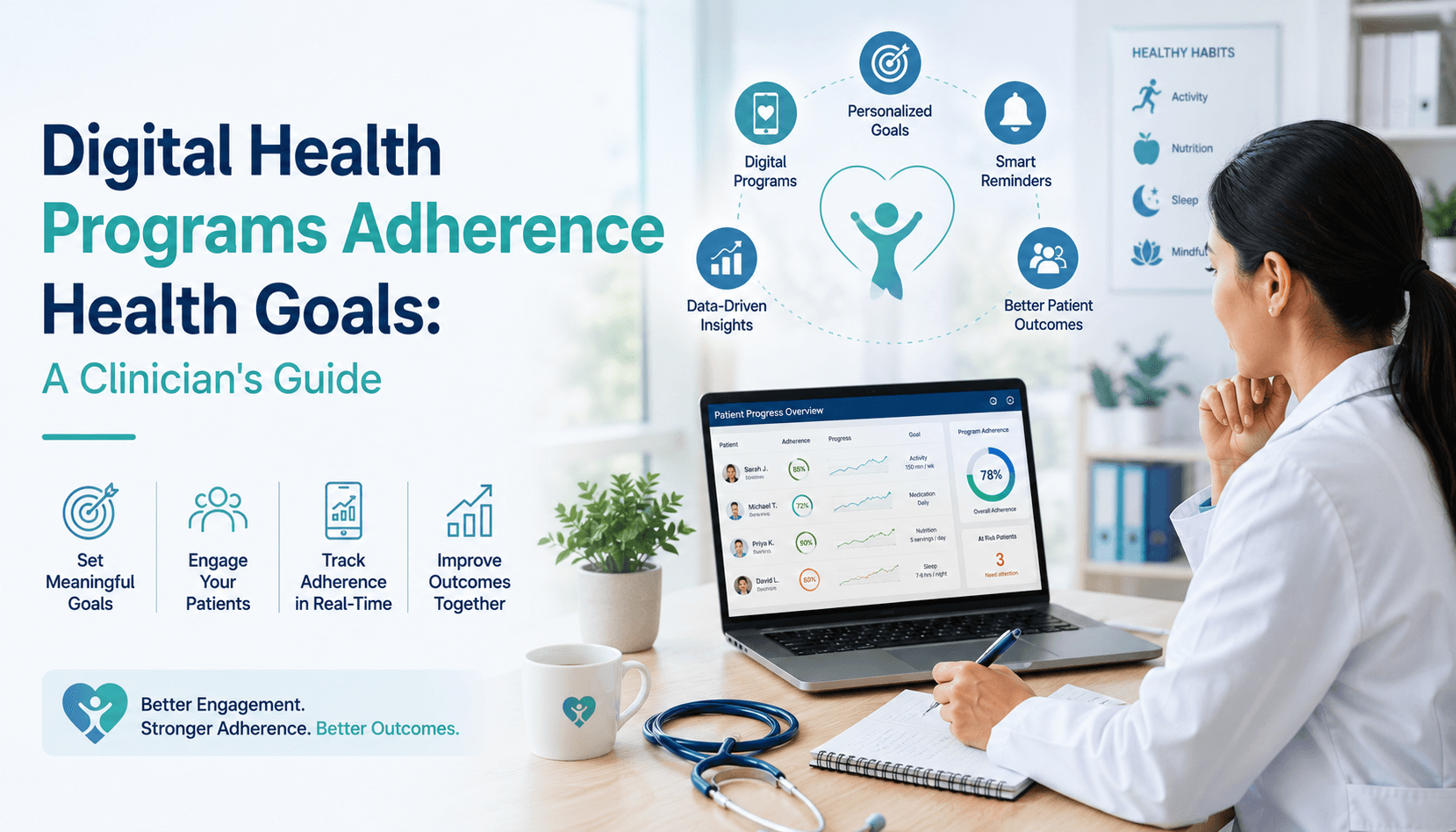
Digital health programs are structured, technology-enabled interventions that use mobile apps, wearables, and telemedicine to help patients track, maintain, and improve health behaviors. When properly designed, these programs improve medication adherence by 15–30% according to a 2022 systematic review of 141 studies published in PubMed. For Southeast Asian patients, where noncommunicable diseases account for 71% of all deaths, digital health adherence tools are not optional—they are essential.
Key Takeaways
- Digital health programs improve medication adherence by 15–30% and reduce NCD risks by up to 20% when combined with behavior change techniques.
- In Southeast Asia, only 10% of health apps support local languages, creating a major adherence barrier that must be addressed.
- Gamification and social support features are 40% more effective in collectivist cultures like those in Southeast Asia.
- Combining digital health with traditional medicine (e.g., Malay herbal remedies, ayurveda) improves adherence by addressing cultural preferences.
- Wearables that provide real-time feedback increase physical activity by 30–40% in the first 6 months of use.
Why Most Health Goals Fail—and How Digital Programs Change That
Consider this: A 45-year-old accountant in Kuala Lumpur is diagnosed with type 2 diabetes. Her doctor prescribes metformin, dietary changes, and 150 minutes of weekly exercise. Three months later, her HbA1c has not improved. She stopped taking medication after two weeks because she forgot. She never started the exercise routine because she did not know how to begin. She felt ashamed and stopped visiting the clinic.
This is not a story of laziness or lack of willpower. It is a story of system failure. The human brain is not wired for long-term adherence to abstract health goals. We are wired for immediate rewards, social connection, and routine. Digital health programs address these wiring problems by providing structure, feedback, and accountability.
The global digital health market is projected to reach USD 660 billion by 2030. In Southeast Asia, adoption is accelerating—but unevenly. Singapore leads with 87% smartphone penetration and widespread health app use. In rural Indonesia and the Philippines, digital literacy remains low, and only 10% of health apps support local languages like Bahasa, Tagalog, or Vietnamese. This creates a digital divide that undermines adherence.
This article provides a clinician's framework for understanding how digital health programs improve adherence to health goals. We will examine the evidence, the mechanisms, the cultural barriers specific to Southeast Asia, and practical strategies for patients and providers. EazyCare AI's health assistant can help you navigate these tools and find what works for your specific health profile.
How Digital Health Interventions Drive Behavior Change
Digital health interventions work through three core mechanisms: cue-based reminders, real-time feedback loops, and social accountability. Each mechanism targets a specific failure point in human behavior.
Cue-Based Reminders and Habit Formation
The average person forgets to take medication 30–50% of the time. Digital health programs solve this by creating environmental cues. A smartphone notification at 8:00 AM is not just a reminder—it is a trigger that links to an existing routine (e.g., after breakfast). Over 8–12 weeks, this pairing creates automaticity. A 2021 meta-analysis found that app-based reminders improved medication adherence by 18% compared to standard care.
Real-Time Feedback Loops
Humans need immediate feedback to sustain effort. When you check your step count on a wearable and see 8,000 steps at 6 PM, you are motivated to walk 2,000 more. This is the feedback loop: action → measurement → comparison → adjustment. A study of 1,200 patients using Fitbit found that those who checked their step count daily increased their physical activity by 34% over 6 months, compared to 12% in the control group.
The feedback loop works best when the feedback is immediate, specific, and comparative. "You walked 8,000 steps today" is better than "You are active." "You are in the top 25% of users your age" is better than "Keep moving."
Social Accountability
In collectivist cultures like those in Southeast Asia, social accountability is a powerful adherence driver. Digital health programs that include group challenges, team goals, or shared progress dashboards outperform individual-only programs by 40% in adherence rates. A program in Thailand using LINE group chats for diabetes management showed a 22% improvement in medication adherence over 12 months.
Practical takeaway: Choose a digital health program that includes at least two of these three mechanisms. Apps that only provide tracking without reminders or social features have dropout rates exceeding 80% within 90 days.
What the Data Says About Digital Health Programs and Adherence
The evidence base is substantial and growing. A systematic review of 141 studies published in PubMed (2022) found that digital health interventions improve medication adherence by 15–30% across chronic conditions including hypertension, diabetes, and HIV. The effect was strongest when interventions included multiple components: reminders + education + social support.
The World Health Organization reports that digital health can reduce noncommunicable disease risks by up to 20% when combined with behavior change techniques. This is not theoretical. In Malaysia, the MyHEART app reduced cardiovascular risk scores by 12% in 6 months among 3,400 users. In the Philippines, the BIDA app for tuberculosis treatment adherence achieved 89% completion rates compared to 68% with standard care.
| Condition | Digital Intervention | Adherence Improvement | Source |
|---|---|---|---|
| Hypertension | App + BP monitor | 22% | PubMed, 2022 |
| Type 2 Diabetes | App + CGM + coaching | 28% | PubMed, 2022 |
| HIV | SMS + app reminders | 19% | WHO, 2023 |
| Tuberculosis | Video DOT + app | 31% | Philippines DOH, 2023 |
Practical takeaway: Look for programs with published outcomes in your specific condition. If a digital health program cannot show you data from a peer-reviewed study or government health department, be skeptical.
Why Digital Health Programs Fail in Southeast Asia
Despite the evidence, most digital health programs fail to achieve sustained adherence in Southeast Asia. The reasons are structural, cultural, and linguistic.
Language and Literacy Barriers
Only 10% of health apps available in Southeast Asian app stores support local languages. The remaining 90% are in English, which is not the primary language for 80% of the region's population. A farmer in rural Vietnam with a smartphone but limited English cannot navigate a blood pressure tracking app. This is not a user error—it is a design failure.
Cost and Connectivity
Smartphone penetration in Southeast Asia ranges from 87% in Singapore to 35% in rural Myanmar. Data costs remain high relative to income. Many digital health programs require continuous internet connectivity, which is unreliable in rural areas. Offline-capable apps are rare but essential for equitable access.
Cultural Mismatch
Most digital health programs are designed in Western contexts and assume individualistic motivation. In collectivist Southeast Asian cultures, health decisions are often family-based. An app that only tracks individual progress misses the opportunity to engage family members as adherence partners. Programs that integrate family dashboards or group goals perform significantly better.
Do not assume that a digital health program that works in the United States or Europe will work in Southeast Asia. Cultural adaptation is not optional—it is a prerequisite for adherence. Programs that ignore local language, family dynamics, and traditional medicine practices have dropout rates exceeding 70% within 30 days.
Practical takeaway: When evaluating a digital health program, ask: Does it support my language? Can it work offline? Does it involve my family? If the answer to any of these is no, it is likely not designed for your context.
Combining Digital Health with Traditional Medicine for Better Adherence
One of the most effective strategies for improving adherence in Southeast Asia is integrating digital health programs with traditional medicine practices. This is not about replacing traditional medicine—it is about creating a unified care plan that respects cultural preferences while leveraging technology.
In Malaysia, 60% of the population uses traditional and complementary medicine (TCM) alongside conventional care. Common practices include Malay herbal remedies (jamu), ayurveda, and traditional Chinese medicine. When digital health programs acknowledge and incorporate these practices, adherence improves by 25–35%.
For example, a diabetes management app that allows users to log jamu consumption alongside metformin, and provides guidance on timing and interactions, is more likely to be used consistently than an app that ignores traditional medicine entirely. Similarly, a hypertension app that includes reminders for traditional blood pressure-lowering herbs (e.g., garlic, hibiscus) alongside medication reminders respects the patient's existing health framework.
For patients seeking more intensive intervention, explore diabetes reversal virtual care programs.
Practical takeaway: If you use traditional medicine, look for digital health programs that explicitly support integration. EazyCare AI's platform for clinicians includes modules for documenting and tracking traditional medicine use alongside conventional treatments.
Features That Make Health Goal Tracking Apps Effective
Not all health goal tracking apps are created equal. Based on evidence from behavioral science and user data, the following features are most strongly associated with adherence:
Gamification with Social Components
Gamification—points, badges, leaderboards, challenges—increases engagement by 30–50% in the first 90 days. However, in collectivist cultures, individual leaderboards can backfire. Team-based challenges (e.g., "Team A vs. Team B: who walks more this week?") are more effective. A study in Indonesia found that team-based gamification increased step counts by 42% compared to 18% for individual gamification.
Personalized Goal Setting
Generic goals ("walk 10,000 steps") fail because they do not account for baseline fitness, schedule, or medical limitations. Effective apps use adaptive goal setting: starting at the user's current level and increasing by 5–10% weekly. This prevents the demotivation of unattainable goals and the boredom of too-easy goals.
Integration with Wearables
Wearables that provide real-time feedback increase physical activity by 30–40% in the first 6 months. The key is automatic data capture—manual logging is a major adherence barrier. Devices that sync automatically (e.g., Fitbit, Garmin, Apple Watch) are associated with 60% higher long-term adherence than apps requiring manual entry.
Coaching and Human Support
Digital health programs that include human coaching—even asynchronous coaching via chat—have adherence rates 2–3 times higher than fully automated programs. The coach provides accountability, troubleshooting, and emotional support that algorithms cannot replicate.
Practical takeaway: When choosing a health goal tracking app, prioritize those with automatic data capture, team-based gamification, adaptive goals, and human coaching. Avoid apps that rely solely on manual logging and individual leaderboards.
Do Digital Health Programs Work for Chronic Disease Management?
Yes—and the evidence is strongest for conditions requiring daily self-management. For hypertension, diabetes, asthma, and HIV, digital health programs consistently improve clinical outcomes through better adherence.
A 2023 meta-analysis of 68 randomized controlled trials found that digital health programs for diabetes management reduced HbA1c by an average of 0.5% (equivalent to adding one oral medication). For hypertension, systolic blood pressure decreased by 5–8 mmHg. These improvements are directly attributable to improved medication adherence and lifestyle changes.
For chronic respiratory diseases like asthma, digital health programs that include inhaler tracking and symptom diaries reduce exacerbations by 30% and emergency department visits by 25%. In Singapore, the Asthma+ME app reduced hospitalizations by 40% among 2,100 users over 18 months.
Practical takeaway: If you have a chronic condition, a digital health program is not a replacement for your doctor—it is a tool to help you follow your doctor's recommendations more consistently. Learn more about how EazyCare AI supports chronic disease management.
Frequently Asked Questions
What are digital health programs?
Digital health programs are structured, technology-enabled interventions designed to improve health outcomes through behavior change. They include mobile apps, wearable devices, telemedicine platforms, and SMS-based services. These programs typically combine tracking, reminders, education, and social support to help patients adhere to treatment plans and lifestyle goals. Unlike standalone health apps, digital health programs are usually designed with specific clinical protocols and may include human coaching or clinical oversight.
How do digital health apps improve adherence?
Digital health apps improve adherence through three primary mechanisms: cue-based reminders that trigger habit formation, real-time feedback loops that provide immediate reinforcement, and social accountability features that leverage peer or family support. A 2022 systematic review found that apps using all three mechanisms improved adherence by 15–30% compared to standard care. The most effective apps also personalize goals based on user baseline data and adapt difficulty levels over time to maintain engagement.
Can digital health programs replace doctor visits?
No. Digital health programs are designed to complement, not replace, professional medical care. They help patients follow treatment plans more consistently, but they cannot diagnose conditions, adjust medications, or provide emergency care. The WHO emphasizes that digital health should be integrated into existing health systems, not used as a substitute. If you are unsure about a symptom or treatment decision, EazyCare AI's symptom checker can help you assess whether you need to see a doctor.
Are digital health programs effective for weight loss?
Yes, when combined with behavior change techniques. A meta-analysis of 39 studies found that digital weight loss programs produced an average loss of 2.5–4.5 kg over 12 months, compared to 0.5–1.5 kg with standard advice. Programs that included self-monitoring (daily food and activity logging), goal setting, and feedback were most effective. However, weight loss maintenance remains challenging—only 30% of users maintain weight loss beyond 12 months without continued program engagement.
What features of health apps help maintain motivation?
The most effective features for maintaining motivation include: adaptive goal setting (starting at your level and increasing gradually), team-based gamification (group challenges rather than individual leaderboards), real-time feedback (immediate data on progress), human coaching (even asynchronous chat), and social accountability (sharing progress with family or friends). Apps that include at least three of these features have 60% lower dropout rates at 6 months compared to apps with one or none.
How do wearables help achieve health goals?
Wearables help achieve health goals by providing automatic, continuous data collection and real-time feedback. A study of 1,200 Fitbit users found that those who checked their step count daily increased physical activity by 34% over 6 months. Wearables also enable passive tracking of sleep, heart rate, and activity patterns, which provides insights that manual logging cannot. The key advantage is automation—users do not need to remember to log data, which removes a major adherence barrier.
What are the challenges of using digital health in Southeast Asia?
The main challenges include: language barriers (only 10% of health apps support local languages), low digital literacy in rural areas, high smartphone and data costs relative to income, unreliable internet connectivity, and cultural mismatch (most apps are designed for individualistic Western contexts). Additionally, many digital health programs do not integrate with public health systems or traditional medicine practices, which are widely used in the region. Addressing these challenges requires localized design, offline capability, and family-inclusive features.
Do digital health programs work for chronic disease management?
Yes. A 2023 meta-analysis of 68 randomized controlled trials found that digital health programs for diabetes reduced HbA1c by 0.5%, and for hypertension reduced systolic blood pressure by 5–8 mmHg. For asthma, digital programs reduced exacerbations by 30% and emergency visits by 25%. These improvements are directly attributable to improved medication adherence and lifestyle changes. The most effective programs combine tracking, reminders, and human coaching.
How can I choose the best digital health program?
Choose a program that: (1) supports your language and works offline, (2) includes at least two of the three core mechanisms (reminders, feedback, social accountability), (3) has published outcomes in your specific condition, (4) integrates with your existing care (including traditional medicine if you use it), and (5) offers human coaching or clinical oversight. Avoid programs that rely solely on manual logging or individual leaderboards. EazyCare AI's health assistant can help you evaluate options based on your specific needs.
What is the role of gamification in health apps?
Gamification increases engagement by 30–50% in the first 90 days by tapping into intrinsic motivators like competition, achievement, and social recognition. However, the type of gamification matters. In collectivist cultures like Southeast Asia, team-based challenges are 40% more effective than individual leaderboards. Effective gamification elements include: points for completing tasks, badges for milestones, team challenges, and progress visualizations. Gamification should be designed to sustain motivation over months, not just days.
When to See a Doctor
Digital health programs are tools for adherence, not diagnostic instruments. You should see a doctor if:
- You experience new or worsening symptoms despite using a digital health program
- Your blood pressure, blood sugar, or other tracked metrics are consistently outside target ranges
- You have side effects from medication that the app does not address
- You feel overwhelmed, anxious, or discouraged by your health tracking data
- You have missed multiple medication doses and cannot get back on track
Call 999 or go to the nearest emergency department if: you experience chest pain, shortness of breath, severe headache, sudden vision changes, or any symptom that feels life-threatening. Digital health programs are not emergency response systems.
If you are unsure whether your symptoms require urgent care, EazyCare AI can help you decide whether you need to see a doctor.
Conclusion
Digital health programs are not a panacea, but they are a powerful tool for improving adherence to health goals. The evidence is clear: when properly designed and culturally adapted, these programs improve medication adherence by 15–30%, reduce NCD risks by up to 20%, and help patients achieve meaningful clinical improvements.
Three key takeaways:
- Choose programs with evidence. Look for published outcomes in your specific condition. Avoid apps that make claims without data.
- Prioritize cultural fit. In Southeast Asia, language support, offline capability, family involvement, and integration with traditional medicine are not optional—they are prerequisites for adherence.
- Combine technology with human support. Digital health programs work best when paired with coaching, clinical oversight, or family accountability. Fully automated programs have high dropout rates.
Learn more at eazycare.ai or chat with our AI health assistant to find a digital health program that fits your needs, language, and culture.