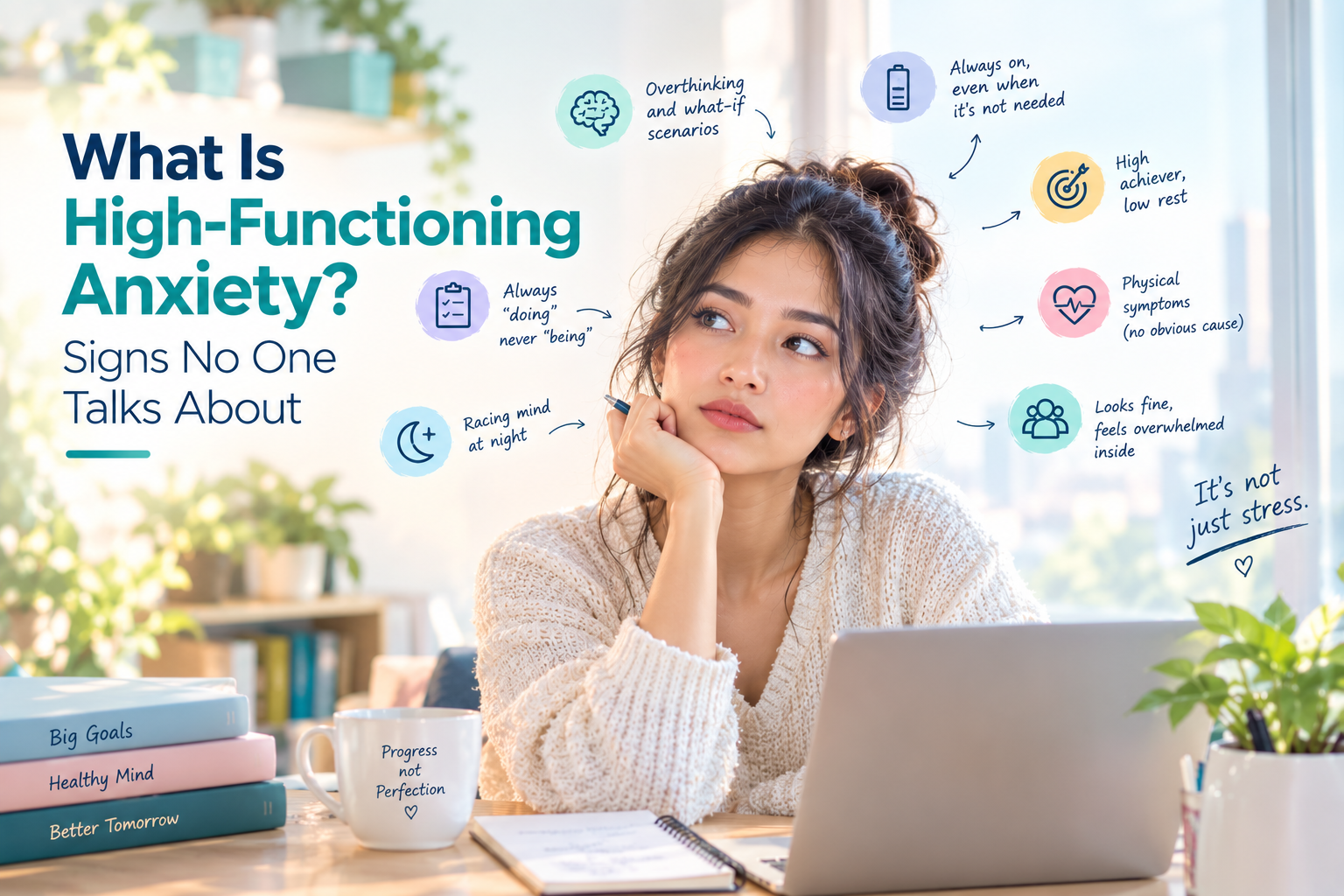
Stress is a normal physiological response to perceived threats or demands. A healthy stress level enables focus and performance, but when stress becomes chronic or overwhelming, it can impair daily function and increase disease risk. The World Health Organization (WHO) reports that 1 in 4 people globally will experience a mental health condition in their lifetime, and chronic stress is a major contributor.
Key Takeaways
- Normal stress is time-limited and resolves after a stressor ends; chronic stress persists and causes measurable physical and emotional changes.
- The Perceived Stress Scale (PSS) is the most widely validated self-assessment tool, with scores above 20 indicating moderate-to-high stress.
- In Southeast Asia, collectivist pressures (family expectations, workplace hierarchy) and stigma often prevent people from recognising when stress has become unhealthy.
- A 5-minute self-assessment can help you decide whether to use self-care strategies or seek professional help.
Why We're Asking the Wrong Question About Stress
A 33-year-old accountant in Kuala Lumpur wakes up at 5 AM, checks her work messages before brushing her teeth, feels a dull headache by noon, and snaps at her children during dinner. She tells herself: “This is just how life is right now.” She is not alone. Across Malaysia and Southeast Asia, many professionals, parents, and caregivers live in a state of chronic activation that they mistake for normal functioning.
The problem is not that stress exists — it evolved to keep us alive. The problem is that we lack a reliable way to tell when stress has shifted from a helpful signal to a destructive force. Most online quizzes ask vague questions like “Do you feel overwhelmed?” without providing a validated framework or cultural context. They also ignore the unique stressors that Southeast Asians face: hierarchical workplaces where speaking up is discouraged, extended family obligations that blur boundaries, and a deep-seated stigma around admitting mental struggle.
This article provides an evidence-based, 5-minute self-assessment grounded in the Perceived Stress Scale — the most widely validated tool in stress research — adapted for non-clinical use. It also explains what normal stress looks like, how to recognise the warning signs of chronic stress, and when to seek help. If you have been wondering whether your stress level is normal, this guide will give you a concrete answer and actionable next steps. For a more personalised assessment, chat with EazyCare AI to discuss your symptoms confidentially.
What Does 'Normal Stress' Actually Mean?
Stress is the body's response to any demand—physical, mental, or emotional. When you face a challenge, your brain activates the sympathetic nervous system, releasing cortisol and adrenaline. This "fight-or-flight" response sharpens your focus, increases heart rate, and redirects energy to muscles. In small, time-limited doses, stress improves performance: meeting a deadline, giving a presentation, or reacting to a near-accident while driving. This is normal stress.
The key distinction is recovery. Normal stress ends when the stressor ends. The body returns to baseline within minutes or hours. Chronic stress, by contrast, occurs when the threat (or perceived threat) never fully subsides. The system stays activated, cortisol remains elevated, and the body begins to break down over weeks and months. According to the WHO, persistent stress is a known risk factor for anxiety disorders, depression, cardiovascular disease, and weakened immune function.
But how much stress is too much? Researchers use the concept of allostatic load — the cumulative wear and tear on the body from repeated stress responses. A 2021 meta-analysis published in PubMed found that the Perceived Stress Scale (PSS) shows a Cronbach's alpha above 0.80 across diverse cultures, making it the most reliable tool for measuring stress in general populations. The scale asks about thoughts and feelings over the past month, measuring how unpredictable, uncontrollable, and overloaded individuals perceive their lives to be.
Allostatic load is the biological cost of chronic stress. It can be measured through biomarkers like cortisol, blood pressure, heart rate variability, and inflammatory markers. In a primary care setting, your doctor may look for signs of allostatic overload to diagnose stress-related illness.
For most people, a PSS score below 14 indicates low stress; 15–20 is moderate; above 20 suggests high stress that warrants attention. However, these numbers are culturally influenced. A study involving Malaysian university students found that baseline PSS scores were slightly higher on average than Western norms, likely due to academic pressure and family expectations.
How to Measure Your Stress Level: The 5-Minute Self-Assessment
You can assess your current stress level in under five minutes using a modified version of the Perceived Stress Scale. Unlike vague quizzes, this tool has been validated by decades of research and can give you a reliable indication of whether your stress warrants action. Below is a simplified version suitable for self-administration.
Instructions: For each question, think about how often you felt or thought a certain way in the last month. Rate each item on a scale of 0 to 4: 0 = Never, 1 = Almost Never, 2 = Sometimes, 3 = Fairly Often, 4 = Very Often.
| # | Question | Score (0–4) |
|---|---|---|
| 1 | How often have you been upset because of something that happened unexpectedly? | |
| 2 | How often have you felt that you were unable to control the important things in your life? | |
| 3 | How often have you felt nervous or “stressed”? | |
| 4 | How often have you felt confident about your ability to handle your personal problems?* | |
| 5 | How often have you felt that things were going your way?* | |
| 6 | How often have you found that you could not cope with all the things that you had to do? | |
| 7 | How often have you been able to control irritations in your life?* | |
| 8 | How often have you felt that you were on top of things?* | |
| 9 | How often have you been angered because of things that were outside of your control? | |
| 10 | How often have you felt difficulties were piling up so high that you could not overcome them? |
* Items 4, 5, 7, and 8 are reverse-scored (i.e., 0=4, 1=3, 2=2, 3=1, 4=0). Add all scores to get a total between 0 and 40.
This self-assessment is a screening tool, not a diagnostic instrument. A high score does not mean you have a mental disorder, but it does indicate that your stress level is likely affecting your health. Share your results with a doctor or mental health professional if you score above 20.
Interpreting your score:
- 0–13: Low stress. Your stress response is well-regulated. Continue using healthy coping strategies.
- 14–20: Moderate stress. You may benefit from stress-reduction techniques and lifestyle adjustments.
- 21–30: High stress. Chronic stress is likely. Consider consulting a healthcare provider.
- 31–40: Very high stress. You are at significant risk for health problems. Seek professional evaluation promptly.
For a more nuanced assessment, use EazyCare AI's symptom checker, which asks additional questions about sleep, appetite, mood, and physical symptoms to help you determine the next steps.
Stress Symptoms That Signal Something More: When Normal Crosses the Line
Normal stress produces temporary symptoms: racing heart before a presentation, tension headache after a long day, irritability during a traffic jam. These pass. Chronic stress, however, produces persistent symptoms that affect multiple domains of life. The Centers for Disease Control and Prevention (CDC) reports that 1 in 8 adults in the United States regularly experience stress-related symptoms that interfere with daily life — and prevalence in Southeast Asia is likely similar or higher due to underreporting.
Physical Signs
Chronic stress directly affects the body. Common physical symptoms include: frequent headaches (especially tension-type), muscle aches and pains, chest tightness, digestive issues (irritable bowel, acid reflux), fatigue that persists despite sleep, changes in appetite (overeating or undereating), and lowered immune function (getting sick more often).
Emotional Signs
Emotionally, chronic stress manifests as irritability, anxiety, mood swings, feelings of overwhelm, and a sense of detachment or numbness. Many people describe feeling "on edge" or "wired but tired."
Behavioural Signs
Behavioural changes include procrastination, withdrawal from social activities, increased use of alcohol or smoking, neglect of responsibilities, and difficulty making decisions.
"In my years seeing patients in Malaysia, the most overlooked sign is a change in sleep pattern. Many dismiss insomnia as a normal part of adult life, but it's often the first sign that stress has shifted from adaptive to pathological."
— Dr. Aina Rashid, consultant psychiatrist, Kuala Lumpur (excerpt from a 2023 interview)
If you recognise three or more of these symptoms persisting for more than two weeks, your stress level is likely beyond the normal range. The EazyCare AI platform for clinicians helps healthcare providers track such symptoms systematically.
The Southeast Asian Perspective: Why Your Stress Might Look Different
Stress is universal, but the way it presents — and the way people talk about it — varies enormously by culture. In Southeast Asia, several factors make stress assessment particularly complex.
Collectivist stressors. In Malaysia, Singapore, and other Southeast Asian countries, individuals often carry the weight of family expectations, caregiving responsibilities, and a desire to maintain social harmony. A young adult may feel stressed not only by work deadlines but by the pressure to provide for parents, maintain a certain social image, or avoid bringing "shame" to the family. These stressors are less visible than individualistic Western stressors and are often internalised as personal failure rather than recognised as environmental pressure.
Workplace hierarchy. Organisational culture in many Southeast Asian companies is steeped in hierarchy. Subordinates may feel unable to voice concerns or set boundaries, leading to stress accumulation without outlet. A 2020 survey by the Malaysian Employers Federation found that 64% of employees reported high job stress, but only 12% felt comfortable discussing it with superiors.
Stigma and underreporting. Mental health stigma remains a major barrier. Many Southeast Asians avoid clinical labels like "anxiety" or "depression," preferring to describe physical symptoms — headaches, chest tightness, fatigue — to their doctors. This somatisation means that stress often goes untreated until it manifests as a more serious condition.
These cultural nuances are why a generic "am I stressed?" quiz is insufficient. The self-assessment provided earlier is still useful, but it should be interpreted with the understanding that a score of 18 might be less alarming for someone in a high-pressure urban environment than for someone in a low-stress setting. Context matters.
EazyCare AI's health assistant is designed to account for regional factors, including language (Bahasa Malaysia, Mandarin, Tamil, English) and culturally sensitive symptom descriptions. Start a conversation to learn more.
How to Lower Your Stress Level in 10 Minutes or Less
If your self-assessment reveals moderate or high stress, you don't need to wait for a doctor's appointment to start managing it. Research indicates that brief, structured relaxation techniques can reduce cortisol levels and shift your nervous system from sympathetic (fight-or-flight) to parasympathetic (rest-and-digest) within minutes. Here are four evidence-based methods you can use anywhere.
4-7-8 Breathing. Inhale through your nose for 4 seconds, hold for 7 seconds, exhale slowly through your mouth for 8 seconds. Repeat 4–5 times. This activates the vagus nerve and lowers heart rate.
Progressive Muscle Relaxation. Starting from your toes, tense each muscle group for 5 seconds then release, moving up to your legs, abdomen, hands, chest, shoulders, neck, and face. Done systematically, this reduces physical tension in under 10 minutes.
5-4-3-2-1 Grounding. Name 5 things you can see, 4 you can touch, 3 you can hear, 2 you can smell, and 1 you can taste. This technique interrupts rumination and anchors you in the present moment.
Brief Mindfulness Meditation. Use a guided app or simply focus on your breath for 5 minutes, gently returning attention whenever it wanders. A 2022 study from the University of Malaya showed that even a single 10-minute session reduced perceived stress scores among Malaysian office workers by an average of 18%.
| Technique | Time Required | Best For |
|---|---|---|
| 4-7-8 Breathing | 2–3 minutes | Acute anxiety or anger |
| Progressive Muscle Relaxation | 8–10 minutes | Physical tension, insomnia |
| Grounding (5-4-3-2-1) | 2–5 minutes | Feeling overwhelmed or panicky |
| Mindfulness Meditation | 5–10 minutes | Daily stress prevention |
These techniques are powerful for acute stress management, but they are not a substitute for addressing the root causes of chronic stress. If you find yourself relying on these methods multiple times per day, your overall stress load remains high.
When Your Stress Becomes a Health Crisis: Burnout, Anxiety, Depression
Chronic stress does not stay in its lane. It cross-talks with the immune system, cardiovascular system, and mental health. The CDC reports that 1 in 8 adults regularly experience stress-related symptoms that interfere with daily life. If left unaddressed, chronic stress can develop into clinical conditions such as:
- Burnout: A state of emotional, physical, and mental exhaustion caused by prolonged workplace stress. The WHO classifies burnout as an occupational phenomenon characterised by feelings of energy depletion, increased mental distance from one’s job, and reduced professional efficacy.
- Anxiety disorders: Chronic stress primes the brain for hypervigilance. When this becomes persistent and disproportionate to actual threats, it may meet criteria for generalized anxiety disorder, panic disorder, or social anxiety.
- Depression: High cortisol levels over time can alter neurotransmitter function and neuroplasticity, increasing vulnerability to depressive episodes.
Differentiating between stress and these conditions can be difficult. A key marker is duration and disability: stress comes and goes; burnout, anxiety, and depression cause persistent impairment in work, relationships, and daily functioning for weeks or months. The EazyCare AI platform provides clinically-informed screening for these conditions and can help you prepare for a medical consultation.
Normal stress: caused by a specific stressor, resolves when stressor ends, doesn't harm relationships or productivity long-term.
Burnout: caused by chronic workplace stress, leads to cynicism and reduced performance.
Anxiety/Depression: may arise without an obvious stressor, causes pervasive changes in mood, sleep, appetite, and cognition.
Frequently Asked Questions
How do I know if my stress level is unhealthy?
Unhealthy stress is characterised by persistence (lasting weeks or months) and disability (interfering with sleep, work, relationships, or daily function). A score above 20 on the Perceived Stress Scale suggests unhealthy stress. Also watch for physical symptoms like chronic headaches, fatigue, and digestive issues that don't resolve with rest.
What is a normal stress level on a scale of 1 to 10?
On a subjective 0–10 scale, most people report a daily stress level around 3–5. Occasional spikes to 7 or 8 during acute events are normal if they subside quickly. A baseline level consistently above 6 is considered high and warrants attention. However, numeric scales are less reliable than validated tools like the PSS.
Can stress cause physical pain like headaches or chest tightness?
Yes. Stress triggers muscle tension, which commonly causes tension-type headaches, jaw clenching, and neck/shoulder pain. Chest tightness can result from hyperventilation or anxiety-induced muscle tension. However, chest pain should always be evaluated by a doctor to rule out cardiac causes. EazyCare AI's symptom checker can help you assess whether your symptoms need urgent attention.
What's the difference between everyday stress and burnout?
Everyday stress is short-term and specific; burnout is a state of physical and emotional exhaustion from prolonged workplace stress. Burnout includes cynicism about one's job, reduced efficacy, and a sense of detachment. Unlike normal stress, burnout does not improve after a weekend break. It often requires structural changes at work and professional support.
How can I measure my stress at home without a doctor?
Use the 10-question Perceived Stress Scale provided in this article. It takes 5 minutes and gives you a numeric score. Other at-home methods include tracking heart rate variability (HRV) using a wearable device — lower HRV is linked to higher stress. Note that these tools are screening aids, not diagnostics.
Is it normal to feel stressed every single day?
Feeling some stress daily is common in high-pressure environments, but it is not "normal" in the sense of being healthy. Daily stress without adequate recovery accumulates into chronic stress. Even if you have become accustomed to it, your body pays the price through elevated cortisol and increased disease risk. If you feel stressed every day for more than two weeks, take the self-assessment above and consider professional advice.
What are the early warning signs of chronic stress?
Early signs include: difficulty winding down after work, increased irritability over small things, frequent colds, relying on caffeine or alcohol to get through the day, and feeling tired even after a full night's sleep. These signs often appear before major health problems develop.
When should I see a doctor for stress symptoms?
See a doctor if your stress-related symptoms persist for more than 2 weeks; if you experience chest pain, shortness of breath, or severe headache; if you have thoughts of self-harm; or if you are unable to perform daily activities. Your doctor can perform a full assessment and rule out underlying medical conditions. EazyCare AI's symptom checker can help you decide whether you need urgent care.
What is the Perceived Stress Scale and how does it work?
The Perceived Stress Scale (PSS) is a 10-item questionnaire developed by psychologist Sheldon Cohen in 1983. It measures the degree to which life situations are appraised as stressful — specifically, how unpredictable, uncontrollable, and overloaded one feels. It is the most widely used psychological instrument for measuring stress perception and has been validated in over 20 languages, including Malay and Chinese.
Are there stress tests that help me know if I'm okay?
Yes, several stress assessments exist: the PSS (gold standard), the Holmes-Rahe Life Stress Inventory (measures life event burden), and the Depression Anxiety Stress Scales (DASS). These are not diagnostic but can indicate whether your stress level is in a concerning range. For a quick check, the 5-minute self-assessment in this article is a good starting point.
When to See a Doctor
While occasional stress is part of life, certain signs demand medical attention. Seek professional help if you experience any of the following:
- Chest pain, palpitations, or shortness of breath — these could signal heart problems, not just stress.
- Thoughts of harming yourself or others — contact a crisis helpline immediately.
- Inability to get out of bed or perform basic self-care for more than a few days.
- Significant weight loss or gain without trying.
- Sleep disturbances lasting more than two weeks (can't fall asleep, waking early, or sleeping excessively).
- Persistent sadness, hopelessness, or loss of interest in things you usually enjoy.
Emergency escalation: Call 999 or go to the nearest emergency department if you experience sudden chest pain, severe difficulty breathing, or are in immediate danger of harming yourself.
If you are unsure, EazyCare AI can help you decide whether you need urgent care through a confidential symptom assessment.
Conclusion
Knowing whether your stress level is normal is not about comparing yourself to others. It is about understanding your own body's signals, using validated tools to assess where you stand, and taking action when your mind or body is asking for help. Here are the three key takeaways from this article:
- Normal stress is temporary and solvable. It ends when the stressor ends. Chronic stress persists and causes measurable damage to your health.
- The self-assessment works. A 5-minute check using the modified Perceived Stress Scale gives you a reliable score. Use it regularly — once a month or whenever you feel something is off.
- Context matters for Southeast Asians. Cultural pressures and stigma can mask chronic stress. Take your score seriously if it is above 14, even if you think “everyone is like this.”
You don't need to navigate stress alone. EazyCare AI is built to support your mental wellness journey with evidence-based information, culturally sensitive guidance, and a direct line to professional care if needed. Learn more at eazycare.ai or chat with our AI health assistant to start taking control of your stress today.