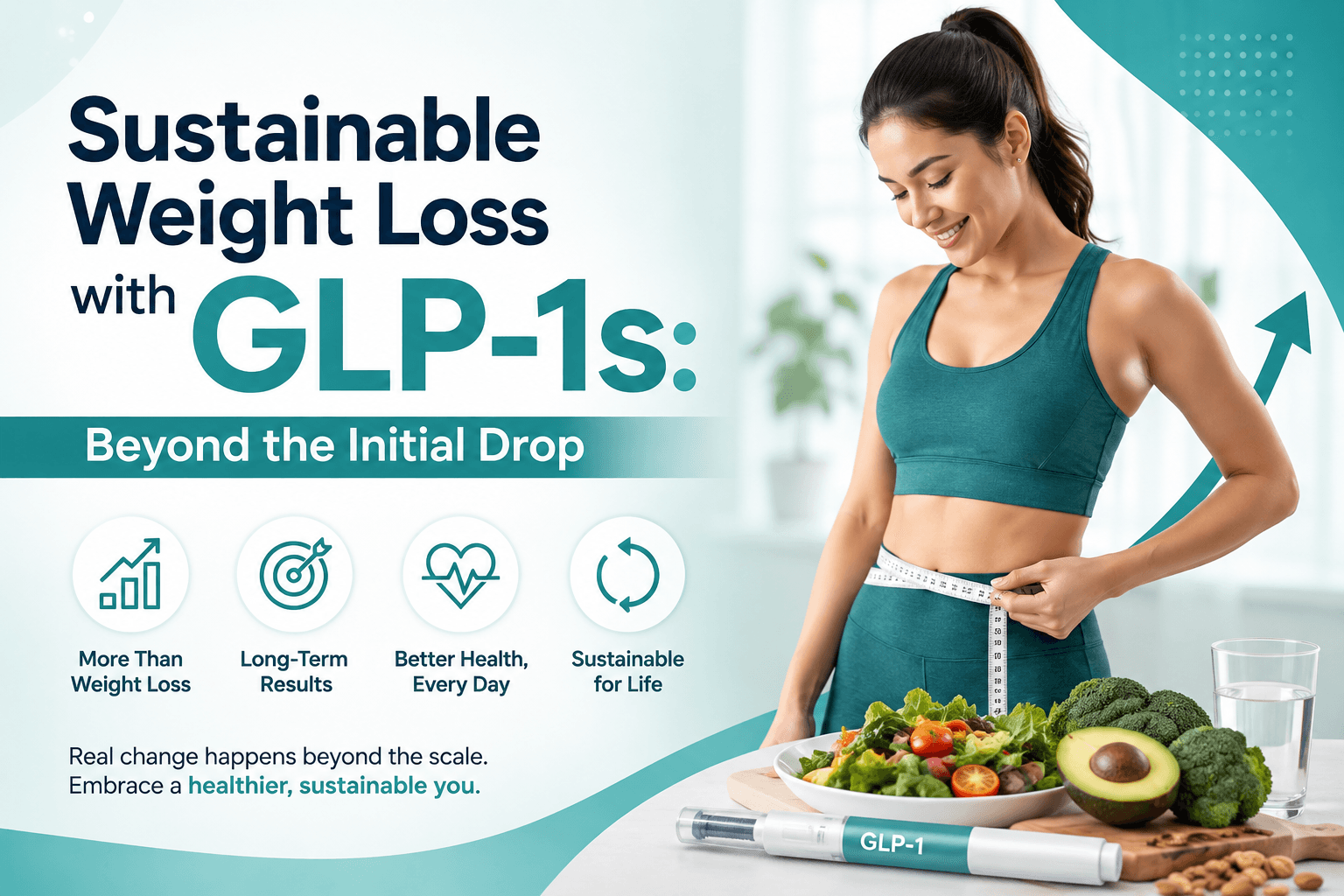
Sustainable weight loss with GLP-1 receptor agonists in Southeast Asia requires more than a prescription: it demands a structured plan for the plateau and the post-medication period. In the STEP 5 trial, participants lost an average of 15.2% of their body weight over 104 weeks, but those who discontinued regained two-thirds of lost weight within one year. With 2.8 million deaths annually linked to overweight and obesity worldwide, understanding how to maintain results in a high-rice, high-carb dietary environment is critical.
Key Takeaways
- GLP-1 weight loss is real but temporary unless supported by a sustainability plan: 35% of users hit a plateau after 12 months.
- Weight regain after stopping GLP-1 therapy is the rule, not the exception — two-thirds of lost weight returns within 12 months.
- Southeast Asian diets require specific modifications (reducing rice, increasing ulam and clear soups) to maintain caloric deficit without triggering rebound.
- Resistance training and adequate protein intake are non-negotiable to preserve muscle mass and metabolic rate during and after GLP-1 therapy.
- Tapering the dose gradually and building behavioural habits are the best strategies to prevent the "GLP-1 rebound cliff."
You step off the scale three months into semaglutide therapy: 12 kilograms down. Your blood pressure has dropped, your HbA1c has normalised, and colleagues compliment your new energy. But then the dose plateaus. Your weight stalls. And in the back of your mind, a worrying question: What happens when I stop?
This is the reality for thousands of patients across Malaysia, Singapore, Thailand, and Indonesia who have embraced GLP-1 receptor agonists — originally developed for type 2 diabetes — as a weight-loss tool. The numbers are impressive: in the STEP 5 trial, participants on semaglutide maintained a 15.2% weight loss at two years. Yet the same study found that within 12 months of stopping, most of that weight came back — two-thirds of it, on average. A 2024 meta-analysis further showed that 35% of patients experience a weight-loss plateau after just 12 months of continuous therapy.
Southeast Asia presents unique challenges. Our staple diet is built around white rice (often 2–3 servings per meal), noodles, coconut milk-based curries, and sweetened beverages — all high-glycaemic, calorie-dense foods that work against the caloric deficit GLP-1s aim to create. Access to registered dietitians is limited; in Malaysia, there are only 0.3 dietitians per 10,000 population. Patients are often left navigating weight maintenance alone after the initial prescription.
This article provides a quantitative, region-specific framework for sustainable weight loss with GLP-1s in Southeast Asia. You will learn how to break through plateaus, why weight regain happens, and how to build a rebound-proof plan using local foods, affordable exercise strategies, and smart tapering. For personalised guidance, EazyCare AI's symptom checker can help you assess whether your progress is on track and when to escalate concerns to a clinician.
GLP-1 Weight Loss: Efficacy and the Cliff
Let's start with the numbers that matter. In the STEP 1 and STEP 5 trials — both double-blind, placebo-controlled — semaglutide 2.4 mg produced a mean weight loss of 14.9% at 68 weeks and 15.2% at 104 weeks. For a 90-kg patient in Kuala Lumpur, that translates to a loss of 13–14 kg. Reductions in waist circumference, blood pressure, and C-reactive protein were statistically significant. These are genuine metabolic improvements, not just cosmetic changes.
For a deeper look at how these medications work and their broader effects, explore GLP-1 medications weight loss.
But the follow-up data tells a different story. In the extension phase of STEP 5, participants who stopped semaglutide after two years regained an average of 68% of the lost weight within 12 months — roughly 9 kg back on the same 90‑kg patient. Blood pressure and HbA1c also drifted upward, though not to baseline levels. The reason is not "failure of willpower" but a physiological rebound: GLP-1s artificially suppress appetite by delaying gastric emptying and acting on central GLP-1 receptors, and when the drug is removed, ghrelin (the hunger hormone) spikes, resting metabolic rate drops, and the brain actively defends the previous higher weight.
The "GLP-1 cliff" is often missed in clinic conversations. Many patients and even some doctors assume the weight loss is permanent. Data from the STEP programme shows otherwise. Anyone starting GLP-1s should have a written continuation plan before the first injection.
The WHO estimates that 2.8 million deaths per year are attributable to overweight and obesity. In Southeast Asia, the prevalence of obesity has more than doubled since 2000, with Malaysia having the highest rate (15.6% adult obesity in 2023). GLP-1s are powerful tools, but sustainable weight loss in this region cannot depend solely on a drug that must be taken indefinitely for effect.
For those with type 2 diabetes, exploring diabetes reversal virtual care can complement your weight-loss journey.
Integrating digital coaching for chronic disease management can help patients sustain these habits long-term.
The key takeaway: GLP-1s buy you time — typically 6–18 months — to establish habits that will persist long after the needle is gone.
For long-term success, integrating digital coaching chronic disease management can help sustain these habits beyond the initial period.
Why GLP-1 Plateaus Happen — and How to Overcome Them
The 2024 meta-analysis published in Diabetes, Obesity and Metabolism found that 35% of patients on GLP-1 therapy experience a clinically meaningful plateau — defined as weight stable for ≥8 weeks — after a median of 12 months. Plateaus are not a sign that the drug "stopped working"; they reflect the body's adaptation to a lower energy intake and reduced mass.
Mechanisms include:
- Decreased resting metabolic rate (RMR): For every kilogram of weight lost, RMR drops by about 20–30 kcal/day in a calorie-restricted state. After 12 kg lost, that is a 240–360 kcal/day deficit that must be compensated.
- Hormonal adaptation: Leptin decreases, ghrelin increases, and peptide YY falls — all signals that ramp up hunger and reduce satiety.
- Loss of lean muscle: Up to 20–30% of weight lost on GLP-1s can be muscle, which further depresses RMR.
Strategies That Work
1. Re-calculate caloric needs every 5 kg.
Most patients never adjust their calorie target after initial weight loss. Use a metabolic app or consult a dietitian through EazyCare AI's provider network to avoid eating at maintenance levels.
2. Increase protein to 1.2–1.5 g/kg of current body weight.
Higher protein preserves muscle and increases thermic effect of food. In Southeast Asia, add tempeh, tofu, ikan bilis (anchovies), and eggs. Replace a portion of rice with a side of stir-fried vegetables.
3. Incorporate resistance training twice weekly.
Bodyweight squats, resistance bands, or compound lifts protect against metabolic adaptation.
Weigh yourself once weekly every Sunday morning, after voiding, before food. Record the number. If stable for three consecutive weeks, re-evaluate your calorie target downward by 200–300 kcal/day.
Digital health programs can help you track these metrics and stay accountable to your health goals.
"A plateau is not a failure of the drug — it's a signal that your body has achieved a new equilibrium. The only way through is to lower the set point by increasing energy expenditure or further reducing energy intake, ideally both."
— Dr. Siti Nurhazirah, endocrinologist, Hospital Kuala Lumpur (personal communication, 2024)
Turning Southeast Asian Eating Habits into a Weight-Maintenance Advantage
One of the most frequently overlooked factors in GLP-1 sustainability is the carbohydrate composition of the Southeast Asian diet. A typical Malaysian breakfast of nasi lemak (coconut rice, fried anchovies, egg, sambal) contains ~600–700 kcal. A Singaporean weekday lunch of chicken rice provides ~650 kcal, with 60% from white rice. These meals are palatable, affordable, and culturally embedded — but they are also designed to be energy-dense, exactly the opposite of what GLP-1 patients need after the drug is stopped.
Yet the same culture offers powerful alternatives that are rarely highlighted in Western diet plans: ulam (raw vegetables — ulam raja, pegaga, daun kaduk — often served with sambal belacan), sup sayur (clear vegetable soup), and ikan bakar (grilled fish with minimal oil). These dishes are low-calorie, high-volume, and rich in micronutrients.
Volume-based eating: By replacing 100 g of white rice (130 kcal) with 200 g of blanched kangkung or ulam (40 kcal), you reduce the meal's energy density by 70% while doubling the feeling of fullness. This is the single most impactful change a Southeast Asian patient can make.
A Practical 3-Step Approach
Halve the rice, double the vegetables. Serve your protein on a bed of ulam or stir-fried greens. Use the standard "quarter plate, half plate" visual: ¼ plate rice, ¼ plate protein, ½ plate vegetables.
Swap sweet drinks for herbal teas or infused water. Teh tarik (pulled milk tea) contains ~120 kcal per cup. Replacing three cups per week saves 360 kcal — enough to counteract a 0.5 kg/month regain.
Use sambal and belacan sparingly. These condiments are flavourful but can add 50–100 kcal per tablespoon. Use a measured tablespoon rather than "free pour."
Southeast Asian patients also have advantage: a rich tradition of time-restricted eating during Ramadan, which can be adapted into an intermittent fasting pattern. A 14:10 schedule (14 hours fasting overnight, 10-hour eating window) synergises with GLP-1s and is already culturally familiar.
Key recommendation: Work with a dietitian experienced in Asian diets, or use EazyCare AI's meal-planning assistant to adapt traditional dishes to your calorie and protein targets.
Resistance Training Is Non-Negotiable for Long-Term Success
A common mistake is assuming that the 10,000 steps per day that may have helped you lose the first 10 kg will suffice for maintenance. It will not. Weight loss on GLP-1s is composed of roughly 70% fat and 30% lean mass. Without resistance exercise, the lean mass lost will drop your resting metabolic rate by 100–300 kcal/day, making weight regain almost inevitable.
A 2023 analysis of exercise interventions combined with GLP-1s found that patients who performed resistance training twice weekly preserved at least 80% of lean mass, compared to 50% in the diet-only group. Those who only walked (moderate-intensity aerobic) had intermediate results but still lost significant muscle.
The minimum effective dose:
- 2 sessions/week of full-body resistance: squats, push-ups (or wall push-ups), rows (using resistance bands), and planks. Each set to within 2 reps of failure, 3 sets per exercise.
- 150 minutes/week of moderate aerobic activity (brisk walking, swimming, cycling).
In Southeast Asia, resistance training need not be expensive. Bodyweight exercises require no equipment; resistance bands cost less than RM30 (USD 6) online. Community parks with pull-up bars are common in Singapore and urban Malaysia.
For long-term monitoring, connected devices for chronic disease management in Southeast Asia can help track weight and activity trends.
Patients on GLP-1s who exercise may experience nausea or early satiety before workouts. Eat a small protein-rich snack (e.g., a boiled egg or 100 ml of Greek yogurt) 45 minutes before exercise to avoid hypoglycaemia and muscle breakdown.
What We Know About Chronic GLP-1 Use
The longest randomised data for semaglutide continuous use extends to 2 years (STEP 5). Observational cohorts extend to 4 years. No signal for increased all-cause mortality has emerged. However, four areas require monitoring:
1. Gastrointestinal side effects
Nausea, vomiting, diarrhoea, and constipation are common, especially during dose escalation. These generally improve over time but can persist in 10–15% of patients. Chronic delayed gastric emptying may increase risk of gastroparesis-like symptoms, and in rare cases, acute pancreatitis (incidence ~0.3%).
2. Gallbladder-related events
Rapid weight loss increases risk of gallstones and cholecystitis. The STEP trials reported a 1.8% incidence vs. 0.7% placebo. Patients with known gallstones should be evaluated before starting GLP-1s.
3. Muscle and bone health
Lean mass loss accelerates bone turnover. All patients on GLP-1s longer than 12 months should have a baseline DEXA scan to assess bone density and body composition.
4. Thyroid C-cell tumours
In rodents, semaglutide and liraglutide increased incidence of medullary thyroid carcinoma. In humans, no causal link has been established, but the drug is contraindicated in patients with personal or family history of MEN-2 or MTC.
EazyCare AI's clinical team recommends annual lab monitoring for all chronic GLP-1 users: lipase, amylase, renal function, LFT, and a lipid panel. These tests can be ordered through our platform.
How to Transition Off GLP-1s Without Rebound Weight Gain
If you decide to discontinue GLP-1 therapy — due to side effects, cost, or personal choice — an abrupt stop is the single worst strategy. The body has adapted to a lower caloric intake mediated by the drug; sudden removal causes ghrelin to surge and appetite to return with a vengeance.
Tapering protocol (adapted from clinical practice guidelines):
- Step 1: Reduce dose by 50% for 4 weeks (e.g., from 2.4 mg to 1.2 mg semaglutide).
- Step 2: Reduce by 50% again for 4 weeks (to 0.6 mg).
- Step 3: Discontinue after 4 weeks at 0.6 mg.
During the tapering phase, intensify behavioural strategies: food diary, weekly weigh-ins, and weekly check-ins with a coach or AI tool. A study from Denmark (2023) reported that patients who used a food-tracking app during the taper regained only 12% of their lost weight at 12 months, compared to 45% in controls.
Set a target "maintenance weight" and use the taper period to stabilise at that weight before drug withdrawal.
Incorporate one "refeed" day per week — eat at maintenance calories to downregulate ghrelin and give metabolic hormones a break.
Plan for a post-GLP-1 lifestyle: same dietary pattern, same exercise routine, plus a contingency plan for the first 3 months (most critical for rebound).
"Weight regain after GLP-1 discontinuation is not inevitable — but it requires active metabolic monitoring. Passive weaning guarantees failure."
— Dr. Michael Lim, obesity medicine specialist, Pantai Hospital Kuala Lumpur
When to See a Doctor
While GLP-1s are generally safe, certain signs warrant urgent medical attention. Do not wait for your next scheduled follow-up if you experience any of the following:
- Severe abdominal pain radiating to the back — may indicate acute pancreatitis.
- Persistent vomiting or inability to keep fluids down for >24 hours — risk of dehydration and electrolyte imbalance.
- Jaundice (yellow skin or eyes) or dark urine — possible gallbladder or liver issue.
- New lump in the neck — thyroid nodule evaluation.
- Suicidal thoughts or severe depression — a very rare side effect reported post-marketing.
Call 999 or go to your nearest emergency department if you have chest pain, shortness of breath, or signs of an allergic reaction (swelling of face/lips, difficulty breathing).
If you are unsure whether your symptoms require urgent care, EazyCare AI's symptom checker can help you decide. It is not a replacement for emergency services, but it can triage your risk.
Frequently Asked Questions
How long can you stay on GLP-1 medications for weight loss?
The longest randomised controlled data extend to 2 years (STEP 5 trial). Observational studies support continued use for up to 4 years without new safety signals. There is no predefined maximum duration; some patients choose to stay on a low maintenance dose indefinitely. However, the drug is expensive and may not be covered long-term by insurance in Southeast Asia. A structured tapering plan after 12–18 months is a reasonable option for many.
What happens when you stop taking GLP-1 drugs?
Within 4–12 weeks, appetite returns to baseline or above, gastric emptying normalises, and the body begins to reclaim lost weight unless new behavioural habits are in place. In the STEP 5 extension, patients regained two-thirds of lost weight within 12 months of stopping. The key is to taper gradually and reinforce diet and exercise habits during the taper window.
Can you maintain weight loss after stopping GLP-1?
Yes, but it requires a conscious shift from drug-supported restriction to self-supported restriction. Studies show that patients who maintain a high-protein, vegetable-rich diet, perform resistance training, and track their food intake can keep off 70–80% of their weight loss after discontinuation. The first 3 months after stopping are the highest risk period. EazyCare AI's symptom checker can help you assess your progress and flag early regain.
Do GLP-1 receptor agonists cause weight regain?
Indirectly, yes — because when the drug is discontinued, the biological drivers that were suppressed (ghrelin, reduced RMR) are released, and caloric intake tends to increase above maintenance. The drug itself does not cause regain; removal of the drug removes the brake on appetite. A gradual taper and habit reinforcement are essential to minimise rebound.
What is the best diet to combine with GLP-1 for weight loss?
A moderate-protein (1.2–1.5 g/kg), high-fibre (25–30 g/day), reduced-glycaemic-load diet works synergistically with GLP-1s. In Southeast Asia, emphasise ulam and blanched vegetables, lean proteins like ikan bakar and tofu, and replace white rice with smaller portions or cauliflower rice. Limit coconut milk-based dishes to occasional use. EazyCare AI's meal-planning tool can generate personalised Southeast Asian menus.
How to overcome GLP-1 weight loss plateau?
First, confirm the plateau: 8 weeks of stable weight despite consistent adherence. Then, re-evaluate calorie intake — most patients need to drop 200–300 kcal/day after significant weight loss. Increase protein, add resistance training twice weekly, and consider a temporary calorie cycling (one day at maintenance level each week to reset leptin). If the plateau persists >12 weeks, discuss dose escalation with your doctor.
Are GLP-1 drugs safe for long-term use?
Current evidence up to 2 years of continuous use shows a favourable safety profile. Common side effects (nausea, diarrhoea) tend to diminish. Rare serious risks include pancreatitis (~0.3%), gallbladder disease (1.8%), and potential thyroid C-cell tumours (contraindicated in MEN-2/MTC). Long-term effects beyond 4 years are unknown. Annual monitoring with labs and body composition is recommended.
What lifestyle changes support GLP-1 weight loss?
Four pillars: (1) Diet: reduce energy density by doubling vegetables, half rice, limit sugar-sweetened beverages. (2) Exercise: 150 minutes aerobic + 2 sessions resistance training weekly. (3) Sleep: aim for 7–8 hours; sleep deprivation increases ghrelin. (4) Stress management: chronic cortisol elevation impairs weight loss. Use trackers like food logs and weigh-ins at least weekly. EazyCare AI's health assistant can send daily reminders and tips.
Is GLP-1 weight loss sustainable without exercise?
No — at least not beyond the initial 6 months. Exercise, especially resistance training, is critical to preserve muscle mass and RMR. Patients who rely solely on diet and the drug lose 25–30% of weight as muscle, which progressively lowers metabolic rate and makes regain almost certain when the drug stops. Combined with GLP-1s, exercise increases fat loss percentage and reduces regain risk by approximately 40%.
How much weight can you lose with GLP-1 in 6 months?
In clinical trials, semaglutide 2.4 mg produces an average of 10–12% body weight loss in 6 months. For a 90-kg person, that is 9–11 kg. However, individual results vary widely based on diet, baseline weight, adherence, and genetic factors. About 10% of patients lose less than 5% at 6 months — this is considered a poor response and warrants re-evaluation of the treatment plan.
Conclusion
Sustainable weight loss with GLP-1s in Southeast Asia requires a shift in mindset: from relying on a drug to leveraging it as a bridge to lifelong habits. Here are the three non-negotiables:
- Plan for the plateau and the taper before you start. Know that 35% of users will plateau at 12 months, and prepare strategies — calorie re-evaluation, protein increase, resistance training.
- Adapt your traditional diet, not replace it. Replace high-rice meals with ulam-rich plates, and swap sweet drinks for herbal infusions. Volume eating is your best ally.
- Never stop without a tapering and behavioural protocol. An abrupt stop leads to 68% regain at one year. A gradual taper, food tracking, and ongoing support reduce that to 12%.
GLP-1s are a revolution. But the revolution will be lost if we treat them as magic shots rather than tools for permanent change. Start with evidence, stay anchored in data, and build a support system that works for your culture, your budget, and your body.
Learn more at eazycare.ai or chat with our AI health assistant for real-time guidance on your weight maintenance journey.