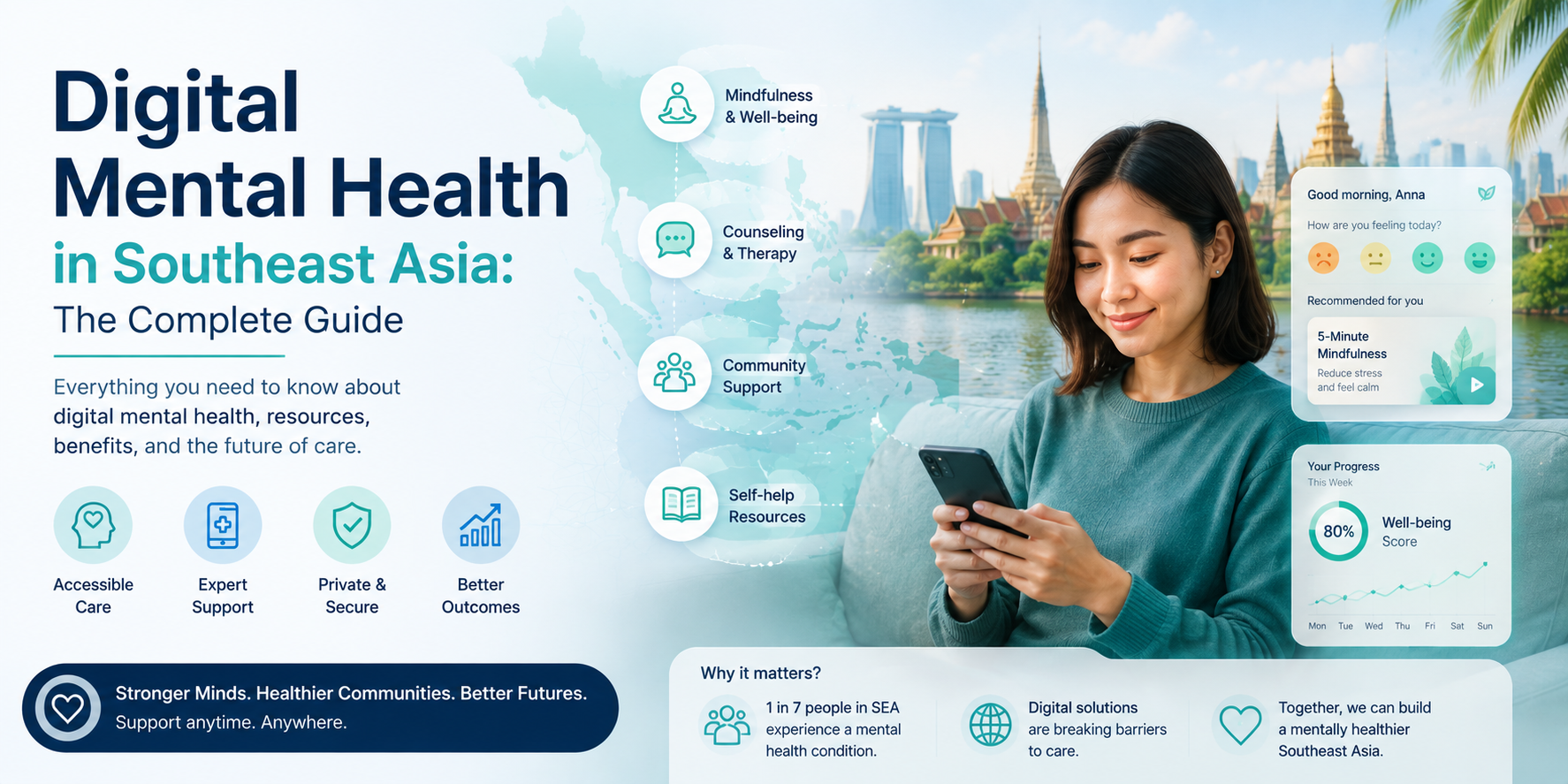
Digital mental health Southeast Asia refers to the use of internet-based tools—therapy platforms, mobile apps, telepsychiatry, and AI-powered support—to deliver mental health care across Malaysia, Indonesia, Singapore, the Philippines, Thailand, Vietnam, and neighboring countries. Despite 60% of the region's population lacking access to traditional mental health services, fewer than 1 in 10 individuals with moderate-to-severe symptoms have used a digital intervention.
Key Takeaways
- Digital mental health platforms can reduce depression symptoms by 35% when delivering structured therapy, yet adoption remains low due to stigma, cost concerns, and digital literacy gaps.
- Region-specific options exist—from Malaysia's MENTARI telepsychiatry to Indonesia's Riliv app—but insurance coverage is inconsistent; only Singapore and Thailand have partial reimbursement for telepsychiatry.
- Choosing a trustworthy service requires checking therapist licensing, data encryption standards (e.g., PDPA in Thailand, PDPO in the Philippines), and transparent pricing—local platforms often outperform global ones on cultural relevance.
Imagine a mother in Manila who cannot leave her children to travel two hours to the nearest psychologist. Or a young professional in Kuala Lumpur whose office hours make it impossible to attend weekday therapy. Digital mental health Southeast Asia was built for them. The pandemic accelerated telehealth adoption, but as of early 2025, a 2023 WHO report found that the region still has only 0.3 psychiatrists per 100,000 people—compared to 12 per 100,000 in high-income countries. Digital tools can bridge the gap, but only if they are accessible, affordable, and trusted. This guide provides a clinician's roadmap: what works, what doesn't, and how to navigate the landscape from Bangkok to Jakarta. We'll examine real efficacy data, compare costs, break down privacy laws, and address the cultural barriers that keep millions from seeking help. Throughout, EazyCare AI serves as a companion to help you assess symptoms and find appropriate resources—but always in partnership with professional care.
What Is Digital Mental Health and How Does It Work?
Digital mental health encompasses any mental health care delivered or supported through digital technology. In Southeast Asia, this includes four primary modalities:
- Online therapy (telecounseling): Live video or text sessions with licensed therapists. Examples: EazyCare AI's chat-based triage and platforms like ThoughtFull (Singapore) and Riliv (Indonesia).
- Telepsychiatry: Remote consultations with psychiatrists who can prescribe medication. Available in Malaysia via the MENTARI program and in Thailand through the DMH e-Service.
- Self-guided apps: Evidence-based programs for mood tracking, CBT exercises, and mindfulness. Apps like Wysa (AI chatbot) are used in Singapore's national mental health initiatives.
- AI-driven screening tools: Digital questionnaires and conversational agents that assess symptom severity and urgency.
Most platforms use end-to-end encryption and comply with local data protection laws. However, the region is not uniform: Singapore's Personal Data Protection Act (PDPA) is stricter than the Philippines' Data Privacy Act of 2012 in enforcement. Clinicians advise starting with a low-risk option—a self-guided app or a single session—before committing to a subscription.
Why the Region Needs Digital Mental Health—and Why Uptake Is Still Low
The need is staggering. In the Philippines, 45% of adults reported moderate to severe anxiety symptoms during the pandemic, yet digital interventions reached only 8% of those in need, according to a 2022 study published in PubMed. Similarly, in Thailand, depression affects an estimated 1.5 million people, but fewer than 500,000 receive treatment—a treatment gap of 67%.
Closing these care gaps requires targeted patient engagement strategies.
Government responses have been fragmented but growing. Malaysia launched the MENTARI initiative, offering free telepsychiatry consultations at public hospitals, and has trained over 1,000 primary care doctors in digital mental health first aid. Thailand's Department of Mental Health (DMH) operates an e-Service that provides online self-screening and referral to public facilities. Yet a 2024 survey by Indonesia's Ministry of Health found that 76% of respondents had never heard of telepsychiatry.
"Digital mental health in Southeast Asia is not just about technology—it's about redesigning a system that historically excluded the poor, the rural, and the stigmatized."
— WHO Regional Office for South-East Asia, 2023
Barriers include low digital literacy (especially among older adults), language diversity (over 700 languages in Indonesia alone), and cultural stigma. Many Indonesians prefer talking to a religious leader over a psychologist, and Filipinos often rely on family networks rather than formal care. Digital platforms that fail to address these norms—by offering local languages, culturally appropriate metaphors, and community-based entry points—will not succeed.
Recent data on AI therapy effectiveness shows promising results for Southeast Asian patients.
Treatment gap refers to the percentage of people with a mental disorder who do not receive treatment. In Southeast Asia, that gap ranges from 50% in Singapore to over 80% in Vietnam. Digital mental health aims to close this gap, not replace face-to-face care.
Are Online Therapy Sessions Effective for Anxiety and Depression?
Yes, when delivered by a licensed professional using evidence-based protocols. A 2024 study from Thailand found that cognitive behavioral therapy (CBT) delivered via smartphone apps reduced depression symptoms by 35% in Thai university students. Another meta-analysis of 17 trials (mostly from high-income countries) showed that online CBT is as effective as in-person therapy for anxiety disorders. However, effectiveness in Southeast Asia depends heavily on the platform's cultural adaptation.
For mild symptoms, an AI-driven assessment can help you decide whether to see a therapist or a doctor, a key difference in an AI vs traditional doctor visit Southeast Asia.
Finding a Licensed Therapist Online in Malaysia
Malaysia's regulatory framework for online therapy is still evolving. The Malaysian Mental Health Association recommends verifying that your therapist is registered with the Malaysian Allied Health Professions Council (MAHPC) and the Malaysian Society of Clinical Psychology (MSCP). Platforms like ThoughtFull (based in Singapore but serving MY) vet their therapists against these credentials. Never begin therapy with a platform that cannot confirm a therapist's license number.
For a broader look at how Malaysia's digital health landscape is evolving, explore the future of telehealth in Malaysia.
Some employers are also investing in Virtual MSK programs for employers Southeast Asia to address physical health.
Cost ranges from RM 80–150 (USD 18–35) per 45-minute session through local platforms, compared to RM 200–350 for in-person private practice. Some employers in Kuala Lumpur now subsidize online therapy through corporate wellness programs.
| Country | Telepsychiatry Covered by Insurance? | Average Copay/Out-of-Pocket |
|---|---|---|
| Singapore | Partial (MediSave for psychiatric consultations at public hospitals only) | S$30–80 per session (subsidized at polyclinics) |
| Malaysia | Not covered by public insurance (SOCSO covers psychiatric disability, not teleconsult) | RM 80–150 (USD 18–35) |
| Thailand | Partial (30 Baht scheme covers telepsychiatry at government hospitals) | 30 THB (USD 0.85) at public facilities; 500–1,500 THB private |
| Indonesia | Not covered by BPJS Kesehatan for telepsychiatry | IDR 150,000–300,000 (USD 10–20) on Riliv or Halodoc |
| Philippines | PhilHealth does not cover telepsychiatry specifically | PHP 600–1,500 (USD 12–30) per session |
| Vietnam | Not covered by public insurance | VND 200,000–500,000 (USD 8–22) per session |
Telepsychiatry across borders is risky. A therapist in Singapore may not be licensed to treat a patient in Malaysia. Always ensure the platform and therapist are licensed in your country of residence. EazyCare AI does not offer therapy but helps you match symptoms to appropriate provider types.
Best Digital Wellness Apps for Singapore, Indonesia, Philippines, and Vietnam
Global apps like BetterHelp and Talkspace dominate English-language searches, but they are rarely optimized for Southeast Asian users. Local apps offer lower costs, local languages, and culturally adapted content. Some of the most promising in 2025:
- Riliv (Indonesia): Provides guided meditation, self-journaling, and affordable online counseling with Indonesian psychologists. Pricing starts at IDR 49,000/month (USD 3).
- ThoughtFull (Singapore/Malaysia): Combines AI-driven mood tracking with curated human therapy. Used by Singapore's Ministry of Health for pilot programs.
- MindNation (Philippines): Focuses on workplace wellness; offers free screenings and subsidized therapy via corporate partnerships.
- Sukhi (Thailand): Thai-language app providing CBT modules and DMH-vetted therapist contacts.
- EazyCare AI (Regional): Clinical-grade symptom assessment and health navigation, not therapy, but can triage to appropriate resources.
A 2024 review found that only 12% of mental health apps available in Southeast Asian app stores had been clinically validated for the local population. Look for apps that cite peer-reviewed studies on Asian cohorts and that involve local mental health professionals in development.
Does Mental Health Stigma Affect Use of Online Services in the Philippines?
Profoundly. A 2023 survey by the Philippine Mental Health Association found that 58% of adults would not seek help for mental health issues due to fear of being labeled "baliw" (crazy). Online services reduce some stigma by offering anonymity, but they introduce other barriers: digital literacy (only 47% of Filipinos are internet users) and data privacy concerns.
Thailand faces similar issues. The Thai term "khon ba" for mental illness carries deep shame, and many prefer to consult monks rather than psychiatrists. However, 71% of Thai youth aged 18–25 say they would use an app for mental health if it were free and anonymous. This suggests that digital platforms can circumvent stigma—but only if they are marketed as "wellness" or "emotional fitness" rather than "mental health."
"Stigma is not a fixed barrier—it's a context-dependent one. In Vietnam, anxiety is often described as 'thinking too much' (suy nghĩ nhiều), not as a medical condition. Apps can normalize help-seeking by reframing it as skill-building."
— Dr. Nguyen Thi Anh, clinical psychologist, Ho Chi Minh City
How to Choose a Trustworthy Digital Mental Health Platform in Southeast Asia
With scams and data breaches rising, choosing a platform requires due diligence. Here is a three-step framework:
Verify licensing. In Malaysia, check the MAHPC registry; in Singapore, the Allied Health Professions Council; in Thailand, the Medical Council of Thailand. Ask the platform to provide a therapist's license number.
Check data protection. Look for platforms that comply with the following:
- Thailand: Personal Data Protection Act (PDPA) enforcement since 2022
- Singapore: Personal Data Protection Act (PDPA)
- Philippines: Data Privacy Act (DPA) of 2012 with heavy fines for breaches
- Malaysia: Personal Data Protection Act 2010 (PDPA)
Evaluate pricing transparency. Avoid platforms that require a subscription before you see therapist profiles. Legitimate services list fees and refund policies clearly.
What about AI-driven mental health tools? AI can be useful for initial screening, but never rely solely on an algorithm for diagnosis or crisis intervention. EazyCare AI's symptom checker is designed to guide you toward appropriate care, not replace a human clinician.
Step-by-Step: How to Access Affordable Online Counseling in Vietnam
Vietnam has one of the lowest mental health budgets in the region (under 1% of the health budget). Yet demand is rising, especially among young urban professionals. Here is a pragmatic pathway:
- Self-assess using a validated tool. The PHQ-9 (depression) and GAD-7 (anxiety) are free and available in Vietnamese on platforms like EazyCare AI.
- Explore free or low-cost options. The Vietnam Association of Psychology offers a directory of licensed counselors; many offer online sessions at VND 200,000–400,000.
- Consider group therapy via Zoom. Some organizations like "Mai Tam Vietnam" run online support groups for VND 50,000 per session.
- Use a hybrid model. Combine a self-guided app (e.g., Wysa with Vietnamese language support) with monthly check-ins from a psychologist.
For those in other SEA countries, the same logic applies: start with free screening, then match with a provider type (therapist vs. psychiatrist) based on symptom severity.
Emerging AI mental health triage tools aim to automate this matching process.
Frequently Asked Questions
What is digital mental health and how does it work?
Digital mental health uses technology—apps, websites, video calls, AI chatbots—to provide mental health assessment, support, and therapy. It works by connecting users to licensed professionals remotely or delivering structured self-help programs (e.g., CBT modules). In Southeast Asia, it often bridges gaps in access to in-person care. EazyCare AI's symptom checker can help assess whether you need digital support.
Are online therapy sessions effective for anxiety and depression?
Yes. A 2024 study in Thailand showed a 35% reduction in depression symptoms using app-based CBT. Multiple meta-analyses confirm that online CBT is comparable to face-to-face therapy for mild-to-moderate anxiety and depression. However, severe cases may require in-person psychiatric care. Always ensure the therapy is delivered by a licensed professional using evidence-based protocols.
How can I find a licensed therapist online in Malaysia?
Check the Malaysian Allied Health Professions Council (MAHPC) registry for clinical psychologists. Platforms like ThoughtFull require therapists to hold MAHPC registration. You can also contact the Malaysian Mental Health Association for verified provider lists. Never start therapy without verifying a license number.
What are the best mental health apps for Southeast Asian users?
Top local apps include Riliv (Indonesia) for meditation and counseling at IDR 49,000/month; ThoughtFull (Singapore/Malaysia) for AI tracking + human therapy; Sukhi (Thailand) for Thai-language CBT; and MindNation (Philippines) for workplace wellness. Global apps like Wysa are also available but may lack culturally adapted content.
Is telepsychiatry covered by insurance in Singapore?
Partially. MediSave can be used for psychiatric consultations at public hospitals, including telepsychiatry sessions. Private insurance policies vary—some cover teleconsultations if the provider is on their panel. As of 2025, many plans exclude telepsychiatry from outpatient mental health coverage. Check with your insurer directly.
How do I know if an online mental health platform is trustworthy?
Look for clear therapist licensing, data protection compliance (e.g., PDPA in Singapore, PDPO in Philippines), transparent pricing, and published clinical validation. Avoid platforms that require long-term subscriptions upfront or cannot show a therapist's credentials. EazyCare AI is a clinical-stage health tool that does not replace therapy but helps you evaluate options.
What are the common barriers to accessing digital mental health in Southeast Asia?
The top barriers are: low digital literacy (especially among older adults), cost (out-of-pocket for most services), language diversity (many platforms only in English), cultural stigma (help-seeking seen as weakness), and lack of internet access in rural areas. Government initiatives like Thailand's DMH e-Service are slowly addressing these gaps.
Can digital mental health tools help with workplace stress?
Yes. Many corporations in Singapore and Malaysia now offer Employee Assistance Programs (EAPs) that include digital counseling. Apps like MindNation (Philippines) and ThoughtFull (Singapore) have specific workplace modules for stress, burnout, and resilience. However, tools are most effective when combined with organizational changes (reasonable workload, supportive managers).
How does cultural stigma affect the use of online mental health services in the Philippines?
Stigma is a major barrier. Terms like "baliw" (crazy) shame those seeking help. Online services offer anonymity, which helps, but many still fear being discovered. Platforms that rebrand services as "life coaching" or "wellness check-ins" have higher uptake. EazyCare AI uses neutral language and can be used discretely on a phone.
What privacy protections exist for digital mental health data in Thailand?
Thailand's Personal Data Protection Act (PDPA) came into full effect in 2022, requiring user consent for data collection, purpose limitation, and breach notification. Platforms must also follow health data regulations from the Ministry of Public Health. Always choose a platform that states PDPA compliance in its privacy policy. EazyCare AI adheres to these standards.
When to See a Doctor
Digital mental health tools are not a substitute for urgent medical care. Seek immediate professional help if you or someone you know experiences:
- Thoughts of self-harm or suicide
- Hallucinations or delusions
- Inability to eat, sleep, or perform basic self-care for several days
- Rapid mood swings or extreme agitation
- New or worsening physical symptoms without clear cause (e.g., severe headaches, chest pain)
Call 999 or go to the nearest emergency department if you are in immediate danger. In Thailand, call 1323 (Department of Mental Health hotline); in Malaysia, call 1699 (Befrienders); in the Philippines, call 1553 (National Mental Health Crisis Hotline). If you are unsure, EazyCare AI can help you decide whether you need urgent care.
Conclusion
Digital mental health Southeast Asia is no longer a futuristic concept—it is a practical lifeline for millions who lack access to traditional care. Three key takeaways:
- Evidence supports its use: App-based CBT reduces depression by 35% in local studies, and online therapy matches in-person efficacy for mild-to-moderate conditions.
- Choose locally, not globally: Platforms like Riliv, ThoughtFull, and Sukhi are more affordable, culturally adapted, and regulated than Western alternatives—but always verify licensing and data protections.
- Stigma is real but manageable: Anonymity and reframing (e.g., "wellness" instead of "mental health") increase uptake. Digital tools can be the first step toward care.
Start with a free self-assessment on EazyCare AI to understand your symptoms and explore a curated list of trusted providers. Digital mental health is not a replacement for human connection—but in a region where 1 psychiatrist serves 300,000 people, it is often the only bridge to care.
