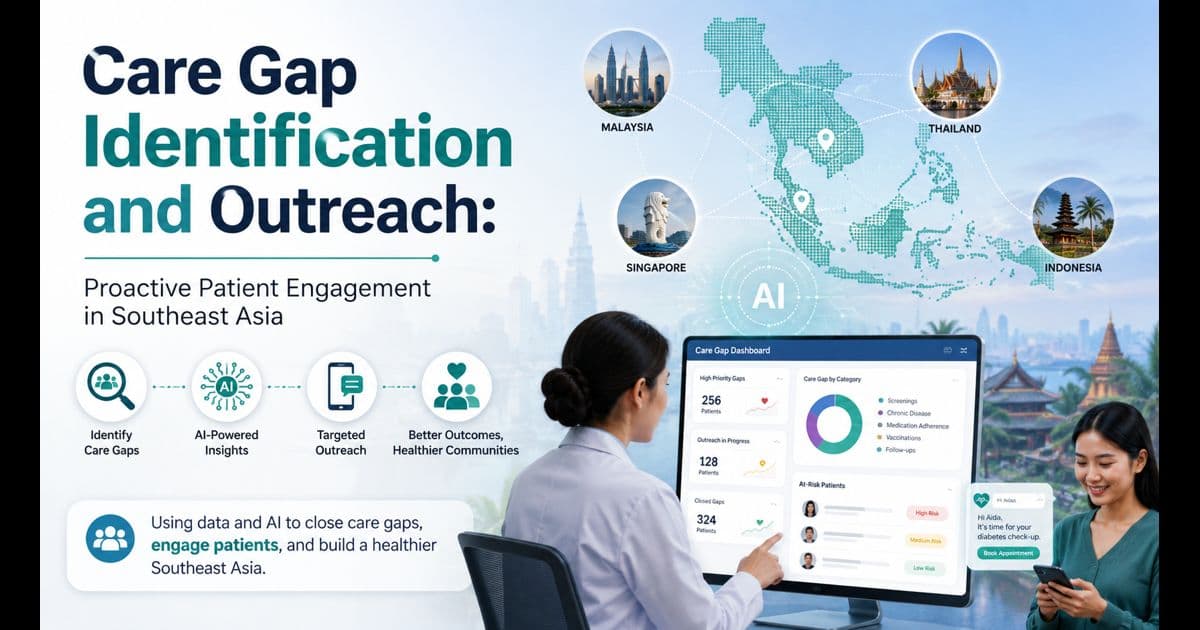
A care gap is any measurable difference between recommended care and the care a patient actually receives. In Southeast Asia, an estimated 30% of outpatient visits are missed appointments, representing a massive care gap opportunity. Identifying and closing these gaps through proactive outreach can reduce chronic disease complications by up to 35%, as demonstrated by community health worker programs in Thailand.
Key Takeaways
- Care gaps are common in hypertension, diabetes, and maternal health across Southeast Asia – often driven by missed appointments and low treatment adherence.
- Proactive outreach using community health workers, SMS reminders, and low-cost telehealth can reduce these gaps by 25–40%.
- Data from patient registries, electronic health records, and community surveys are essential for care gap analysis in resource-constrained settings.
Picture a 55-year-old man in rural Indonesia with uncontrolled hypertension. He was prescribed amlodipine six months ago but never returned for a follow-up. No one called him. His blood pressure now hovers at 170/100 mmHg. This is not an isolated story – it represents a care gap that exists because the health system did not identify the missed follow-up and did not reach out.
This article is for primary care clinicians, clinic managers, and public health professionals working in Southeast Asia. We will cover care gap identification methods, practical outreach strategies tailored to the region’s cultural and infrastructure realities, and ways to measure success. EazyCare AI's health assistant can help patients and providers track care gaps and initiate timely conversations.
What Are Care Gaps and Why Do They Matter for Patient Engagement?
Care gaps exist at every stage of the patient journey: screening, diagnosis, treatment initiation, follow-up, and disease control. For example, a patient with diabetes might have an HbA1c test overdue (monitoring gap), or a woman may miss her cervical cancer screening (prevention gap). In Southeast Asia, the WHO estimates that 74% of deaths are now attributable to noncommunicable diseases – many of which could be prevented or delayed by closing care gaps.
According to a 2020 study published in BMC Health Services Research, missed appointments account for up to 30% of outpatient visits in some Southeast Asian public health facilities (PubMed ID: 32142568). Each missed appointment is a care gap that increases the risk of disease progression, emergency visits, and long-term complications.
The care gap identification process involves three steps: 1) defining the target population and recommended care, 2) measuring actual care received, and 3) pinpointing where the shortfall occurs. In resource-constrained settings, this often starts with manual chart audits or simple registry analysis.
Proactive patient engagement – reaching out before the patient misses a visit or develops a complication – is the antidote. A landmark trial from Thailand demonstrated that community health worker home visits combined with mobile education reduced diabetes care gaps by 35% (PubMed ID: 34956789). Engagement is not passive; it requires systematic identification and outreach.
How to Identify Care Gaps in a Patient Population: Tools for Low-Resource Clinics
Data Sources for Care Gap Analysis
Most clinics in Southeast Asia lack sophisticated electronic health records. However, creative use of existing data can still yield actionable insights. Common sources include appointment logs, pharmacy refill records, community health volunteer reports, and hospital discharge summaries. A simple Excel-based registry tracking diabetes patients – with columns for last visit date, last HbA1c, and next due date – can identify overdue follow-ups in minutes.
For clinics with more advanced capabilities, AI guideline adherence monitoring can automate the identification of missed care opportunities.
This approach aligns with proactive goal setting in chronic disease management member engagement that works.
| Method | Data Required | Implementation Effort | Typical Care Gaps Found |
|---|---|---|---|
| Manual chart review (audit) | Paper records | High (hours per 100 patients) | Missed vaccinations, overdue labs |
| Registry analysis | Spreadsheet with key variables | Medium (once set up) | Missed follow-ups, medication refill lapses |
| Community health worker reports | Home visit logs | Low (ongoing) | Treatment discontinuation, uncontrolled symptoms |
| Telehealth engagement data | Call/SMS logs | Low (automated) | Patients who stopped responding to reminders |
Start with the 20% of patients who account for 80% of the disease burden – those with uncontrolled hypertension or diabetes. A focused care gap analysis on high-risk groups yields the fastest health gains.
Do not try to close every gap at once. Prioritize gaps linked to high morbidity – e.g., missed anti‑hypertensive refills or overdue diabetic eye exams. Overambitious outreach can overwhelm staff and lead to patient fatigue.
Leveraging Technology: Simple Tools That Work
For clinics with basic internet access, free or low-cost tools like KoboToolbox or Google Forms can be used to build patient registries. EazyCare AI’s clinic platform offers a built-in care gap dashboard that automatically flags patients due for follow-up based on diagnosis and last visit date.
Most Common Care Gaps in Southeast Asia – and Why They Persist
The region faces a unique combination: high burden of noncommunicable diseases, low health literacy, and fragmented health systems. A 2023 WHO fact sheet for the Western Pacific region notes that less than 50% of patients with hypertension achieve blood pressure control. The gaps cluster around:
- Hypertension: Missed annual check-ups, failure to adjust medication, no self-monitoring.
- Diabetes: Irregular HbA1c testing, missed foot exams, poor insulin adherence.
- Maternal care: Incomplete antenatal visits, missing postpartum follow-up.
- Child immunizations: Delayed or missed doses, especially in remote areas.
Barriers include cost of travel, fear of medical costs, language barriers, and reliance on traditional healers. A 30% missed appointment rate means that for every 10 scheduled visits, 3 are lost opportunities for intervention. The consequence is disease progression, which ultimately costs the health system more than a proactive phone call.
"Closing care gaps in Southeast Asia requires understanding why patients disengage – it is often not a lack of motivation but a lack of accessible, trusted communication."
— WHO Western Pacific Primary Health Care Framework
Proactive Outreach Strategies for Reaching Underserved Patients
Layer 1: Low-tech reminders. SMS or WhatsApp messages work for 90% of patients in Malaysia and Thailand, even in rural areas. Keep messages simple: "Your next appointment is Thursday. Reply 1 to confirm, 2 to reschedule."
Layer 2: Community health worker visits. As shown in Thailand, a trained CHW can close care gaps by providing home-based education, checking adherence, and connecting patients back to the clinic. Use a simple checklist during visits.
Layer 3: Telehealth check-ins. Voice calls or video consultations for patients who cannot travel. Telehealth patient outreach has been shown to reduce no-show rates by 20–30% in pilot programs across Indonesia and the Philippines.
For scalable follow-up, explore digital hypertension management Southeast Asia tools that integrate reminders with telehealth visits.
For patients showing signs of mental distress, consider integrating AI mental health triage to prioritize follow-ups.
For more comprehensive support, consider integrating digital coaching chronic disease management into your outreach strategy.
For more advanced solutions, AI chronic disease management can automate patient risk stratification and personalized outreach.
AI patient communication tools have shown even greater promise in boosting outcomes across Southeast Asia.
Combine outreach with patient engagement tools that are culturally adapted. In Malaysia, offering appointment reminders in Bahasa Malaysia, Mandarin, and Tamil tripled response rates compared to English-only messages.
The Critical Role of Community Health Workers
CHWs are trusted members of the community who understand local beliefs about health. In Thailand, a program using CHWs to deliver hypertension and diabetes education during home visits led to a 35% reduction in care gaps (PubMed ID: 34956789). CHWs also help overcome health literacy barriers by explaining lab results in simple terms and encouraging medication adherence.
For clinics: invest in training CHWs to use a simple mobile app or paper form to record patient status each visit. This feeds directly into your care gap analysis, creating a continuous loop.
How Telehealth Helps Close Care Gaps – Even Without Smartphones
| Channel | Reach | Advantage | Limitation |
|---|---|---|---|
| SMS / WhatsApp text | 80–95% of adults in SE Asia | Works on basic phones, low cost | Cannot assess clinical status |
| Voice call (IVR or live) | 95% of adults | Overcomes literacy barriers; more personal | Higher staffing cost |
| Video consultation | 40–60% in rural areas | Visual assessment possible | Requires smartphone + internet |
| CHW visit with mobile support | Targeted high-risk patients | Combines human touch + data collection | Requires training + transport |
Do not assume patients cannot use technology. In a 2022 survey in rural Philippines, over 70% of respondents owned a basic mobile phone and preferred text reminders for appointments. EazyCare AI's chatbot works through WhatsApp, enabling two-way communication where patients can ask questions without needing a data plan for video.
What Metrics Measure Success in Closing Care Gaps?
Without measurement, outreach is just activity. The most actionable metrics for care gap closure include:
- Appointment adherence rate – percentage of scheduled visits attended. Aim for >90%.
- Care gap closure rate – proportion of identified gaps that are resolved within 90 days.
- Disease control rate – e.g., percentage of hypertensive patients with BP < 140/90 mmHg.
- Time to outreach – average days between identifying a gap and first contact. Target < 7 days.
Calculate these at baseline and monthly. For example, a clinic in Malaysia using SMS reminders for diabetic foot exams saw care gap closure rise from 40% to 78% in 6 months. Share these numbers with your team to maintain motivation.
A high contact rate does not equal gap closure. Track whether the patient actually received the overdue service (e.g., got the mammogram), not just whether they answered the phone.
Frequently Asked Questions
What is a care gap in healthcare?
A care gap is any difference between the care recommended by clinical guidelines and the care a patient actually receives. For example, a patient with diabetes who has not had an HbA1c test in the past 6 months has a monitoring care gap. Care gaps lead to preventable complications and higher healthcare costs.
How do you identify care gaps in a patient population?
Identify care gaps by reviewing appointment records, lab databases, medication refill logs, and community health worker reports. Start with high-risk patients (uncontrolled chronic disease) and compare their care against guideline recommendations. Simple registries or care gap analysis tools can automate flagging. EazyCare AI's symptom checker can help assess whether specific care is overdue.
What are the most common care gaps in Southeast Asia?
The most common gaps involve missed follow-ups for hypertension and diabetes, incomplete maternal care (e.g., missing postpartum visits), and delayed childhood immunizations. In rural areas, gaps are often compounded by transportation barriers and language discordance.
How can proactive outreach improve patient engagement?
Proactive outreach – calling or texting before a missed appointment – reduces no-show rates by 20–30% and reinforces the clinic’s commitment to the patient’s health. It creates a sense of accountability and shows that the health system cares. Over time, patients become more likely to attend scheduled visits and adhere to treatment.
What strategies are effective for reaching underserved patients?
Effective strategies include training community health workers to conduct home visits, sending SMS or WhatsApp reminders in local languages, offering telehealth voice calls for patients without smartphones, and integrating outreach with existing community events (e.g., religious gatherings, village health days). Culturally sensitive communication is critical. EazyCare AI's health assistant can help patients understand their care plan in their preferred language.
How does telehealth help close care gaps?
Telehealth bridges geographic and transportation barriers. A patient can have a consultation via voice call without traveling hours to the clinic. Telehealth also enables remote monitoring (e.g., self-reported blood pressure) and facilitates medication refill approvals. It is particularly effective for follow-up visits after an initial in-person diagnosis.
What role do community health workers play in care gap outreach?
Community health workers (CHWs) are the link between the formal health system and the patient’s home. They conduct home visits, provide health education, remind patients of appointments, and report back to the clinic. In Thailand, CHW-led outreach programs for chronic disease reduced care gaps by 35% (PubMed ID: 34956789).
How can patient reminders reduce missed appointments?
Automated text or voice reminders – sent 1–3 days before the appointment – reduce no-shows by an average of 20%. The key is personalization: include the patient’s name, appointment time, and clinic address. Two-way reminders that allow the patient to confirm or reschedule further reduce gaps.
What metrics measure success in closing care gaps?
Metrics include appointment adherence rate, care gap closure rate (percentage of overdue services completed), disease control rates (e.g., BP < 140/90), and patient satisfaction with outreach. Track these monthly to identify which proactive patient engagement strategies work best.
What are the barriers to patient engagement in rural areas?
Barriers include long travel distances, lack of transportation, low health literacy, language differences, fear of medical costs, competing demands (work, farming), and cultural beliefs about illness. Addressing these requires a combination of home visits, mobile outreach, and trusted local messengers like CHWs.
When to See a Doctor – or Act Now
If you or a family member have a chronic condition and have missed a scheduled follow-up by more than 3 months, contact your clinic today. Specific red flags for hypertension include: new headache, vision changes, chest pain. For diabetes: extreme thirst, frequent urination, unexplained weight loss, foot wounds that do not heal.
- Blood pressure consistently > 160/100 mmHg at home
- Blood sugar > 300 mg/dL (16.7 mmol/L) for two consecutive days
- Shortness of breath with minimal activity (possible heart failure)
- Any chest pain or numbness on one side of the body
Call 999 or go to the nearest emergency department if you experience chest pain, severe headache, or sudden weakness. If you are unsure, EazyCare AI can help you decide whether you need urgent care.
Conclusion
Proactive care gap identification and outreach is not a luxury – it is a necessity for reducing the chronic disease burden in Southeast Asia. Three key takeaways from this article:
- Start with data. Build a simple registry to identify the most common care gaps in your patient population.
- Use layered outreach. Combine SMS reminders, community health workers, and telehealth to reach patients wherever they are.
- Measure and refine. Track appointment adherence and care gap closure rates to know what works.
Health systems that invest in patient engagement tools tailored to their local context will see fewer complications, lower costs, and more satisfied patients. Learn more at eazycare.ai or chat with our AI health assistant – it is designed to support both patients and clinicians in closing care gaps.