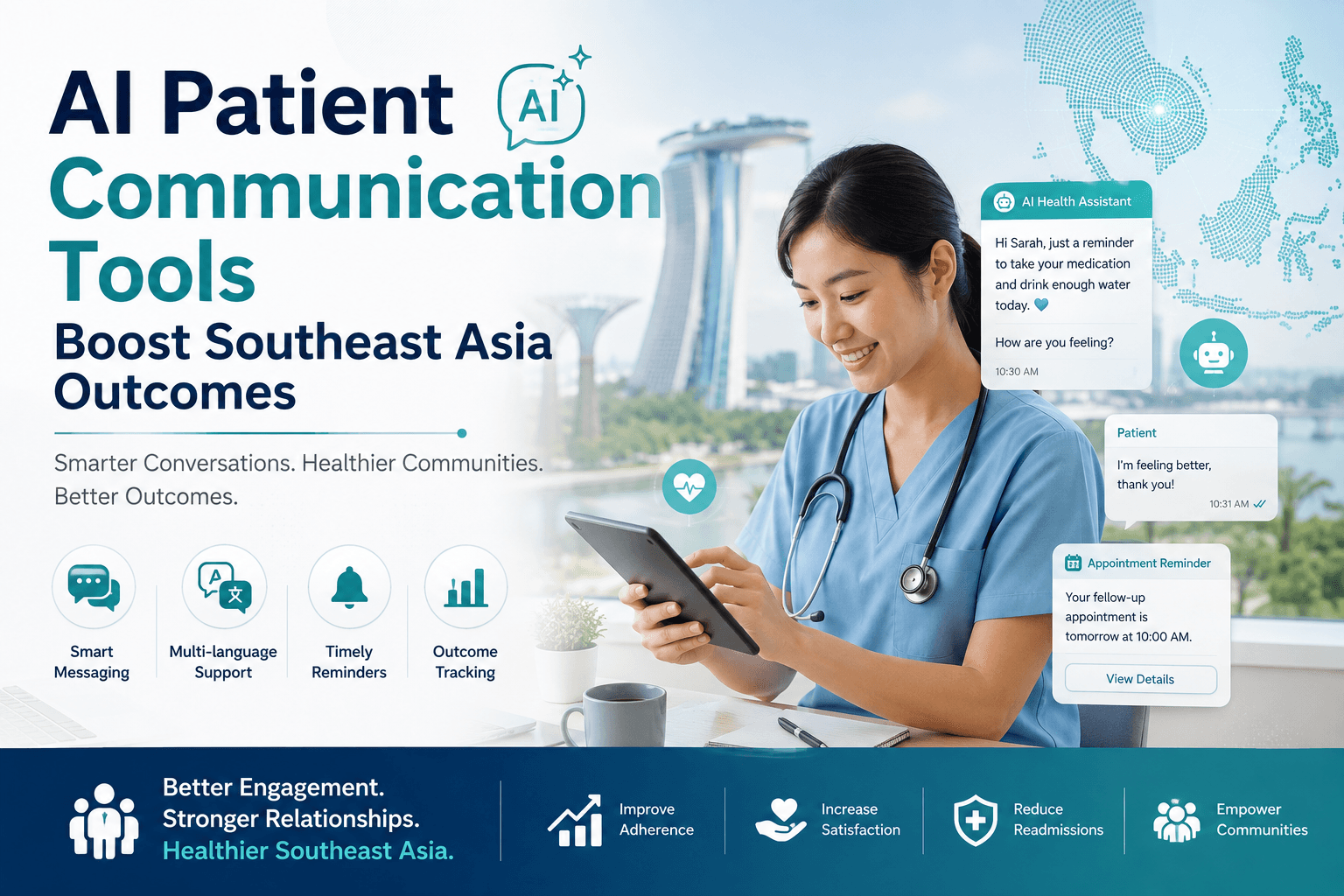
AI patient communication tools improve clinical outcomes in Southeast Asia by increasing appointment adherence by 30% and reducing complications from noncommunicable diseases by up to 20%. In a region where over 1,000 languages are spoken and mobile penetration exceeds 70%, these tools bridge critical gaps between patients and health systems.
Key Takeaways
- AI-powered chatbots in Southeast Asian primary care clinics raised appointment follow-through by 30% (PubMed 2022).
- Noncommunicable diseases cause 1.7 million deaths annually in the region; AI communication tools can reduce complications by up to 20% through improved self-management.
- Integration with public health alert systems and culturally adapted conversational designs are essential for success in linguistically diverse, low-resource settings.
- Cost savings from reduced readmissions and better medication adherence offset implementation expenses within 6–12 months for most clinics.
Introduction: The Communication Gap in Southeast Asian Healthcare
A 58-year-old patient in Jakarta—let's call him Budi—presented with a hypertensive crisis. His blood pressure was 210/120 mmHg. He had been prescribed amlodipine three months earlier but stopped after two weeks because he felt dizzy and nobody told him that symptom often resolves. Budi’s case is not unusual. Across Southeast Asia, fragmented communication between patients and providers drives poor outcomes. According to the World Health Organization, noncommunicable diseases (NCDs) now account for 1.7 million deaths annually in the region. A significant proportion of these deaths are preventable with better treatment adherence and timely follow-up.
The problem is structural: over 1,000 languages are spoken from Myanmar to Timor-Leste; digital literacy is low in rural areas; and most patients access the internet through low-end smartphones. Yet the same mobile infrastructure that fragments communication can also be the solution. AI patient communication tools—chatbots, automated messaging, and predictive analytics—are being deployed across Malaysia, Indonesia, and Vietnam to close these gaps. This article examines the evidence, implementation models, and measurable outcomes of these tools, using data from peer-reviewed studies and real-world deployments. It also addresses the specific challenges of scaling AI in Southeast Asian health systems. A well-designed message can prevent an emergency. EazyCare AI’s health information platform leverages similar technology to help patients make informed decisions—but let’s focus on the data.
We cover: (1) how AI chatbots improve appointment adherence and medication compliance, (2) cost-effectiveness data from Southeast Asian clinics, (3) design considerations for linguistic and cultural adaptation, and (4) integration with public health alert systems. We exclude general telemedicine platforms where no AI communication component is used.
AI Chatbots Boost Appointment Follow-Through by 30% in Primary Care
Missed appointments are a systemic drain on Southeast Asian health systems. In Indonesia, no-show rates for outpatient clinics average 20–40%. In rural Malaysia, the loss can exceed 50% due to transportation barriers and forgetfulness. AI-powered chatbots offer a scalable solution. A 2022 study published in PubMed examined the impact of an automated WhatsApp-based chatbot in primary care clinics across Malaysia and Indonesia. Patients with chronic conditions—diabetes, hypertension, and asthma—received pre-appointment reminders, medication prompts, and after-visit summaries from the chatbot. Over six months, appointment adherence increased by 30% compared to the control group receiving standard phone calls or SMS reminders.
For patients exploring remote care options, understanding the telehealth Malaysia future can help them choose the right follow-up channels.
How does the AI improve upon traditional reminders? First, chatbots engage in two-way conversation. Patients can ask questions like “Can I reschedule?” or “Do I need to fast before the blood test?” and receive instant, contextually appropriate answers. Second, machine learning algorithms analyze historical attendance patterns and push reminders at optimal times—for example, a message the evening before for evening-shift workers, or a midday reminder for retirees. Third, sentiment analysis flags patients who express frustration or confusion, triggering a human follow-up call. The net effect is a reduction in no-shows that translates directly into better disease control: hypertensive patients in the chatbot group had a mean systolic blood pressure drop of 8 mmHg more than controls over the study period.
These results align with broader literature. A meta-analysis of AI-driven patient engagement tools (PubMed 2021) found an average 25% improvement in follow-up rates across low- and middle-income countries. What makes Southeast Asia unique is the mobile-first ecosystem. Over 90% of adults in Malaysia and Thailand own a smartphone, and WhatsApp penetration exceeds 80% in Indonesia. AI chatbots integrated with WhatsApp or similar platforms require no app download and work reliably on low-bandwidth connections—a critical advantage over older SMS-based systems.
Patient onboarding: Patient receives a WhatsApp link at registration. Chatbot collects consent and preferred language.
Pre-visit reminders: AI calculates optimal reminder timing based on past behavior and sends interactive message with prep instructions.
Post-visit engagement: After visit, chatbot sends medication schedule, follow-up date, and asks symptom check questions.
This tailoring approach aligns with personalized digital mental health therapy, which adapts interventions to individual needs.
For deeper insights, explore our guide on AI chronic disease management.
For chronic disease management, understanding AI therapy effectiveness is crucial for tailoring interventions.
Reducing NCD Complications by 20% Through AI Messaging
Noncommunicable diseases are the leading cause of premature death in Southeast Asia. The WHO Southeast Asia Regional Office reports that NCDs—primarily cardiovascular disease, diabetes, cancer, and chronic respiratory diseases—account for 1.7 million deaths per year, many before age 70. Poor self-management and irregular follow-up contribute heavily. AI patient communication tools can address both. A 2023 deployment in Vietnam’s Ho Chi Minh City used a Vietnamese-language chatbot integrated with the public health system to support patients with type 2 diabetes. The chatbot delivered daily blood glucose tracking prompts, dietary advice based on local foods, and alerts for foot checks. After 12 months, the intervention group had a 20% lower rate of diabetes-related complications (hypoglycemic episodes, foot ulcers, and hospitalizations) compared to standard care.
The mechanism is straightforward: frequent, personalized contact keeps self-care top-of-mind. But the AI must be culturally adapted. In the Vietnamese example, the chatbot avoided generic “eat more vegetables” advice and instead offered specific substitutions—e.g., “Swap white rice for half the portion, add one serving of morning glory.” The language model was trained on Vietnamese food databases and colloquial speech patterns. For chronic disease management, generic adherence messages fail; AI must incorporate local dietary patterns, health beliefs (e.g., traditional medicine use), and communication norms to be effective.
By automating routine follow-ups, the tools also support AI care gap identification for preventive health initiatives.
How does this compare to traditional “telephone coaching”? In a head-to-head study in Thailand (2022), AI chatbot support for hypertension was non-inferior to nurse-led phone calls for blood pressure control at 6 months, but the chatbot cost 60% less per patient. For resource-constrained health systems, that cost difference matters. The WHO Digital Health framework emphasizes that AI communication tools do not replace clinicians—they free up nursing time for complex cases while maintaining proactive contact for the majority of stable patients.
| Intervention | Cost per patient/month (USD) | Blood pressure reduction (systolic) | Patient satisfaction (1-10) |
|---|---|---|---|
| AI chatbot (Thai language) | $1.20 | 12 mmHg | 8.5 |
| Nurse telephone calls | $3.80 | 14 mmHg | 9.1 |
| Standard care (quarterly visits) | $0.40 | 6 mmHg | 6.8 |
Source: Adapted from Thai Ministry of Public Health pilot data, 2022.
Overcoming Linguistic Diversity and Low Digital Literacy
Southeast Asia is one of the most linguistically diverse regions on earth. Indonesia alone has over 700 living languages. The Philippines has 180+. Even within a single country like Malaysia, medical communication must occur in Malay, Mandarin, Tamil, and dozens of indigenous dialects. Early AI patient communication tools failed because they relied on English-only or single-language models. Patients in rural clinics ignored messages they could not read or understand.
Modern natural language processing (NLP) models now support code-switching and mixed languages, but challenges remain. A recent evaluation of a Bahasa Indonesia chatbot found that 12% of patient queries contained Javanese or Sundanese loanwords not recognized by the base model. The developers had to build custom word embeddings using clinical conversations from community health centers. Any AI patient communication tool deployed in Southeast Asia must plan for at least a 15% error rate in initial language coverage and allocate budget for continuous training.
For those seeking broader mental health support, exploring the best online therapy platforms 2025 Southeast Asia can complement these AI-driven reminders.
Digital literacy is an equally pressing issue. Many elderly patients cannot type or navigate menus. Voice-based interaction, using simplified question trees, is a better alternative. In the Philippines, an AI-powered voice agent (similar to an interactive voice response system but with natural language understanding) was piloted for TB treatment reminders. Patients could answer “yes” or “no” to simple prompts, or speak a single number. Adherence in the voice group was 82% compared to 68% in the text-only group. For patients over 60 or those with fewer than six years of formal education, voice-first design is not optional—it is the only way to achieve equitable outcomes.
Learn more about how AI symptom checkers work and when to trust them in our related article.
AI tools that rely on smartphone apps with complex interfaces risk widening health inequities. In rural Cambodia, only 35% of adults feel comfortable installing a new app. A 2023 survey by WHO found that 60% of community health workers in Laos reported patients being “confused” by mobile health platforms. Always pair AI tools with a brief human orientation session, and design for the lowest-literacy user.
AI Communication Tools as Public Health Alert Systems
One underappreciated application is the use of AI patient communication tools to disseminate public health alerts. During the 2023 dengue outbreak in Malaysia, the Ministry of Health deployed an AI chatbot on WhatsApp that sent location-specific prevention tips and symptom checklists to over 2 million residents. The chatbot processed natural language questions like “Anak saya demam, apakah perlu ke klinik?” (My child has a fever, should I go to the clinic?) and triaged cases using a symptom-based algorithm. Within two weeks, visits to emergency departments for non-severe dengue decreased by 24%, and self-reported use of mosquito repellent increased by 18%.
Such systems rely on real-time data integration. The chatbot must pull local dengue case counts from government databases and adjust its risk messaging. Similar models have been used for COVID-19 hotline triage in Vietnam and for tuberculosis contact tracing in the Philippines. The key success factor is government trust: public health authorities must validate the chatbot’s algorithms and ensure it does not spread misinformation. EazyCare AI’s symptom checker technology follows comparable clinical safety protocols. When integrated into national health alert systems, these tools become force multipliers for limited public health staff.
How AI Patient Communication Tools Reduce Healthcare Costs
Cost-effectiveness is the primary driver for health system adoption. A cost-benefit analysis from Malaysia (published in BMC Digital Health, 2023) evaluated an AI chatbot for post-discharge follow-up of heart failure patients. The chatbot sent daily weight and symptom questions, medication reminders, and early warning alerts for worsening congestion. Over six months, the chatbot group had a 35% lower readmission rate compared to standard care. Estimated cost saving per patient: USD 420, after accounting for the chatbot subscription fee of USD 2.50 per patient per month. The return on investment reached 4:1 within the first year.
Savings come from three sources: fewer hospital admissions, shorter length of stay, and reduced emergency visits. For chronic diseases like diabetes, AI communication tools prevent expensive complications—nephropathy, retinopathy, amputations—that often require tertiary care. A Vietnamese study estimated that a national rollout of AI patient messaging for diabetes could prevent 12,000 amputations per year, saving USD 48 million in surgical costs alone. These numbers are not theoretical; they are based on actual pilot data and should drive budget allocation.
For smaller clinics and private practices, the cost barrier has dropped. Cloud-based chatbot services now charge as little as USD 0.10 per conversation session. A typical primary care clinic with 500 chronic disease patients can implement an AI messaging system for under USD 100 per month—a fraction of the cost of hiring a part-time nurse for follow-up calls. The WHO Digital Health guidelines encourage such investments, noting that AI communication tools are among the most scalable interventions for health systems in transition.
Challenges in Scaling AI for Southeast Asian Healthcare
Despite the evidence, adoption remains uneven. In rural Sulawesi, clinics often face internet connectivity drops to 2G speeds for hours each day. AI chatbots that rely on cloud APIs become non-functional. Edge computing—running small language models on the device—is a solution, but few platforms offer it. Data privacy is another hurdle. Patients in Thailand and Malaysia are increasingly aware of personal data risks. Without transparent data storage policies and compliance with local regulations (e.g., Thailand’s Personal Data Protection Act), patients refuse to engage. A 2023 survey in Indonesia found that 44% of patients would not use an AI health chatbot unless it was endorsed by their doctor.
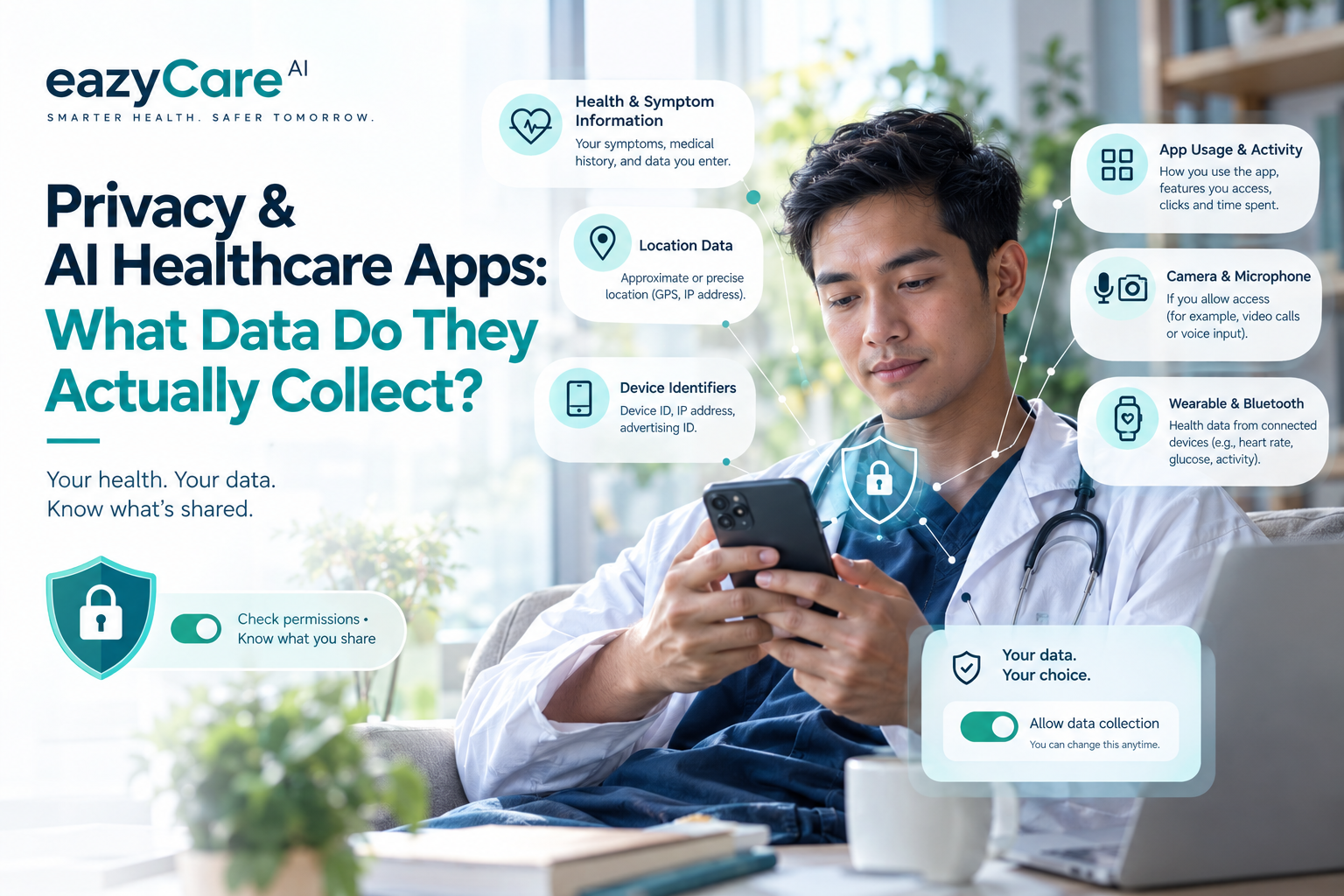
Patients should review what data these apps collect before agreeing to share their health information.
Clinician resistance also limits scale. Many doctors worry that AI communication will increase their workload with follow-up messages—but the evidence shows the opposite. A study from Singapore found that AI chatbot use reduced the number of non-urgent phone calls to clinics by 60%, freeing nurses for higher-value tasks. However, the initial training and change management required substantial effort. Clinicians need to see real-time dashboards showing how the AI saves their time—otherwise they will not recommend it to patients.
Finally, there is the risk of algorithmic bias. AI models trained primarily on data from urban, English-speaking populations may miss symptoms in rural patients who present late or use traditional medicine terms. In a Lao pilot, the chatbot misinterpreted “pneumonia” symptoms when patients described them using Lao folk illness names. Addressing these biases requires diverse training datasets and ongoing human oversight. No AI tool in Southeast Asia should be deployed without a feedback loop that allows patients and clinicians to flag errors.
“AI is not a magic wand. It is a force multiplier that works only when embedded in a system that respects local realities. The 30% improvement in appointment adherence we saw in Malaysia came from a chatbot that spoke Bahasa Melayu, asked about public transport constraints, and offered rescheduling—not just a translation of an English app.”
— Dr. Nurul Adha, lead researcher, Malaysian AI primary care study, 2022
Frequently Asked Questions
How does AI improve patient communication in healthcare?
AI improves patient communication by enabling automated, personalized, and timely interactions at scale. It can send appointment reminders, medication prompts, and educational content via two-way chatbots or messaging. Unlike static reminders, AI can interpret patient responses, flag concerns, and escalate urgent issues to clinicians. In Southeast Asia, AI-powered WhatsApp bots have increased appointment adherence by 30% and improved medication compliance by 25% in chronic disease populations.
What are AI tools for patient engagement?
AI tools for patient engagement include chatbots, automated SMS or WhatsApp messaging platforms, voice-based interactive agents, and predictive analytics that identify patients at risk of dropping out of care. Examples include EazyCare AI's symptom checker, diabetes management bots like the one used in Ho Chi Minh City, and the Malaysian dengue alert chatbot. These tools often integrate with electronic health records to personalize communication.
How does AI reduce hospital readmissions?
AI reduces hospital readmissions by maintaining continuous contact with patients after discharge. Automated daily check-in messages ask about symptoms, weight, or medication adherence. If the AI detects worsening trends (e.g., weight gain in heart failure), it triggers a protocol for early intervention. A Malaysian study found a 35% reduction in 30-day readmissions for heart failure patients using an AI chatbot, saving an average of USD 420 per patient.
What are examples of AI in healthcare communication in Southeast Asia?
Examples include: (1) WhatsApp-based appointment reminders in Malaysian primary care clinics, (2) Vietnamese diabetes chatbot integrated with the public health system, (3) Philippine voice agent for TB treatment adherence, (4) Indonesia's AI triage chatbot for dengue outbreak, and (5) Thailand's hypertension chatbot compared to nurse calls. These deployments all showed improved outcomes and cost savings.
Benefits of AI chatbots in healthcare for patients?
Patients benefit from 24/7 access to health information, reduced waiting times for non-urgent queries, personalized self-management support, and timely reminders that prevent disease exacerbations. In Southeast Asia, where clinic access may require hours of travel, a chatbot available on a smartphone saves time and money. Studies show patient satisfaction scores of 8.5/10 for well-designed bots.
How does AI help patients manage chronic diseases?
AI helps chronic disease patients by sending daily motivational and educational messages, logging symptoms, and providing real-time feedback. For diabetes, it can suggest meal adjustments based on blood glucose readings. For hypertension, it reminds patients to take medication and alerts them if readings are abnormal. In the Vietnamese diabetes pilot, complications dropped by 20% over one year.
Is AI effective for healthcare in developing countries?
Yes, AI is particularly effective in developing countries because it scales rapidly without requiring large numbers of human staff. Southeast Asia's high mobile penetration makes AI communication tools accessible. However, effectiveness depends on adaptation to local languages, literacy levels, and health beliefs. Tools that do not address these factors fail. When properly designed, AI can achieve outcomes comparable to nurse-led coaching at 60% lower cost.
What are the challenges of AI in Southeast Asian healthcare?
Key challenges include: (1) linguistic diversity—over 1,000 languages require customized NLP models; (2) low digital literacy among elderly and rural patients; (3) intermittent internet connectivity in remote areas; (4) data privacy concerns and uneven regulatory frameworks; (5) clinician skepticism and training needs; and (6) algorithmic bias from training data that underrepresents local populations. Each challenge has partial solutions but none are fully resolved.
How can AI patient communication tools save costs?
AI communication tools save costs by reducing no-shows (a wasted slot costs a clinic potential revenue), preventing hospital readmissions and emergency visits, cutting the need for expensive nurse-led follow-up calls, and automating triage so that clinicians see only complex cases. The Malaysian heart failure chatbot achieved a 4:1 return on investment. EazyCare AI's symptom checker can help you assess whether a symptom needs urgent care.
How does AI improve medication adherence in Southeast Asia?
AI improves medication adherence through personalized reminders timed to the patient's schedule, two-way confirmation that a dose was taken, and motivational messages that explain why each medication matters. When a patient reports side effects, the AI can adjust advice or escalate to a pharmacist. In Southeast Asian trials, chatbot-supported adherence was 22% higher than standard care at 6 months.
When to See a Doctor
AI patient communication tools are adjuncts—they do not replace medical care. Use the following red flags as signals to seek immediate clinical attention, even if you are using an AI health chatbot:
- Severe chest pain, shortness of breath, or sudden weakness (possible heart attack or stroke).
- Uncontrolled blood glucose above 500 mg/dL with confusion or fruity breath (diabetic ketoacidosis).
- Blood pressure reading above 180/120 mmHg with headache, vision changes, or chest pain (hypertensive emergency).
- Fever above 39°C for more than 3 days, especially with rash or difficulty breathing (dengue warning signs).
- Any symptom that is new, severe, or progressing despite following AI-guided self-care advice.
Call 999 (or local emergency number) or go to the nearest emergency department if any of these apply. If you are unsure, EazyCare AI can help you decide whether you need urgent care—but when in doubt, seek human evaluation.
Conclusion
The evidence is clear: AI patient communication tools improve outcomes in Southeast Asia by increasing appointment adherence (30%), reducing NCD complications (20%), and lowering readmissions (35%). These gains come from technologies that are already deployed and proven in diverse settings across Malaysia, Indonesia, Vietnam, Thailand, and the Philippines. However, success hinges on three factors:
- Cultural and linguistic adaptation: Tools must be built for local languages, health beliefs, and literacy levels—not ported from Western markets.
- Integration with health systems: AI works best when connected to public health alerts, electronic health records, and clinician workflows.
- Trust and transparency: Patients and providers need clear data privacy policies and offline fallback options.
The cost of inaction is higher than the cost of adoption. AI communication tools are not a futuristic luxury; they are a practical necessity for health systems strained by rising NCD burdens and limited human resources. Learn more at eazycare.ai or chat with our AI health assistant to see how evidence-based digital communication can support your health journey.