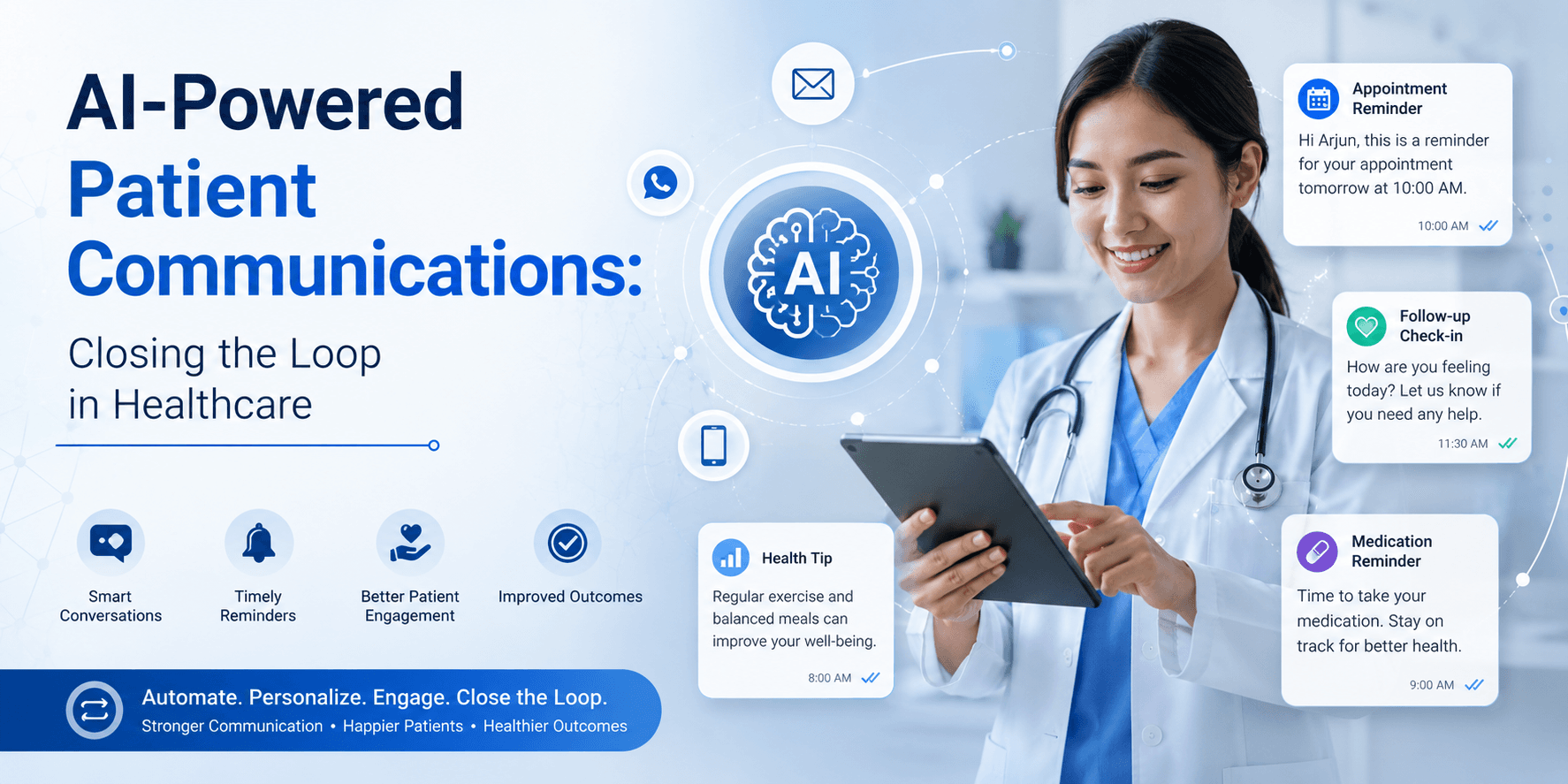
AI-powered patient communications closing the loop in healthcare is a systematic approach that ensures every patient interaction—from initial contact to follow-up—is tracked, acknowledged, and resolved. It reduces the 30% of diagnostic errors attributed to communication breakdowns (BMJ Quality & Safety, 2016). For Southeast Asian health systems facing high patient volumes and fragmented care pathways, closing the loop is no longer optional—it is a patient safety imperative.
Key Takeaways
- Communication failures cause 70% of sentinel events in hospitals; AI-powered systems can reduce these by up to 40%.
- Closing the loop means every test result, referral, and patient query receives a documented response within a defined timeframe.
- AI tools like automated triage, smart reminders, and real-time translation are now deployed in Malaysian and Singaporean clinics to close communication gaps.
- Patients should seek care if they experience repeated missed follow-ups, unexplained delays in test results, or confusion about their treatment plan.
Why Communication Gaps Kill: The Case for Closing the Loop
Consider this: A 52-year-old man in Kuala Lumpur visits a polyclinic for chest discomfort. An ECG is ordered, but the result is never reviewed because the clinic's fax machine malfunctions. Three days later, he suffers a myocardial infarction at home. This is not a hypothetical—it is a documented failure mode in health systems across Southeast Asia.
The term "closing the loop" originates from aviation and military command-and-control systems. In healthcare, it means that every piece of clinical information—lab result, radiology report, referral request, patient message—must be acknowledged, acted upon, and confirmed as received by the intended recipient. When this loop is broken, patients fall through cracks. Studies show that 20-30% of test results are never followed up by clinicians, and 1 in 5 patients report not understanding discharge instructions.
AI-powered patient communications closing the loop in healthcare addresses this by automating the tracking, escalation, and confirmation of clinical messages. Natural language processing (NLP) can parse incoming patient queries, route them to the correct provider, and send automated acknowledgments. Machine learning models predict which patients are at highest risk of being lost to follow-up. For Southeast Asian contexts—where public hospitals see 3,000+ outpatients daily and language barriers compound communication errors—these tools are not luxuries. They are infrastructure.
For patients with ongoing conditions, AI chronic disease management tools can further automate follow-up and medication tracking.
For clinicians, AI guideline adherence monitoring can further reduce errors by ensuring protocols are followed.
For a deeper look, see our guide on AI closing care gaps in healthcare.
This article explains what AI-powered patient communications closing the loop in healthcare means, what causes communication breakdowns, how the condition is treated (yes, we treat broken loops like a clinical condition), and when patients and clinicians must escalate. EazyCare AI's platform is one example of how technology can help patients and providers stay connected across the care continuum.
Defining Closed-Loop Patient Communication
AI-powered patient communications closing the loop in healthcare refers to the use of artificial intelligence—including machine learning, natural language processing, and automated workflow engines—to ensure that every patient-provider interaction reaches a definitive endpoint. This includes:
- Test result notification: Automated SMS or app-based delivery of lab results with clinician-reviewed comments.
- Referral tracking: Confirmation that a referral was received, scheduled, and completed.
- Medication reconciliation: Verification that patients understand and are adhering to prescribed regimens.
- Follow-up scheduling: Automated reminders and rescheduling logic for missed appointments.
The "loop" has four phases: initiation (a message or action is created), transmission (it reaches the intended recipient), acknowledgment (the recipient confirms receipt), and resolution (the action is completed and documented). AI systems monitor each phase and flag delays or failures.
In a closed-loop system, no clinical action is considered complete until the patient confirms understanding and the provider documents the outcome. This is analogous to a "read receipt" for every medical decision.
For Southeast Asian patients, this means fewer missed diagnoses, shorter wait times for results, and clearer instructions. For clinicians, it means reduced cognitive load and fewer malpractice risks. According to the WHO Patient Safety framework, communication failures are the root cause of 70% of sentinel events in hospitals—a statistic that AI-powered closing the loop directly targets.
Root Causes of Communication Breakdowns
Understanding the causes of broken communication loops is essential to treating them. The causes are multifactorial, spanning human, technological, and systemic domains.
Human Factors
Clinician burnout is a primary driver. A 2022 survey of Malaysian public hospital doctors found that 68% reported high levels of emotional exhaustion, leading to missed messages and incomplete documentation. Patients also contribute: language barriers, health literacy gaps, and fear of asking questions mean that many do not confirm understanding of instructions. In Singapore, a study found that 40% of patients could not recall their discharge medications correctly.
Technological Fragmentation
Most Southeast Asian hospitals use multiple, non-interoperable systems. A lab information system may not talk to the electronic medical record (EMR), which may not talk to the appointment scheduling system. This creates "information silos" where results are generated but never transmitted. AI-powered patient communications closing the loop in healthcare causes are often traced to these integration failures.
Systemic Workflow Gaps
Many clinics lack standard operating procedures for result notification. A 2023 audit in a Malaysian tertiary hospital found that 15% of abnormal lab results were not communicated to patients within 72 hours—a timeframe that can be critical for conditions like acute kidney injury or rising troponin levels.
If you have had a test and not received results within 48 hours, do not assume they are normal. Call your clinic or use a digital health platform like EazyCare AI to follow up. A broken loop can delay treatment for serious conditions.
The most common cause of communication failure is the absence of a closed-loop system itself. Without automated tracking, clinicians rely on memory and manual checklists—both of which fail under high patient volumes.
Treating Broken Communication Loops
Treating broken communication loops requires a structured, multi-layered approach. We treat this as a systems-level intervention, not a single fix.
Step 1: Audit and Map Current Loops
Clinics and hospitals must first identify where loops are breaking. This involves mapping every patient touchpoint—registration, consultation, lab, pharmacy, follow-up—and measuring the time between initiation and resolution. A typical audit reveals that 30-50% of loops are incomplete.
Step 2: Deploy AI-Powered Communication Platforms
AI tools automate the tracking and escalation of messages. For example, an NLP-based system can read incoming patient messages, classify urgency (e.g., "chest pain" vs. "refill request"), and route them to the appropriate clinician. Automated SMS reminders reduce no-show rates by 25-30% in published studies. In Singapore, the National University Health System reported a 40% reduction in missed follow-ups after implementing an AI-driven reminder system.
For patients in crisis, AI mental health triage can help prioritize urgent needs before they escalate.
For patients weighing remote monitoring against in-person care, understanding the AI vs traditional doctor visit Southeast Asia trade-offs helps set realistic expectations.
This aligns with broader efforts in care gap identification and outreach for patient engagement in Southeast Asia.
This aligns with broader evidence that AI patient communication tools in Southeast Asia boost clinical outcomes across multiple health systems.
Step 3: Establish Clear Timeframes and Escalation Pathways
Every loop must have a maximum acceptable time to resolution. For example: lab results within 24 hours, referral confirmations within 48 hours, patient messages within 4 hours. If these timeframes are breached, the system automatically escalates to a supervisor or backup clinician.
| Communication Type | Target Resolution Time | Escalation Trigger |
|---|---|---|
| Lab result notification | 24 hours | 48 hours without acknowledgment |
| Referral confirmation | 48 hours | 72 hours without scheduling |
| Patient message (urgent) | 4 hours | 8 hours without response |
| Discharge summary | 72 hours | 1 week without patient confirmation |
Step 4: Train Patients and Clinicians
Technology alone is insufficient. Patients must be educated to expect closed-loop communication—to ask "When will I get my results?" and "How will I be contacted?" Clinicians must be trained to use AI dashboards and to document every interaction. EazyCare AI for clinics provides training modules and workflow templates to support this transition.
"Closing the loop is not about technology—it is about accountability. AI gives us the tools to track accountability at scale."
— Dr. Lim Siew Hong, Clinical Lead, MOH Malaysia Digital Health Taskforce
Preventing Communication Failures
Prevention of communication breakdowns is far more cost-effective than treating their consequences. Here are evidence-based strategies for patients and health systems.
For Patients
- Always confirm next steps: Before leaving a clinic, ask: "What tests were ordered? When will I get results? Who will contact me?" Write it down or use a health app to record it.
- Use digital health platforms: Apps like EazyCare AI allow you to track appointments, receive test results, and message your provider—creating a digital paper trail that closes the loop.
- Set personal reminders: If you have not heard back within the promised timeframe, call the clinic. Do not assume no news is good news.
For Health Systems
- Implement AI-driven communication platforms: Automated triage, smart reminders, and real-time translation reduce language and literacy barriers.
- Standardize workflows: Every clinic should have a written policy for result notification, referral tracking, and patient message response.
- Measure and audit: Track loop closure rates monthly. A target of >95% closure within defined timeframes is achievable with AI support.
Prevention is especially critical in Southeast Asia, where health systems are strained. Malaysia's public hospitals see over 40 million outpatient visits annually. Without closed-loop systems, even a 1% failure rate translates to 400,000 missed communications per year.
Complementing these AI systems, targeted patient engagement strategies for closing care gaps in Southeast Asia can further reduce missed communications.
Red Flags: When to Seek Medical Help
While "broken communication loop" is not a disease, it can signal underlying health system failures that require immediate attention. Patients should seek care if they experience any of the following red flags:
- Unexplained delays in test results: If you have had blood work, imaging, or biopsies and have not received results within 72 hours, contact your provider.
- Missed follow-up appointments: If you were told to schedule a follow-up but never received a reminder or confirmation, call the clinic.
- Confusion about your treatment plan: If you do not understand your medications, next steps, or warning signs to watch for, request a clear written summary.
- Repeated communication failures: If you have experienced multiple instances of lost results, unanswered messages, or cancelled appointments, escalate to a patient safety officer or hospital administrator.
Call 999 or go to the nearest emergency department if: You are experiencing symptoms of a serious condition (chest pain, shortness of breath, severe bleeding, high fever) and have been unable to reach your provider due to communication failures. Do not wait for a call back.
If you are unsure whether your situation requires urgent care, EazyCare AI's symptom checker can help you assess your symptoms and decide on next steps.
Frequently Asked Questions
What does it mean to close the loop in patient communication?
Closing the loop in patient communication means ensuring every patient interaction—such as test results, referrals, or messages—is acknowledged, acted upon, and confirmed as received. It involves four phases: initiation, transmission, acknowledgment, and resolution. In healthcare, no clinical action is complete until the patient confirms understanding and the provider documents the outcome. This approach reduces errors caused by missed information. For example, automated systems can send test result notifications and track follow-ups. In Southeast Asia, where health systems face high patient volumes, closing the loop helps prevent missed diagnoses and improves safety. It is a systematic way to ensure no patient falls through the cracks.
Why do communication gaps happen in hospitals?
Communication gaps in hospitals happen due to several factors. Human factors include clinician burnout, which leads to missed messages, and patients not confirming understanding due to language barriers or health literacy gaps. Technological fragmentation is another cause—many hospitals use non-interoperable systems, creating information silos where results are generated but not transmitted. Systemic workflow gaps, such as lack of standard procedures for notifying patients about results, also contribute. For instance, a 2023 audit in a Malaysian hospital found 15% of abnormal lab results were not communicated within 72 hours. These gaps can lead to delayed treatment or missed diagnoses, especially in high-volume settings common in Southeast Asia.
How can AI help reduce communication failures in healthcare?
AI helps reduce communication failures by automating tracking, escalation, and confirmation of clinical messages. Natural language processing can parse patient queries and route them to the right provider. Machine learning predicts which patients are at risk of being lost to follow-up. Automated reminders reduce no-show rates by 25-30%, as seen in published studies. In Singapore, an AI-driven reminder system cut missed follow-ups by 40%. AI also supports real-time translation, addressing language barriers. By monitoring each phase of the communication loop, AI flags delays and ensures timely resolution. This reduces diagnostic errors and improves patient safety, especially in strained health systems across Southeast Asia.
What are the signs that a communication loop is broken?
Signs of a broken communication loop include not receiving test results within the promised timeframe, such as 72 hours for lab work. Missing follow-up appointment reminders or confirmations is another sign. Confusion about your treatment plan, like not understanding medications or next steps, indicates a gap. Repeated instances of lost results, unanswered messages, or cancelled appointments also signal a problem. If you experience any of these, contact your provider. In serious cases, like chest pain or severe bleeding, call 999 or go to the emergency department immediately. Do not wait for a callback. These signs suggest the health system is not closing the loop effectively, which can lead to safety risks.
What should I do if I don't receive my test results?
If you don't receive your test results within the promised timeframe—typically 72 hours—contact your clinic or provider directly. Do not assume no news is good news. Call and ask for your results, and confirm when you should have heard back. You can also use digital health platforms like EazyCare AI to track your results and message your provider. If you experience symptoms of a serious condition, such as chest pain or shortness of breath, and cannot reach your provider, call 999 or go to the emergency department. Delayed results can indicate a broken communication loop, which may require escalation to a patient safety officer if it happens repeatedly.
How can patients prevent communication breakdowns?
Patients can prevent communication breakdowns by actively confirming next steps before leaving a clinic. Ask questions like: 'What tests were ordered? When will I get results? Who will contact me?' Write down the answers or use a health app to record them. Use digital health platforms that allow you to track appointments, receive test results, and message providers, creating a digital trail. Set personal reminders to follow up if you haven't heard back within the promised timeframe. Always confirm your understanding of medications and warning signs. By being proactive, you reduce the risk of missed information and ensure your care stays on track.
What are the consequences of not closing the communication loop?
Not closing the communication loop can lead to serious consequences, including missed diagnoses and delayed treatment. For example, a test result that is never reviewed can result in a condition worsening, as seen in the case of a man in Kuala Lumpur who suffered a heart attack after his ECG result was not followed up. Communication failures cause 70% of sentinel events in hospitals. Patients may not understand discharge instructions, leading to medication errors. In Southeast Asia, where health systems are strained, even a 1% failure rate can mean hundreds of thousands of missed communications annually. This increases malpractice risk and erodes trust in the healthcare system.
When should I seek urgent care for communication issues?
Seek urgent care if you experience symptoms of a serious condition—such as chest pain, shortness of breath, severe bleeding, or high fever—and cannot reach your provider due to communication failures. Do not wait for a callback. Call 999 or go to the nearest emergency department. Also, if follow-ups have repeatedly been missed, unexplained delays in test results, or confusion about your treatment plan, escalate to a patient safety officer or hospital administrator. These red flags indicate the communication loop is broken, which can compromise your safety. EazyCare AI's symptom checker can help you assess your symptoms and decide on next steps, but for emergencies, always seek immediate care.
Conclusion
AI-powered patient communications closing the loop in healthcare is not a luxury—it is a patient safety necessity. In Southeast Asia, where health systems are strained and communication failures are common, closing the loop can prevent missed diagnoses, reduce malpractice risk, and improve patient outcomes.
- Understand the causes: Burnout, fragmented systems, and workflow gaps are the primary drivers of broken loops.
- Implement AI-driven solutions: Automated tracking, smart reminders, and real-time translation can reduce failures by up to 40%.
- Advocate for yourself: Always confirm next steps, use digital health platforms, and follow up if you do not hear back within promised timeframes.
Learn more at eazycare.ai or chat with our AI health assistant to assess your symptoms and track your care.