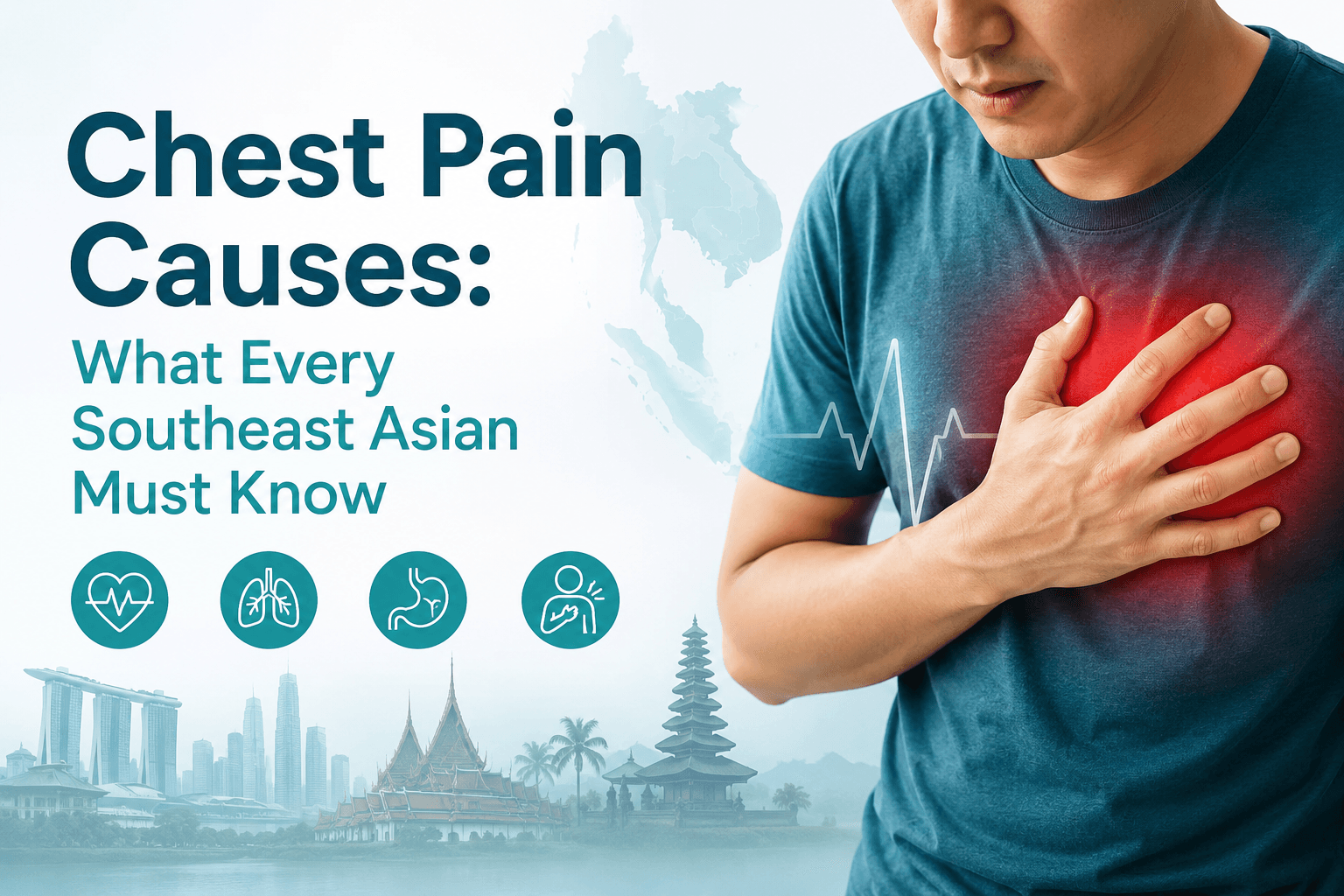
Chest pain is a symptom that signals the body something is wrong, but the cause is not always a heart attack. In fact, up to 60% of chest pain cases in primary care stem from non-cardiac conditions such as GERD, costochondritis, or panic attacks. In Southeast Asia, cardiovascular disease remains the leading cause of death, yet many patients delay seeking care because they cannot distinguish between a benign ache and a medical emergency.
Key Takeaways
- Chest pain accounts for 5–6% of all emergency department visits in Malaysia and the US — most are not heart attacks.
- Non-cardiac causes (GERD, anxiety, musculoskeletal pain) are responsible for 60% of cases in primary care.
- Heart attack pain is typically pressure-like, radiates to the left arm or jaw, and is accompanied by shortness of breath, cold sweat, or nausea.
- Anxiety-related chest pain is often sharp, localised, and associated with palpitations, tingling, or a sense of impending doom.
- If you are unsure, use EazyCare AI's symptom checker to assess your risk before deciding whether to visit an emergency department.
Why Chest Pain Demands Your Attention — and Your Calm
Imagine this: you are a 35-year-old accountant in Kuala Lumpur, sitting through a late-night deadline. Suddenly, a sharp jab hits your chest. Your mind races to the worst-case scenario — heart attack. You rush to the nearest emergency department, spend hours waiting, only to be told it is costochondritis or acid reflux. This scenario plays out thousands of times every month across Southeast Asia.
Chest pain is the body's smoke alarm. It can signal a fire (heart attack, aortic dissection, pulmonary embolism) or a burnt piece of toast (GERD, muscle strain, anxiety). The challenge is that the smoke alarm sounds the same for both. In Malaysia, cardiovascular disease caused 20% of all deaths in 2020, according to WHO data. Yet the same data shows that emergency departments see far more patients with non-cardiac chest pain than those with actual heart attacks.
This article will help you understand the chest pain causes most relevant to Southeast Asian patients — from heart attacks to anxiety, GERD, and costochondritis. You will learn how to distinguish between them using simple, regionally relevant examples, and when to act fast versus when to call your GP or use a telemedicine service like EazyCare AI's symptom checker.
Chest Pain in Southeast Asia: What the Data Reveals
Every year, chest pain drives approximately 5–6% of all emergency department visits in the United States. The proportion is similar in Malaysia, where emergency departments in major cities like Kuala Lumpur, Penang, and Johor Bahru see hundreds of chest pain cases each week. But the key statistic every patient should know is this: up to 60% of patients presenting with chest pain in primary care have non-cardiac causes (PubMed, 2020).
In Southeast Asia, the prevalence of GERD is estimated at 12–20%, with chest pain being a common symptom (MOH Malaysia). Anxiety and panic disorders are associated with chest pain in 20–30% of cases among Southeast Asian populations (WHO). This means that for every 10 patients with chest pain, only 2–4 will have a cardiac cause. The rest are dealing with digestive, musculoskeletal, or psychological issues.
Chest pain is not a diagnosis — it is a symptom that requires a process of elimination. The first step is always to rule out life-threatening conditions (heart attack, pulmonary embolism, aortic dissection). Only after that can clinicians focus on the more common, benign causes.
The problem is that many patients in Southeast Asia either panic and rush to the hospital unnecessarily, or worse, they ignore the pain because they assume it is "just stress" or "acidity." Both extremes are dangerous. The goal is to find a middle path: recognise when chest pain is a red flag and when it can be managed with a GP visit or home care.
Just as chest pain can have non-cardiac origins, headache causes beyond stress often involve overlooked triggers like sinus issues or tension.
Heart Attack and Other Cardiac Causes of Chest Pain
When we talk about chest pain causes, the heart is the first organ that comes to mind. Cardiac chest pain — known as angina or myocardial infarction — is caused by reduced blood flow to the heart muscle, usually due to a blocked coronary artery. In Southeast Asia, the risk is elevated by high rates of smoking, hypertension, diabetes, and a diet rich in saturated fats and refined carbohydrates.
For long-term heart health, explore how AI chronic disease management can help monitor risks like hypertension and diabetes.
For a deeper look, understanding blood pressure numbers can help you manage this risk factor.
For a deeper dive into chest pain causes and meaning, consult our clinical guide.
For those with hypertension or diabetes, using connected devices for chronic disease management can help monitor and reduce cardiac risk.
How to Recognise Heart Attack Chest Pain
The classic description is a sensation of pressure, squeezing, or heaviness in the centre of the chest, lasting more than a few minutes or coming and going. The pain often radiates to the left arm, jaw, back, or even the stomach. Accompanying symptoms include shortness of breath, cold sweat, nausea, and lightheadedness. According to the American Heart Association, women are more likely to experience atypical symptoms such as fatigue, indigestion, or upper back pain.
"The single most important factor in surviving a heart attack is time. Every minute of delay reduces the chance of saving heart muscle."
— American Heart Association
If you have chest pain that feels like a heavy weight on your chest, especially if it radiates and is accompanied by shortness of breath or cold sweat, call 999 immediately. Do not drive yourself to the hospital. Do not wait to see if it passes. Do not take antacids or painkillers.
Other cardiac causes include pericarditis (inflammation of the heart lining), which produces sharp, pleuritic pain that improves when leaning forward, and aortic dissection, which causes sudden, tearing chest pain that radiates to the back. Both are emergencies but far less common than heart attacks.
GERD, Anxiety, Costochondritis: The Real Culprits in Southeast Asia
Most chest pain cases in Southeast Asia are not cardiac. The three most common non-cardiac causes are gastroesophageal reflux disease (GERD), anxiety/panic attacks, and costochondritis. Understanding these can save you unnecessary trips to the emergency department.
GERD and Acid Reflux
GERD affects 12–20% of Malaysians, and chest pain is one of its hallmark symptoms. The pain is often described as a burning sensation behind the breastbone, sometimes mistaken for heart pain. It typically occurs after meals, especially if you have eaten spicy food, deep-fried snacks, or drunk coffee or alcohol — common dietary triggers in Southeast Asia. The pain worsens when lying down or bending over and improves with antacids.
Understanding your gut health second brain can help explain why digestive issues often trigger chest pain.
Tip: If your chest pain is accompanied by a sour taste in the mouth, regurgitation, or burping, it is likely GERD. Try sitting upright and taking an antacid. If the pain resolves within 15 minutes, it is almost certainly not a heart attack.
Anxiety and Panic Attacks
Anxiety-related chest pain is extremely common in urban Southeast Asian populations, where workplace stress, financial pressure, and sleep deprivation are rampant. The pain is often sharp, stabbing, and localised to a small area — it can be reproduced by pressing on the chest wall. Patients often feel palpitations, a racing heart, tingling in the hands or face, and a sense of impending doom. This is known as a panic attack.
If this sounds familiar, you may be experiencing burnout rather than a heart issue.
If you're often tired, learn to recognise the signs your body needs more sleep to prevent stress-related chest pain.
According to WHO data, anxiety and panic disorders are associated with chest pain in 20–30% of cases in Southeast Asian populations. The key differentiator is that anxiety chest pain usually peaks within 10 minutes and then fades, whereas heart attack pain persists or worsens.
For those with anxiety-related chest pain, exploring online mental health care in Southeast Asia can be a helpful step.
Explore online mental health therapy vs medication options for managing anxiety.
Recognizing what your body is telling you through these symptoms can help you distinguish between a panic attack and a more serious condition.
Do not assume chest pain is "just anxiety" until a doctor has ruled out cardiac causes. If you have risk factors (age >45, smoking, diabetes, high blood pressure, family history of heart disease), always err on the side of caution and seek medical evaluation.
Costochondritis
Costochondritis is inflammation of the cartilage that connects the ribs to the breastbone. It produces sharp, localised pain that worsens with deep breathing, coughing, or pressing on the chest. It is common after a viral infection, heavy lifting, or repetitive coughing. The pain is typically on the left side of the chest, which often triggers anxiety. The good news: costochondritis is harmless and resolves on its own within weeks.
Innovations such as AI in musculoskeletal pain management now offer faster diagnosis and personalised care.
To test for costochondritis: press firmly on the spot where the pain is worst. If you can reproduce the pain by pressing, it is almost certainly musculoskeletal, not cardiac.
| Cause | Pain Characteristics | Triggers | Relief |
|---|---|---|---|
| Heart Attack | Pressure, squeezing, radiating to arm/jaw | Exertion, stress | Rest, nitroglycerin (if prescribed) |
| GERD | Burning, behind breastbone | Spicy food, lying down | Antacids, sitting upright |
| Anxiety/Panic | Sharp, stabbing, localised | Stress, panic triggers | Deep breathing, distraction |
| Costochondritis | Sharp, reproducible by pressing | Deep breathing, coughing | Anti-inflammatory medication, rest |
How to Differentiate Chest Pain at Home: A Step-by-Step Guide
When chest pain strikes, your first instinct might be to panic. Instead, follow this structured approach. It is not a substitute for medical evaluation, but it can help you decide whether to call an ambulance or schedule a GP visit.
Stop and assess. Are you having trouble breathing, cold sweat, or nausea? Do you feel pressure or tightness in the centre of your chest? If yes, call 999 immediately.
Check for reproducibility. Press firmly on the painful spot. Does it hurt more? If yes, it is likely costochondritis or a muscle strain. If the pain is deep and not affected by pressing, cardiac cause is possible.
Consider timing and triggers. Did the pain start after a meal (especially spicy or fried food)? Try taking an antacid. If it improves within 15 minutes, it is likely GERD. Did the pain start during a stressful moment? If it comes with palpitations and tingling, it could be a panic attack.
Note associated symptoms. Heartburn, regurgitation, sour taste = GERD. Tingling, racing heart, sense of doom = anxiety. Fever, cough, phlegm = possible pneumonia or pleurisy. If you have any of these, see a GP within 24 hours.
If your child has a fever, consult our fever in children guide for when to worry.
Use a reliable symptom checker. If you are still unsure, use EazyCare AI's symptom checker to assess your risk. It asks targeted questions and provides a recommendation based on validated triage guidelines.
Chest Pain Treatment at Home: What Works and What Doesn't
Once you have ruled out a heart attack (or are waiting for medical help), home treatment depends on the cause. Here is what evidence supports:
- For GERD: Take an over-the-counter antacid (e.g., aluminium-magnesium hydroxide). Sit upright. Avoid lying down for at least 2 hours after eating. Avoid trigger foods (spicy, oily, citrus, caffeine).
- For anxiety/panic: Practice slow, deep breathing (4 seconds in, 4 seconds hold, 6 seconds out). Use grounding techniques (name 5 things you see, 4 you can touch, 3 you hear, 2 you smell, 1 you taste). If panic attacks recur, seek cognitive behavioural therapy (CBT).
- For costochondritis: Apply a warm compress to the area. Take ibuprofen or paracetamol as directed. Avoid heavy lifting and deep breathing exercises. Most cases resolve in 2–4 weeks.
Do not take aspirin if you are unsure whether the pain is cardiac. Aspirin can worsen bleeding in conditions like aortic dissection or peptic ulcer disease. Only take aspirin if you have been diagnosed with a heart attack or have been instructed by a doctor.
Frequently Asked Questions
What does chest pain indicate?
Chest pain can indicate a serious cardiac event (heart attack, angina, pericarditis) or a benign condition (GERD, costochondritis, anxiety, muscle strain). In Southeast Asia, up to 60% of chest pain cases in primary care are non-cardiac. The key is to evaluate the type, duration, triggers, and associated symptoms. If you have risk factors for heart disease, always seek medical evaluation first. EazyCare AI's symptom checker can help you assess your risk.
When should I worry about chest pain?
Worry if the pain is pressure-like, radiates to the left arm or jaw, lasts more than a few minutes, or is accompanied by shortness of breath, cold sweat, nausea, or lightheadedness. Also worry if you have risk factors: age >45, smoking, diabetes, high blood pressure, or family history of heart disease. Any chest pain that is new, severe, or associated with fever or cough should be evaluated by a doctor within 24 hours.
Can chest pain be caused by anxiety?
Yes, anxiety and panic attacks are a common cause of chest pain, especially in Southeast Asian urban populations. The pain is often sharp, stabbing, and localised, and is accompanied by palpitations, tingling, and a sense of doom. Anxiety-related chest pain typically peaks within 10 minutes and resolves. However, always rule out cardiac causes first, especially if you have risk factors.
Is chest pain always a heart attack?
No. Only 20–40% of chest pain cases in emergency departments are due to a heart attack or other cardiac cause. The majority are due to GERD, anxiety, costochondritis, or other non-cardiac conditions. However, because a heart attack is life-threatening, any chest pain that is new, severe, or fits the cardiac pattern should be treated as an emergency until proven otherwise.
What are the common causes of chest pain?
The most common causes include: heart attack, angina, GERD, anxiety/panic attacks, costochondritis, muscle strain, pericarditis, pneumonia, and pulmonary embolism. In Southeast Asia, GERD and anxiety are particularly prevalent due to dietary habits and high stress levels. Always consult a healthcare provider for a proper diagnosis.
How to tell the difference between heartburn and heart attack?
Heartburn (GERD) typically causes a burning sensation behind the breastbone, happens after meals, and is relieved by antacids. Heart attack pain is a pressure or squeezing sensation, often radiates to the arm or jaw, and is accompanied by shortness of breath, cold sweat, or nausea. If you are unsure, treat it as a heart attack and call 999. EazyCare AI can help you differentiate.
What does chest pain feel like with anxiety?
Anxiety chest pain is often described as a sharp, stabbing, or pinching sensation in a small area of the chest. It may come and go quickly, and is often accompanied by a racing heart, tingling hands or face, sweating, and a feeling of impending doom. The pain can be reproduced by pressing on the chest wall. It typically resolves with deep breathing or distraction.
When to go to hospital for chest pain?
Go to the emergency department immediately if: the pain is sudden, severe, or pressure-like; it radiates to the arm, jaw, or back; it is accompanied by shortness of breath, cold sweat, nausea, or fainting; you have risk factors for heart disease; or the pain does not improve after 5 minutes of rest. If you are unsure, call 999 or use EazyCare AI's symptom checker for guidance.
Can chest pain be a sign of lung problems?
Yes, lung conditions such as pneumonia, pleurisy, pulmonary embolism, or a collapsed lung can cause chest pain. Pneumonia pain is often sharp and worsens with deep breathing or coughing. Pulmonary embolism causes sudden, sharp chest pain with shortness of breath and sometimes coughing up blood. If you have chest pain accompanied by fever, cough, or difficulty breathing, seek medical attention promptly.
What is the best position to sleep with chest pain?
If you have GERD-related chest pain, sleep with your head elevated on an extra pillow or use a wedge pillow to keep stomach acid from flowing back. If you have costochondritis, sleeping on your back with a pillow under your knees can reduce pressure on the chest wall. For heart-related chest pain, the best position is sitting upright, as lying flat can worsen symptoms. Never ignore chest pain that persists, especially at night.
When to See a Doctor
You should seek medical attention immediately if you experience any of the following:
- Chest pain that is sudden, severe, or feels like a heavy weight on your chest
- Pain that radiates to your left arm, jaw, back, or stomach
- Shortness of breath, cold sweat, nausea, or lightheadedness
- Racing or irregular heartbeat with chest pain
- Pain that does not improve after 5 minutes of rest
- Chest pain accompanied by fever, cough, or coughing up blood
Call 999 or go to the nearest emergency department if you have any of these red flags. Do not drive yourself. Do not wait. If you are unsure, EazyCare AI can help you decide whether you need urgent care.
If your chest pain is mild, intermittent, and you have no red flags, make an appointment with your GP within 1–2 days. They can perform an ECG, blood tests, and a physical exam to rule out cardiac causes.
Conclusion
Understanding chest pain causes is not just about knowing the list — it is about knowing when to act. The three most important takeaways are:
- Most chest pain is not a heart attack. Up to 60% of cases are due to GERD, anxiety, or costochondritis. But you must never assume it is benign without evaluation.
- Learn the red flags. Pressure, radiation, shortness of breath, cold sweat — these demand immediate emergency care. Do not delay.
- Use technology wisely. Tools like EazyCare AI's symptom checker can help you triage your symptoms in minutes, reducing unnecessary emergency visits and ensuring you get the right care at the right time.
Your health is too important to gamble on guesswork. Learn more at eazycare.ai or chat with our AI health assistant to get personalised guidance for your chest pain.