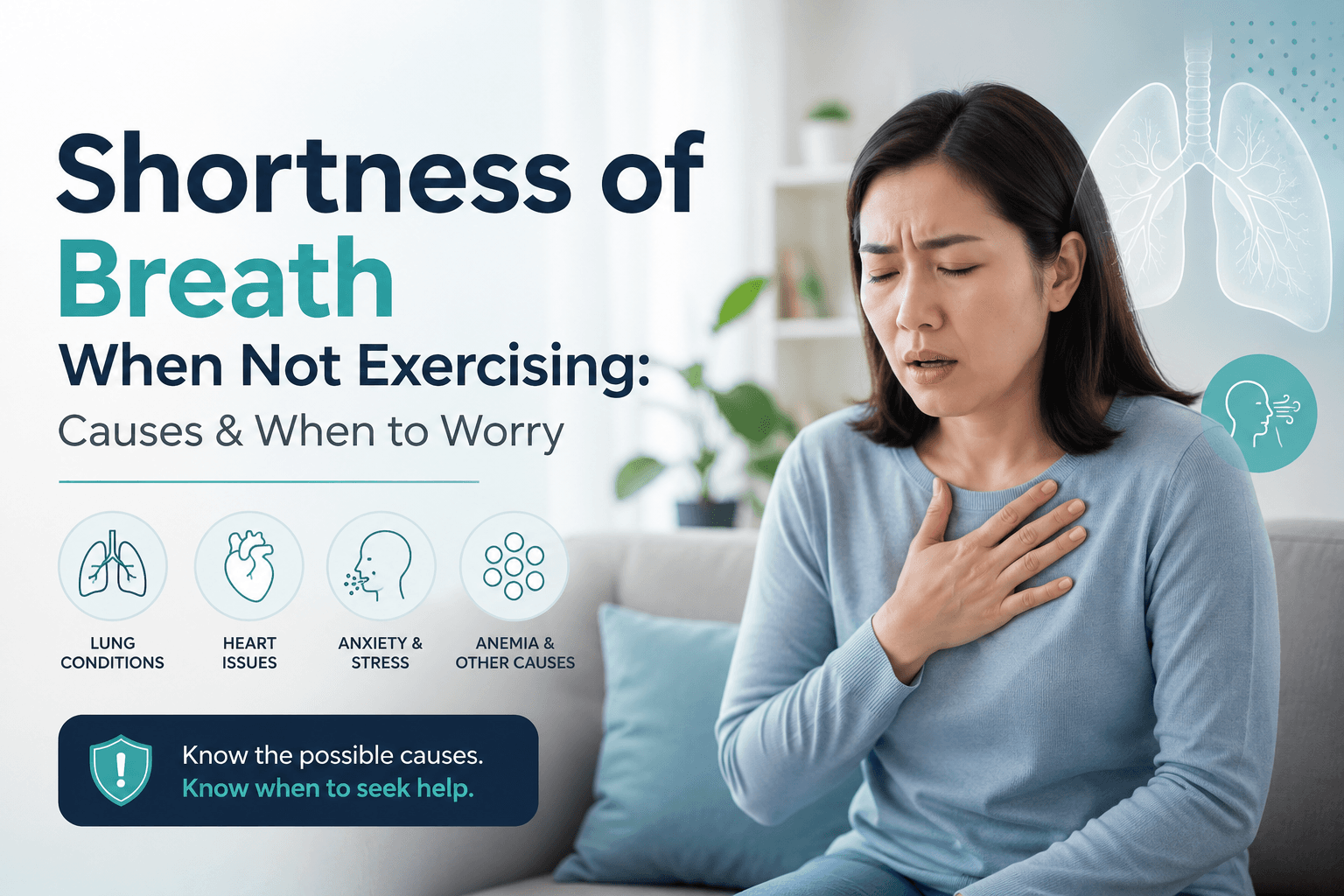
Dyspnea at rest – the sensation of breathlessness while sitting still or lying down – is a symptom, not a disease. It affects approximately 15% of adults globally, with prevalence rising to over 30% in those older than 65 (PubMed, 2019). Understanding the underlying cause is critical because the differential spans treatable conditions like anxiety to life-threatening emergencies like pulmonary embolism.
Key Takeaways
- Shortness of breath at rest has three main categories: cardiac (heart failure), pulmonary (asthma, PE, COPD), and non-cardiopulmonary (anxiety, GERD, anemia).
- Orthopnea – dyspnea that worsens when lying flat – is a classic sign of left-sided heart failure requiring urgent evaluation.
- Southeast Asian residents face unique triggers including tropical heat, seasonal haze, and endemic infections like dengue and tuberculosis.
- Use the "TRIAGE" framework below to decide if you need emergency care, same-day clinic, or can self-monitor.
- EazyCare AI's symptom checker can help you assess your breathing difficulty and guide your next step.
Introduction
You're sitting at your desk in Kuala Lumpur, the air conditioning humming, when you notice you're panting. You haven't moved. Your heart is not racing. Yet each breath feels shallow, unsatisfying. This is dyspnea at rest – and it's not normal.
Prolonged inactivity can also affect your breathing, as explained in what happens to your body when you sit all day.
Patients frequently dismiss this symptom. "I'm just stressed," they say. "It's the haze." But here's the clinical truth: dyspnea that occurs without exertion is never benign until proven otherwise. The causes range from anxiety disorders (which affect 1 in 13 people worldwide according to WHO) to pulmonary embolism, which presents with sudden rest dyspnea in up to 50% of cases and ranks as a leading cause of cardiovascular death.
Recognizing when your body is telling you something serious can save your life.
Southeast Asia adds its own layers: the annual haze from forest fires spikes PM2.5 levels, heat indices above 40°C strain the cardiovascular system, and infectious diseases like dengue and tuberculosis remain endemic. These factors mean that a symptom that might be "anxiety" in a temperate climate could actually be early heart failure in a 55-year-old Indonesian with untreated hypertension.
Check your blood pressure numbers regularly to catch hypertension early and prevent complications like heart failure.
This article will walk you through the 7 most common causes of shortness of breath when not exercising, a simple way to tell cardiac from pulmonary dyspnea, and a clear triage system for when to call 999 versus when to book a routine appointment. If you're unsure, EazyCare AI's health assistant can help you assess your symptoms in real time.
Why You Feel Breathless at Rest: The Mechanics of Dyspnea
Dyspnea is the conscious perception of increased respiratory effort. Normally, your brainstem automatically adjusts your breathing rate based on carbon dioxide levels, oxygen saturation, and pH. At rest, a healthy adult breathes 12–16 times per minute. When you develop dyspnea at rest, something is perturbing this equilibrium – either the sensors (chemoreceptors), the pump (respiratory muscles and chest wall), the gas exchanger (lungs), or the delivery system (heart).
Key physiological drivers:
- Increased work of breathing: airway obstruction (asthma, COPD) or stiff lungs (pulmonary fibrosis).
- Ventilation-perfusion mismatch: when areas of the lung get blood flow but no air (pneumonia, PE), the brain senses hypoxia.
- Reduced oxygen-carrying capacity: anemia – even a 2 g/dL drop in hemoglobin can produce dyspnea at rest.
- Metabolic load: fever, hyperthyroidism, or anxiety state increase CO2 production and drive hyperventilation.
In Southeast Asia, the combination of high ambient temperature and humidity imposes an additional thermal load. A 2021 study in Annals of the American Thoracic Society found that for every 5°C rise above 30°C, resting minute ventilation increases by 2–3 L/min – enough to unmask early cardiopulmonary disease. If you notice breathlessness specifically on hot afternoons or during haze episodes, that's a clue your body is struggling to compensate.
Dyspnea at rest is not "normal aging." While lung elasticity decreases with age, the sensation of breathlessness while sitting still at any age should be investigated. The 15% prevalence statistic means 1 in 7 adults has experienced it – but only a fraction seek care early enough.
Cardiac Causes: When Your Heart Can't Keep Up
Heart failure is the most ominous and common cardiac cause of dyspnea at rest. Globally, heart failure affects 26 million people (WHO), and dyspnea – especially at rest – is a cardinal symptom. Here's how to recognize it.
For more on related symptoms, learn about chest pain causes in Southeast Asia.
Left-Sided Heart Failure (Systolic or Diastolic)
When the left ventricle cannot pump effectively, blood backs up into the pulmonary veins, raising pressure in the lung capillaries. Fluid leaks into the interstitial space, stiffening the lungs. At rest, the sensation is like "trying to breathe through a straw." The hallmark: orthopnea – dyspnea that worsens when lying flat and improves when sitting up. This is not subtle; patients often sleep propped up on 2–3 pillows without realizing why.
Paroxysmal nocturnal dyspnea (PND) is a related symptom – you wake up gasping for air 1–2 hours after falling asleep. In a study of Malaysian patients with heart failure (2020), 67% reported PND before their diagnosis, and the median delay from first symptom to echocardiogram was 11 months.
| Factor | Cardiac Dyspnea | Pulmonary Dyspnea |
|---|---|---|
| Position worsens | Lying flat (orthopnea) | No clear positional effect (except asthma at night) |
| Onset | Gradual (days–weeks) or sudden (flash pulmonary edema) | Can be acute (PE, asthma) or chronic (COPD) |
| Associated symptoms | Swollen ankles, fatigue, weight gain, nocturnal cough | Wheezing, cough with sputum, fever, pleuritic chest pain |
| Response to sitting up | Significant improvement within 1–2 minutes | Minimal to no change |
| Common in Southeast Asia | Post-rheumatic valve disease, hypertensive heart disease, ischemic cardiomyopathy | Tuberculosis, post-TB fibrosis, chronic exposure to biomass smoke |
If you have shortness of breath at rest plus swelling in your feet or legs, unexplained weight gain of >2 kg in 3 days, or a history of high blood pressure, diabetes, or heart attack – see a doctor within 24 hours. These are the warning signs of heart failure published by the American Heart Association.
Another cardiac cause: arrhythmias. Atrial fibrillation can cause a rapid, irregular pulse that reduces cardiac output and triggers dyspnea even at rest because the heart doesn't fill properly. A simple pulse check can be revealing – if your resting heart rate is consistently above 100 bpm or below 50 bpm, evaluate further. EazyCare AI's platform for clinicians includes a risk calculator for valvular heart disease, which remains underdiagnosed in rural Southeast Asia.
Pulmonary Causes: Lungs, Airways, and Blood Clots
Pulmonary embolism (PE) is the emergency. A clot in the pulmonary artery blocks blood flow to a segment of lung, creating a ventilation-perfusion mismatch. Sudden dyspnea at rest occurs in 50% of PE cases (PubMed, 2021), often accompanied by sharp chest pain that worsens with deep breathing (pleuritic) and sometimes hemoptysis. PE is the third leading cause of cardiovascular death after heart attack and stroke. If you have dyspnea plus recent surgery, long-haul flight (common in SE Asia travel corridors), oral contraceptive use, or known DVT – go to emergency immediately.
Asthma and COPD
Classically, asthma causes dyspnea with wheezing and chest tightness, but cough-variant asthma can present solely with breathlessness at rest. In high-humidity climates like Thailand or Indonesia, mold and dust mites trigger exacerbations even without obvious exertion. COPD from biomass smoke (indoor cooking fires) is a major problem in rural Vietnam and Myanmar, causing gradually progressive rest dyspnea.
Tuberculosis and Pneumonia
Tuberculosis (TB) is endemic in the Philippines, Indonesia, and Myanmar. Dyspnea at rest in TB occurs when there is significant lung destruction, pleural effusion, or airway compression from lymphadenopathy. Pneumonia – bacterial or viral (COVID-19, influenza) – can cause rest dyspnea. In EazyCare AI's data from Malaysian users, the most common pulmonary cause of rest dyspnea during the 2023 haze season was upper respiratory infection with reactive airway disease, not asthma.
In a 2022 study from Jakarta, 18% of patients presenting with dyspnea at rest had post-TB lung disease – scarring that reduces lung capacity by 30–50%. Many were misdiagnosed as "anxiety" because they were young and had normal chest X-rays (CT scans revealed the fibrosis). Spirometry is essential.
Practical takeaway: If your dyspnea at rest comes with a dry or productive cough, fever, or history of TB contact, get a chest X-ray and sputum test. Don't assume it's "just a cough" in a region where TB is 10x more common than in Europe.
Anxiety and Panic Disorders: The Brain-Lung Connection
Anxiety disorders affect 1 in 13 people globally (WHO, 2022), and dyspnea is a core symptom of panic attacks. But here's the diagnostic challenge: patients with undiagnosed asthma or cardiac dyspnea often develop secondary anxiety, creating a chicken-and-egg dilemma. How do you tell them apart?
Just as with dyspnea, headache causes beyond stress warrant careful evaluation.
| Feature | Anxiety Dyspnea | Cardiac Dyspnea |
|---|---|---|
| Onset | Sudden, often situational (crowds, stress) | Gradual or after lying flat |
| Duration | Minutes to hours; comes and goes | Persistent or worsening |
| Associated sensations | Dizziness, tingling, depersonalization | Leg swelling, fatigue |
| Response to distraction | Improves | No change |
| Saturation | Normal (≥97%) | Often ≤95% |
"Anxiety can cause real physical shortness of breath, but it rarely kills you. Heart failure and PE do. I have seen patients die because both they and their clinicians assumed 'it's just anxiety' without checking oxygen saturation or doing a simple echo."
— Dr. Amin, Senior Cardiologist, National Heart Institute Kuala Lumpur
Practical test: If you can take a slow, deep breath to a count of 5 and hold it for 10 seconds without discomfort, your lungs are likely fine. If you cannot because of "air hunger" or sharp pain, the cause is likely organic. Also measure your oxygen saturation with a pulse oximeter – if it's below 95% at rest, it's not anxiety.
Other Common Causes: GERD, Anemia, Thyroid, and Medications
Gastroesophageal reflux disease (GERD) can cause dyspnea at rest through two mechanisms: aspiration of acid into the airways causing bronchospasm, or a vagal reflex that narrows the bronchi. A 2020 study found that 30% of patients with GERD reported shortness of breath when sitting still, especially after meals. If your breathlessness is worse after eating or when lying down, try a 2-week trial of a proton pump inhibitor (under medical supervision).
Anemia reduces oxygen delivery to tissues. The body compensates by increasing heart rate and respiratory rate. In iron-deficiency anemia – common among menstruating women and in populations with poor diet diversity in SE Asia – hemoglobin can drop to <8 g/dL before dyspnea at rest appears. A simple blood test can rule this out.
To interpret these results yourself, learn how to read blood test results in plain English.
Hyperthyroidism increases metabolic rate and oxygen consumption, causing dyspnea at rest. In Thailand, Graves' disease is prevalent. Look for weight loss, heat intolerance, tremor, and palpitations.
Medications: Beta-blockers can worsen airway resistance in patients with undiagnosed asthma. Chemotherapy drugs (bleomycin, cyclophosphamide) cause pulmonary fibrosis. Even some traditional remedies, common in SE Asia, have been linked to pulmonary toxicity – for example, kratom and certain herbal "cleanses."
Check your oxygen saturation at rest. It should be ≥95%. If it's lower, proceed to step 2.
Lie flat for 2 minutes. If your breathlessness worsens significantly, this is orthopnea – suspect cardiac cause.
Check your pulse rate and regularity. If irregular or persistently >100 bpm, see a doctor.
When Environment Matters: Heat, Haze, and Infections in Southeast Asia
The region's tropical climate amplifies all causes of dyspnea. Heat stress – when wet-bulb globe temperature exceeds 32°C – can cause hyperventilation even in healthy individuals. For a person with borderline heart failure, this can tip them into rest dyspnea. The 2023 heatwave in Thailand saw a 22% increase in emergency visits for dyspnea according to the Thai Ministry of Public Health.
Air pollution (haze): PM2.5 levels in Chiang Mai, Kuala Lumpur, and Jakarta regularly exceed 100 µg/m³ during haze season (WHO guideline: 15 µg/m³). Acute exposure triggers bronchoconstriction, oxidative stress, and alveolar inflammation. A 2021 study in Environmental Health Perspectives linked each 10 µg/m³ increase in PM2.5 to a 4.5% increase in emergency department visits for dyspnea at rest.
Infections: Dengue hemorrhagic fever can cause pleural effusion and respiratory distress. Scrub typhus, leptospirosis, and melioidosis are under-recognized causes of pneumonia and dyspnea. In Vietnam and Cambodia, post-COVID-19 lung function decline is emerging as a common cause of rest dyspnea, especially in previously healthy young adults.
For parents, our Fever in Children Guide explains when to worry and what to do.
| Trigger | Mechanism | At-risk group | Action |
|---|---|---|---|
| Heat index >35°C | Cutaneous vasodilation, increased cardiac output | Elderly, hypertensives | Stay in air conditioning; use fan; monitor weight |
| PM2.5 >50 µg/m³ | Airway inflammation, oxidative stress | Asthmatics, COPD, children | Wear N95 mask; use inhaler as needed |
| Dengue season | Plasma leakage → pleural effusion | All ages | Check for fever, rash; get early NS1 test |
| Post-TB or post-COVID | Lung fibrosis, reduced DLCO | Recovered patients | Pulmonary rehabilitation; follow-up spirometry |
Frequently Asked Questions
What causes shortness of breath when sitting still?
The most common causes include anxiety (hyperventilation syndrome), heart failure (especially left-sided with orthopnea), and pulmonary conditions like asthma, COPD, or pulmonary embolism. Anemia and GERD are also frequent culprits. In 15% of cases, no organic cause is found after basic testing (PubMed). If your oxygen saturation is normal and you can lie flat without worsening, anxiety is more likely. If it's persistently low or orthopnea is present, cardiac causes must be ruled out. Use EazyCare AI's symptom checker to document your pattern – it helps clinicians decide which tests to order first.
Can anxiety cause shortness of breath at rest?
Yes. Panic disorder and generalized anxiety can trigger dyspnea at rest through hyperventilation, chest muscle tension, and sympathetic overdrive. The sensation is often described as "air hunger" or "can't take a deep enough breath." Unlike cardiac dyspnea, it usually comes in waves, is relieved by distraction or breathing exercises, and does not cause a drop in oxygen saturation. However, because anxiety can mimic early heart failure, it is essential to rule out organic causes first – especially if this is a new symptom. Never assume "it's just anxiety" without a clinical evaluation. EazyCare AI's chat can guide you through a self-assessment to differentiate the two.
Is shortness of breath at rest a sign of heart problems?
It can be. Dyspnea at rest is one of the most common symptoms of heart failure, affecting 26 million people worldwide (WHO). It may also occur with arrhythmias, valvular disease, or pericardial effusion. The classic pattern: breathlessness that worsens when lying flat (orthopnea) and may wake you at night (paroxysmal nocturnal dyspnea). If you also have swollen ankles, fatigue, or a history of high blood pressure, the probability is high. A chest X-ray, ECG, and NT-proBNP blood test can differentiate cardiac from non-cardiac causes. If in doubt, EazyCare AI's symptom checker can help you assess your risk.
What does shortness of breath when lying down indicate?
This is called orthopnea and is a classic sign of left-sided heart failure. When you lie flat, gravity redistributes blood from the legs and abdomen into the chest. A failing left heart cannot pump this extra volume forward, causing fluid to accumulate in the lungs (pulmonary congestion). The result: breathlessness within minutes of reclining. Other causes include severe asthma (dynamic hyperinflation worsens when supine), COPD, and diaphragmatic paralysis. A simple test: sleep with 2 or 3 pillows. If you need that many to feel comfortable, see a cardiologist soon. EazyCare AI can help you log your sleeping position and symptoms to show your doctor.
How do I know if my shortness of breath is serious?
Use the mnemonic CRITICAL: C – chest pain or pressure; R – rapid onset (minutes to hours); I – inability to speak full sentences; T – thigh/calf swelling or pain (suggesting DVT); I – infection symptoms (fever, cough); C – cold, clammy skin; A – altered mental status; L – low oxygen saturation (<95%). If any of these are present, go to the ER. If none, but the dyspnea persists for more than 3 days or interferes with daily activities, book a clinic visit within the week. EazyCare AI's triage algorithm can help you make this decision in real time.
Can acid reflux cause shortness of breath at rest?
Yes. GERD can cause dyspnea at rest through two mechanisms: 1) Micro-aspiration of acid into the airways triggers bronchospasm (especially in patients with asthma). 2) The vagus nerve reflex causes airway narrowing when stomach acid irritates the lower esophagus. This pattern is often worse after meals or when lying down. A trial of a proton pump inhibitor (like omeprazole) for 2–4 weeks often resolves the breathlessness if GERD is the cause. However, do not self-treat without first ruling out cardiac or pulmonary causes. EazyCare AI's symptom checker can help you decide if acid reflux is likely based on your other symptoms.
What is the difference between cardiac and pulmonary dyspnea?
Cardiac dyspnea is typically positional (worse lying down, better sitting up) and comes with leg swelling, fatigue, and a history of heart disease. Pulmonary dyspnea is more often activity-related or triggered by allergens, and comes with cough, wheezing, fever, or chest pain that worsens with deep breathing. In practice, the two overlap – many heart failure patients also have COPD. The best way to differentiate is with an echocardiogram and pulmonary function tests. A chest X-ray can show signs of both. EazyCare AI's platform includes a differential diagnosis tool that highlights the likelihood of each based on your symptom cluster.
When should I go to the ER for shortness of breath?
Go to the ER immediately if you have any of these: sudden onset of severe breathlessness (can't finish a sentence), chest pain or pressure, fainting or near-fainting, blue lips or fingertips, oxygen saturation below 90%, or if your breathing is so labored you cannot speak. Also go if you have a history of blood clots, recent surgery, or long travel, and the dyspnea started suddenly. Call 999 (emergency number in Malaysia, Indonesia, Thailand) or have someone drive you. Do not wait to see if it passes – pulmonary embolism and heart failure can deteriorate within minutes. If you are unsure, use EazyCare AI's emergency triage to help decide while you call for help.
When to See a Doctor
Seek emergency care (call 999 or go to ER) if you have ANY of these red flags:
- Sudden, severe breathlessness that makes it impossible to speak full sentences.
- Chest pain, pressure, or tightness (especially if radiating to arm/jaw).
- Fainting, near-fainting, or dizziness with the dyspnea.
- Blue lips, fingertips, or tongue (cyanosis).
- Oxygen saturation <90%.
- Swelling, pain, or redness in one leg (suggests DVT and possible PE).
- Productive cough with blood (hemoptysis).
Book a same-day or next-day clinic appointment if: Your dyspnea is new, persistent (lasting more than 24 hours), comes with swelling of the feet, or forces you to sleep propped up on pillows. Even if you feel fine otherwise, a basic workup (chest X-ray, ECG, blood count, oxygen saturation) can identify the problem early. Do not ignore chronic dyspnea at rest. The earlier the cause is treated, the better the outcome.
If you are unsure, EazyCare AI can help you decide whether you need urgent care based on validated clinical criteria.
Conclusion
Shortness of breath when not exercising is never a symptom to dismiss. Here are the three key takeaways:
- Always rule out cardiac and pulmonary causes first. Heart failure and pulmonary embolism are treatable but time-sensitive. Use the orthopnea test and pulse oximeter as bedside screens.
- Consider regional triggers. Heat, haze, dengue, and TB are common in Southeast Asia and can present solely as dyspnea at rest. A thorough history including recent travel, exposure, and occupation is essential.
- Don't assume it's anxiety until proven otherwise. Anxiety is common, but it is also a diagnosis of exclusion. A simple echocardiogram, oxygen saturation check, and spirometry can distinguish the two.
Your health is not a guessing game. If you have experienced unexplained shortness of breath at rest, see a healthcare provider within the next 48 hours. For guidance on what to say to your doctor or to check your symptoms right now, chat with EazyCare AI's health assistant. It's free, private, and designed for Southeast Asian patients. Learn more at eazycare.ai.