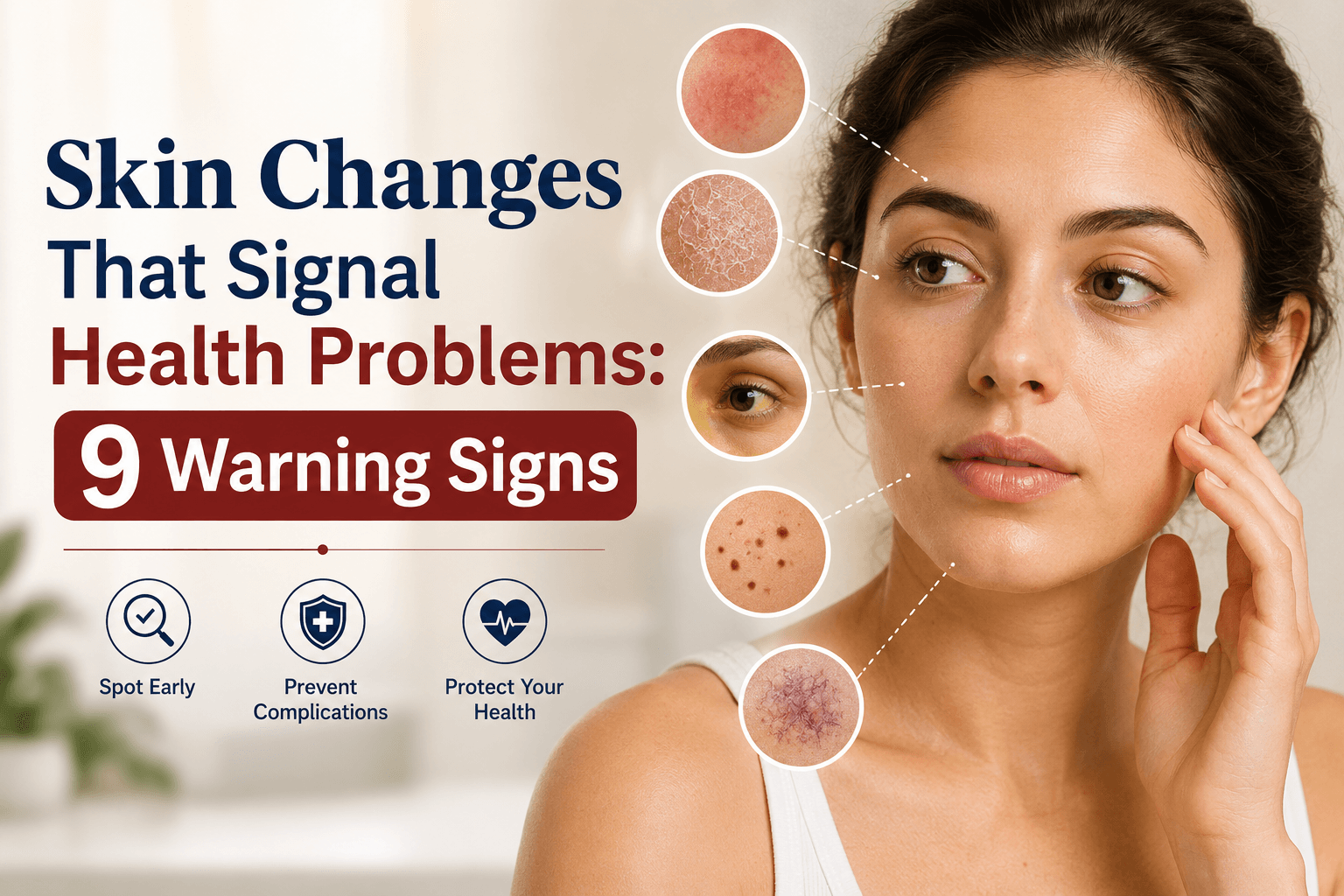
Skin changes that signal health problems are visible clues from your body that something inside isn't functioning as it should. About 33% of people with type 2 diabetes develop at least one skin manifestation — often before they are diagnosed. In Southeast Asia, where hepatitis B affects 1 in 20 adults and non-communicable diseases are rising rapidly, recognising these signs early can prevent years of silent organ damage.
Key Takeaways
- Dark, velvety patches on the neck or armpits (acanthosis nigricans) are strongly linked to insulin resistance and diabetes.
- Yellow skin or eyes in adults almost always signals liver disease — hepatitis B is the leading cause in Southeast Asia.
- Chronic itching without a rash affects about 40% of chronic kidney disease patients and often appears before dialysis.
- A malar (butterfly) rash is an early sign of lupus in 10–30% of patients — a condition that disproportionately affects Asian women.
- Any sore that doesn’t heal after 3 weeks needs a biopsy — skin cancer is the 5th most common cancer in Malaysia.
A 52-year-old teacher in Kuala Lumpur noticed a dark patch on the back of her neck. She assumed it was dirt that wouldn't wash off. Six months later, her fasting blood glucose was 11.2 mmol/L. She had type 2 diabetes, and the skin had been trying to warn her for half a year.
Stories like this are common in Southeast Asian clinics. Skin changes that signal health problems are frequently dismissed as cosmetic, fungal, or simply “normal” ageing. But your skin is the largest organ of the human body — a metabolically active, immunologically sentient barrier. When your liver, kidneys, pancreas, or immune system begin to fail, the skin often speaks before laboratory tests can.
This article is written for busy professionals, concerned parents, and anyone in Southeast Asia who has noticed a persistent change in their skin and wants to know if it matters. We will cover the 9 most clinically significant skin changes, the internal conditions they point to, and — critically — when to escalate to a doctor. For personalised triage, EazyCare AI's symptom checker can help you assess your skin concerns and decide on next steps.
Why Your Skin Is Your Body's Early Warning System
The skin is not just a passive covering. It is richly supplied with blood vessels, nerve endings, and immune cells. When systemic disease alters blood chemistry — such as high glucose, bilirubin accumulation, or uraemic toxins — the skin changes colour, texture, or sensation. For example, acanthosis nigricans (dark, thickened skin) is driven by insulin spilling into the epidermis and stimulating keratinocyte growth. Jaundice occurs when the liver cannot clear bilirubin, and it binds to elastic fibres in the skin.
In Southeast Asia, three factors make skin changes especially important: 1) High prevalence of hepatitis B — the WHO estimates 257 million people globally live with chronic hepatitis B, with the highest burden in Asia. 2) Rapidly rising rates of type 2 diabetes — Malaysia has one of the highest diabetes prevalence rates in the region at 19% of adults. 3) Tropical climate — melasma and fungal infections are common, but they can obscure more serious underlying conditions.
Prolonged sitting can also worsen these skin changes by impairing circulation and metabolic health.
Emerging AI chronic disease management tools can help track these conditions through skin imaging and data analysis.
Skin changes that signal health problems fall into three categories: colour changes (yellow, dark, pale), texture changes (thickening, dryness, velvety patches), and sensation changes (itching, burning, pain). Any change lasting more than 2–4 weeks without an obvious cause (e.g., sunburn, insect bite) warrants a medical evaluation.
Practical takeaway: Look at your skin weekly in good lighting. Pay attention to areas not exposed to sun — armpits, groin, inner elbows — because many systemic changes appear there first.
Diabetes Skin Signs: Dark Patches, Skin Tags, and Dermopathy
Diabetes affects nearly every organ, and the skin is often the first to show it. According to the CDC, 33% of people with type 2 diabetes have at least one cutaneous manifestation. The most specific is acanthosis nigricans (AN): a dark, velvety hyperpigmentation on the neck, axillae, or groin. In a Malaysian study of 500 patients with AN, 78% had insulin resistance or prediabetes. It is not dirt. It is a signal from your metabolism.
For those managing diabetes, digital coaching for chronic disease management can help track blood sugar and skin changes.
Diabetic Dermopathy
These are light-brown, scaly patches on the shins — often mistaken for age spots or injury scars. They occur in up to 40% of diabetic patients and correlate with neuropathy and retinopathy. The patches are harmless by themselves but serve as a marker of long-standing poor glycaemic control.
Skin Tags and Diabetes
Multiple eruptive skin tags, especially on the eyelids, neck, and underarms, are associated with insulin resistance. A 2019 meta-analysis found that patients with >30 skin tags had a 3.5-fold higher risk of type 2 diabetes. Not every skin tag is dangerous, but if you have a dozen or more, check your blood sugar.
If you develop a blister, infection, or ulcer on your foot that is slow to heal, this can indicate diabetic neuropathy and peripheral artery disease. Foot ulcers precede 85% of diabetes-related amputations (WHO). Inspect your feet daily. EazyCare AI's symptom checker can help you decide if a foot sore needs same-day attention.
"In our clinic, we have diagnosed type 2 diabetes in patients who came in only for a dark neck or unexplained skin tags. The skin often gives us a 6- to 12-month head start on the diagnosis."
AI-driven tools are now helping close care gaps in healthcare by detecting such early skin signs earlier.
AI-driven care gap identification can help ensure such early warnings are not missed.
If you notice signs your body needs more sleep, such as persistent fatigue or dark circles, it may also affect your skin's health.
— Dr. Priya Rajan, endocrinologist, Kuala Lumpur Hospital
Yellow Skin, Itchy Skin, and Spider Veins: Liver Warning Signs
When the liver is damaged — by hepatitis, alcohol, or non-alcoholic fatty liver disease — bilirubin builds up in the blood and deposits in the skin, causing jaundice. Jaundice in adults is never normal. In newborns it's common (60%), but in adults it is a key sign of liver disease. Hepatitis B, which the WHO estimates affects 257 million people globally, is a leading cause in Asia, where transmission often occurs perinatally in Southeast Asia.
For parents, understanding fever in children guide can help distinguish harmless viral fevers from serious infections.
Other Liver-Related Skin Changes
- Spider angiomas – small red spots with radiating vessels, typically on the upper chest and face. Caused by elevated oestrogen levels due to liver failure. More than 3 to 5 spider naevi suggest chronic liver disease.
- Palmar erythema – reddening of the palms, especially the thenar and hypothenar eminences. Seen in cirrhosis and chronic hepatitis.
- Generalised pruritus (itching) – often occurs without a rash, due to bile salt accumulation in the skin. This can precede jaundice by months.
Practical takeaway: If you notice your skin or eyes turning yellow, or you develop persistent itching without a visible cause, get liver function tests and a hepatitis B screening. In Malaysia and Indonesia, hepatitis B surface antigen testing is widely available for under RM 20. EazyCare AI can also help you find nearby clinics for screening.
Chronic Itching — The Most Overlooked Kidney Warning
Uraemic pruritus — persistent, intense itching without a primary rash — affects about 40% of patients with chronic kidney disease (CKD), often when the glomerular filtration rate (GFR) drops below 30 mL/min. The mechanism is poorly understood but involves the accumulation of uraemic toxins, altered calcium–phosphorus metabolism, and skin dryness.
In Southeast Asia, where diabetes and hypertension are the leading causes of CKD (accounting for 60–70% of cases), itchy skin can be an early clue that the kidneys are failing. Many patients attribute the itch to heat, mosquito bites, or eczema, and do not seek care until they have advanced disease.
Uraemic frost is a rare but dramatic sign: white, powdery urea crystals on the skin. It appears only in end-stage renal disease. Fortunately, today’s patients are usually on dialysis before this develops. But generalised itching can appear at much earlier stages.
Practical takeaway: If you have diabetes, hypertension, or a family history of kidney disease, and you develop persistent full-body itching that is not relieved by moisturiser or antihistamines, have your serum creatinine and estimated GFR checked.
Regular monitoring of your blood pressure numbers is key to preventing kidney disease.
Dry Skin, Hair Loss, and Puffy Face: When Your Thyroid Is Off
Thyroid hormones regulate skin cell turnover and sebaceous gland activity. Hypothyroidism (underactive thyroid) presents with coarse, dry, scaling skin, a puffy face, thinning of the outer third of the eyebrows, and diffuse hair loss. Conversely, hyperthyroidism (overactive thyroid) causes warm, moist, thin skin and sometimes a reddish, raised rash known as pretibial myxedema on the shins.
Both conditions are common in Southeast Asia, particularly in women aged 30–60. Iodine deficiency has largely been controlled by salt iodisation, but autoimmune thyroiditis (Hashimoto’s) is rising. If your skin is persistently dry despite humid weather and a good moisturiser, consider a thyroid function test.
| Feature | Hypothyroidism | Hyperthyroidism |
|---|---|---|
| Skin texture | Dry, rough, scaly | Warm, moist, thin |
| Hair changes | Diffuse thinning, eyebrow loss | Fine hair, possible hair loss |
| Facial appearance | Puffy, oedematous (myxedema) | Staring gaze, lid lag |
| Other signs | Cold intolerance, constipation | Heat intolerance, tremor, palpitations |
Butterfly Rash, Purpura, and Mouth Ulcers: Skin Clues to Lupus and More
Autoimmune diseases often announce themselves through the skin long before internal organs are involved. Systemic lupus erythematosus (SLE) is classically associated with a malar rash — a butterfly-shaped redness across the cheeks and nose — that spares the nasolabial folds. Approximately 10–30% of SLE patients present with this rash as their initial symptom, according to a 2018 review in PubMed.
Lupus is of particular concern in Southeast Asia, where women of Asian descent have a higher prevalence and more severe disease compared with Caucasian populations. Other lupus skin signs include photosensitive rashes (worsened by sun), discoid (coin-shaped) patches, and oral ulcers. Purpura — small purple spots from bleeding under the skin — can indicate vasculitis or platelet destruction.
If you develop a widespread, red, target-shaped rash after a fever or cough, consider erythema multiforme or even meningococcal septicaemia (a medical emergency). The rash does not blanch when pressed. Take a photo and call a doctor immediately.
Practical takeaway: Asian women with persistent facial redness that worsens in sunlight, or unexplained mouth ulcers lasting >2 weeks, should be evaluated for SLE. Antinuclear antibody (ANA) testing is widely available.
Skin Changes That Could Be Cancer: Basal Cell, Squamous Cell, and Melanoma
Skin cancer is not just a fair-skinned problem. In Malaysia, it is the 5th most common cancer, and the Ministry of Health notes that basal cell carcinoma is the most frequent type, often misdiagnosed as benign skin changes. The sun exposure in tropical latitudes means that all Southeast Asians, regardless of skin tone, are at risk — especially those with outdoor occupations or a history of severe sunburn.
Persistent headaches can also signal underlying health issues, so learn about headache causes beyond stress.
The ABCDE Rule for Moles and Lesions
- Asymmetry — one half doesn't match the other
- Border — irregular, scalloped, or poorly defined edges
- Color — multiple colours or uneven distribution
- Diameter — >6 mm (about the size of a pencil eraser)
- Evolving — changing in size, shape, or colour
Non-melanoma skin cancers (basal and squamous cell) often present as a pearly bump or a crusty, non-healing sore. They rarely spread but can destroy local tissue. Melanoma, while rarer in darker skin, can occur on the palms, soles, and under nails (acral lentiginous melanoma) — and is often diagnosed late because it is not suspected. Any wound that does not heal within 3 weeks should be biopsied.
Learn more about skin cancer screening in Malaysia at MOH Skin Cancer Awareness.
Frequently Asked Questions About Skin Changes That Signal Health Problems
What skin changes indicate liver problems?
Jaundice (yellowing of the skin and eyes) is the hallmark. Other signs include spider angiomas, palmar erythema, and generalised itching without a rash. In Southeast Asia, hepatitis B is the most common cause, but fatty liver disease (linked to obesity and diabetes) is rising. If you notice any of these skin changes, get a liver function test and a hepatitis B surface antigen screen. EazyCare AI's symptom checker can help you assess your risk.
Can a skin rash be a sign of diabetes?
Yes — and it is often one of the earliest signs. Acanthosis nigricans (dark, velvety patches on the neck and armpits) is the most specific. Other diabetes-related rashes include diabetic dermopathy (light-brown patches on shins), eruptive xanthomas (yellow bumps on the buttocks or elbows), and recurrent fungal or bacterial infections (e.g., vaginal thrush, boils). If you have any of these, check your fasting blood glucose and HbA1c.
What do dark patches on skin mean?
Dark patches can mean different things depending on location and texture. Acanthosis nigricans (velvety, dark skin on neck/armpits) almost always indicates insulin resistance or type 2 diabetes. Melasma (brown patches on cheeks and forehead) is driven by sun exposure and hormonal changes — common in pregnant women and those on oral contraceptives, but not generally a sign of internal disease. Patches that are rough, crusty, or growing should be evaluated for actinic keratosis or skin cancer.
Is itching a sign of internal disease?
Yes, especially if the itch is persistent, generalised, and not accompanied by a rash. Common internal causes include chronic kidney disease (affects about 40% of patients), cholestatic liver disease, thyroid disorders, and iron-deficiency anaemia. In rare cases, itching can be a paraneoplastic sign of lymphoma. See a doctor if antihistamines and moisturisers do not relieve the itch within 2 weeks.
What skin changes are associated with thyroid problems?
Hypothyroidism causes dry, coarse, flaky skin, puffy face, thinning of the outer eyebrows, and diffuse hair loss. Hyperthyroidism causes warm, moist, thin skin, fine hair, and sometimes a reddish, thickened rash on the shins (pretibial myxedema). Simple blood tests (TSH, free T4) can confirm the diagnosis. Many patients are misdiagnosed with eczema or ageing skin before the thyroid condition is found.
Can skin discoloration be a sign of cancer?
Certain skin discolourations can indicate internal malignancy. Jaundice (yellow) may point to liver or pancreatic cancer. Grey–blue skin can signal advanced melanoma or methaemoglobinaemia. Localised hyperpigmentation in the mouth or on the palms can be due to Addison's disease (adrenal insufficiency) or, rarely, paraneoplastic syndromes. A new or changing mole with irregular pigment should be assessed using the ABCDE rule and possibly biopsied.
Why do skin changes occur with kidney disease?
As kidneys fail, uraemic toxins accumulate in the blood and deposit in the skin, causing generalised itching. The skin may also become dry, scaly, and pale due to anaemia. Calcium–phosphate imbalance can lead to calciphylaxis (painful, hardened patches) in late-stage disease. Uraemic frost (white urea crystals on the skin) is now rare because most patients are on dialysis before it appears. Early detection of kidney disease is critical — urine and blood tests can catch it.
What does yellow skin (jaundice) indicate?
In adults, yellow skin and eyes mean there is too much bilirubin in the blood — a sign of liver disease, bile duct obstruction, or haemolysis (red blood cell breakdown). In Southeast Asia, the most common cause is hepatitis B infection, which can be chronic and silent for decades. Other causes include cirrhosis, gallstones, and alcoholic liver disease. Jaundice always requires immediate medical evaluation — do not wait to see if it resolves on its own. EazyCare AI can help you determine if you need same-day care.
Are skin tags a sign of diabetes?
Not all skin tags are linked to diabetes, but multiple eruptive skin tags — especially on the eyelids, neck, and axillae — are associated with insulin resistance. A person with more than 30 skin tags has roughly a 3.5-fold increased risk of type 2 diabetes. If you have many skin tags, especially with dark patches or central obesity, get your blood sugar checked. Skin tags themselves are benign and can be removed for cosmetic reasons, but they are a sign to look deeper.
What skin symptoms are linked to autoimmune disorders?
Malar (butterfly) rash and photosensitive rashes are classic for systemic lupus erythematosus. Discoid lupus causes coin-shaped, scaly patches that can scar. Scleroderma causes tight, shiny skin with difficulty opening the mouth. Dermatomyositis presents with a violet rash on the eyelids (heliotrope) and red bumps over the knuckles (Gottron's papules). Psoriasis (red, scaly plaques) is an autoimmune inflammatory condition that can be associated with psoriatic arthritis. Many autoimmune skin conditions can be managed effectively if caught early.
When to See a Doctor for Skin Changes
Not every mole or dry patch is a crisis. But the following skin changes that signal health problems require prompt evaluation — do not wait more than a week:
- Yellowing of the skin or eyes (jaundice)
- A dark, velvety patch on the neck or armpit that was not there before
- A sore that does not heal after 3 weeks
- A new mole or spot that is >6 mm, asymmetrical, or changing shape/colour
- Severe, generalised itching without a rash that lasts more than 2 weeks and does not respond to antihistamines
- A widespread rash that appears after a fever, especially if it does not blanch when pressed
- Sudden onset of many skin tags (dozens) — especially if accompanied by increased thirst, urination, or unexplained weight loss
- Facial redness in a butterfly pattern — especially if it worsens with sun exposure
Call 999 or go to the nearest emergency department if you have a rapidly spreading rash, difficulty breathing, swelling of the lips or tongue, or a rash that looks like small red or purple spots that do not blanch (meningococcal septicaemia).
If you are unsure, EazyCare AI's symptom checker can help you quickly decide whether you need urgent care, a same-day GP appointment, or a routine dermatology referral.
Conclusion
Your skin speaks the language of your internal organs. Learning to interpret the common skin changes that signal health problems can give you an edge against diabetes, liver disease, kidney failure, autoimmune disorders, and even cancer. Here are the three most critical points to remember:
- Dark, velvety patches = check insulin resistance. This is probably the most actionable sign in Southeast Asia, where diabetes prevalence is soaring.
- Persistent itching with no rash = check your kidneys and liver. Especially if you have risk factors like hypertension, diabetes, or hepatitis B exposure.
- Any mole or sore that changes or doesn't heal = get a biopsy. Skin cancer is the 5th most common cancer in Malaysia, and early detection saves lives.
You don't need to become a dermatologist to benefit from this knowledge. Start looking at your skin weekly. Ask a partner or family member to check your back. And when in doubt, seek evidence-based guidance. Learn more at eazycare.ai or chat with our AI health assistant for a personalised symptom assessment. Your skin is trying to tell you something — listen to it.