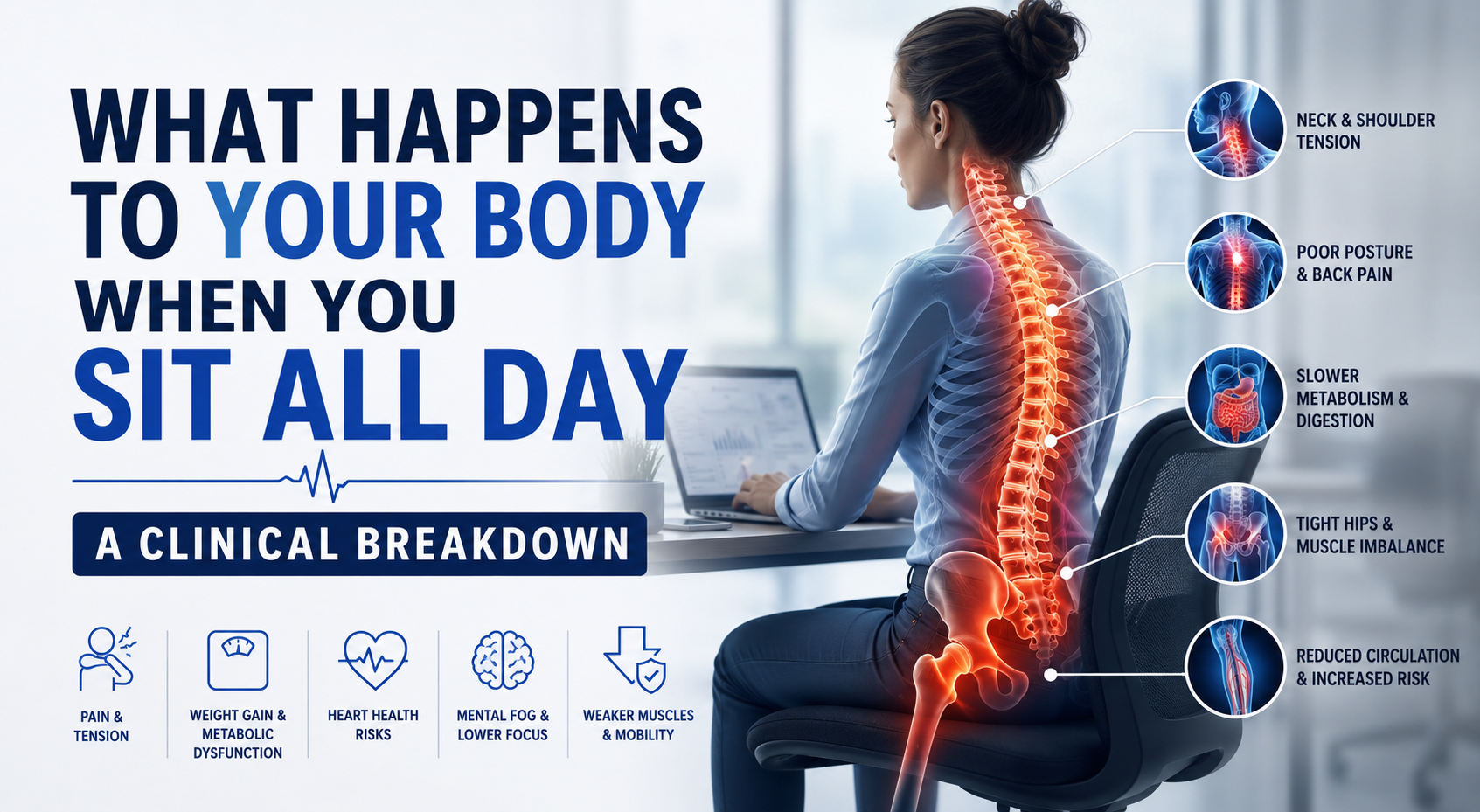
Prolonged sitting—defined as six or more hours per day—triggers a cascade of metabolic, musculoskeletal, and cardiovascular failures. Within two hours of uninterrupted sitting, leg blood flow can drop by 50%, glucose clearance falls, and spinal discs begin to swell asymmetrically. The global health burden is staggering: prolonged sitting accounts for roughly 3.8% of all-cause deaths worldwide (WHO, 2022). For Southeast Asian professionals who combine office work with long commutes, the risk is compounded by high humidity that discourages movement and cultural norms that equate long hours with dedication.
Key Takeaways
- Sitting ≥6 hours/day raises all-cause mortality risk by 40% and cardiovascular disease risk by 125%.
- Muscles of the lower body (glutes, hamstrings, hip flexors) weaken and lose mass within weeks of sustained sitting.
- Metabolic rate drops 20-30% after one hour of sitting, impairing fat breakdown and sugar regulation.
- Interrupting sitting every 30 minutes with just 2 minutes of walking improves glycaemic control and leg circulation.
- Southeast Asian workers face unique barriers: lack of standing desks, long sedentary commutes, and cultural stigma against breaks.
Why Sitting All Day Is a Silent Health Emergency
Most people associate ill health with smoking, poor diet, or lack of exercise—but few recognise that the act of sitting itself is a physiological insult. The term "sitting disease" was coined to describe the cluster of metabolic, cardiovascular, and musculoskeletal abnormalities that arise from prolonged sedentary time. Unlike acute injuries, sitting damage accumulates silently over months and years.
In Southeast Asia, the situation is particularly urgent. According to the Ministry of Health Malaysia National Health and Morbidity Survey, 60% of Malaysian adults do not meet recommended physical activity levels, with long sitting hours a major contributor. Many office workers spend 8–10 hours at a desk, then another 1–2 hours commuting in cars or buses—often without even a short walk to the bus stop because of urban heat and humidity. The local working culture often discourages taking breaks, equating them with laziness.
This article will dissect exactly what happens to your body when you sit all day—from your spine to your metabolism—and offer evidence-based interventions that work in a real-world Southeast Asian office. You don't need a standing desk or a gym membership. You need to understand the mechanisms and use simple micro-movements.
EazyCare AI's health assistant can help you track your sedentary time and suggest personalised activity breaks based on your schedule.
How Prolonged Sitting Destroys Your Spine and Weakens Muscles
The Spine Under Compression
When you sit, the load on your lumbar intervertebral discs increases by 40% compared to standing, according to biomechanics research. The discs lose hydration and become stiffer. After 30 minutes of continuous sitting, the disc nucleus pulposus begins to shift posteriorly, pressing against the annulus fibrosus. Over months, this repeated pressure can lead to disc bulging or herniation. The Harvard Medical School notes that the combination of poor posture and prolonged sitting is the strongest modifiable risk factor for chronic low back pain.
In a typical Southeast Asian office, chairs often lack adequate lumbar support. Many workers sit on stools or cheap office chairs with flat seats. The result: slouched posture, forward head carriage, and tight chest muscles—a pattern called "upper crossed syndrome." This leads to tension headaches, neck stiffness, and eventually cervical disc degeneration.
Learn about other headache causes beyond stress that may be affecting your daily life.
If you experience persistent neck stiffness, consider virtual physical therapy for musculoskeletal pain as a convenient solution.
Within 30 minutes of sitting, spinal discs begin to swell unevenly due to increased hydrostatic pressure. This reduces the disc's ability to absorb shock. Standing or walking every 30 minutes rehydrates discs and restores symmetrical load distribution.
Muscle Atrophy and Activation Failure
The gluteus maximus—the largest muscle in the body—essentially "forgets" how to fire when you sit for extended periods. This is called gluteal amnesia. The hamstrings shorten, and the hip flexors become chronically tight. The lower back muscles (erector spinae) are forced to overwork, leading to fatigue and strain. A study in the Journal of Physical Therapy Science found that 8 hours of seated work per day reduced gluteal muscle thickness by 5% over a 12-week period.
Practical takeaway: Even if you exercise after work, you cannot fully undo a full day of sitting. The ideal approach is to interrupt sitting every 30 minutes with 2 minutes of walking. In a typical KL office, this could mean walking to the pantry or around the floor. If stepping away is not possible, try chair-based glute squeezes (squeeze glutes for 5 seconds, release—repeat 10 times every hour).
| Muscle Group | Effect of Prolonged Sitting | Time to Change |
|---|---|---|
| Gluteus maximus | Atrophy, reduced activation | ~2 weeks |
| Hip flexors | Shortening, tightness | ~1 week |
| Hamstrings | Tightness, reduced flexibility | ~1 week |
| Lower back erectors | Overactivation, fatigue | Daily |
| Core stabilisers | Weakening, loss of endurance | ~3 weeks |
Sitting All Day and Heart Disease: The 125% Risk Increase
The cardiovascular consequences of sitting are as severe as they are underappreciated. The American Heart Association published a meta-analysis showing that sitting more than 6 hours per day increases the risk of cardiovascular disease by 125% compared to those who sit less than 3 hours. That means a person sitting 8 hours daily has more than double the chance of developing heart disease—even after adjusting for exercise habits.
Venous Stasis and Deep Vein Thrombosis
When you sit, your leg muscles remain inactive. The calf muscle pump—which normally pushes blood back toward the heart—stops working. Blood pools in the veins of the lower legs, increasing the risk of deep vein thrombosis (DVT). A landmark study in PubMed reported that 2 hours of uninterrupted sitting reduces leg blood flow by up to 50%. This effect is even more pronounced in hot, humid environments because peripheral vasodilation further slows venous return. In tropical Singapore and Kuala Lumpur, workers returning from long commutes in sweltering traffic may already have compromised leg circulation before they even reach the office.
Sitting for 4+ hours without moving can triple your risk of DVT. Symptoms include unilateral leg swelling, pain, warmth, and redness. If you experience sudden shortness of breath or chest pain after a long period of sitting, seek emergency care—this could be a pulmonary embolism.
Blood Pressure and Arterial Stiffness
Prolonged sitting causes an immediate increase in peripheral vascular resistance. Blood vessels in the legs constrict, raising systolic blood pressure by an average of 5–10 mmHg. Over years, this repeated elevation accelerates arterial stiffening, which is a precursor to stroke and heart failure. Two minutes of walking every hour can reverse this acute blood pressure spike, according to a 2020 study in Medicine & Science in Sports & Exercise.
If you experience sudden chest pain, understanding common chest pain causes can help you decide when to seek emergency care.
If you feel exhausted despite sitting all day, consider exploring why am I so tired all the time medical reasons.
For context, understanding blood pressure numbers helps you interpret these changes.
Practical takeaway: If you have a desk job, set a timer for 30 minutes. Every chime, stand up and do one of the following: walk to the toilet, march in place for 2 minutes, or do 10 calf raises. This single habit reduces the cardiovascular risk of sitting by about 30%.
Sitting 8 Hours a Day Effects on Metabolism and Weight Gain
The metabolic consequences of sitting are immediate and measurable. Within one hour of sitting, the activity of an enzyme called lipoprotein lipase (LPL)—which breaks down fat from the blood—drops by 90% in the leg muscles. The muscles are not contracting, so they do not pull fat from circulation. Blood sugar clearance also slows because glucose transporters (GLUT4) are less responsive without muscle contraction. A study comparing 8 hours of sitting versus 8 hours of standing/stepping found that the sedentary group had 40% higher blood sugar levels after a meal.
In addition to breaking up sitting, being aware of signs your body needs more sleep can support metabolic function.
This metabolic shutdown is the reason why sitting all day is strongly linked to weight gain and insulin resistance. The CDC notes that adults who sit for 8+ hours daily and do no physical activity have a risk of dying similar to that of smoking or obesity. For Southeast Asians—who have a higher prevalence of type 2 diabetes at lower BMIs (the "Asian" metabolic phenotype)—this is especially dangerous.
Step 1: Stand up at least once every 30 minutes. Use a water bottle that requires frequent refills. This forces a short walking break.
Step 2: At lunch, walk for 10 minutes before or after eating. This lowers post-meal blood sugar spikes by 20%.
Step 3: Use a step counter on your phone. Aim for at least 7,000 steps per day—even if you sit most of the day, breaking up sitting time matters more than total steps.
"Lipoprotein lipase activity in leg muscles drops 90% within one hour of sitting. This single enzyme is responsible for clearing triglycerides from the bloodstream. Without it, fat accumulates in muscle tissue and the liver."
— Hamilton et al., Journal of Applied Physiology, 2008
The "Active Commuter" Solution
For many Southeast Asians, the commute itself can be turned into a micro-activity session. Instead of taking a Grab all the way to the office, get off the bus or train one stop early and walk the remaining 10 minutes. In cities like Jakarta, Manila, and Bangkok, the heat is a deterrent—but carrying a small towel and a water bottle makes it manageable. Even 5 minutes of walking (about 400 steps) counts as a break.
Does Sitting Increase Your Risk of Cancer?
Yes—the evidence is mounting. A large meta-analysis of over 4 million participants found that prolonged sedentary time is associated with a 13% increased risk of colon cancer, 10% for endometrial cancer, and 8% for lung cancer. The mechanisms are multifactorial: worsened insulin resistance (which promotes cell growth), increased inflammation markers (C-reactive protein), and reduced immune surveillance. The World Health Organization recommends limiting recreational sitting as a "probable" cancer prevention strategy.
For women, prolonged sitting also raises the risk of ovarian and breast cancer by 10–15%. The World Cancer Research Fund states that sedentary behaviour independently contributes to cancer risk, above and beyond the effect of physical inactivity. In other words, even if you exercise 30 minutes daily, sitting for the remaining 15.5 waking hours still puts you at higher risk.
Practical takeaway: Break sitting time every 30 minutes—this is more protective than one long evening workout. The best intervention is frequency of movement, not duration.
Frequently Asked Questions
What happens if you sit for 8 hours a day?
Your risk of all-cause mortality increases by 40% compared to sitting less than 3 hours per day (PubMed, 2012). Your leg circulation drops by up to 50% after 2 hours, raising clot risk. Your glutes and hamstrings begin to atrophy within weeks. Blood sugar control worsens by 40% after a meal. Your spine discs swell and become prone to herniation. Over years, this pattern elevates the risk of heart disease, diabetes, obesity, and certain cancers. EazyCare AI's symptom checker can help you assess whether your back pain or leg swelling requires medical attention.
How many hours of sitting is unhealthy?
Any sitting exceeding 6 hours per day is considered "prolonged" and carries significantly higher health risks. However, even 4–6 hours increases risks modestly. The key is total sitting time and uninterrupted sitting bouts. Breaking sitting every 30 minutes can reduce risk regardless of total hours. The optimal target is to keep total daily sitting under 6 hours and never sit for more than 60 minutes without standing.
Can sitting all day cause back pain?
Yes. Sitting increases lumbar disc pressure by 40%, tightens hip flexors, overworks the lower back muscles, and weakens the glutes. All four factors independently contribute to mechanical low back pain. A large study of 14,000 adults found that those who sat more than 7 hours per day were 3.5 times more likely to report chronic back pain. Simple interventions like using a rolled towel for lumbar support and standing every 30 minutes have been shown to reduce pain by 30% within 4 weeks.
Does sitting all day increase risk of heart disease?
Yes—by 125% for those who sit over 6 hours per day compared to under 3 hours (American Heart Association, 2018). The mechanisms include reduced leg blood flow, increased blood pressure, arterial stiffness, and higher inflammation markers. Importantly, regular moderate exercise does not fully negate this risk. The only way to reduce the cardiovascular impact of sitting is to break up sitting time with frequent (every 30 minutes) light activity.
What muscles weaken from prolonged sitting?
The primary muscles that weaken are the gluteus maximus (hip extension), the hamstrings (but they tighten), the core stabilisers (transversus abdominis, multifidus), and the quadratus lumborum (lateral stabiliser). The hip flexors and anterior chest muscles become tight and overactive, creating an imbalance that perpetuates a slumped posture. Over time, this imbalance can lead to lower crossed syndrome, with anterior pelvic tilt and low back strain.
How does sitting affect your metabolism?
Sitting reduces the activity of lipoprotein lipase by 90% in the lower body muscles. This means fat remains in the bloodstream longer, contributing to high triglycerides. Glucose clearance also drops by 40% after a meal. Additionally, overall energy expenditure decreases—you burn about 0.7–1.0 calories per minute at rest, compared to 1.5–2.0 calories per minute standing and 3–5 calories per minute walking. Over a day, sitting vs. standing can burn 200–400 fewer calories.
Can sitting too much cause blood clots?
Yes. Prolonged sitting, especially for 4+ hours without moving, significantly increases the risk of deep vein thrombosis (DVT). Blood flow in the legs can drop by 50% after 2 hours (PubMed, 2010). Risk factors include dehydration, hot environments, and varicose veins—all common in tropical Southeast Asia. To prevent clots, stand and walk every 1–2 hours, drink water, and do ankle pumps (point and flex feet repeatedly) while sitting.
What are the best exercises to do after sitting all day?
The most effective exercises target the weakened muscles: glute bridges (15 reps), hip flexor stretches (30 seconds each side), cat-cow stretches (10 reps), and standing side bends (10 per side). For immediate circulation, march in place for 2 minutes. For long-term resilience, add walking (brisk 20-minute daily walk) and resistance training (squats, lunges) 2–3 times per week. A 5-minute after-work stretch routine can reverse acute stiffness caused by 8 hours of sitting.
Does sitting increase your risk of cancer?
Yes—sedentary behaviour is associated with an 13% increased risk of colon cancer, 10% for endometrial, and 8% for lung cancer (World Cancer Research Fund). While the absolute increase is modest, the mechanism involves chronic inflammation, insulin resistance, and reduced immune surveillance. Breaking sitting time reduces these biomarkers. EazyCare AI can help you track your daily movement and provide reminders to stand up.
Is standing better than sitting all day?
Yes, standing is metabolically better—it burns about 20% more calories per hour, improves leg circulation, and reduces disc pressure. However, standing all day also has drawbacks: it can cause varicose veins, joint strain, and low back pain if posture is poor. The optimal pattern is to alternate between sitting and standing every 30–60 minutes, with brief walking breaks. If standing desks are not available, a high stool or counter can serve a similar purpose.
When to See a Doctor
While the risks of sitting are mostly chronic, certain acute symptoms require immediate medical attention:
For fever in children, refer to our fever in children guide for when to worry.
Learn which acute signs warrant attention by reading about the 7 symptoms you should never ignore.
- Unilateral leg swelling, redness, or warmth after a long day of sitting—possible DVT.
- Sudden shortness of breath or chest pain—possible pulmonary embolism.
- Severe, shooting low back pain that radiates below the knee—possible lumbar disc herniation with nerve root compression.
- Numbness or weakness in the legs or feet—possible spinal stenosis or nerve compression.
- Unexplained weight loss or night sweats—though not directly related to sitting, these can signal underlying pathology that may be exacerbated by immobility.
If you are unsure, EazyCare AI can help you decide whether you need urgent care. For any of the above red flags, call 999 or go to the nearest emergency department immediately.
Conclusion
- Sitting ≥6 hours/day increases your risk of death by 40%, cardiovascular disease by 125%, and cancer by 8–13%. These risks are comparable to smoking or obesity.
- Your body deteriorates mechanistically: discs swell, muscles atrophy, circulation sludges, enzymes shut down, and insulin resistance rises—all measurable within hours.
- Interrupting sitting every 30 minutes with 2 minutes of light activity is the single most powerful intervention. It does not require gym equipment, money, or special tools. It requires only awareness and a timer.
For Southeast Asian professionals, the combination of long commutes, tropical heat, and cultural pressure to maintain desk hours makes this a systemic challenge. But small changes—a walking commute, a water bottle that forces refills, a stool to alternate sitting with standing, a timer on your phone—can cut your risk by half. Your body responds not to your exercise class at 7 PM but to every hour you spend in that chair today.
For those managing chronic conditions, connected devices for chronic disease management in Southeast Asia can help track activity and health metrics.
Learn more at eazycare.ai or chat with our AI health assistant to get a personalised plan for reducing sedentary time.