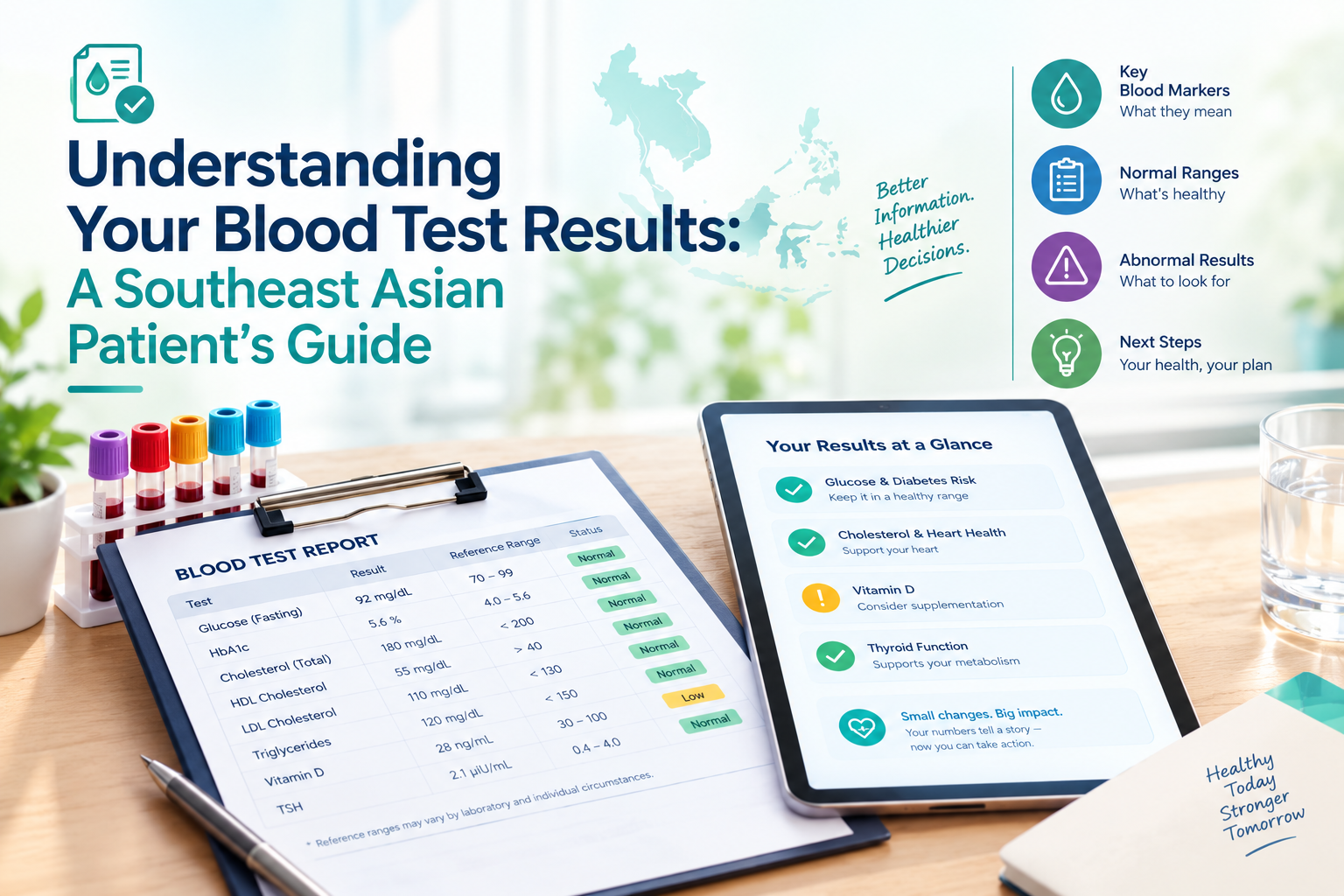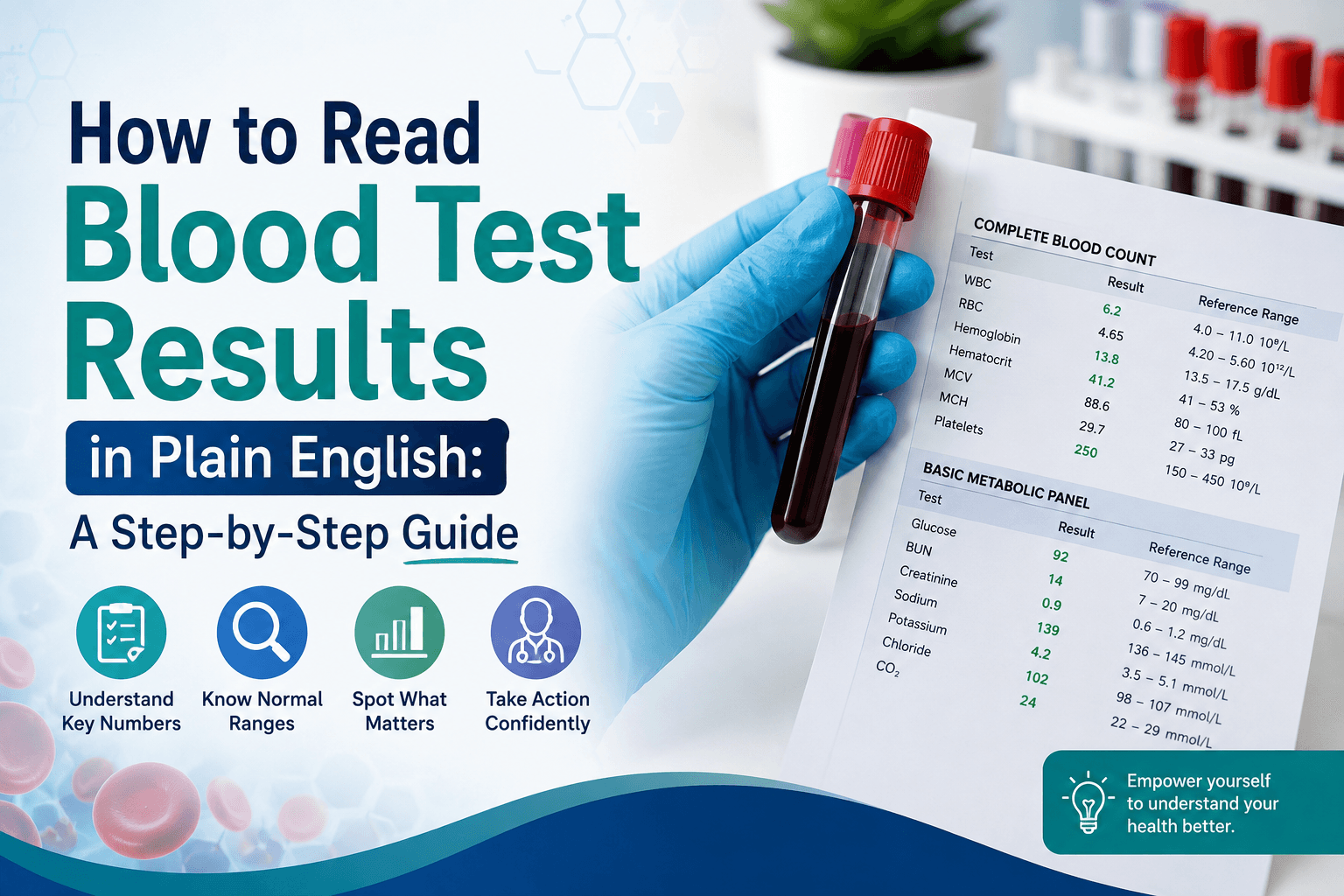
A blood test result is a set of numbers that measure specific substances in your blood. Each number is compared to a reference range based on healthy populations. In Southeast Asia, about 1 in 3 adults have at least one abnormal blood test result annually, but most are normal variations or borderline values that require follow-up rather than alarm.
Key Takeaways
- Reference ranges are not absolute – they vary by lab, age, sex, and ethnicity. The "normal" for a Malay woman in her 30s may differ from a Chinese man in his 60s.
- Read the "Flag" column first – most lab reports show H (high) or L (low) next to abnormal results. Even then, many flagged values are clinically insignificant.
- Understand the big three panels – Complete Blood Count (CBC) for overall health, Lipid Panel for heart risk, and Glucose/LFTs for metabolic and liver function. These cover 80% of routine screening.
- Don't self-diagnose from a single number – trends over time and clinical context matter more than one out-of-range value. Always discuss with your doctor.
You've just received your blood test results. The page is filled with abbreviations, numbers, and a column titled "Reference Range." Unless you're a clinician, it looks like a foreign language. This guide will teach you how to read blood test results in plain English – starting with the layout, then each common test panel, and finally what to do when something is flagged. We'll use reference ranges from Malaysian and Singaporean laboratories, because your local values matter more than Western averages.
Understanding Your Blood Test Report Format
Most lab reports in Malaysia and Singapore follow a standard four-column format:
| Test Name | Result | Reference Range | Flag |
|---|---|---|---|
| Haemoglobin (Hb) | 13.5 g/dL | 12.0–16.0 | — |
| White Blood Cell Count (WBC) | 11.2 x 10^9/L | 4.0–10.0 | H |
| Fasting Glucose | 5.8 mmol/L | 3.9–6.0 | — |
The Result column is your measured value. The Reference Range is the interval considered "normal" for 95% of a healthy population. The Flag column uses H (high) or L (low) to indicate results outside that range. But here's the critical point: reference ranges are not hard boundaries. They are statistical cut-offs. A value that falls just 0.1 mmol/L above the upper limit does not automatically mean disease. According to a 2019 PubMed study on Southeast Asian populations, reference ranges for haemoglobin and MCV differ significantly between ethnic groups – Malay individuals often have lower mean haemoglobin than Chinese individuals of the same age and sex. Always consider your personal baseline and clinical context.
Lab ranges in Malaysia and Singapore may differ from US or UK ranges. For example, the upper limit for fasting glucose is often set at 6.0 mmol/L in Singapore, while some US labs use 5.6 mmol/L. Always use the range printed on your report – it matches the reagents and population used by that lab.
Now let's break down the three most common test panels. If you have a comprehensive health screening, you'll likely see these sections.
How to Read a Complete Blood Count (CBC) Result
The CBC is the most ordered blood test worldwide. It measures three main cell types: red blood cells (oxygen carriers), white blood cells (immune defenders), and platelets (clotting agents). The CBC also includes derived indices like MCV, MCH, and RDW that help diagnose anaemia types.
Red Blood Cell Indices
Your report will show haemoglobin (Hb), haematocrit (Hct), red blood cell count (RBC), and the indices:
- MCV (Mean Corpuscular Volume) – measures the average size of your red blood cells. Low MCV suggests iron deficiency or thalassaemia trait (common in Malaysia). High MCV can indicate vitamin B12 or folate deficiency.
- MCH (Mean Corpuscular Haemoglobin) – the average amount of haemoglobin per cell. Low MCH often accompanies low MCV.
- RDW (Red Cell Distribution Width) – a measure of variation in red cell size. A high RDW indicates mixed cell sizes, often seen in early iron deficiency when new small cells appear alongside normal ones.
Practical takeaway: If your Hb is low (e.g., 11.0 g/dL for an adult male) and MCV is also low, iron deficiency is the most likely cause in Southeast Asia. However, thalassaemia carrier status is extremely common – up to 5% of Malaysians carry the trait. A normal RDW with low MCV suggests thalassaemia rather than iron deficiency. Your doctor will order ferritin and haemoglobin electrophoresis to confirm.
Do not start iron supplements based solely on low MCV. In thalassaemia carriers, extra iron can accumulate and cause organ damage. Always confirm with a ferritin test first.
White Blood Cell (WBC) and Differential
A normal WBC range is 4.0–10.0 x 10^9/L. A mildly elevated WBC (e.g., 11.5) is common after exercise, stress, or minor infection. A high WBC with a left shift (increased neutrophils) suggests bacterial infection. Low WBC (below 3.5) may be seen in viral infections, autoimmune conditions, or certain medications. The differential (neutrophils, lymphocytes, monocytes, eosinophils, basophils) provides more clues. For example, eosinophil elevation is often due to parasitic infections or allergies – both common in tropical Southeast Asia.
For support managing stress, explore our guide on digital mental health in Southeast Asia.
If you're constantly exhausted despite normal blood work, explore the medical reasons for fatigue.
Platelets
Normal range: 150–450 x 10^9/L. Low platelets (thrombocytopenia) can be caused by dengue – a major concern in Malaysia and Singapore. In dengue, platelet counts drop rapidly and can fall below 20 x 10^9/L, requiring urgent admission. If your platelet count is below 100 and you have fever, headache, or body aches, seek medical attention immediately.
For ongoing health monitoring, AI chronic disease management can help track trends in your blood test results over time.
If you experience chest pain alongside low platelets or other abnormal results, learn about common chest pain causes in Southeast Asia.
If your child has a fever, our fever in children guide explains when to worry and what to do.
To understand how blood pressure relates to your overall health, start by understanding blood pressure numbers.
For a deeper dive into CBC interpretation with case examples, visit EazyCare AI's health assistant to run your numbers through a clinical decision support tool.
Understanding Your Cholesterol and Lipid Profile Results
The lipid panel measures fats in your blood and is a cornerstone of cardiovascular risk assessment. In Malaysia, the Ministry of Health reports that 4 in 10 adults have high cholesterol, yet many do not know it. The standard panel includes:
| Test | Desirable Range (mmol/L) | What It Means |
|---|---|---|
| Total Cholesterol | < 5.2 | Sum of all cholesterol. High suggests increased risk. |
| LDL Cholesterol | < 2.6 (optimal) / < 3.4 (acceptable) | "Bad" cholesterol – deposits in arteries. |
| HDL Cholesterol | > 1.0 (men) / > 1.3 (women) | "Good" cholesterol – helps remove LDL from blood. |
| Triglycerides | < 1.7 | Fat storage form. High levels linked to diet and diabetes. |
What does high LDL cholesterol mean in a blood test? LDL above 2.6 mmol/L is considered elevated, but the target depends on your overall cardiovascular risk. If you have diabetes, previous heart attack, or high blood pressure, your doctor may aim for LDL below 1.8 mmol/L. A single high LDL reading does not require immediate panic – but it does warrant a conversation about diet, exercise, and possibly statin therapy. EazyCare AI's lipid risk calculator can help you estimate your 10-year heart risk based on local guidelines.
"The most dangerous misconception about cholesterol is that borderline high LDL is not a problem. But in Southeast Asia, where stroke rates are rising, every point of LDL above 2.6 increases your risk by 20%."
— Dr. R. Sivakumar, Consultant Cardiologist, Penang (adapted from MOH Clinical Practice Guidelines, 2023)
Triglycerides are particularly sensitive to diet. A high triglyceride level (e.g., 3.5 mmol/L) often drops significantly after a few days of low-carb, low-sugar eating. Fasting for 10–12 hours before the blood draw is essential; non-fasting triglyceride levels can be falsely elevated by 2–3 times.
How to Read Blood Test Results for Diabetes
Globally, about 422 million people have diabetes, and the number is rising rapidly in Southeast Asia (WHO, 2023). Two tests are commonly used: fasting blood glucose (FBG) and HbA1c (glycated haemoglobin).
Fasting Blood Glucose (FBG)
Normal: 3.9–6.0 mmol/L (Singapore/Malaysia). A fasting glucose of 6.1–6.9 mmol/L is classified as impaired fasting glucose (pre-diabetes). A level of 7.0 mmol/L or higher on two separate occasions confirms diabetes. Important: A single borderline reading (e.g., 6.2 mmol/L) does not mean you have diabetes. It may be due to stress, illness, or insufficient fasting. The oral glucose tolerance test (OGTT) is more definitive for borderline cases.
For a healthy adult, a fasting glucose below 5.6 mmol/L is considered optimal. Levels between 5.6 and 6.0 are considered normal but close to the upper limit. If you are over 40, overweight, or have a family history of diabetes, a fasting glucose of 5.6 or above should prompt an HbA1c test. EazyCare AI's symptom checker can help you assess your risk for diabetes.
HbA1c
HbA1c reflects average blood glucose over the past 2–3 months. Normal: below 5.7% (39 mmol/mol). Pre-diabetes: 5.7–6.4% (39–47 mmol/mol). Diabetes: 6.5% (48 mmol/mol) or higher. The advantage of HbA1c is that it does not require fasting. However, it can be misleading in people with anaemia, haemoglobin variants (e.g., thalassaemia), or chronic kidney disease – all common in Southeast Asia. Always interpret HbA1c alongside FBG.
Practical takeaway: If your FBG is 5.8 mmol/L and your HbA1c is 5.4%, you are likely still in the normal range. But if your FBG is 6.2 and HbA1c is 6.0%, you have pre-diabetes and should start lifestyle modifications. The EazyCare AI diabetes risk tool can provide personalised prevention tips based on your numbers.
How to Interpret Liver Function Test Results
Liver function tests (LFTs) include enzymes (ALT, AST, ALP, GGT) and proteins (albumin, total protein). They are often ordered as part of routine health screening or when monitoring medication side effects. Here are the key values for Southeast Asian populations (based on PubMed reference ranges):
| Test | Normal Range (U/L) | What Elevation Suggests |
|---|---|---|
| ALT (Alanine Aminotransferase) | 10–40 | Liver cell damage (e.g., hepatitis, fatty liver) |
| AST (Aspartate Aminotransferase) | 10–35 | Liver or muscle damage; ratio >2 suggests alcoholic liver disease |
| ALP (Alkaline Phosphatase) | 44–147 | Bile duct obstruction or bone disease |
| GGT (Gamma-Glutamyl Transferase) | 5–40 | Alcohol use, bile duct issues, or medication effect |
Mildly elevated ALT (e.g., 45–60 U/L) is extremely common in Southeast Asia due to the high prevalence of non-alcoholic fatty liver disease (NAFLD) – affecting up to 30% of Malaysians. Other causes include hepatitis B carrier state (common in the region), medication use (e.g., paracetamol, statins), and herbal supplements. If your ALT is persistently elevated, your doctor will order hepatitis serology, ultrasound, and possibly a FibroScan to assess liver stiffness.
Practical takeaway: A single elevated ALT does not mean liver failure. In fact, many people with NAFLD have normal liver function. The key is to look at trends: if ALT rises over 3–6 months, further investigation is needed. If it remains stable, repeat testing in 6 months may be sufficient.
Frequently Asked Questions
What do the numbers on a blood test mean?
Each number measures a specific substance in your blood – for example, haemoglobin measures oxygen-carrying capacity; LDL measures cholesterol in low-density lipoproteins. The number is compared to a reference range (the "normal" interval). If your result falls outside that range, it may be flagged as high (H) or low (L). However, a flag does not automatically mean disease. Many factors like age, sex, ethnicity, time of day, and recent food intake affect results. Always discuss flagged values with your doctor. EazyCare AI's symptom checker can help you decide whether you need urgent care.
How do I read a complete blood count (CBC) result?
Start by looking at the three main components: haemoglobin (Hb) for anaemia, white blood cell count (WBC) for infection or inflammation, and platelet count for bleeding risk. Then check the red cell indices: MCV (cell size), MCH (haemoglobin per cell), and RDW (variation in size). For example, a low Hb with low MCV suggests iron deficiency or thalassaemia. A high WBC with high neutrophils suggests bacterial infection. In Southeast Asia, always consider dengue if platelets are low and WBC is low. EazyCare AI's CBC interpret can help you assess your numbers.
What is a normal range for blood tests?
Normal ranges vary by lab, but common ranges for adults in Malaysia/Singapore: haemoglobin 12–16 g/dL (women), 13–17 g/dL (men); fasting glucose 3.9–6.0 mmol/L; total cholesterol <5.2 mmol/L; ALT 10–40 U/L. However, these ranges are based on population averages. A result slightly outside the range may be normal for you. For example, a haemoglobin of 11.8 g/dL in a woman may be her baseline if she has thalassaemia minor. The reference range is a guide, not a verdict.
How to understand blood test abbreviations like MCV, MCH, RDW?
MCV = Mean Corpuscular Volume (average red blood cell size). Normal 80–100 fL. MCH = Mean Corpuscular Haemoglobin (haemoglobin amount per cell). Normal 27–32 pg. RDW = Red Cell Distribution Width (variation in cell size). Normal 11.5–14.5%. Low MCV + low MCH = microcytic anaemia (iron deficiency or thalassaemia). High RDW suggests a mix of cell sizes, often seen in early iron deficiency. Normal MCV with low MCH can also occur in thalassaemia. These indices help your doctor narrow down the cause of anaemia.
What does high LDL cholesterol mean in a blood test?
LDL (low-density lipoprotein) is often called "bad" cholesterol. High LDL means more cholesterol is being deposited in your artery walls, increasing your risk of heart attack and stroke. In Malaysia, desirable LDL is below 2.6 mmol/L. If you have diabetes or heart disease, the target is lower (<1.8 mmol/L). A single high LDL reading (e.g., 3.5) does not require emergency treatment, but it does warrant lifestyle changes and possibly medication. EazyCare AI's lipid risk calculator can help you estimate your 10-year heart risk based on local guidelines.
How to read blood test results for diabetes?
Two key tests: fasting blood glucose (FBG) and HbA1c. FBG normal <6.0 mmol/L; pre-diabetes 6.1–6.9; diabetes ≥7.0 on two occasions. HbA1c normal <5.7%; pre-diabetes 5.7–6.4%; diabetes ≥6.5%. If your FBG is borderline (e.g., 6.2), an HbA1c can confirm whether you have sustained high blood sugar. In Southeast Asia, HbA1c can be falsely low in people with thalassaemia or anaemia, so interpret with caution. If you are unsure, EazyCare AI's diabetes screening tool can help you assess your risk.
What is a normal fasting blood glucose level?
Normal fasting glucose is 3.9–6.0 mmol/L (Singapore/Malaysia). Levels between 5.6–6.0 are considered high-normal and should prompt monitoring, especially if you have risk factors like family history or obesity. A fasting glucose of 6.1–6.9 is impaired fasting glucose (pre-diabetes). A level of 7.0 or higher on two separate occasions indicates diabetes. Always ensure you have fasted for at least 8 hours (no food, only water) for an accurate reading.
What does low hemoglobin indicate?
Low haemoglobin (anaemia) means your blood carries less oxygen. Common causes in Southeast Asia: iron deficiency (due to heavy menstruation or poor diet), thalassaemia trait (genetic, common in the region), chronic disease, or vitamin B12/folate deficiency. Symptoms include fatigue, pale skin, shortness of breath, and dizziness. If your Hb is low, look at MCV: low MCV suggests iron deficiency or thalassaemia; normal MCV suggests chronic disease or B12 deficiency. Ferritin, iron studies, and haemoglobin electrophoresis can pinpoint the cause. EazyCare AI's symptom checker can help you assess your concern.
How to interpret liver function test (LFT) results?
LFTs measure liver enzymes (ALT, AST, ALP, GGT) and proteins (albumin). Elevated ALT suggests liver cell damage (e.g., fatty liver, hepatitis). Elevated AST with ALT can indicate alcoholic liver disease if AST:ALT ratio >2. Elevated ALP suggests bile duct obstruction or bone disease. Elevated GGT often indicates alcohol use or bile duct issues. Mildly elevated ALT (40–60 U/L) is very common in Malaysia due to fatty liver. Persistent elevation requires further testing. If your LFTs are abnormal, do not panic – many are transient and improve with diet and exercise. EazyCare AI can help you decide whether you need to see a doctor.
What should I do if my blood test result is abnormal?
First, don't panic. Many abnormal results are borderline or transient. Check the flag column: H (high) or L (low). Look at how far the result is from the reference range – a small deviation (e.g., ALT 42 vs upper limit 40) is often insignificant. Consider factors that could affect the result: did you eat or drink before the test? Were you stressed or sick? Have you taken any medications or supplements? If the result is markedly abnormal (e.g., haemoglobin 8.0, glucose 12.0, platelets 50), seek medical attention promptly. For borderline results, discuss with your doctor. EazyCare AI can help you decide whether you need urgent care.
When to See a Doctor
While most blood test abnormalities are not emergencies, certain results require immediate medical attention:
- Haemoglobin below 7.0 g/dL – severe anaemia, risk of heart failure
- Platelet count below 20 x 10^9/L – risk of spontaneous bleeding, especially if accompanied by fever (dengue)
- White blood cell count below 1.0 x 10^9/L – severe neutropenia, risk of life-threatening infection
- Fasting glucose above 16.0 mmol/L – possible diabetic ketoacidosis, especially if you have symptoms like nausea, vomiting, deep breathing
- Potassium level below 2.5 or above 6.5 mmol/L – dangerous heart rhythm disturbances
- Liver enzymes above 5 times the upper limit of normal – acute hepatitis or drug-induced liver injury
Call 999 or go to the nearest emergency department if you have any of these results along with symptoms like chest pain, shortness of breath, confusion, or bleeding that won't stop. If you are unsure about your results, EazyCare AI can help you decide whether you need urgent care.
Conclusion
Reading your blood test results in plain English comes down to three steps:
- Understand the layout – identify the test name, your result, the reference range, and any flags. Note that reference ranges are not absolute and vary by ethnicity and lab.
- Interpret the common panels – CBC (red cells, white cells, platelets), lipid panel (LDL, HDL, triglycerides), glucose (FBG, HbA1c), and LFTs (ALT, AST, ALP, GGT). Each number tells a story about your health.
- Take action appropriately – borderline results often require lifestyle changes, not medication. Markedly abnormal results need prompt medical attention. Never start treatment based on a single lab value without consulting a doctor.
Blood tests are powerful tools, but they are only one piece of your health picture. Use this guide to become an informed patient who can engage in meaningful discussions with your doctor. For personalised guidance, chat with EazyCare AI's health assistant – it's like having a clinician explain your results in plain English, 24/7.