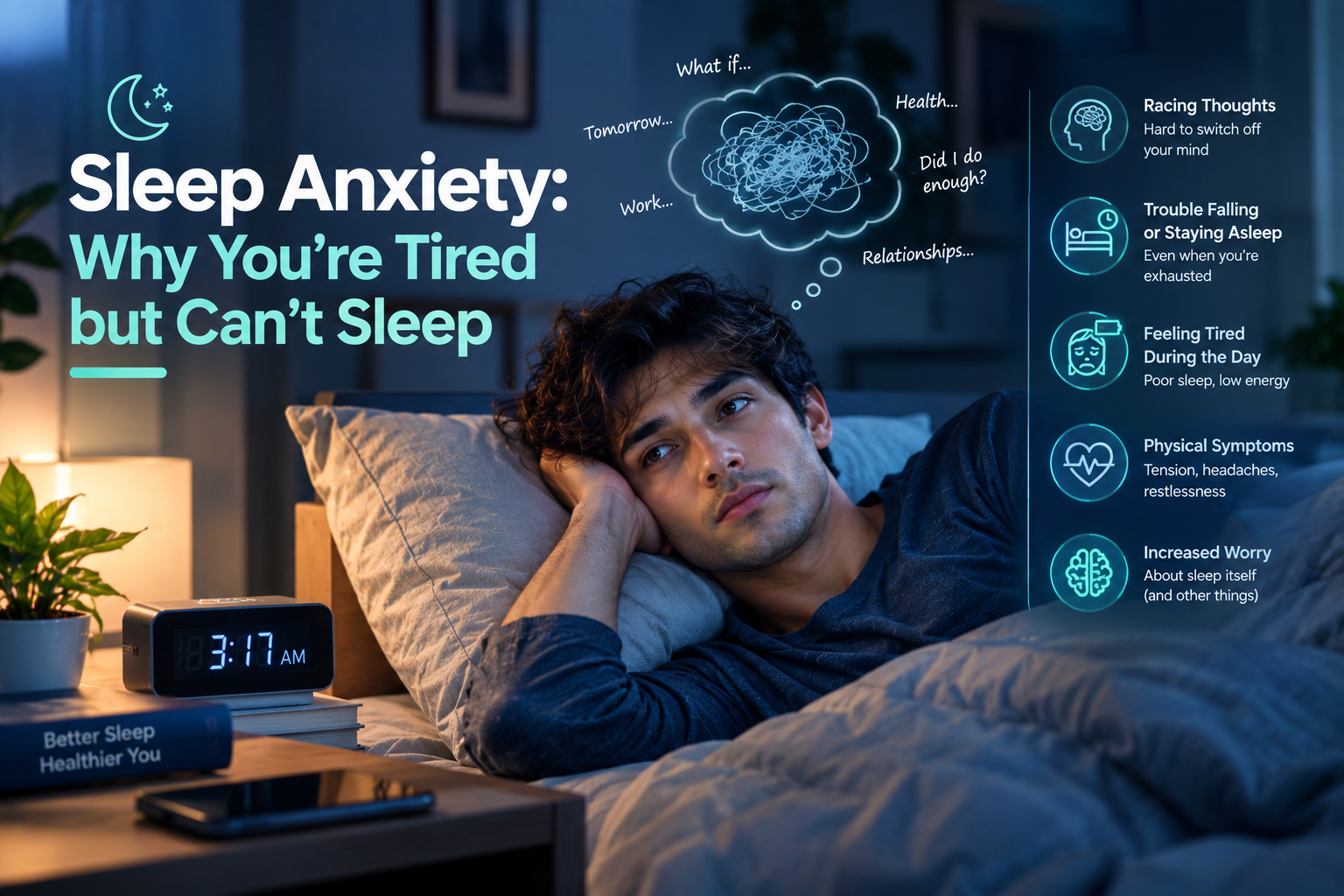
Sleep anxiety is the persistent fear or dread of not being able to fall or stay asleep, creating a vicious cycle where worry about insomnia itself fuels sleeplessness. Unlike occasional difficulty sleeping, sleep anxiety involves a cognitive hyperarousal state that leaves patients feeling "tired but wired." In Malaysia, a 2020 study found that 29.3% of adults reported poor sleep quality, with anxiety and stress as top contributors.
Key Takeaways
- Sleep anxiety is distinct from general insomnia: it centres on fear of sleep failure and the consequences of lost rest.
- The "tired but wired" state is driven by a cortisol-adrenaline loop that makes it physiologically difficult to power down.
- Cognitive Behavioral Therapy for Insomnia (CBT-I) resolves sleep anxiety in 70–80% of patients within 6–8 sessions.
- Affordable natural remedies—chamomile tea, valerian root, and breathing techniques—can complement first-line treatments, especially in contexts with limited access to specialist care.
You close your eyes at 11 PM after a long day. Your body is heavy with exhaustion. Your limbs sink into the mattress. But your mind is racing—about tomorrow’s deadline, a misread email, the neighbour’s dog, the sound of the ceiling fan. Minutes stretch into an hour. Your heart begins to pound. You think: If I don’t sleep now, tomorrow will be a disaster. That thought, paradoxically, keeps you awake.
This is the signature experience of sleep anxiety: being profoundly tired yet unable to fall asleep because the act of trying to sleep becomes a source of stress. For millions of Southeast Asian professionals and parents, this cycle is a nightly reality. High-pressure work cultures, late-night screen habits, and shared living spaces compound the problem. This article explains what sleep anxiety is, why it feels like a trap, and—most importantly—what actually works to break free.
EazyCare AI provides evidence-based health information to help you understand and manage conditions like sleep anxiety. Whether you’re exploring symptoms or looking for treatment options, we serve as a reliable companion in your health journey.
What Is Sleep Anxiety?
Sleep anxiety is not a formal diagnostic category in the DSM-5 or ICD-11. Instead, it describes a specific type of anxiety that centres on sleep itself. Patients with sleep anxiety typically experience:
- Racing thoughts about the consequences of poor sleep before bed
- Physical symptoms (rapid heartbeat, shallow breathing, muscle tension) when lying down to sleep
- A conditioned fear response to the bedroom environment
- Cognitive hyperarousal: difficulty "switching off" even when exhausted
The condition often co-occurs with generalised anxiety disorder (GAD) or major depressive disorder, but it can also exist independently. A 2018 meta-analysis in PubMed found that people with anxiety disorders are 3.5 times more likely to develop chronic insomnia compared to those without anxiety—a relationship that is bidirectional: poor sleep worsens anxiety, and anxiety worsens sleep.
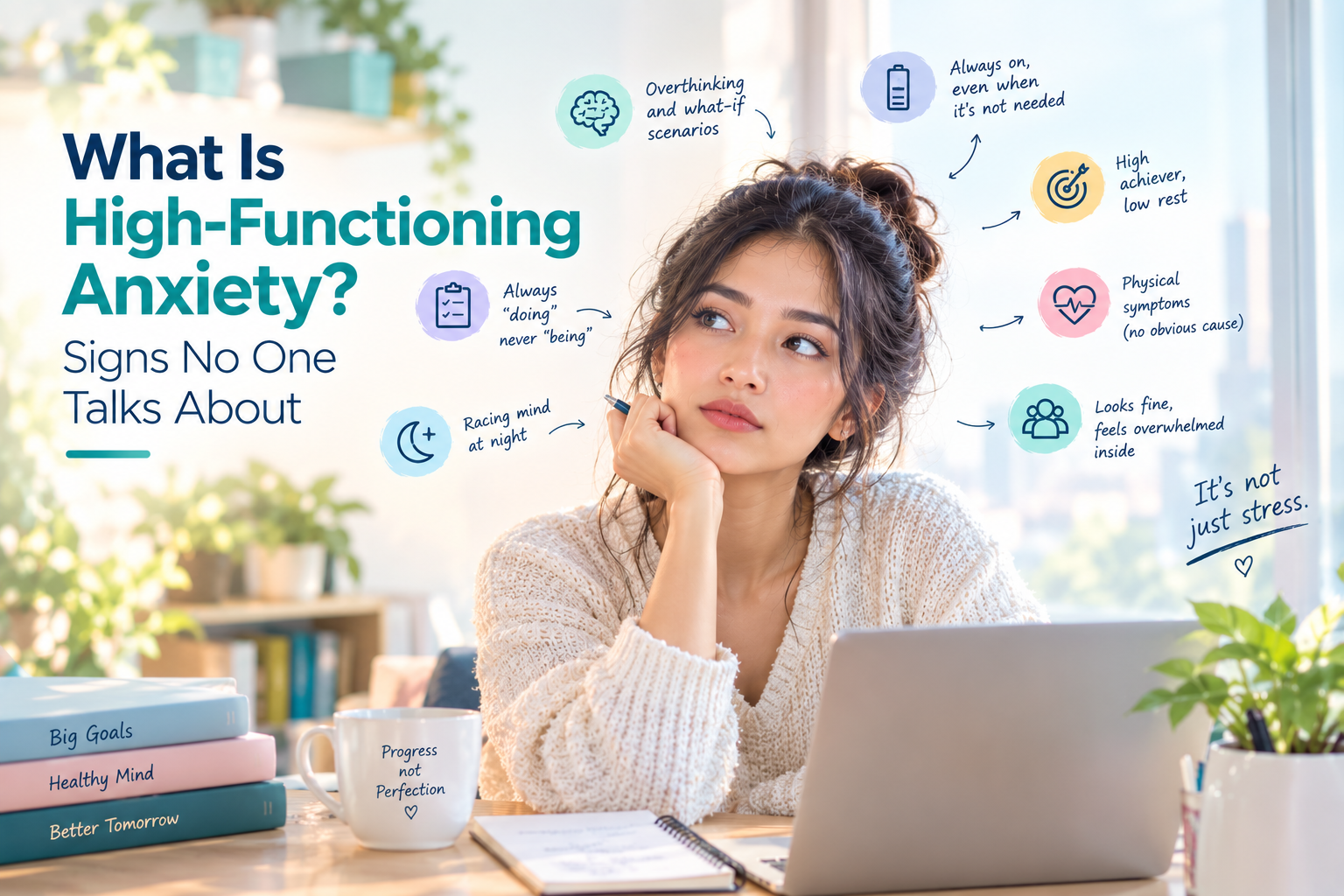
Recognizing the subtle signs you have anxiety can help break the cycle.
Key distinction: Unlike someone who simply has insomnia (difficulty initiating or maintaining sleep without emotional distress), the person with sleep anxiety is trapped in a cognitive loop. They are not just unable to sleep; they are afraid of not sleeping. This fear activates the sympathetic nervous system, producing stress hormones that make falling asleep even harder.
The Tired-But-Wired Cycle: Why Your Brain Won't Shut Off
"The brain cannot simultaneously be in a state of threat detection (hyperarousal) and sleep readiness (parasympathetic dominance). Sleep anxiety forces it to choose threat every time."
— National Sleep Foundation, Sleep Anxiety Overview
To understand why you feel exhausted yet alert, it helps to know how the sleep-wake system works. Sleep is governed by two opposing forces: the homeostatic sleep drive (pressure to sleep that builds throughout the day) and the circadian rhythm (the internal 24-hour clock). For most people, these forces align by bedtime. But in sleep anxiety, a third force—the stress response—overrides both.
Cortisol and adrenaline are the primary drivers of this override. When the brain perceives a threat (including the threat of another sleepless night), it releases these hormones to keep you vigilant. Elevated cortisol inhibits the release of melatonin, blocks the action of GABA (the brain’s main inhibitory neurotransmitter), and increases heart rate and blood pressure. The result: a state of physiological readiness that is the exact opposite of what is needed for sleep.
Sleep effort paradox: The more you consciously try to force sleep, the more you activate the brain's arousal systems. This is why "just relax" advice often fails—it increases performance anxiety around sleep, which in turn triggers hyperarousal. The solution is to reduce sleep effort rather than increase it.
The "tired but wired" feeling is therefore not a failure of willpower. It is a predictable neurobiological response. A 2017 study using functional MRI found that individuals with insomnia exhibit increased activity in the prefrontal cortex and amygdala during sleep attempts—regions associated with worry and threat evaluation. Their brains are literally unable to disengage from vigilance.
Practical takeaway: If you are lying in bed with a racing heart and spinning thoughts, stop trying to sleep. Get up, go to a dimly lit room, and engage in a boring, non-stimulating activity (reading a physical book, folding laundry) until you feel drowsiness naturally. This is called stimulus control therapy—a core component of CBT-I.
Sleep Anxiety vs Insomnia: Key Differences
Many people use "insomnia" and "sleep anxiety" interchangeably, but they are not identical. Understanding the difference is critical for choosing the right treatment.
| Factor | Sleep Anxiety | Insomnia (without sleep anxiety) |
|---|---|---|
| Primary driver | Fear of not sleeping; catastrophic thoughts about consequences | Circadian misalignment, poor sleep hygiene, medical conditions, or stress |
| Emotional state at bedtime | Worry, dread, panic | Frustration, resignation, but not fear |
| Physical symptoms | Racing heart, sweating, shortness of breath (anxiety attacks) | Tension in jaw or shoulders, restlessness |
| Response to sleep effort | Trying harder worsens symptoms | Trying harder sometimes helps (e.g., using relaxation techniques) |
| Treatment focus | Anxiety reduction and cognitive restructuring | Sleep hygiene, chronotherapy, or medication |
In clinical practice, the two often overlap. A 2021 systematic review found that over 50% of patients with chronic insomnia also meet criteria for an anxiety disorder. However, when sleep anxiety is the primary driver, addressing the fear of sleeplessness—rather than simply improving sleep habits—is essential.
Practical takeaway: If your main complaint is "I'm terrified of not sleeping, and that fear keeps me awake," you likely have sleep anxiety. Consider seeking CBT-I specifically, which includes cognitive restructuring for catastrophic thoughts about sleep.
For those seeking convenient options, AI insomnia treatment platforms offer digital cognitive-behavioral therapy guided by algorithms.
What Triggers Sleep Anxiety in Southeast Asia?
Sleep anxiety does not develop in a vacuum. Several factors unique to Southeast Asian lifestyles amplify the risk:
High-Pressure Work Culture
In Malaysia, 29.3% of adults report poor sleep quality, with anxiety and stress as top contributors (PMC, 2020). Long working hours, demanding bosses, and the expectation of 24/7 availability (especially via messaging apps) keep the brain in a state of chronic low-grade stress. The bedtime mind does not know how to switch from "problem-solving mode" to "rest mode."
Late-Night Screen Habits
A 2019 survey by the Malaysian Communications and Multimedia Commission found that 88% of Malaysians use smartphones within an hour of bedtime. Blue light suppresses melatonin production by up to 50%, but the cognitive effect is even more significant: scrolling through work emails or social media triggers dopamine-driven anticipation that activates the prefrontal cortex.
Shared Living Spaces
Many Southeast Asian families live in close quarters, where noise, light, and temperature cannot be individually controlled. The inability to create a predictable sleep environment increases uncertainty—a known trigger for anxiety. People in shared spaces may also experience pressure to stay awake to accommodate others, further disrupting circadian rhythms.
Cultural factor: In some Southeast Asian communities, complaining about sleep is seen as "weakness" or "laziness." This stigma can prevent people from seeking help, allowing sleep anxiety to become chronic. If you recognise these patterns, there is no shame in addressing them—sleep is a biological necessity, not a badge of honour.
Practical takeaway: Identify your specific triggers using a sleep diary for one week. Note: caffeine consumption, last screen time, bedtime worry content, and subjective anxiety level (1–10) before sleep. This data helps clinicians tailor treatment and can reveal patterns you might otherwise miss.
How to Stop Sleep Anxiety: Evidence-Based Treatments
The gold-standard treatment for sleep anxiety is Cognitive Behavioral Therapy for Insomnia (CBT-I). Unlike sleep hygiene advice (which helps but is rarely sufficient for anxiety-driven insomnia), CBT-I directly targets the cognitive and behavioural loops that maintain sleep anxiety.
A 2019 meta-analysis in PubMed showed that CBT-I reduces sleep anxiety in 70–80% of patients within 6–8 sessions. Core components include:
- Stimulus control: Reassociate the bed with sleep, not worry. Get out of bed when awake >20 minutes.
- Sleep restriction: Consolidate sleep by limiting time in bed to actual sleep time, increasing sleep drive.
- Cognitive restructuring: Challenge catastrophic thoughts ("I'll never sleep", "I'll fail tomorrow") with balanced alternatives ("Even 5 hours of sleep is enough to function", "One bad night does not define my week").
- Paradoxical intention: Intentionally try to stay awake (reduces performance anxiety around sleep).
Medication is not first-line for sleep anxiety because sedatives (benzodiazepines, Z-drugs) can mask the underlying cognitive patterns and lead to dependency. However, short-term use of melatonin or low-dose doxepin may be prescribed under medical supervision.
Practical takeaway: If CBT-I is not accessible in your area (many Malaysian public hospitals do not yet offer it), consider digitally delivered CBT-I programs or guided self-help books. EazyCare AI's symptom checker can help you decide if your sleep anxiety warrants professional referral.
Natural Remedies and Lifestyle Changes for Sleep Anxiety
While CBT-I remains the cornerstone, affordable natural remedies can support the process—especially in contexts where specialist care is out of reach.
Chamomile or valerian root tea. Chamomile contains apigenin, which binds to GABA receptors and produces mild sedation. Valerian root has been shown in small trials to improve sleep latency by 15–20 minutes. Brew a cup 45–60 minutes before bed. Avoid commercially sweetened varieties.
4-7-8 breathing technique. Inhale through the nose for 4 seconds, hold for 7 seconds, exhale through the mouth for 8 seconds. Repeat 4–5 times. This activates the parasympathetic nervous system, lowering heart rate and cortisol levels. It is free, private, and effective even in shared rooms.
Magnesium glycinate. Magnesium deficiency is linked to increased anxiety and poor sleep. A 2017 randomised trial found that 400 mg of magnesium glycinate improved sleep efficiency by 12% in adults with insomnia. It is available over the counter in most Malaysian pharmacies.
Screen curfew with blue-light blocking. Stop all screens 45 minutes before bed. If unavoidable (e.g., for work), use a blue-light filter app and lower screen brightness to minimum. This does not eliminate the cognitive activation from content, so a physical book or audio-only relaxation is better.
These strategies are not cures but evidence-informed adjuvants. They work best when combined with stimulus control and cognitive techniques. Practical takeaway: Choose one or two remedies to implement consistently for two weeks. Do not try everything at once—you need to assess what works for your body and your environment.
Frequently Asked Questions
Why do I feel exhausted but my mind won't shut off at night?
This is the hallmark of cognitive hyperarousal. Your brain's stress response system is overactive, releasing cortisol and adrenaline that override sleep signals. Even though your body is physically fatigued, your mind perceives a threat (often the fear of not sleeping itself) and keeps you alert. The solution involves reducing sleep effort and training the brain to associate the bed with safety, not performance.
What's the difference between sleep anxiety and regular insomnia?
Insomnia is trouble falling or staying asleep regardless of emotional state. Sleep anxiety is specifically driven by fear about sleep. In sleep anxiety, the person lies awake worrying about being awake; the worry itself perpetuates the wakefulness. Treatment for sleep anxiety must address that cognitive loop, while general insomnia may respond more to sleep hygiene or circadian adjustments alone.
Can anxiety cause you to wake up in the middle of the night and not fall back asleep?
Yes. Nocturnal anxiety (waking with a racing heart, sweating, or catastrophic thoughts) is common. The same hyperarousal mechanism that disrupts sleep onset can also disrupt sleep maintenance. Often, the person wakes from a light stage of sleep and immediately starts worrying about the clock, triggering a stress spike that prevents re-entry into deeper sleep.
How do I stop my heart from racing when I try to sleep?
A racing heart at bedtime is usually due to adrenaline release from anxiety. Try the 4-7-8 breathing technique to stimulate the vagus nerve and slow the heart rate. If the sensation persists beyond 15 minutes, get out of bed and do a boring, relaxing activity until calm. If you also experience chest pain, shortness of breath, or dizziness, seek medical evaluation to rule out cardiac causes. EazyCare AI's symptom checker can help you assess whether your symptoms need urgent attention.
Is sleep anxiety a sign of a bigger mental health problem?
Sleep anxiety can exist on its own, but it frequently co-occurs with generalised anxiety disorder, panic disorder, or depression. If you also experience persistent worry about many things, unexplained physical symptoms, or low mood, a comprehensive mental health assessment is recommended. However, isolated sleep anxiety is still valid and treatable.
What natural supplements help with sleep anxiety?
Melatonin (0.5–3 mg) can help reset circadian timing if taken 30 minutes before bed. Magnesium glycinate (400 mg) supports relaxation and has good evidence for improving sleep efficiency. Valerian root and chamomile are milder options. Avoid supplements that combine multiple herbs in high doses; start low and see how you respond. Always consult a pharmacist or doctor before starting supplements, especially if you take prescription medications.
Does screen time before bed make sleep anxiety worse?
Yes, in two ways. First, blue light suppresses melatonin, delaying sleep onset. Second, the cognitive stimulation from work emails or social media keeps the prefrontal cortex active, making it harder to transition into a relaxed state. The combination is particularly potent for people prone to anxiety. A 45-minute screen-free wind-down is one of the most effective low-cost interventions.
How long does sleep anxiety typically last?
Without intervention, sleep anxiety can become chronic, persisting for months or years as the conditioned fear response reinforces itself. With appropriate treatment—CBT-I in the first 6–8 sessions—significant improvement is seen in 70–80% of patients. Some people experience relapse during high-stress periods, but maintenance strategies help prevent this.
Can sleep anxiety go away on its own without treatment?
It can, but it is unlikely for most people. The natural course of stress-induced sleep anxiety often resolves when the stressor recedes (e.g., after a project deadline). However, if the fear of sleeplessness becomes central, the cycle becomes self-sustaining. Without breaking the cognitive-behavioural loop, the likelihood of spontaneous remission is low. Seeking help early prevents chronicity.
What should I do if I wake up panicking at 3 AM?
Do not lie in bed fighting the panic. Get up, move to a dimly lit room, and practice grounding: name five things you can see, four you can touch, three you can hear, two you can smell, one you can taste. This shifts attention away from internal arousal. When your heart rate slows, return to bed only when drowsy. If this pattern occurs frequently, see a doctor to rule out sleep apnea or panic disorder.
When to See a Doctor
While sleep anxiety itself is not a medical emergency, certain symptoms warrant prompt evaluation:
- Feeling of choking or gasping for air during sleep (possible sleep apnea)
- Severe daytime sleepiness that causes you to nod off at work or while driving
- Chest pain, palpitations, or shortness of breath that occurs during the night and persists after waking
- Unusual behaviours during sleep (sleepwalking, thrashing, vocalisations)
- Suicidal thoughts or severe depression co-occurring with sleep problems
Call 999 or go to the nearest emergency department if you have chest pain with sweating, nausea, or radiance to the arm or jaw — these may signal a heart attack.
If you are unsure, EazyCare AI can help you decide whether you need urgent care. For most people with sleep anxiety, a primary care doctor or a mental health professional is the appropriate starting point.
Conclusion
Sleep anxiety is not laziness, weakness, or a personal failing. It is a predictable neurobiological condition in which the fear of not sleeping hijacks the sleep system itself. The good news is that it responds reliably to targeted interventions.
- Recognise the cycle: Understand that your "tired but wired" state is driven by hyperarousal, not a lack of willpower.
- Adopt CBT-I principles: Stimulus control, cognitive restructuring, and paradoxical intention break the loop within weeks.
- Support with lifestyle: Use affordable remedies like chamomile tea, magnesium, and a screen curfew as adjuvants—not substitutes for behavioural therapy.
If sleep anxiety is affecting your health and daily function, take the first step today. Learn more at eazycare.ai or chat with our AI health assistant for personalised guidance.